
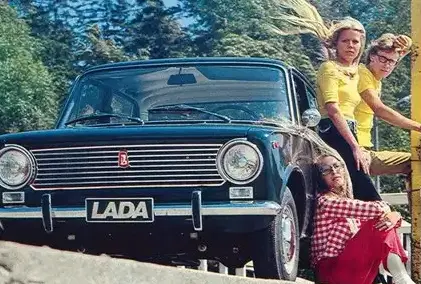
The Lada 2101, often referred to as the “Zhiguli” in its native Soviet Union, was a pivotal vehicle in the history of Soviet automotive manufacturing. Introduced in 1970 and remaining in production until 1983, it represented a significant step forward in accessibility and modernity for the average Soviet citizen. Based heavily on the Fiat 124, the 2101 was designed to provide a reliable and relatively affordable family car. The 1.2-liter (73.11 cubic inch) 62 horsepower variant, discussed here, was a mainstay of the early production run and served as the entry point into the 2101 model range. It played a crucial role in motorizing the Soviet population and became an instantly recognizable symbol of the era.
Technical Specifications
| Brand | Lada |
| Model | 2101 |
| Generation | 2101 |
| Type (Engine) | 1.2 (62 Hp) |
| Start of production | 1970 |
| End of production | 1983 |
| Powertrain Architecture | Internal Combustion engine |
| Body type | Sedan |
| Seats | 5 |
| Doors | 4 |
| Fuel consumption (urban) | 9.4 l/100 km (25 US mpg, 30.1 UK mpg, 10.6 km/l) |
| Fuel consumption (extra urban) | 6.9 l/100 km (34.1 US mpg, 40.9 UK mpg, 14.5 km/l) |
| Fuel consumption (combined) | 9.2 l/100 km (25.6 US mpg, 30.7 UK mpg, 10.9 km/l) |
| Fuel Type | Petrol (Gasoline) |
| Acceleration 0 – 100 km/h | 21 sec |
| Acceleration 0 – 62 mph | 21 sec |
| Acceleration 0 – 60 mph | 20 sec |
| Maximum speed | 142 km/h (88.23 mph) |
| Weight-to-power ratio | 15.2 kg/Hp, 65.6 Hp/tonne |
| Weight-to-torque ratio | 10.6 kg/Nm, 94.2 Nm/tonne |
| Power | 62 Hp @ 5000 rpm |
| Power per litre | 51.8 Hp/l |
| Torque | 89 Nm @ 3400 rpm (65.64 lb.-ft. @ 3400 rpm) |
| Engine layout | Front, Longitudinal |
| Engine displacement | 1198 cm3 (73.11 cu. in.) |
| Number of cylinders | 4 |
| Engine configuration | Inline |
| Cylinder Bore | 76 mm (2.99 in.) |
| Piston Stroke | 66 mm (2.6 in.) |
| Compression ratio | 8.5:1 |
| Number of valves per cylinder | 2 |
| Fuel injection system | Carburettor |
| Engine aspiration | Naturally aspirated |
| Valvetrain | OHC |
| Kerb Weight | 945 kg (2083.37 lbs.) |
| Trunk (boot) space – minimum | 325 l (11.48 cu. ft.) |
| Fuel tank capacity | 39 l (10.3 US gal | 8.58 UK gal) |
| Length | 4073 mm (160.35 in.) |
| Width | 1611 mm (63.43 in.) |
| Height | 1440 mm (56.69 in.) |
| Wheelbase | 2424 mm (95.43 in.) |
| Front track | 1349 mm (53.11 in.) |
| Rear (Back) track | 1305 mm (51.38 in.) |
| Drivetrain Architecture | The Internal combustion engine (ICE) drives the rear wheels of the vehicle. |
| Drive wheel | Rear wheel drive |
| Number of gears and type of gearbox | 4 gears, manual transmission |
| Front suspension | Double wishbone |
| Rear suspension | Coil spring |
| Front brakes | Disc |
| Rear brakes | Drum |
| Steering type | Worm-reduction unit |
| Tires size | 155/80 SR13 |
Powertrain & Engine Architecture
The heart of the Lada 2101 1.2 was a 1198cc inline-four cylinder engine. This engine, designated with various codes depending on the specific year and minor revisions, was a relatively simple design. It featured a single overhead camshaft (OHC) operating two valves per cylinder. Fuel delivery was handled by a carburetor, a common feature for vehicles of this era, rather than fuel injection. The engine produced 62 horsepower at 5000 rpm and 89 Nm (65.64 lb-ft) of torque at 3400 rpm. The engine was mounted longitudinally in the front of the vehicle, driving the rear wheels. The four-speed manual transmission was a standard component, providing a straightforward driving experience. The engine’s design was directly derived from the Fiat 124’s engine, though with some modifications to suit Soviet manufacturing capabilities and fuel availability.
Driving Characteristics
The 1.2-liter Lada 2101 was not known for its blistering performance. Acceleration from 0 to 60 mph took around 20 seconds, and its top speed was approximately 88 mph. However, it was never intended to be a sports car. The focus was on providing reliable and economical transportation. The four-speed manual transmission offered reasonable control, but the engine’s limited power meant frequent gear changes were necessary, especially when tackling hills or overtaking. Compared to later, more powerful 2101 variants (like those with the 1.3 or 1.5-liter engines), the 1.2-liter felt noticeably slower and less refined. The gear ratios were optimized for fuel economy and everyday usability rather than outright speed. The rear-wheel-drive configuration provided predictable handling, but the relatively soft suspension and limited grip meant it wasn’t a particularly sporty vehicle to drive.
Equipment & Trim Levels
The base-level Lada 2101 1.2 was fairly spartan in terms of equipment. Standard features included basic cloth upholstery, a simple dashboard with analog gauges, and manually operated windows and locks. Heating was standard, but air conditioning was not available. Optional extras were limited, but could include a radio, upgraded seat covers, and sometimes, a more sophisticated instrument cluster. The interior was functional and durable, designed to withstand the harsh conditions often encountered in the Soviet Union. The exterior trim was also minimal, with basic chrome bumpers and relatively simple steel wheels. The 1.2-liter model represented the most affordable entry point into the 2101 range, prioritizing practicality over luxury.
Chassis & Braking
The Lada 2101 featured a body-on-frame construction, which was common for vehicles of its time. The front suspension utilized a double wishbone design, while the rear suspension employed a coil spring setup. Braking was provided by disc brakes on the front wheels and drum brakes on the rear. The steering system was a worm-reduction unit, which provided relatively heavy but direct steering feel. The chassis was designed for durability and simplicity, prioritizing ease of maintenance and repair. The relatively narrow tires (155/80 SR13) contributed to a comfortable ride but limited grip in cornering.
Market Reception & Comparison
The Lada 2101 was overwhelmingly well-received in the Soviet Union and other Eastern Bloc countries. It filled a critical need for affordable and reliable transportation. Critics praised its durability and ease of maintenance, but also noted its relatively basic features and modest performance. Compared to other trims in the 2101 lineup, the 1.2-liter model offered the best fuel economy but the slowest acceleration. It was often favored by drivers who prioritized economy and reliability over performance. The 1.3 and 1.5-liter versions offered more power but came at a higher price and with slightly lower fuel efficiency.
Legacy
The Lada 2101 1.2, while no longer in production, remains a significant vehicle in automotive history. Its simple, robust design contributed to its longevity, and many examples are still on the road today, particularly in Eastern Europe and Russia. The powertrain, while not particularly sophisticated, proved to be remarkably durable and relatively easy to repair. In the used car market, the 2101 1.2 is often sought after by enthusiasts and collectors who appreciate its historical significance and simple mechanicals. It represents a bygone era of automotive engineering and a unique chapter in the history of Soviet manufacturing. Its enduring popularity is a testament to its practicality and reliability.
