
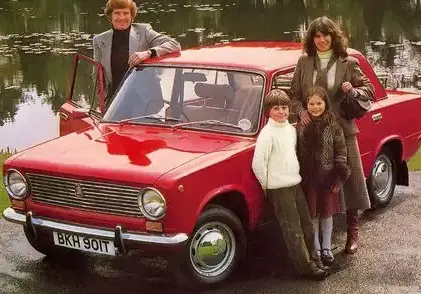
The Lada 21012 1.2, producing 64 horsepower, was a variant of the Lada 2101, a Soviet-designed automobile that became a ubiquitous sight on the roads of Eastern Europe and beyond. Produced from 1974 to 1982, the 21012 represented a refinement of the original 2101, incorporating minor cosmetic and mechanical updates. This particular 1.2-liter engine and four-speed manual transmission combination occupied the entry-level position within the 2101 lineup, offering affordable transportation for a broad segment of the population. The 2101 series, based on the Fiat 124, was significant as the first mass-produced car from the Soviet Union, and the 21012 continued this legacy, providing a relatively modern and reliable vehicle for its time.
Technical Specifications
| Brand | Lada |
| Model | 2101 |
| Generation | 21012 |
| Type (Engine) | 1.2 (64 Hp) |
| Start of production | 1974 |
| End of production | 1982 |
| Powertrain Architecture | Internal Combustion engine |
| Body type | Sedan |
| Seats | 5 |
| Doors | 4 |
| Fuel consumption (urban) | 9.4 l/100 km (25 US mpg, 30.1 UK mpg, 10.6 km/l) |
| Fuel consumption (extra urban) | 6.9 l/100 km (34.1 US mpg, 40.9 UK mpg, 14.5 km/l) |
| Fuel consumption (combined) | 9.2 l/100 km (25.6 US mpg, 30.7 UK mpg, 10.9 km/l) |
| Fuel Type | Petrol (Gasoline) |
| Acceleration 0 – 100 km/h | 22 sec |
| Acceleration 0 – 62 mph | 22 sec |
| Acceleration 0 – 60 mph | 20.9 sec |
| Maximum speed | 140 km/h (86.99 mph) |
| Weight-to-power ratio | 14.9 kg/Hp |
| Weight-to-torque ratio | 10.7 kg/Nm |
| Power | 64 Hp @ 5600 rpm |
| Power per litre | 53.4 Hp/l |
| Torque | 89 Nm @ 3400 rpm (65.64 lb.-ft. @ 3400 rpm) |
| Engine layout | Front, Longitudinal |
| Engine displacement | 1198 cm3 (73.11 cu. in.) |
| Number of cylinders | 4 |
| Engine configuration | Inline |
| Cylinder Bore | 76 mm (2.99 in.) |
| Piston Stroke | 66 mm (2.6 in.) |
| Compression ratio | 8.5:1 |
| Number of valves per cylinder | 2 |
| Fuel injection system | Carburettor |
| Engine aspiration | Naturally aspirated |
| Valvetrain | OHC |
| Kerb Weight | 955 kg (2105.41 lbs.) |
| Trunk (boot) space (minimum) | 325 l (11.48 cu. ft.) |
| Fuel tank capacity | 39 l (10.3 US gal, 8.58 UK gal) |
| Length | 4073 mm (160.35 in.) |
| Width | 1611 mm (63.43 in.) |
| Height | 1384 mm (54.49 in.) |
| Wheelbase | 2424 mm (95.43 in.) |
| Front track | 1349 mm (53.11 in.) |
| Rear track | 1305 mm (51.38 in.) |
| Drivetrain Architecture | Rear wheel drive |
| Drive wheel | Rear wheel drive |
| Number of gears and type of gearbox | 4 gears, manual transmission |
| Front suspension | Double wishbone |
| Rear suspension | Coil spring |
| Front brakes | Disc |
| Rear brakes | Drum |
| Steering type | Worm-reduction unit |
| Tires size | 155/80 SR13 |
Powertrain & Engine Architecture
The heart of the Lada 21012 1.2 was a 1.2-liter (1198 cc) inline-four cylinder engine. This engine, designated internally with various codes depending on the specific production year, was a relatively simple design featuring a single overhead camshaft (OHC) and two valves per cylinder. Fuel delivery was handled by a carburetor, a common feature for vehicles of this era. The engine produced 64 horsepower at 5600 rpm and 89 Nm (65.64 lb-ft) of torque at 3400 rpm. The engine was mounted longitudinally in the front of the vehicle, driving the rear wheels. The four-speed manual transmission was a standard unit, chosen for its simplicity and durability. It wasn’t known for quick shifts, but it was robust and reliable.
Driving Characteristics
The 21012 1.2 offered modest performance. Acceleration from 0 to 100 km/h (0-62 mph) took approximately 22 seconds, and the top speed was around 140 km/h (87 mph). Compared to later, more powerful versions of the 2101 (like those with 1.5 or 1.6-liter engines), the 1.2-liter version felt noticeably underpowered, especially when fully loaded or climbing hills. The four-speed gearbox had relatively widely spaced ratios, requiring frequent shifting to maintain optimal engine speed. However, the low-end torque made it reasonably tractable for everyday driving. The rear-wheel-drive configuration provided a predictable handling balance, though it lacked the sophistication of more modern chassis designs.
Equipment & Trim Levels
The Lada 21012 1.2 was typically equipped with basic amenities. Standard features included cloth upholstery, a simple dashboard layout with analog gauges, and basic exterior trim. Options were limited, but could include a radio, upgraded seat covers, and sometimes, a more sophisticated heater system. The interior was functional rather than luxurious, prioritizing durability and ease of maintenance. The 21012 generally lacked features considered commonplace in Western cars of the same period, such as power steering or air conditioning.
Chassis & Braking
The 21012 featured a body-on-frame construction, a common practice for vehicles of its era. The front suspension utilized a double wishbone design, while the rear suspension employed a coil spring setup. Braking was accomplished via disc brakes on the front wheels and drum brakes on the rear. The steering system was a worm-reduction unit, providing relatively heavy but direct steering feel. The tires were typically 155/80 SR13, chosen for their affordability and durability rather than high performance.
Market Reception & Comparison
The Lada 21012 1.2 was primarily aimed at budget-conscious buyers in the Soviet Union and Eastern Bloc countries. It was praised for its affordability, reliability, and ease of maintenance. However, it was often criticized for its lack of refinement, modest performance, and basic features. Compared to the more powerful 1.5-liter versions of the 2101, the 1.2-liter model offered lower running costs but sacrificed performance. Fuel economy was reasonable for the time, averaging around 9.2 l/100 km (25.6 US mpg). The 1.2L was often favored by those who prioritized economy over outright speed.
Legacy
The Lada 21012 1.2, and the 2101 series as a whole, holds a significant place in automotive history as the first mass-produced Soviet car. While not known for its technological innovation, it provided affordable and reliable transportation to millions of people. Today, the 21012 is a popular choice among classic car enthusiasts, particularly those interested in Soviet-era vehicles. The 1.2-liter engine, while simple, proved to be remarkably durable, and many examples are still running today. Parts availability can be a challenge, but the car’s straightforward design makes it relatively easy to repair and maintain. The 21012 remains a testament to the ingenuity and resourcefulness of Soviet automotive engineering.
