
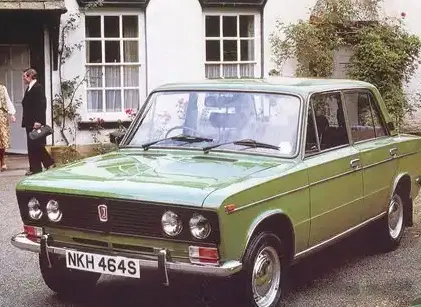
The Lada 2103, produced between 1972 and 1983, represents a significant evolution in the Soviet automotive industry. Based heavily on the Fiat 124, the 2103 was intended as a more modern and refined alternative to the earlier Lada 2101, offering improved styling and a slightly more powerful engine. It served as the mid-range offering in the Lada lineup during its production run, positioned above the basic 2101 and below the more luxurious 2106. The 1.5-liter, 73 horsepower variant was a mainstay, providing a balance of affordability and usability for the Soviet consumer and export markets.
Technical Specifications
| Brand | Lada |
| Model | 2103 |
| Generation | 2103 |
| Type (Engine) | 1.5 (73 Hp) |
| Start of production | 1972 |
| End of production | 1983 |
| Powertrain Architecture | Internal Combustion engine |
| Body type | Sedan |
| Seats | 5 |
| Doors | 4 |
| Fuel consumption (extra urban) | 8.4 l/100 km (28 US mpg, 33.6 UK mpg, 11.9 km/l) |
| Fuel Type | Petrol (Gasoline) |
| Acceleration 0 – 100 km/h | 19 sec |
| Acceleration 0 – 62 mph | 19 sec |
| Acceleration 0 – 60 mph | 18.1 sec |
| Maximum speed | 150 km/h (93.21 mph) |
| Weight-to-power ratio | 13.2 kg/Hp (75.6 Hp/tonne) |
| Weight-to-torque ratio | 9.3 kg/Nm (107.8 Nm/tonne) |
| Power | 73 Hp @ 5600 rpm |
| Power per litre | 50.1 Hp/l |
| Torque | 104 Nm @ 3400 rpm (76.71 lb.-ft. @ 3400 rpm) |
| Engine layout | Front, Longitudinal |
| Engine displacement | 1458 cm3 (88.97 cu. in.) |
| Number of cylinders | 4 |
| Engine configuration | Inline |
| Cylinder Bore | 76 mm (2.99 in.) |
| Piston Stroke | 80 mm (3.15 in.) |
| Compression ratio | 8.5:1 |
| Number of valves per cylinder | 2 |
| Fuel injection system | Carburettor |
| Engine aspiration | Naturally aspirated engine |
| Valvetrain | OHC |
| Kerb Weight | 965 kg (2127.46 lbs.) |
| Max. weight | 1430 kg (3152.61 lbs.) |
| Max load | 465 kg (1025.15 lbs.) |
| Trunk (boot) space – maximum | 400 l (14.13 cu. ft.) |
| Fuel tank capacity | 39 l (10.3 US gal | 8.58 UK gal) |
| Length | 4116 mm (162.05 in.) |
| Width | 1611 mm (63.43 in.) |
| Height | 1440 mm (56.69 in.) |
| Wheelbase | 2424 mm (95.43 in.) |
| Front track | 1365 mm (53.74 in.) |
| Rear (Back) track | 1321 mm (52.01 in.) |
| Drivetrain Architecture | The Internal combustion engine (ICE) drives the rear wheels of the vehicle. |
| Drive wheel | Rear wheel drive |
| Number of gears and type of gearbox | 4 gears, manual transmission |
| Front suspension | Double wishbone |
| Rear suspension | Coil spring |
| Front brakes | Disc |
| Rear brakes | Drum |
| Steering type | Worm-reduction unit |
| Tires size | 175/70 SR13 |
Introduction
The Lada 2103, launched in 1972, was a crucial step in the modernization of the Soviet automotive industry. While still fundamentally based on the Fiat 124 design licensed in the late 1960s, the 2103 featured a redesigned front grille, updated interior trim, and improved overall build quality compared to its predecessor, the 2101. The 1.5-liter engine, producing 73 horsepower, was the most common powerplant, offering a reasonable compromise between performance and fuel economy. The 2103 was primarily intended for the domestic Soviet market, where it filled a vital need for affordable and reliable transportation, but it was also exported to numerous countries in Eastern Europe and beyond.
Powertrain & Engine Architecture
The heart of the Lada 2103 1.5 was the 1458cc inline-four cylinder engine. This engine, often referred to by its internal codes, utilized a single overhead camshaft (OHC) design and a two-valve per cylinder configuration. Fuel delivery was handled by a carburetor, a common feature for the time, though relatively inefficient compared to fuel injection. The engine’s 8.5:1 compression ratio contributed to its modest power output of 73 horsepower at 5600 rpm and 104 Nm (76.71 lb-ft) of torque at 3400 rpm. The engine was mounted longitudinally in the front of the vehicle. The standard transmission was a four-speed manual gearbox, designed for durability rather than sporty performance. The 4-speed manual was a robust, if somewhat clunky, unit, reflecting the emphasis on reliability over refinement.
Driving Characteristics
The Lada 2103 1.5 with the manual transmission offered a driving experience best described as utilitarian. Acceleration was leisurely, taking approximately 19 seconds to reach 100 km/h (62 mph). The engine’s torque peak at 3400 rpm meant that it felt relatively responsive in everyday driving situations, but lacked the punch of higher-output versions or those equipped with a more modern fuel delivery system. The gear ratios were spaced to prioritize fuel economy and ease of driving, rather than outright performance. Compared to the later Lada 2106, which offered a slightly more refined experience, the 2103 felt more basic and raw. The rear-wheel-drive layout provided predictable handling, but the suspension, while adequate, was not particularly sophisticated.
Equipment & Trim Levels
The Lada 2103 1.5 was typically equipped with basic, but functional, features. Standard equipment included cloth upholstery, a simple dashboard layout with basic instrumentation, and manually operated windows and door locks. The interior was designed for practicality and durability, rather than luxury. Optional extras, such as a radio, upgraded upholstery, and a sunroof, were available, but relatively uncommon. The trim level was largely consistent across the 2103 range, with minor variations in interior color schemes and exterior paint options.
Chassis & Braking
The Lada 2103 utilized a body-on-frame construction, a common practice for the time. The front suspension employed a double wishbone design, while the rear suspension featured a coil spring setup. Braking was provided by disc brakes on the front wheels and drum brakes on the rear. The steering system was a worm-reduction unit, which offered relatively heavy steering feel. The tires were typically 175/70 SR13, providing adequate grip for the vehicle’s performance capabilities. The relatively simple suspension setup prioritized durability and affordability over sophisticated handling.
Market Reception & Comparison
The Lada 2103 was generally well-received in its target markets, particularly within the Soviet Union and Eastern Europe. It was praised for its affordability, reliability, and ease of maintenance. However, it was also criticized for its outdated design, relatively poor performance, and lack of modern features. Compared to other trims in the Lada lineup, the 1.5-liter version represented the entry-level option, offering the most affordable price point. The later 2106, with its more refined interior and slightly more powerful engine, was considered a more desirable, albeit more expensive, alternative. Fuel economy was reasonable for the era, but not exceptional.
Legacy
The Lada 2103 remains a popular classic car among enthusiasts, particularly in Eastern Europe and Russia. Its simple mechanical design makes it relatively easy to maintain and repair, and spare parts are still readily available. The 1.5-liter engine, while not particularly powerful, is known for its durability and reliability. In the used car market today, the 2103 is valued for its affordability and nostalgic appeal. While not a performance icon, the Lada 2103 played a significant role in providing affordable transportation to millions of people during its production run, and it continues to hold a special place in automotive history.
