
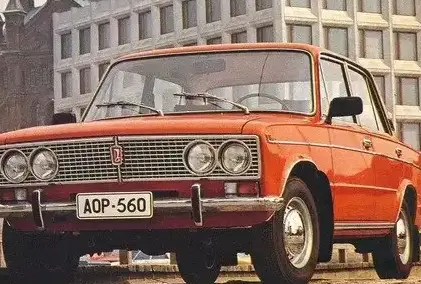
The Lada 21033 1.3, a variant of the Lada 2103, was produced between 1977 and 1983. It represented a significant step forward for AvtoVAZ, the Soviet automotive manufacturer, offering a more refined and modern vehicle compared to its predecessors like the Lada 2101. The 2103 was based on the Fiat 124, but heavily modified and localized for Soviet conditions and manufacturing capabilities. The 21033 designation specifically denotes the model equipped with the 1.3-liter engine producing 70 horsepower. This version occupied an entry-level position within the 2103 range, offering a balance of affordability and practicality for the Soviet consumer.
Technical Specifications
| Brand | Lada |
| Model | 2103 |
| Generation | 21033 |
| Type (Engine) | 1.3 (70 Hp) |
| Start of production | 1977 |
| End of production | 1983 |
| Powertrain Architecture | Internal Combustion engine |
| Body type | Sedan |
| Seats | 5 |
| Doors | 4 |
| Fuel consumption (extra urban) | 8.3 l/100 km (28.3 US mpg / 34 UK mpg / 12 km/l) |
| Fuel Type | Petrol (Gasoline) |
| Acceleration 0 – 100 km/h | 21 sec |
| Acceleration 0 – 62 mph | 21 sec |
| Acceleration 0 – 60 mph | 20 sec |
| Maximum speed | 143 km/h (88.86 mph) |
| Weight-to-power ratio | 13.8 kg/Hp (72.5 Hp/tonne) |
| Weight-to-torque ratio | 10.1 kg/Nm (99.5 Nm/tonne) |
| Power | 70 Hp @ 5600 rpm |
| Power per litre | 54.1 Hp/l |
| Torque | 96 Nm @ 3400 rpm (70.81 lb.-ft. @ 3400 rpm) |
| Engine layout | Front, Longitudinal |
| Engine displacement | 1295 cm3 (79.03 cu. in.) |
| Number of cylinders | 4 |
| Engine configuration | Inline |
| Cylinder Bore | 79 mm (3.11 in.) |
| Piston Stroke | 66 mm (2.6 in.) |
| Compression ratio | 8.5:1 |
| Number of valves per cylinder | 2 |
| Fuel injection system | Carburettor |
| Engine aspiration | Naturally aspirated engine |
| Valvetrain | OHC |
| Kerb Weight | 965 kg (2127.46 lbs.) |
| Max. weight | 1430 kg (3152.61 lbs.) |
| Max load | 465 kg (1025.15 lbs.) |
| Trunk (boot) space – maximum | 400 l (14.13 cu. ft.) |
| Fuel tank capacity | 39 l (10.3 US gal | 8.58 UK gal) |
| Length | 4116 mm (162.05 in.) |
| Width | 1611 mm (63.43 in.) |
| Height | 1440 mm (56.69 in.) |
| Wheelbase | 2424 mm (95.43 in.) |
| Front track | 1365 mm (53.74 in.) |
| Rear (Back) track | 1321 mm (52.01 in.) |
| Drivetrain Architecture | The Internal combustion engine (ICE) drives the rear wheels of the vehicle. |
| Drive wheel | Rear wheel drive |
| Number of gears and type of gearbox | 4 gears, manual transmission |
| Front suspension | Double wishbone |
| Rear suspension | Coil spring |
| Front brakes | Disc |
| Rear brakes | Drum |
| Assisting systems | ABS (Anti-lock braking system) |
| Steering type | Worm-reduction unit |
| Tires size | 175/70 SR13 |
Powertrain & Engine Architecture
The Lada 21033 1.3 was powered by a 1.3-liter inline-four cylinder engine, internally designated as a variation of the VAZ-2101 engine family. This engine featured a single overhead camshaft (OHC) valvetrain with two valves per cylinder. Fuel delivery was managed by a carburetor, a common feature for vehicles of this era and market. The engine produced 70 horsepower at 5600 rpm and 96 Nm (70.81 lb-ft) of torque at 3400 rpm. The engine was mounted longitudinally in the front of the vehicle, driving the rear wheels. The 21033 was exclusively offered with a four-speed manual transmission. This transmission was a robust, if unsophisticated, unit designed for durability rather than sporty performance.
Driving Characteristics
The 1.3-liter engine in the 21033 provided adequate, but not exhilarating, performance. Acceleration from 0 to 100 km/h (0-62 mph) took approximately 21 seconds, and the top speed was around 143 km/h (88.86 mph). Compared to the larger 1.5 and 1.6-liter engines available in other 2103 models, the 1.3 offered less power and torque. This resulted in slower acceleration and a reduced ability to handle inclines when fully loaded. However, the 1.3-liter engine was more fuel-efficient than its larger counterparts, making it a popular choice for drivers who prioritized economy. The four-speed manual transmission had relatively widely spaced gear ratios, requiring frequent shifting to maintain optimal engine speed. The rear-wheel-drive layout provided predictable handling, but the car was prone to oversteer if pushed hard.
Equipment & Trim Levels
The Lada 21033 1.3 was typically equipped with basic, functional features. Standard equipment included cloth upholstery, a simple dashboard with analog gauges, and basic exterior trim. Options were limited, but could include a radio, upgraded interior trim, and occasionally, a sunroof. The 21033 was generally considered the base model within the 2103 range, lacking the more luxurious appointments found in higher-spec versions. The interior was designed for practicality and durability, with hard-wearing materials and a focus on ease of maintenance.
Chassis & Braking
The Lada 21033 featured a traditional body-on-frame construction. The front suspension utilized a double wishbone design, while the rear suspension employed a coil spring setup. This suspension configuration provided a reasonably comfortable ride, although it was not particularly sophisticated. The braking system consisted of disc brakes on the front wheels and drum brakes on the rear wheels. While adequate for normal driving conditions, the braking performance was not on par with more modern vehicles. Some later models were equipped with an early form of ABS, but this was not a standard feature on the 1.3-liter version.
Market Reception & Comparison
The Lada 21033 1.3 was well-received in the Soviet Union and other Eastern European markets due to its affordability and reliability. It was seen as a practical and dependable vehicle for everyday transportation. Compared to the 1.5 and 1.6-liter versions of the 2103, the 1.3 offered better fuel economy but less performance. The 1.5-liter engine was often preferred by drivers who needed more power for hauling passengers or cargo. The 1.3-liter version was particularly popular among drivers who primarily used the car for commuting or short trips. Reliability was generally good, although the carburetor required periodic adjustment and maintenance.
Legacy
The Lada 21033 1.3, and the 2103 series as a whole, holds a significant place in automotive history as a symbol of Soviet engineering and manufacturing. While not known for its technological innovation, the 2103 was a durable and affordable vehicle that provided transportation for millions of people. Today, the 21033 is a popular choice among classic car enthusiasts and collectors, particularly those interested in Soviet-era automobiles. The 1.3-liter engine is known for its relative simplicity and ease of maintenance, making it a relatively reliable powertrain even after decades of use. Parts availability can be a challenge, but a dedicated community of enthusiasts continues to support and preserve these vehicles.
