
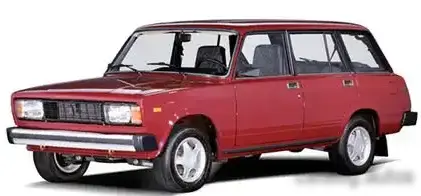
The Lada 21041 1.6, producing 74 horsepower, was a station wagon (estate) variant of the Lada 2104 series, manufactured between 2000 and 2003. It represented a continuation of the classic Lada design, offering a practical and affordable vehicle primarily aimed at the Eastern European and Russian markets. The 21041 sat within the broader 2104 family, which itself was a significant evolution of the earlier 2101 model, heavily based on the Fiat 124. This particular 1.6-liter version with a carburetor was positioned as a mainstream offering, balancing affordability with reasonable performance for everyday use. It was a workhorse vehicle, designed for durability and practicality rather than outright speed or luxury.
Technical Specifications
| Brand | Lada |
| Model | 2104 |
| Generation | 21041 |
| Type (Engine) | 1.6 (74 Hp) |
| Start of production | 2000 year |
| End of production | 2003 year |
| Powertrain Architecture | Internal Combustion engine |
| Body type | Station wagon (estate) |
| Seats | 5 |
| Doors | 5 |
| Fuel consumption (economy) – urban | 9.5 l/100 km (24.8 US mpg, 29.7 UK mpg, 10.5 km/l) |
| Fuel consumption (economy) – extra urban | 6.9 l/100 km (34.1 US mpg, 40.9 UK mpg, 14.5 km/l) |
| Fuel consumption (economy) – combined | 9.2 l/100 km (25.6 US mpg, 30.7 UK mpg, 10.9 km/l) |
| Fuel Type | Petrol (Gasoline) |
| Acceleration 0 – 100 km/h | 17 sec |
| Acceleration 0 – 62 mph | 17 sec |
| Acceleration 0 – 60 mph | 16.2 sec |
| Maximum speed | 145 km/h (90.1 mph) |
| Weight-to-power ratio | 13.8 kg/Hp, 72.5 Hp/tonne |
| Weight-to-torque ratio | 9.9 kg/Nm, 101 Nm/tonne |
| Power | 74 Hp @ 5600 rpm |
| Power per litre | 47.2 Hp/l |
| Torque | 103 Nm @ 3400 rpm (75.97 lb.-ft. @ 3400 rpm) |
| Engine layout | Front, Longitudinal |
| Engine displacement | 1569 cm3 (95.75 cu. in.) |
| Number of cylinders | 4 |
| Engine configuration | Inline |
| Number of valves per cylinder | 2 |
| Fuel injection system | Carburettor |
| Engine aspiration | Naturally aspirated engine |
| Kerb Weight | 1020 kg (2248.72 lbs.) |
| Max. weight | 1475 kg (3251.82 lbs.) |
| Max load | 455 kg (1003.1 lbs.) |
| Trunk (boot) space – minimum | 375 l (13.24 cu. ft.) |
| Trunk (boot) space – maximum | 1340 l (47.32 cu. ft.) |
| Fuel tank capacity | 42 l (11.1 US gal | 9.24 UK gal) |
| Length | 4115 mm (162.01 in.) |
| Width | 1620 mm (63.78 in.) |
| Height | 1443 mm (56.81 in.) |
| Wheelbase | 2424 mm (95.43 in.) |
| Front track | 1365 mm (53.74 in.) |
| Rear (Back) track | 1321 mm (52.01 in.) |
| Drivetrain Architecture | The Internal combustion engine (ICE) drives the rear wheels of the vehicle. |
| Drive wheel | Rear wheel drive |
| Number of gears and type of gearbox | 5 gears, manual transmission |
| Front suspension | Double wishbone |
| Rear suspension | Rigid axle suspension |
| Front brakes | Disc |
| Rear brakes | Drum |
| Steering type | Worm-reduction unit |
Powertrain & Engine Architecture
The heart of the 21041 1.6 was the Lada 1600 engine, a 1.6-liter (1569 cc) inline-four cylinder unit. This engine, while a descendant of the original Fiat 124 design, had undergone numerous modifications over the years. The 74 horsepower output was achieved at 5600 rpm, with a torque figure of 103 Nm (75.97 lb-ft) peaking at 3400 rpm. Critically, this version utilized a carburetor fuel system, a relatively outdated technology by the early 2000s, but one that contributed to the car’s simplicity and ease of maintenance. The engine featured a two-valve per cylinder configuration and a longitudinal front engine layout, driving the rear wheels. The five-speed manual transmission was the standard offering, providing a relatively wide range of gears for optimizing fuel economy and performance. The engine’s design prioritized robustness and low-end torque over high-revving power.
Driving Characteristics
The 21041 1.6, with its 74 horsepower and five-speed manual transmission, offered modest performance. Acceleration from 0 to 100 km/h (0-62 mph) took approximately 17 seconds, and top speed was around 145 km/h (90 mph). Compared to other variants in the 2104 range, such as those with larger engines or more modern fuel injection systems, the 1.6 felt noticeably less powerful. However, the carburetor and relatively low gearing provided decent responsiveness in everyday driving situations. The rear-wheel-drive configuration offered a unique driving experience, particularly in slippery conditions, but also required more driver skill than front-wheel-drive alternatives. The gear ratios were spaced to prioritize fuel efficiency and usability over sporty acceleration. The car wasn’t designed for quick sprints but for reliable transportation.
Equipment & Trim Levels
The Lada 21041 1.6 was generally sparsely equipped, reflecting its budget-oriented positioning. Standard features typically included basic cloth upholstery, a simple dashboard layout with analog gauges, and manual windows and door locks. Heating and ventilation were standard, but air conditioning was rarely fitted, even as an option. The trim level was fairly basic, with minimal chrome or decorative elements. Optional extras were limited, often consisting of upgraded seat covers or a basic radio. The focus was on providing a functional and durable vehicle at the lowest possible price point.
Chassis & Braking
The 21041 utilized a body-on-frame construction, a traditional design that contributed to its robustness. The front suspension employed a double wishbone setup, while the rear suspension featured a rigid axle. This configuration prioritized durability and load-carrying capacity over sophisticated handling. Braking was equally straightforward, with disc brakes on the front wheels and drum brakes on the rear. Steering was accomplished via a worm-reduction unit, which provided a relatively heavy but direct feel. Stabilizer bars were often omitted or minimal, contributing to a noticeable degree of body roll in corners.
Market Reception & Comparison
The Lada 21041 1.6 was primarily sold in Eastern Europe and Russia, where it was valued for its affordability, simplicity, and durability. Critics generally acknowledged its practicality but often criticized its outdated technology, basic interior, and modest performance. Compared to other trims in the 2104 lineup, such as those with larger engines or fuel injection, the 1.6 offered lower running costs but also a less refined driving experience. Fuel economy was reasonable for its time, averaging around 9.2 l/100 km (25.6 US mpg). Reliability was generally good, owing to the engine’s simple design and robust construction, but maintenance requirements were relatively frequent.
Legacy
The Lada 21041 1.6, and the 2104 series as a whole, represents a significant chapter in automotive history, particularly in the context of Eastern European motoring. While technologically outdated by modern standards, the 2104’s simplicity and durability have ensured its continued presence on roads today. The 1.6-liter engine, while not particularly powerful, proved to be relatively reliable and easy to maintain. In the used car market, the 21041 1.6 remains an affordable and accessible option for those seeking a classic, no-frills vehicle. Its enduring appeal lies in its practicality, affordability, and the nostalgic connection it holds for many drivers in its original markets.
