
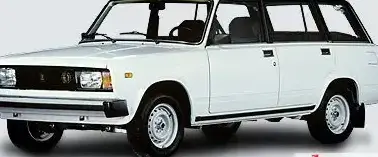
Technical Specifications
| Brand | Lada |
| Model | 2104 |
| Generation | 21043 |
| Type (Engine) | 1.5 (71 Hp) |
| Start of production | 1984 |
| End of production | 2012 |
| Powertrain Architecture | Internal Combustion engine |
| Body type | Station wagon (estate) |
| Fuel Type | Petrol (Gasoline) |
| Power | 71 Hp @ 5600 rpm |
| Power per litre | 49 Hp/l |
| Torque | 104 Nm @ 3400 rpm / 76.71 lb.-ft. @ 3400 rpm |
| Engine layout | Front, Longitudinal |
| Engine displacement | 1450 cm3 / 88.48 cu. in. |
| Number of cylinders | 4 |
| Engine configuration | Inline |
| Cylinder Bore | 76 mm / 2.99 in. |
| Piston Stroke | 80 mm / 3.15 in. |
| Compression ratio | 8.5:1 |
| Number of valves per cylinder | 2 |
| Fuel injection system | Carburettor |
| Engine aspiration | Naturally aspirated engine |
| Valvetrain | OHC |
The Lada 21043 1.5 represents a significant variant within the broader Lada 2104 series, a cornerstone of Eastern European automotive production. Manufactured from 1984 until 2012, it served as a practical and affordable transportation solution, finding a niche in both domestic and export markets. This specific 1.5-liter, 71 horsepower version, most commonly paired with a four-speed manual transmission (though a limited number were equipped with an automatic), occupied the entry-level position in the 2104 lineup, prioritizing cost-effectiveness and dependability over performance. The 2104 itself was an evolution of the earlier 2101 model, retaining its fundamental architecture while incorporating updated styling and mechanical refinements. The ‘3’ designation in 21043 denoted specific improvements and engine options available throughout its extended production run.
Powertrain & Engine Architecture
At the heart of the Lada 21043 1.5 lies a 1450cc inline-four cylinder engine. This engine is directly derived from the original Fiat 124 design, which was licensed to Lada in the 1960s, and subsequently underwent numerous modifications over the decades. The 71 horsepower output was achieved through a relatively simple, yet robust, engineering approach. The engine features a single overhead camshaft (OHC) operating two valves per cylinder. Fuel delivery is managed by a carburetor – typically a K-126G or a similar model – a technology considered outdated by Western standards even in the 1980s, but favored for its simplicity and ease of maintenance within the Lada’s target markets. The engine’s longitudinal front-engine layout, coupled with rear-wheel drive, was a conventional configuration for the era. While the four-speed manual transmission was the predominant pairing, a three-speed automatic transmission was offered, though its selection was infrequent due to its performance drawbacks and reduced fuel efficiency. The automatic transmission was sourced from external suppliers and lacked the sophistication of more advanced automatic systems.
Driving Characteristics
The 21043 1.5, particularly in its manual transmission configuration, delivered modest performance. Acceleration was unhurried, with an estimated 0-60 mph time of approximately 16-18 seconds. The automatic version was even slower, experiencing noticeable power loss due to the transmission’s inherent inefficiencies. The engine’s torque peak at 3400 rpm provided adequate pulling power for everyday driving scenarios, but overtaking required careful consideration and planning. The suspension system, comprising independent front suspension with wishbones and a live rear axle with trailing arms, offered a comfortable, albeit somewhat imprecise, ride quality. The steering lacked power assistance, requiring a reasonable amount of effort, especially during low-speed maneuvers. The overall driving experience was characterized by its simplicity and ruggedness, rather than sporty handling or brisk acceleration. The gear ratios in the manual transmission were optimized to prioritize fuel economy and low-speed drivability.
Equipment & Trim Levels
The Lada 21043 1.5 was positioned as the entry-level model, and its standard equipment reflected this. Interior appointments were basic, typically featuring vinyl or simple cloth upholstery. The dashboard was functional, with a straightforward arrangement of gauges and controls. Standard features included a heater, basic instrumentation (speedometer, fuel gauge, temperature gauge), and manually operated windows and door locks. Optional extras were limited but could encompass a radio, upgraded upholstery, and, on occasion, a sunroof. The trim level was largely determined by the exterior paint color and the availability of minor cosmetic enhancements. Higher trim levels within the 2104 range (such as those equipped with the 1.6-liter engine) offered more luxurious interiors and additional features like power steering and improved sound systems.
Chassis & Braking
The Lada 21043 employed a body-on-frame construction, a design choice that contributed to its durability but also increased its weight. The suspension system, as previously mentioned, consisted of independent front suspension and a live rear axle. Braking was typically achieved with drum brakes on all four wheels, although some later models and export versions featured front disc brakes. The braking system was adequate for the vehicle’s performance capabilities but lacked the stopping power and modulation of more contemporary systems. Stabilizer bars were often omitted on the base 1.5 model, resulting in a noticeable degree of body roll during cornering. The tires were typically narrow and designed for durability rather than maximizing grip.
Market Reception & Comparison
The Lada 21043 1.5 was primarily aimed at budget-conscious buyers in Eastern Europe and developing markets. It was lauded for its affordability, reliability, and ease of maintenance. However, it was frequently criticized for its outdated technology, uninspiring performance, and relatively spartan interior. Compared to its siblings, such as the 1.6-liter versions, the 1.5 offered considerably less power and refinement. The 1.6-liter models were preferred by drivers seeking a more responsive driving experience, while diesel-powered versions (available in certain markets) prioritized fuel economy. Fuel economy for the 1.5-liter model was reasonable for its time, averaging around 30-35 miles per gallon. Reliability was generally good, although the carburetor required periodic adjustment and maintenance.
Legacy
The Lada 21043 1.5, and the 2104 series as a whole, occupies a significant position in automotive history as a symbol of Soviet-era engineering and a testament to the enduring appeal of simple, robust design. While it never achieved widespread popularity in Western markets, it remained a popular choice in its primary markets for decades. Today, the 21043 is increasingly sought after by classic car enthusiasts and collectors, particularly those with an interest in Eastern European automotive history. The 1.5-liter engine, while not exceptionally powerful, is renowned for its durability and relative simplicity, making it a relatively straightforward engine to maintain and repair. Parts availability can present a challenge, but a dedicated community of enthusiasts continues to support the preservation of these iconic vehicles. The long-term reliability of the powertrain, when properly maintained, is surprisingly commendable, and numerous examples continue to operate on the road today.
