
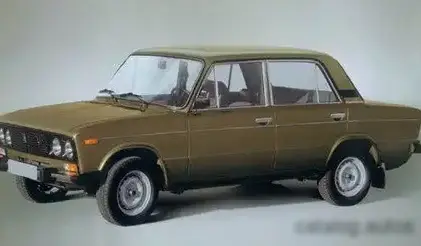
The Lada 21061, powered by a 1.5-liter engine producing 72 horsepower, represents a significant iteration within the classic Lada 2106 series. Produced from 1976 to 1985, this variant was a mainstay of the Soviet automotive landscape and a key export for AvtoVAZ. It offered a balance of affordability, durability, and relative comfort, making it a popular choice for both private owners and state-operated fleets. The 2106, and specifically the 21061, was based heavily on the Fiat 124, a license-built design that formed the foundation of many Eastern European vehicles of the era.
Technical Specifications
| Brand | Lada |
| Model | 2106 |
| Generation | 21061 |
| Type (Engine) | 1.5 (72 Hp) |
| Start of production | 1976 |
| End of production | 1985 |
| Powertrain Architecture | Internal Combustion engine |
| Body type | Sedan |
| Fuel Type | Petrol (Gasoline) |
| Power | 72 Hp @ 5600 rpm |
| Power per litre | 49.6 Hp/l |
| Torque | 104 Nm @ 3400 rpm / 76.71 lb.-ft. @ 3400 rpm |
| Engine layout | Front, Longitudinal |
| Engine displacement | 1452 cm3 / 88.61 cu. in. |
| Number of cylinders | 4 |
| Engine configuration | Inline |
| Cylinder Bore | 76 mm / 2.99 in. |
| Piston Stroke | 80 mm / 3.15 in. |
| Compression ratio | 8.5:1 |
| Number of valves per cylinder | 2 |
| Fuel injection system | Carburettor |
| Engine aspiration | Naturally aspirated engine |
| Valvetrain | OHC |
Powertrain & Engine Architecture
The heart of the Lada 21061 is the 1.5-liter inline-four cylinder engine, designated internally as a variation of the early Lada engine family. This engine, while derived from the Fiat 124’s design, underwent numerous modifications over its production run. The 21061 specifically utilized a single, down-draft carburetor – typically a K-126 or similar – for fuel delivery. This carburetor system, while simple and relatively reliable, was known for its sensitivity to adjustment and its impact on fuel economy and emissions. The engine features an overhead camshaft (OHC) design operating two valves per cylinder. This configuration, common for the time, provided a reasonable balance between performance and manufacturing cost. The engine’s longitudinal front-engine layout, coupled with rear-wheel drive, was a conventional setup for European sedans of the 1970s and 80s. The transmission was a four-speed manual, although a three-speed automatic was offered as a rare option, primarily for export markets. The automatic transmission, while providing convenience, significantly impacted performance and was not widely adopted.
Driving Characteristics
The 21061, with its 72 horsepower and 104 Nm (76.71 lb-ft) of torque, offered modest performance. Acceleration was leisurely, with a 0-60 mph time estimated to be around 16-18 seconds. The four-speed manual transmission allowed drivers to make the most of the available power, but the engine’s narrow powerband required frequent shifting. The automatic transmission, when equipped, further dulled acceleration and resulted in a noticeable loss of responsiveness. Handling was predictable but not particularly engaging. The rear-wheel-drive layout provided a degree of balance, but the car’s relatively soft suspension and limited grip meant it wasn’t designed for spirited driving. The focus was on providing a comfortable and reliable ride on often-poor road surfaces.
Equipment & Trim Levels
The Lada 21061 was generally sparsely equipped, reflecting its intended market as an affordable vehicle. Standard features typically included basic cloth upholstery, a simple dashboard with analog gauges, and manually operated windows and door locks. The 21061 often featured a basic AM radio. Higher trim levels, though uncommon, might include upgraded upholstery, a more comprehensive instrument cluster, and optional features like a heated rear window. The exterior trim was minimal, with chrome bumpers and relatively simple steel wheels being the norm. The 21061 was positioned as a step up from the more basic Lada 2103, offering a slightly more refined interior and a more modern appearance.
Chassis & Braking
The Lada 21061 utilized a body-on-frame construction, a common practice for the time. The suspension consisted of independent front suspension with wishbones and coil springs, and a live rear axle with leaf springs. This setup prioritized durability and simplicity over handling precision. Braking was typically accomplished with drum brakes on all four wheels, although some later models and export versions featured front disc brakes. The braking system was adequate for the car’s performance, but lacked the stopping power and modulation of more modern systems. Steering was a recirculating ball system, providing a relatively heavy but direct feel.
Market Reception & Comparison
The Lada 21061 was widely accepted in its primary markets – the Soviet Union and Eastern Europe – due to its affordability and reliability. It was often compared to other vehicles of similar price and specification, such as the Škoda 105/120 and the Dacia 1300. Critics often noted the Lada’s simple construction, ease of maintenance, and ability to withstand harsh conditions. However, it was also criticized for its outdated design, poor fuel economy (compared to newer models), and lack of refinement. Compared to the more powerful Lada 2106 with larger engines, the 1.5-liter version offered lower running costs but significantly reduced performance. The automatic transmission variant was generally viewed as a compromise, sacrificing performance for convenience.
Legacy
The Lada 21061, and the 2106 series as a whole, holds a significant place in automotive history as a symbol of Soviet-era engineering and mass production. While not known for innovation, the 21061 proved to be a durable and reliable vehicle that served millions of drivers for decades. Today, the 21061 is gaining popularity among classic car enthusiasts, particularly those interested in Eastern European automotive history. Parts availability can be challenging, but the car’s simple construction makes it relatively easy to repair and maintain. The 1.5-liter engine, while not particularly powerful, is known for its robustness and longevity, making it a relatively reliable choice for those seeking a classic and affordable vehicle.
