
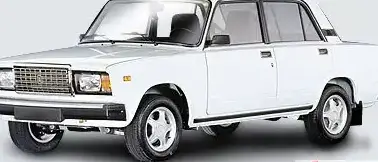
The Lada 21073 1.5i (71 hp) represents a continuation of the classic Lada 2107 series, produced from 2005 to 2012. This variant occupied the entry-level position within the 2107 lineup, offering a more affordable option compared to the later, slightly more powerful 1.6-liter versions. The 2107 itself was a significant model for AvtoVAZ, the Soviet and later Russian automaker, being a modernized version of the Fiat 124, originally licensed in the 1960s. The 21073 designation specifically denotes the updated model with minor cosmetic and mechanical refinements over the earlier 2107 variants. It remained a popular choice in Russia and export markets due to its simplicity, affordability, and relatively easy maintenance.
Technical Specifications
| Brand | Lada |
| Model | 2107 |
| Generation | 21073 |
| Type (Engine) | 1.5i (71 Hp) |
| Start of production | 2005 |
| End of production | 2012 |
| Powertrain Architecture | Internal Combustion engine |
| Body type | Sedan |
| Seats | 5 |
| Doors | 4 |
| Fuel consumption (urban) | 8.9 l/100 km (26.4 US mpg) |
| Fuel Type | Petrol (Gasoline) |
| Maximum speed | 155 km/h (96.31 mph) |
| Weight-to-power ratio | 14.5 kg/Hp |
| Weight-to-torque ratio | 9.9 kg/Nm |
| Power | 71 Hp @ 5600 rpm |
| Power per litre | 49 Hp/l |
| Torque | 104 Nm @ 3400 rpm (76.71 lb.-ft. @ 3400 rpm) |
| Engine layout | Front, Longitudinal |
| Engine displacement | 1450 cm3 (88.48 cu. in.) |
| Number of cylinders | 4 |
| Engine configuration | Inline |
| Cylinder Bore | 76 mm (2.99 in.) |
| Piston Stroke | 80 mm (3.15 in.) |
| Compression ratio | 8.5:1 |
| Number of valves per cylinder | 2 |
| Fuel injection system | Single-point injection |
| Engine aspiration | Naturally aspirated engine |
| Valvetrain | OHC |
| Kerb Weight | 1030 kg (2270.76 lbs.) |
| Max. weight | 1430 kg (3152.61 lbs.) |
| Max load | 400 kg (881.85 lbs.) |
| Trunk (boot) space – maximum | 325 l (11.48 cu. ft.) |
| Fuel tank capacity | 39 l (10.3 US gal) |
| Length | 4128 mm (162.52 in.) |
| Width | 1620 mm (63.78 in.) |
| Height | 1435 mm (56.5 in.) |
| Wheelbase | 2424 mm (95.43 in.) |
| Front track | 1365 mm (53.74 in.) |
| Rear (Back) track | 1321 mm (52.01 in.) |
| Drivetrain Architecture | Rear wheel drive |
| Drive wheel | Rear wheel drive |
| Number of gears and type of gearbox | 5 gears, manual transmission |
| Front suspension | Double wishbone |
| Rear suspension | Coil spring |
| Front brakes | Disc |
| Rear brakes | Drum |
| Steering type | Worm-reduction unit |
| Tires size | 175/70 SR13 |
Powertrain & Engine Architecture
The heart of the Lada 21073 1.5i is the 1.5-liter inline-four cylinder engine, typically identified by engine codes such as 2107. This engine is a descendant of the original Fiat 124 design, though it underwent numerous modifications over its lifespan. The 71 horsepower output is achieved at 5600 rpm, with a torque figure of 104 Nm (76.71 lb.-ft.) delivered at 3400 rpm. The engine utilizes a single-point fuel injection system, a relatively simple setup compared to multi-point injection, contributing to its affordability and ease of maintenance. The overhead camshaft (OHC) valvetrain operates two valves per cylinder. The engine is longitudinally mounted in the front of the vehicle, driving the rear wheels. The five-speed manual transmission is a standard feature, providing a relatively wide range of gear ratios suited for both city driving and highway cruising.
Driving Characteristics
The 21073 1.5i offers a driving experience characterized by its simplicity and predictability. With 71 hp, acceleration is modest, taking approximately 14-15 seconds to reach 60 mph. The five-speed manual transmission helps to keep the engine within its optimal power band, but the lack of modern features like power steering and advanced suspension technology results in a somewhat basic driving feel. Compared to the later 1.6-liter versions, the 1.5i feels noticeably less powerful, particularly when fully loaded or climbing hills. However, the lower power output also contributes to slightly better fuel economy. The rear-wheel-drive configuration provides a traditional driving feel, but it also requires more driver skill in slippery conditions.
Equipment & Trim Levels
The Lada 21073 1.5i was typically offered with a fairly basic level of equipment. Standard features generally included cloth upholstery, a simple dashboard layout with analog gauges, and manual windows and door locks. Air conditioning was often an optional extra, as were features like a radio/cassette player. The interior trim was generally functional rather than luxurious, with a focus on durability. Higher trim levels, though rare on the 1.5i variant, might have included upgraded upholstery, a more comprehensive instrument cluster, and additional comfort features.
Chassis & Braking
The 21073 utilizes a traditional body-on-frame construction, contributing to its robustness but also adding to its weight. The front suspension consists of a double wishbone setup, while the rear suspension employs a coil spring arrangement. Braking is provided by disc brakes on the front wheels and drum brakes on the rear. The steering system is a worm-reduction unit, which provides a direct feel but requires more effort at low speeds. The 175/70 SR13 tires offer adequate grip for normal driving conditions, but they are not particularly sporty.
Market Reception & Comparison
The Lada 21073 1.5i was generally viewed as a practical and affordable transportation option, particularly in markets where budget-friendly cars were in high demand. Critics often praised its simplicity and ease of maintenance, but also noted its lack of refinement and relatively low performance. Compared to the 1.6-liter versions, the 1.5i offered lower running costs but sacrificed some performance. It also provided a more economical entry point into the 2107 range, appealing to buyers who prioritized affordability over power and features. Fuel economy was a strong point, averaging around 8.9 l/100km in urban conditions.
Legacy
The Lada 21073 1.5i, and the 2107 series as a whole, holds a significant place in automotive history, particularly in Eastern Europe and Russia. Its robust construction and simple design made it a reliable workhorse for many years. While not known for its technological innovation, it provided affordable transportation to millions of people. Today, the 2107 is becoming increasingly popular among classic car enthusiasts, who appreciate its retro styling and straightforward mechanics. The 1.5-liter engine, while not particularly powerful, is known for its durability and relatively easy maintenance, making it a viable option for those seeking a classic car project. Parts availability can be a challenge in some regions, but a dedicated community of enthusiasts continues to support the preservation of these vehicles.
