
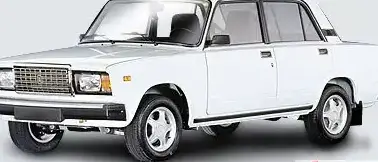
The Lada 21073 1.7i (80 hp) was a popular variant of the Lada 2107, a sedan produced between 1996 and 2003. Positioned as a mainstream offering within the 2107 range, it represented a balance between affordability and reasonable performance for the Eastern European and Russian markets. The 2107 itself was a significant evolution of the original VAZ-2105, inheriting its basic architecture but receiving substantial cosmetic and mechanical updates. It was a mainstay of the Soviet and post-Soviet automotive landscape, known for its ruggedness and simple design. The ‘21073’ designation specifically denotes models equipped with the 1.7-liter engine and, in this case, typically paired with a five-speed manual transmission, though automatic options were available in limited quantities.
Technical Specifications
| Brand | Lada |
| Model | 2107 |
| Generation | 21073 |
| Type (Engine) | 1.7i (80 Hp) |
| Start of production | 1996 |
| End of production | 2003 |
| Powertrain Architecture | Internal Combustion engine |
| Body type | Sedan |
| Seats | 5 |
| Doors | 4 |
| Fuel consumption (urban) | 8.9 l/100 km (26.4 US mpg) |
| Fuel Type | Petrol (Gasoline) |
| Maximum speed | 155 km/h (96.31 mph) |
| Weight-to-power ratio | 12.9 kg/Hp |
| Weight-to-torque ratio | 8 kg/Nm |
| Power | 80 Hp @ 5400 rpm |
| Power per litre | 47.3 Hp/l |
| Torque | 128 Nm @ 3200 rpm (94.41 lb.-ft. @ 3200 rpm) |
| Engine layout | Front, Longitudinal |
| Engine displacement | 1690 cm3 (103.13 cu. in.) |
| Number of cylinders | 4 |
| Engine configuration | Inline |
| Cylinder Bore | 82 mm (3.23 in.) |
| Piston Stroke | 80 mm (3.15 in.) |
| Compression ratio | 9.3:1 |
| Number of valves per cylinder | 2 |
| Fuel injection system | Single-point injection |
| Engine aspiration | Naturally aspirated engine |
| Valvetrain | OHC |
| Kerb Weight | 1030 kg (2270.76 lbs.) |
| Max. weight | 1430 kg (3152.61 lbs.) |
| Max load | 400 kg (881.85 lbs.) |
| Trunk (boot) space – maximum | 325 l (11.48 cu. ft.) |
| Fuel tank capacity | 39 l (10.3 US gal) |
| Length | 4128 mm (162.52 in.) |
| Width | 1620 mm (63.78 in.) |
| Height | 1435 mm (56.5 in.) |
| Wheelbase | 2424 mm (95.43 in.) |
| Front track | 1365 mm (53.74 in.) |
| Rear (Back) track | 1321 mm (52.01 in.) |
| Drivetrain Architecture | Rear wheel drive |
| Drive wheel | Rear wheel drive |
| Number of gears and type of gearbox | 5 gears, manual transmission |
| Front suspension | Double wishbone |
| Rear suspension | Coil spring |
| Front brakes | Disc |
| Rear brakes | Drum |
| Steering type | Worm-reduction unit |
| Tires size | 175/70 SR13 |
Powertrain & Engine Architecture
The heart of the 21073 1.7i was the VAZ-2107 engine, a 1.7-liter inline-four cylinder unit. This engine was a development of earlier VAZ designs, featuring a single overhead camshaft (OHC) and two valves per cylinder. The 80 horsepower output was achieved through a relatively modest compression ratio of 9.3:1 and the use of a single-point fuel injection system. This system, while simpler and less efficient than multi-point injection, was considered a step up from the carburetors used in earlier Lada models. The engine’s longitudinal front-engine, rear-wheel-drive layout was a characteristic of many older European designs and contributed to the car’s handling characteristics. The five-speed manual transmission was the most common pairing, offering a reasonable spread of gears for both city driving and highway cruising. While an automatic transmission was offered, it was less common and often considered less reliable.
Driving Characteristics
The 21073 1.7i offered a driving experience that was best described as utilitarian. With 80 hp, acceleration was not brisk, and overtaking required careful planning. The five-speed manual transmission helped to keep the engine in its optimal power band, but the car felt noticeably slower than versions equipped with the larger 1.6-liter or 1.5-liter engines. The rear-wheel-drive configuration provided a degree of handling balance, but the relatively soft suspension and imprecise steering meant it wasn’t a particularly sporty vehicle. Compared to the more powerful 2107 models, the 1.7i prioritized fuel economy and ease of driving over outright performance. The gear ratios were tuned for everyday usability, with a focus on providing adequate torque at lower speeds.
Equipment & Trim Levels
The 21073 1.7i typically came with a fairly basic level of equipment. Standard features generally included cloth upholstery, a simple dashboard layout with analog gauges, and manual windows and door locks. Optional extras could include a radio, upgraded interior trim, and occasionally, power steering. The trim level was generally considered to be mid-range within the 2107 lineup, offering a step up from the most basic models but lacking the luxury features found in higher-spec versions. The interior was functional and durable, designed to withstand the rigors of daily use.
Chassis & Braking
The Lada 21073 utilized a body-on-frame construction, contributing to its robustness. The front suspension employed a double wishbone design, while the rear suspension featured a coil spring setup. Braking was typically accomplished with disc brakes on the front wheels and drum brakes on the rear. The braking system was adequate for normal driving conditions, but lacked the stopping power of more modern vehicles. The steering system utilized a worm-reduction unit, which provided a relatively heavy and imprecise feel. Stabilizer bars were often omitted on the base models, further contributing to the car’s tendency to body roll in corners.
Market Reception & Comparison
The Lada 21073 1.7i was generally well-received in its target markets, particularly in Russia and other Eastern European countries. It was praised for its affordability, reliability, and ease of maintenance. However, it was also criticized for its outdated design, lack of modern features, and relatively low performance. Compared to other trims in the 2107 lineup, the 1.7i offered a good balance between fuel economy and cost. It was a popular choice for drivers who prioritized practicality over performance. Fuel economy was reasonable for the time, but not exceptional. Reliability was generally good, thanks to the engine’s simple design and robust construction.
Legacy
The Lada 21073 1.7i, and the 2107 model as a whole, holds a significant place in automotive history, particularly in the context of Eastern European motoring. The powertrain, while not technologically advanced, proved to be remarkably durable and relatively easy to repair. Today, the 2107 is a popular choice among classic car enthusiasts and those seeking a simple, affordable, and reliable vehicle. Parts availability remains relatively good, and the car’s simple construction makes it a favorite among DIY mechanics. While not a performance icon, the Lada 21073 1.7i represents a significant chapter in the history of automotive manufacturing and a testament to the enduring appeal of simple, robust engineering.
