
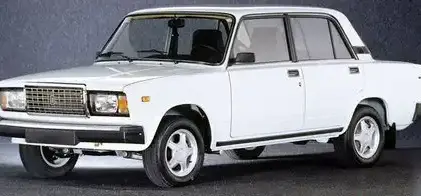
The Lada 21079 1.3R, produced between 1982 and 1995, represents a significant iteration of the Lada 2107, a popular sedan within the Soviet Union and later, Russia and Eastern Europe. This variant, distinguished by its 1.3-liter rotary (Wankel) engine producing 138 horsepower, occupied a unique position in the 2107 lineup, offering a performance-oriented alternative to the more common, lower-powered versions. The 2107 itself was based on the Fiat 124, a design licensed from Italy in the 1960s, and underwent numerous modifications and updates throughout its production run. The 21079, with its unusual rotary engine, was a relatively late addition, aimed at providing a more modern and spirited driving experience.
Technical Specifications
| Brand | Lada |
| Model | 2107 |
| Generation | 21079 |
| Type (Engine) | 1.3R (138 Hp) |
| Start of production | 1982 |
| End of production | 1995 |
| Powertrain Architecture | Internal Combustion engine |
| Body type | Sedan |
| Seats | 5 |
| Doors | 4 |
| Fuel consumption (urban) | 10.1 l/100 km (23.3 US mpg, 28 UK mpg, 9.9 km/l) |
| Fuel consumption (extra urban) | 7.3 l/100 km (32.2 US mpg, 38.7 UK mpg, 13.7 km/l) |
| Fuel consumption (combined) | 8.9 l/100 km (26.4 US mpg, 31.7 UK mpg, 11.2 km/l) |
| Fuel Type | Petrol (Gasoline) |
| Acceleration 0 – 100 km/h | 9 sec |
| Acceleration 0 – 62 mph | 9 sec |
| Acceleration 0 – 60 mph | 8.6 sec |
| Maximum speed | 180 km/h (111.85 mph) |
| Weight-to-power ratio | 7.5 kg/Hp, 132.7 Hp/tonne |
| Weight-to-torque ratio | 5.6 kg/Nm, 178.8 Nm/tonne |
| Power | 138 Hp @ 6000 rpm |
| Power per litre | 105.5 Hp/l |
| Torque | 186 Nm @ 4500 rpm (137.19 lb.-ft. @ 4500 rpm) |
| Engine layout | Front, Longitudinal |
| Engine Model/Code | RPD 413 |
| Engine displacement | 1308 cm3 (79.82 cu. in.) |
| Engine configuration | Rotary (Wankel) |
| Compression ratio | 9.4:1 |
| Fuel injection system | Carburettor |
| Engine aspiration | Naturally aspirated |
| Kerb Weight | 1040 kg (2292.81 lbs.) |
| Max. weight | 1430 kg (3152.61 lbs.) |
| Max load | 390 kg (859.8 lbs.) |
| Trunk (boot) space – minimum | 325 l (11.48 cu. ft.) |
| Trunk (boot) space – maximum | 325 l (11.48 cu. ft.) |
| Fuel tank capacity | 39 l (10.3 US gal, 8.58 UK gal) |
| Length | 4145 mm (163.19 in.) |
| Width | 1620 mm (63.78 in.) |
| Height | 1440 mm (56.69 in.) |
| Wheelbase | 2424 mm (95.43 in.) |
| Front track | 1365 mm (53.74 in.) |
| Rear (Back) track | 1321 mm (52.01 in.) |
| Drivetrain Architecture | The Internal combustion engine (ICE) drives the rear wheels of the vehicle. |
| Drive wheel | Rear wheel drive |
| Number of gears and type of gearbox | 5 gears, manual transmission |
| Front suspension | Independent type McPherson |
| Rear suspension | Coil spring |
| Front brakes | Disc |
| Rear brakes | Drum |
| Steering type | Worm-reduction unit |
| Tires size | 175/70 R13 |
Powertrain & Engine Architecture
The defining feature of the Lada 21079 1.3R is its RPD 413 rotary engine. Unlike the conventional piston engines found in other 2107 models, this engine utilizes a Wankel rotary design. This engine, displacing 1308 cc, produced 138 horsepower at 6000 rpm and 186 Nm (137.19 lb-ft) of torque at 4500 rpm. The engine employed a carburettor fuel injection system, a common feature for the time, but relatively unsophisticated compared to later fuel injection technologies. The rotary engine’s unique design, with its triangular rotor spinning within a housing, offered a high power-to-weight ratio and smooth operation. However, it was also known for its relatively poor fuel economy and higher oil consumption compared to piston engines. The engine was mounted longitudinally in the front of the vehicle, driving the rear wheels through a five-speed manual transmission. This configuration was typical for Lada vehicles of the era.
Driving Characteristics
The 1.3R offered a noticeably different driving experience compared to other 2107 variants. The rotary engine’s power delivery was smooth and linear, providing brisk acceleration. The 0-60 mph time of approximately 8.6 seconds was significantly quicker than the standard 2107 models. The five-speed manual transmission allowed drivers to keep the engine in its optimal power band. However, the rear-wheel-drive layout and relatively simple suspension meant that handling was not as precise as more modern vehicles. The car was prone to oversteer, especially on slippery surfaces. The engine’s characteristic whine was also a distinctive auditory feature.
Equipment & Trim Levels
The 21079 1.3R was generally equipped with a higher level of standard features than the base 2107 models. This included upgraded interior upholstery, often featuring cloth or vinyl seats with a more refined pattern. The dashboard typically featured a more comprehensive instrument cluster, including a tachometer. Optional extras included a radio, upgraded sound system, and occasionally, power windows. However, the overall level of equipment remained relatively basic compared to Western European or Japanese cars of the same period.
Chassis & Braking
The chassis of the 21079 1.3R was largely similar to other 2107 models. It featured an independent McPherson strut suspension at the front and a coil spring suspension at the rear. The front brakes were disc brakes, providing adequate stopping power, while the rear brakes were drum brakes. The steering system utilized a worm-reduction unit, which provided a relatively heavy but direct steering feel. The tires were typically 175/70 R13, offering a reasonable balance of grip and ride comfort.
Market Reception & Comparison
The Lada 21079 1.3R was generally well-received by enthusiasts who appreciated its unique engine and improved performance. However, its higher price compared to other 2107 models limited its appeal to a niche market. Critics noted the rotary engine’s fuel economy and oil consumption as drawbacks. Compared to the standard 2107, the 1.3R offered a significant performance boost, but at the cost of increased complexity and potential maintenance issues. The 1.3R was also positioned above the more economical 1.5 and 1.6-liter versions in the lineup, appealing to drivers seeking a more engaging driving experience.
Legacy
The Lada 21079 1.3R remains a relatively rare and sought-after model among Lada enthusiasts. The rotary engine, while requiring specialized knowledge for maintenance, is appreciated for its unique characteristics. The long-term reliability of the RPD 413 engine can be variable, depending on maintenance and driving habits. Parts availability can be challenging, as many components are specific to this model. Today, the 21079 1.3R is considered a classic car, representing a unique chapter in Lada’s history and a testament to the Soviet Union’s experimentation with alternative engine technologies.
