
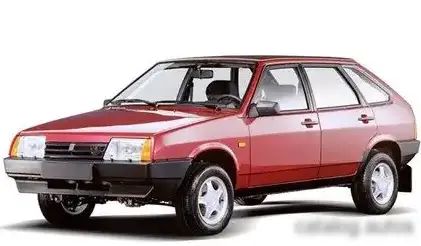
The Lada 21093 1.5, producing 72 horsepower, represents a significant iteration within the second generation of the Lada 2109 series. Produced from 1988 to 2005, this variant was a mainstay of the Soviet and later Russian automotive market, offering affordable transportation to a broad demographic. The 21093 specifically denotes a facelifted version of the original 2109, featuring updated interior and exterior trim. It was built upon the aging, but robust, front-wheel-drive platform initially derived from the Fiat 124, and played a crucial role in keeping personal transportation accessible during a period of significant economic and political change.
Technical Specifications
| Brand | Lada |
| Model | 2109 |
| Generation | 21093 |
| Type (Engine) | 1.5 (72 Hp) |
| Start of production | 1988 year |
| End of production | 2005 year |
| Powertrain Architecture | Internal Combustion engine |
| Body type | Hatchback |
| Seats | 5 |
| Doors | 5 |
| Fuel consumption (urban) | 8 l/100 km (29.4 US mpg, 35.3 UK mpg, 12.5 km/l) |
| Fuel consumption (extra urban) | 5.5 l/100 km (42.8 US mpg, 51.4 UK mpg, 18.2 km/l) |
| Fuel consumption (combined) | 7.7 l/100 km (30.5 US mpg, 36.7 UK mpg, 13 km/l) |
| Fuel Type | Petrol (Gasoline) |
| Acceleration 0 – 100 km/h | 14 sec |
| Acceleration 0 – 62 mph | 14 sec |
| Acceleration 0 – 60 mph | 13.3 sec |
| Maximum speed | 156 km/h (96.93 mph) |
| Weight-to-power ratio | 13.1 kg/Hp, 76.2 Hp/tonne |
| Power | 72 Hp @ 5600 rpm |
| Power per litre | 48 Hp/l |
| Engine layout | Front, Transverse |
| Engine displacement | 1500 cm3 (91.54 cu. in.) |
| Number of cylinders | 4 |
| Engine configuration | Inline |
| Cylinder Bore | 82 mm (3.23 in.) |
| Piston Stroke | 71 mm (2.8 in.) |
| Compression ratio | 9.9:1 |
| Number of valves per cylinder | 2 |
| Fuel injection system | Carburettor |
| Engine aspiration | Naturally aspirated engine |
| Valvetrain | OHC |
| Kerb Weight | 945 kg (2083.37 lbs.) |
| Max. weight | 1370 kg (3020.33 lbs.) |
| Max load | 425 kg (936.96 lbs.) |
| Trunk (boot) space – minimum | 270 l (9.53 cu. ft.) |
| Trunk (boot) space – maximum | 1000 l (35.31 cu. ft.) |
| Fuel tank capacity | 43 l (11.36 US gal, 9.46 UK gal) |
| Length | 4006 mm (157.72 in.) |
| Width | 1650 mm (64.96 in.) |
| Height | 1402 mm (55.2 in.) |
| Wheelbase | 2460 mm (96.85 in.) |
| Front track | 1400 mm (55.12 in.) |
| Rear (Back) track | 1370 mm (53.94 in.) |
| Drivetrain Architecture | The Internal combustion engine (ICE) drives the front wheels of the vehicle. |
| Drive wheel | Front wheel drive |
| Number of gears and type of gearbox | 5 gears, manual transmission |
| Front suspension | Spring Strut |
| Rear suspension | Coil spring |
| Front brakes | Disc |
| Rear brakes | Drum |
| Steering type | Steering rack and pinion |
| Tires size | 165/70 R13 |
Powertrain & Engine Architecture
The heart of the 21093 1.5 was the 1.5-liter inline-four cylinder engine, typically designated with engine codes like 2109. This engine, while simple in design, was known for its durability and relative ease of maintenance. It featured a single overhead camshaft (OHC) operating two valves per cylinder. Crucially, this variant utilized a carburetor for fuel delivery, a technology increasingly outdated in the West by the late 1980s and 1990s, but still common in Soviet and Eastern European production. The carburetor, while less efficient than fuel injection, was easier to repair and maintain with limited resources. The engine produced 72 horsepower at 5600 rpm and 88 lb-ft of torque. The 21093 was exclusively offered with a five-speed manual transmission, designed to maximize the limited power output and provide reasonable fuel economy.
Driving Characteristics
The driving experience of the 21093 1.5 was characterized by its utilitarian nature. Acceleration was modest, taking approximately 14 seconds to reach 60 mph. The carburetor contributed to a somewhat sluggish throttle response, and the engine lacked the refinement of more modern powertrains. However, the five-speed manual transmission allowed drivers to keep the engine in its optimal power band. The suspension, while basic, provided a reasonably comfortable ride on typical road surfaces. Compared to later, fuel-injected versions of the 2109, or the more powerful 1.6-liter variants, the 1.5-liter engine felt underpowered, particularly when fully loaded or tackling inclines. The gear ratios were tuned for economy rather than performance, making it a better suited for city driving than highway cruising.
Equipment & Trim Levels
The 21093 1.5 was generally offered in a fairly basic trim level, reflecting its position as an entry-level model. Standard features typically included cloth upholstery, a simple dashboard layout with analog gauges, and manual windows and door locks. Optional extras, depending on the market and year of production, could include a radio, upgraded seat fabric, and occasionally, power steering. The interior was functional but lacked the aesthetic appeal of Western European or Japanese competitors. The focus was on providing a durable and practical interior that could withstand the rigors of daily use.
Chassis & Braking
The 21093 utilized a relatively simple chassis design. The front suspension consisted of MacPherson strut springs, while the rear suspension employed a coil spring setup. Braking was accomplished via disc brakes on the front wheels and drum brakes on the rear. The braking system was adequate for the vehicle’s weight and performance, but lacked the stopping power and modulation of more advanced systems. Steering was via a rack and pinion system, providing reasonable steering feel. The car’s curb weight of around 2083 lbs contributed to its relatively nimble handling, despite its modest power output.
Market Reception & Comparison
The Lada 21093 1.5 was primarily targeted at budget-conscious buyers in the Soviet Union and Eastern Europe. It was praised for its affordability, durability, and ease of maintenance. However, it was often criticized for its outdated technology, basic interior, and relatively poor fuel economy compared to more modern alternatives. Compared to the slightly more expensive 1.6-liter versions of the 2109, the 1.5-liter model offered a more economical option, albeit with reduced performance. It was a direct competitor to other locally produced vehicles in the region, and often outperformed them in terms of reliability and parts availability.
Legacy
The Lada 21093 1.5, and the 2109 series as a whole, holds a significant place in automotive history as a symbol of Soviet and post-Soviet transportation. While not known for its performance or refinement, it was a reliable and affordable vehicle that provided mobility to millions. Today, the 21093 is gaining a following among classic car enthusiasts, particularly those interested in Eastern European automotive history. The simple engine and mechanical design make it relatively easy to maintain and repair, and parts are still reasonably available. However, due to its age and the inherent limitations of its design, finding well-maintained examples is becoming increasingly challenging. The 1.5-liter engine, while not particularly powerful, is considered relatively robust and can provide years of reliable service with proper maintenance.
