
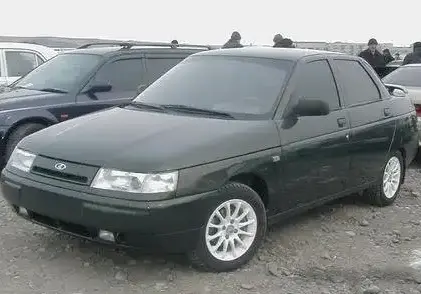
The Lada 2110 1.5, producing 73 horsepower, was a mainstay of the Lada lineup from 1996 to 2003. Representing a significant step forward from the earlier 2105 and 2107 models, the 2110 was intended to modernize Lada’s offerings and appeal to a broader market. This particular 1.5-liter variant served as the entry point into the 2110 range, offering basic transportation at an affordable price. It was positioned below the more powerful 1.6-liter and later 1.8-liter versions, and significantly different from the diesel options available in some markets. The 2110 was built upon the aging but robust 2110 platform, a derivative of the original VAZ-2101 design, but with substantial updates to the body, interior, and suspension.
Technical Specifications
| Brand | Lada |
| Model | 2110 |
| Generation | 2110 |
| Type (Engine) | 1.5 (73 Hp) |
| Start of production | 1996 |
| End of production | 2003 |
| Powertrain Architecture | Internal Combustion engine |
| Body type | Sedan |
| Seats | 5 |
| Doors | 4 |
| Fuel consumption (urban) | 8.8 l/100 km (26.7 US mpg) |
| Fuel Type | Petrol (Gasoline) |
| Acceleration 0 – 100 km/h | 14 sec |
| Acceleration 0 – 62 mph | 14 sec |
| Acceleration 0 – 60 mph | 13.3 sec |
| Maximum speed | 165 km/h (102.53 mph) |
| Weight-to-power ratio | 13.8 kg/Hp |
| Weight-to-torque ratio | 9.3 kg/Nm |
| Power | 73 Hp @ 5600 rpm |
| Power per litre | 48.7 Hp/l |
| Torque | 109 Nm @ 3000 rpm (80.39 lb.-ft. @ 3000 rpm) |
| Engine layout | Front, Transverse |
| Engine displacement | 1500 cm3 (91.54 cu. in.) |
| Number of cylinders | 4 |
| Engine configuration | Inline |
| Cylinder Bore | 82 mm (3.23 in.) |
| Piston Stroke | 71 mm (2.8 in.) |
| Compression ratio | 9.9:1 |
| Number of valves per cylinder | 2 |
| Fuel injection system | Carburettor |
| Engine aspiration | Naturally aspirated engine |
| Valvetrain | OHC |
| Kerb Weight | 1010 kg (2226.67 lbs.) |
| Max. weight | 1485 kg (3273.86 lbs.) |
| Max load | 475 kg (1047.2 lbs.) |
| Trunk (boot) space – maximum | 450 l (15.89 cu. ft.) |
| Fuel tank capacity | 43 l (11.36 US gal) |
| Length | 4277 mm (168.39 in.) |
| Width | 1676 mm (65.98 in.) |
| Height | 1430 mm (56.3 in.) |
| Wheelbase | 2492 mm (98.11 in.) |
| Front track | 1400 mm (55.12 in.) |
| Rear (Back) track | 1370 mm (53.94 in.) |
| Drivetrain Architecture | Front wheel drive |
| Number of gears and type of gearbox | 5 gears, manual transmission |
| Front suspension | Spring Strut |
| Rear suspension | Coil spring |
| Front brakes | Disc |
| Rear brakes | Drum |
| Assisting systems | ABS (Anti-lock braking system) |
| Steering type | Steering rack and pinion |
| Tires size | 175/70 SR13 |
| Wheel rims size | 5J x 13 |
Powertrain & Engine Architecture
The heart of the Lada 2110 1.5 was the 1.5-liter inline-four cylinder engine, typically identified by engine codes such as 2110.1000000. This engine was a relatively simple design, utilizing a single overhead camshaft (OHC) and two valves per cylinder. Crucially, this version relied on a carburetor for fuel delivery, a technology increasingly outdated in the West by the late 1990s, but still common in the Russian market due to its simplicity and tolerance for lower-quality fuel. The carburetor system contributed to the engine’s lower power output compared to the fuel-injected versions. The engine produced 73 horsepower at 5600 rpm and 109 Nm (80.39 lb-ft) of torque at 3000 rpm. The engine was transversely mounted, driving the front wheels through a standard five-speed manual transmission. An automatic transmission was not offered with this engine.
Driving Characteristics
The 2110 1.5 offered modest performance. Acceleration from 0 to 100 km/h (0-62 mph) took around 14 seconds, and top speed was limited to approximately 165 km/h (102.53 mph). The carburetor-fed engine felt sluggish at lower speeds, requiring frequent downshifts to maintain momentum. Compared to the 1.6-liter and 1.8-liter variants, the 1.5-liter engine lacked the responsiveness and overall power needed for confident highway cruising or overtaking. The five-speed manual transmission was not particularly refined, with a somewhat notchy shift feel. However, the relatively light weight of the vehicle (around 1010 kg or 2226.67 lbs) helped to mitigate the engine’s shortcomings to some extent.
Equipment & Trim Levels
The 1.5-liter 2110 typically represented the base trim level. Standard equipment was fairly basic, including cloth upholstery, a simple dashboard layout, and manual windows and door locks. Power steering was often an optional extra, as was a basic audio system. Air conditioning was rarely fitted to this base model. Interior plastics were durable but utilitarian, reflecting the car’s focus on affordability. The exterior featured steel wheels with hubcaps, and minimal chrome trim. Optional extras included upgraded upholstery, a more comprehensive instrument cluster, and improved sound insulation.
Chassis & Braking
The 2110 utilized a relatively simple chassis design. Front suspension consisted of MacPherson strut springs, while the rear employed a coil spring setup. The front brakes were disc brakes, providing adequate stopping power, while the rear brakes were drums, which were less effective. An Anti-lock Braking System (ABS) was available as an option, improving braking performance and safety. The steering was a rack and pinion system, offering reasonable precision, although it lacked the feel of more modern systems. Tire size was typically 175/70 SR13.
Market Reception & Comparison
The Lada 2110 1.5 was primarily aimed at budget-conscious buyers in Russia and other Eastern European markets. Critics generally acknowledged its affordability and practicality, but also pointed to its outdated technology and lack of refinement. Compared to the 1.6-liter and 1.8-liter versions, the 1.5-liter model offered significantly less performance, but also achieved slightly better fuel economy (around 8.8 l/100 km urban). The 1.5-liter engine was considered more reliable than the later fuel-injected versions, due to its simpler design, but it also required more frequent maintenance and was less environmentally friendly.
Legacy
The Lada 2110 1.5 remains a common sight on the roads of Russia and surrounding countries. Its simple engine and robust construction have contributed to its longevity. While not known for its performance or luxury, the 2110 1.5 provided reliable and affordable transportation for a generation of drivers. In the used car market, these models are typically very inexpensive, making them attractive to those seeking a basic, no-frills vehicle. However, potential buyers should be aware of the car’s age and the potential for maintenance issues associated with its outdated technology. The 1.5-liter engine, while simple, requires regular servicing to maintain its reliability, and parts availability can be a concern in some regions.
