
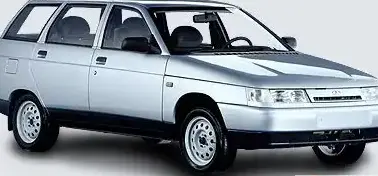
The Lada 21113 1.5i, produced between 1997 and 2004, represents a significant iteration of the Lada 2111 series, a station wagon (estate) body style based on the aging but robust 2110 platform. This variant, equipped with a 1.5-liter inline-four engine producing 94 horsepower, served as a mainstay in the Lada lineup, offering a balance of affordability, practicality, and reasonable fuel economy for the Russian and Eastern European markets. It occupied a middle ground within the 2111 range, positioned below the more powerful 1.6-liter versions and above the base 1.5-liter models with lower output.
Technical Specifications
| Brand | Lada |
| Model | 2111 |
| Generation | 21113 |
| Type (Engine) | 1.5 i (94 Hp) |
| Start of production | 1997 |
| End of production | 2004 |
| Powertrain Architecture | Internal Combustion engine |
| Body type | Station wagon (estate) |
| Fuel Type | Petrol (Gasoline) |
| Power | 94 Hp @ 5600 rpm |
| Power per litre | 62.7 Hp/l |
| Torque | 128 Nm @ 3600 rpm |
| Torque (lb.-ft.) | 94.41 lb.-ft. @ 3600 rpm |
| Engine layout | Front, Transverse |
| Engine displacement | 1500 cm3 |
| Engine displacement (cu. in.) | 91.54 cu. in. |
| Number of cylinders | 4 |
| Engine configuration | Inline |
| Cylinder Bore | 82 mm |
| Cylinder Bore (in.) | 3.23 in. |
| Piston Stroke | 71 mm |
| Piston Stroke (in.) | 2.8 in. |
| Compression ratio | 9.5:1 |
| Number of valves per cylinder | 4 |
| Fuel injection system | Multi-port manifold injection |
| Engine aspiration | Naturally aspirated engine |
| Valvetrain | DOHC |
Powertrain & Engine Architecture
The heart of the 21113 is the Lada 111.12 engine, a 1.5-liter inline-four cylinder powerplant. This engine, while a development of earlier Lada designs, incorporated multi-point fuel injection, a significant upgrade from the carburetor systems found in older models. The engine utilizes a double overhead camshaft (DOHC) valvetrain, operating four valves per cylinder, contributing to improved breathing and power output compared to older single overhead cam designs. The 1.5-liter engine produced 94 horsepower at 5600 rpm and 128 Nm (94.41 lb.-ft.) of torque at 3600 rpm. The engine’s design prioritized durability and ease of maintenance over outright performance. The 21113 typically came equipped with a five-speed manual transmission, but a four-speed automatic transmission was also offered, albeit less commonly. The automatic transmission was sourced from external suppliers and was known for its relatively simple design and robustness, though it did impact fuel economy and acceleration.
Driving Characteristics
The 21113 1.5i offered modest performance. Acceleration was adequate for everyday driving, but not particularly brisk. The 0-60 mph time was estimated to be around 13-15 seconds. The automatic transmission, while providing convenience, further reduced acceleration and responsiveness. Gear ratios were geared towards fuel efficiency rather than performance. The car felt most comfortable cruising at highway speeds, where the engine operated within its optimal range. The suspension, while basic, provided a reasonably comfortable ride, absorbing bumps and imperfections in the road. Handling was predictable but not particularly sporty, reflecting the car’s focus on practicality and affordability. Compared to the 1.6-liter versions, the 1.5i felt noticeably slower, especially when fully loaded or climbing hills. The manual transmission variants offered a more engaging driving experience and slightly better fuel economy.
Equipment & Trim Levels
The Lada 21113 1.5i was typically equipped with basic but functional features. Standard equipment included cloth upholstery, a simple dashboard layout with analog gauges, and manual windows and door locks. Power steering was often an optional extra. Air conditioning was also available as an option, but was not standard. Interior trim levels varied, with some models offering upgraded seat fabrics and minor cosmetic enhancements. The 21113 generally represented a mid-range trim level within the 2111 series, offering a step up in features compared to the base models but lacking the more luxurious appointments of the higher-end trims.
Chassis & Braking
The Lada 21113 utilized a relatively simple chassis design, based on the 2110 platform. The front suspension consisted of MacPherson struts, while the rear suspension employed a twist-beam axle. Braking was typically accomplished with disc brakes on the front wheels and drum brakes on the rear wheels. The braking system was adequate for normal driving conditions, but lacked the stopping power of more modern vehicles. Stabilizer bars were fitted to both the front and rear axles to reduce body roll during cornering. The car’s relatively light weight helped to compensate for the limitations of the braking system.
Market Reception & Comparison
The Lada 21113 1.5i was well-received in its target markets, particularly in Russia and other Eastern European countries. It offered a practical and affordable solution for families and individuals needing a spacious and reliable vehicle. Critics generally praised the car’s durability and ease of maintenance, but noted its lack of refinement and relatively low performance. Compared to other vehicles in its class, such as the Dacia Logan or older models from Western European manufacturers, the 21113 offered a competitive price point but lagged behind in terms of features and overall quality. The 1.6-liter versions of the 2111 offered significantly better performance, but at a higher price. Fuel economy for the 1.5i was reasonable, averaging around 30-35 mpg in mixed driving conditions.
Legacy
The Lada 21113 1.5i, and the 2111 series as a whole, represents a transitional period for the Russian automotive industry. While based on an aging platform, it incorporated important upgrades such as fuel injection and offered a level of practicality and affordability that appealed to a wide range of buyers. The 1.5-liter engine, while not particularly powerful, proved to be remarkably durable and reliable. Today, the 21113 is a relatively common sight on the used car market in Eastern Europe, often prized for its simplicity and low running costs. Parts availability remains good, and the car’s robust construction ensures that many examples are still on the road. However, its age and lack of modern safety features mean that it is increasingly being replaced by newer vehicles.
