
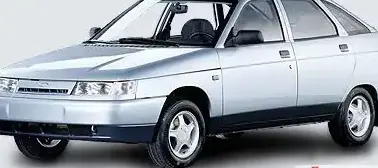
The Lada 2112 1.5i, producing 92 horsepower, was a mainstay of the Lada lineup from 2000 to 2004. Positioned as an entry-level to mid-range offering within the 2112 series, it represented a significant step forward for AvtoVAZ, the Russian manufacturer, moving away from the more dated designs of previous Lada models. The 2112 was based on the 2110 platform, itself a derivative of the original 2100 series, but featured a more modern exterior and interior. This particular 1.5-liter variant aimed to provide affordable transportation with reasonable fuel economy, appealing to a broad segment of the Russian and Eastern European markets.
Technical Specifications
| Brand | Lada |
| Model | 2112 |
| Generation | 2112 |
| Type (Engine) | 1.5 i (92 Hp) |
| Start of production | 2000 year |
| End of production | 2004 year |
| Powertrain Architecture | Internal Combustion engine |
| Body type | Hatchback |
| Seats | 5 |
| Doors | 5 |
| Fuel consumption (urban) | 9.8 l/100 km (24 US mpg, 28.8 UK mpg, 10.2 km/l) |
| Fuel consumption (extra urban) | 6.1 l/100 km (38.6 US mpg, 46.3 UK mpg, 16.4 km/l) |
| Fuel consumption (combined) | 7.4 l/100 km (31.8 US mpg, 38.2 UK mpg, 13.5 km/l) |
| Fuel Type | Petrol (Gasoline) |
| Acceleration 0 – 100 km/h | 12.5 sec |
| Acceleration 0 – 62 mph | 12.5 sec |
| Acceleration 0 – 60 mph | 11.9 sec |
| Maximum speed | 185 km/h (114.95 mph) |
| Weight-to-power ratio | 11.3 kg/Hp, 88.5 Hp/tonne |
| Weight-to-torque ratio | 8.1 kg/Nm, 123.1 Nm/tonne |
| Power | 92 Hp @ 5600 rpm |
| Power per litre | 61.3 Hp/l |
| Torque | 128 Nm @ 3700 rpm (94.41 lb.-ft. @ 3700 rpm) |
| Engine layout | Front, Transverse |
| Engine displacement | 1500 cm3 (91.54 cu. in.) |
| Number of cylinders | 4 |
| Engine configuration | Inline |
| Cylinder Bore | 82 mm (3.23 in.) |
| Piston Stroke | 71 mm (2.8 in.) |
| Compression ratio | 10.5:1 |
| Number of valves per cylinder | 4 |
| Fuel injection system | Multi-port manifold injection |
| Engine aspiration | Naturally aspirated engine |
| Valvetrain | DOHC |
| Kerb Weight | 1040 kg (2292.81 lbs.) |
| Max. weight | 1515 kg (3340 lbs.) |
| Max load | 475 kg (1047.2 lbs.) |
| Trunk (boot) space – maximum | 400 l (14.13 cu. ft.) |
| Fuel tank capacity | 43 l (11.36 US gal | 9.46 UK gal) |
| Length | 4170 mm (164.17 in.) |
| Width | 1680 mm (66.14 in.) |
| Height | 1435 mm (56.5 in.) |
| Wheelbase | 2492 mm (98.11 in.) |
| Front track | 1400 mm (55.12 in.) |
| Rear (Back) track | 1370 mm (53.94 in.) |
| Drivetrain Architecture | The Internal combustion engine (ICE) drives the front wheels of the vehicle. |
| Drive wheel | Front wheel drive |
| Number of gears and type of gearbox | 5 gears, manual transmission |
| Front suspension | Spring Strut |
| Rear suspension | Coil spring |
| Front brakes | Ventilated discs |
| Rear brakes | Drum |
| Steering type | Steering rack and pinion |
| Tires size | 175/65 R14 |
Powertrain & Engine Architecture
The heart of the Lada 2112 1.5i was the 2112.16 engine, a 1.5-liter inline-four cylinder unit. This engine utilized a multi-port fuel injection system, a significant upgrade from the carburetors found in earlier Lada models. The engine featured a double overhead camshaft (DOHC) valvetrain, operating four valves per cylinder, contributing to improved breathing and power output. The engine code is often referenced as a variation of the 2112 series, with specific sub-codes denoting minor variations. While not a particularly sophisticated design by modern standards, it was relatively robust and simple to maintain. The five-speed manual transmission was the standard offering, providing a fairly conventional driving experience. The transmission was chosen for its durability and cost-effectiveness, aligning with the overall budget-conscious nature of the vehicle.
Driving Characteristics
The 92 horsepower and 128 Nm (94.41 lb-ft) of torque delivered by the 1.5-liter engine resulted in modest performance. Acceleration from 0 to 100 km/h (0-62 mph) took around 12.5 seconds, and top speed was limited to 185 km/h (114.95 mph). Compared to higher-spec 2112 models equipped with the 1.6-liter or 1.8-liter engines, the 1.5i felt noticeably slower, particularly when fully loaded or tackling inclines. The five-speed manual transmission was geared to prioritize fuel economy over outright acceleration. Gear ratios were relatively long, requiring frequent downshifts when overtaking or climbing hills. However, the engine proved to be reasonably flexible, offering acceptable drivability in everyday traffic conditions. The 1.5i was generally considered more suitable for urban driving and shorter journeys than for long-distance highway travel.
Equipment & Trim Levels
The Lada 2112 1.5i typically came with a basic level of equipment. Standard features generally included power steering, central locking, and a basic audio system. Interior upholstery was typically cloth, with a relatively simple dashboard layout. Optional extras, such as electric windows, air conditioning, and upgraded audio systems, were available, but often added significantly to the vehicle’s price. The trim level was often differentiated by minor cosmetic details, such as wheel covers and interior trim materials. The focus was on providing a functional and affordable vehicle, rather than luxury or advanced features.
Chassis & Braking
The Lada 2112 utilized a relatively conventional chassis design. Front suspension consisted of MacPherson struts, while the rear employed a coil spring setup. The front brakes were ventilated discs, providing adequate stopping power for the vehicle’s weight and performance. However, the rear brakes were drums, which were less effective than disc brakes and could be prone to fading under heavy use. The steering was a rack and pinion system, offering reasonable precision and feedback. Stabilizer bars were fitted to both the front and rear axles to reduce body roll during cornering. The suspension was tuned for comfort rather than sporty handling, providing a relatively soft ride quality.
Market Reception & Comparison
The Lada 2112 1.5i was generally well-received in its target markets, particularly in Russia and Eastern Europe, where affordability was a key consideration. Critics acknowledged the vehicle’s improved design and features compared to earlier Lada models, but also noted its modest performance and basic interior. Compared to the higher-spec 2112 variants, the 1.5i offered a more economical option, but at the expense of performance and refinement. Fuel economy was a strong point, with combined fuel consumption figures around 7.4 l/100 km (31.8 US mpg). Reliability was generally good, although the vehicle’s build quality was not on par with Western European or Japanese competitors.
Legacy
The Lada 2112 1.5i remains a common sight on the roads of Russia and other former Soviet republics. The engine, while not particularly powerful, proved to be durable and relatively easy to repair, contributing to the vehicle’s longevity. In the used car market, the 1.5i variant is often the most affordable option, making it a popular choice for budget-conscious buyers. Parts availability is generally good, and the vehicle’s simple design makes it relatively easy for amateur mechanics to maintain. While it may not offer the performance or refinement of more modern vehicles, the Lada 2112 1.5i represents a significant step forward in Lada’s history and remains a practical and affordable form of transportation.
