
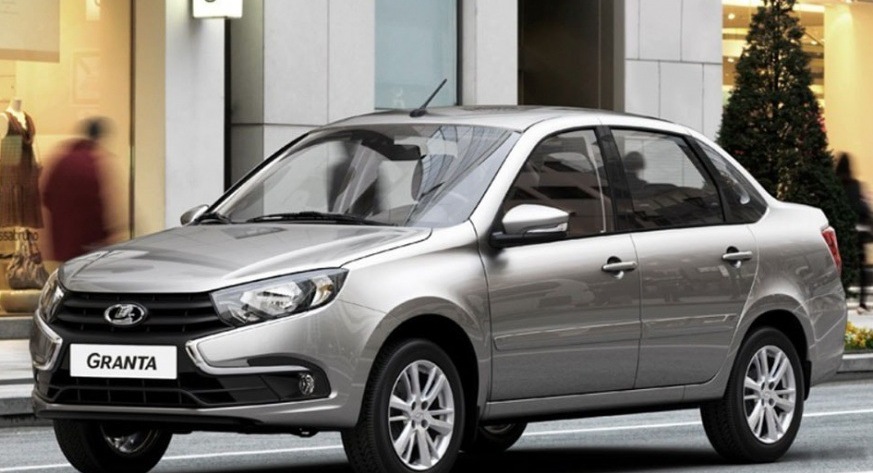
The Lada Granta I (facelift 2018) Sedan 1.6 16V (98 hp) Automatic represents a significant iteration of Lada’s most popular model, positioned as an affordable and practical sedan for the Russian domestic market and export to select countries. Introduced in 2018, this facelift brought updated styling and minor mechanical refinements to the Granta, which itself was based on the aging but robust 2190 platform – a derivative of the original 2105. The 1.6L 16V Automatic variant occupied the mid-range of the Granta lineup, offering a balance between cost and convenience, appealing to buyers seeking an easy-to-drive, economical vehicle. Production continued until the introduction of the Granta FL in 2022.
Technical Specifications
| Brand | Lada |
| Model | Granta |
| Generation | Granta I (facelift 2018) Sedan |
| Type (Engine) | 1.6 16V (98 Hp) Automatic |
| Start of production | 2018 |
| Powertrain Architecture | Internal Combustion engine |
| Body type | Sedan |
| Seats | 5 |
| Doors | 4 |
| Fuel consumption (urban) | 9.9 l/100 km (23.8 US mpg, 28.5 UK mpg, 10.1 km/l) |
| Fuel consumption (extra urban) | 6.1 l/100 km (38.6 US mpg, 46.3 UK mpg, 16.4 km/l) |
| Fuel consumption (combined) | 7.2 l/100 km (32.7 US mpg, 39.2 UK mpg, 13.9 km/l) |
| Fuel Type | Petrol (Gasoline) |
| Acceleration 0 – 100 km/h | 13.1 sec |
| Acceleration 0 – 62 mph | 13.1 sec |
| Acceleration 0 – 60 mph | 12.4 sec |
| Maximum speed | 176 km/h (109.36 mph) |
| Weight-to-power ratio | 11 kg/Hp, 91.2 Hp/tonne |
| Weight-to-torque ratio | 7.4 kg/Nm, 134.9 Nm/tonne |
| Power | 98 Hp @ 5600 rpm |
| Power per litre | 61.4 Hp/l |
| Torque | 145 Nm @ 4000 rpm (106.95 lb.-ft. @ 4000 rpm) |
| Engine layout | Front, Transverse |
| Engine Model/Code | 21126 |
| Engine displacement | 1596 cm3 (97.39 cu. in.) |
| Number of cylinders | 4 |
| Engine configuration | Inline |
| Cylinder Bore | 82 mm (3.23 in.) |
| Piston Stroke | 75.6 mm (2.98 in.) |
| Compression ratio | 11:1 |
| Number of valves per cylinder | 4 |
| Fuel injection system | Multi-port manifold injection |
| Engine aspiration | Naturally aspirated engine |
| Engine oil capacity | 4.4 l (4.65 US qt | 3.87 UK qt) |
| Coolant capacity | 6.5 l (6.87 US qt | 5.72 UK qt) |
| Kerb Weight | 1075-1160 kg (2369.97 – 2557.36 lbs.) |
| Max. weight | 1560 kg (3439.21 lbs.) |
| Max load | 400-485 kg (881.85 – 1069.24 lbs.) |
| Trunk (boot) space | 520 l (18.36 cu. ft.) |
| Fuel tank capacity | 50 l (13.21 US gal | 11 UK gal) |
| Length | 4268 mm (168.03 in.) |
| Width | 1700 mm (66.93 in.) |
| Height | 1500 mm (59.06 in.) |
| Wheelbase | 2476 mm (97.48 in.) |
| Front track | 1430 mm (56.3 in.) |
| Rear track | 1414 mm (55.67 in.) |
| Front overhang | 806 mm (31.73 in.) |
| Rear overhang | 986 mm (38.82 in.) |
| Ride height (ground clearance) | 145 mm (5.71 in.) |
| Drivetrain Architecture | Front wheel drive |
| Number of gears | 4 |
| Gearbox type | Automatic transmission |
| Front suspension | Independent, McPherson with coil spring and anti-roll bar |
| Rear suspension | Semi-independent, coil spring |
| Front brakes | Ventilated discs |
| Rear brakes | Drum |
| Steering type | Steering rack and pinion |
| Tires size | 175/65 R14 82 H; 185/60 R14 82 H; 185/55 R15 82 H |
| Wheel rims size | 14; 15 |
INTRODUCTION
The Lada Granta I (facelift 2018) Sedan 1.6 16V Automatic is a four-door sedan that served as a core model in Lada’s lineup. The Granta was designed to replace the aging Lada 2105 and 2107 models, offering a more modern, albeit still basic, vehicle at an extremely competitive price point. The 2018 facelift brought cosmetic updates to the front and rear fascias, as well as interior improvements. The 1.6-liter engine paired with a four-speed automatic transmission was a popular choice for buyers prioritizing ease of use over outright performance. This variant aimed to provide a comfortable and affordable transportation solution for families and individuals in Russia and other markets where Lada vehicles were sold.
Powertrain & Engine Architecture
The Granta 1.6 16V Automatic is powered by the Lada 21126 engine, a 1.6-liter inline-four cylinder gasoline engine. This engine features a multi-point fuel injection system and a 11:1 compression ratio. The 16-valve cylinder head contributes to improved breathing and power delivery compared to earlier Lada engines. The engine produces 98 horsepower at 5600 rpm and 145 Nm (106.95 lb-ft) of torque at 4000 rpm. The engine is transversely mounted in the front of the vehicle. The automatic transmission is a conventional four-speed unit, known for its simplicity and reliability, but not for its efficiency or responsiveness. This transmission was sourced from Japan and adapted for use in the Granta. It’s a hydraulic control unit, lacking the sophistication of modern electronically controlled automatics.
Driving Characteristics
The Granta 1.6 16V Automatic offers a comfortable, if uninspiring, driving experience. The four-speed automatic transmission prioritizes smooth shifts over quick acceleration. Acceleration from 0-100 km/h (0-62 mph) takes approximately 13.1 seconds, making it noticeably slower than manual transmission versions or models equipped with the more powerful 1.6-liter 106 hp engine. The gear ratios are spaced to prioritize fuel economy and drivability in urban conditions. The automatic transmission tends to hunt for gears on inclines, and downshifts can be slow to respond. The suspension is tuned for comfort, absorbing bumps reasonably well, but it doesn’t offer particularly sharp handling. The steering is light and easy, making it suitable for city driving.
Equipment & Trim Levels
The Granta 1.6 16V Automatic typically came equipped with basic features, reflecting its budget-oriented positioning. Standard equipment included power steering, central locking, electric front windows, and a basic audio system. Higher trim levels, such as the “Comfort” or “Luxe” variants, added features like air conditioning, heated front seats, power windows for the rear, and an upgraded audio system with Bluetooth connectivity. Interior upholstery was typically cloth, with a simple dashboard layout. Optional extras included alloy wheels, fog lights, and a parking sensor system.
Chassis & Braking
The Granta utilizes a front-wheel-drive layout with an independent McPherson strut suspension in the front and a semi-independent coil spring suspension in the rear. The front brakes are ventilated discs, providing adequate stopping power, while the rear brakes are drums, a cost-saving measure. The steering system is a rack and pinion type. The chassis is relatively simple, prioritizing affordability and ease of maintenance over sophisticated engineering. The ride height is 145mm (5.71 inches), providing reasonable ground clearance for navigating rough roads.
Market Reception & Comparison
The Lada Granta 1.6 16V Automatic was generally well-received in its target market, primarily due to its low price and practicality. Critics acknowledged its basic nature but praised its affordability and reliability. Compared to the manual transmission version, the automatic offered greater convenience but suffered from reduced fuel economy and slower acceleration. The 1.6-liter 106 hp manual version provided a more engaging driving experience and better fuel efficiency. The Granta competed with other budget-oriented sedans in the Russian market, such as the Hyundai Solaris and Kia Rio, but typically undercut them in price.
Legacy
The Lada Granta 1.6 16V Automatic has proven to be a relatively reliable vehicle, particularly the engine and transmission combination. While not known for its refinement or performance, it has earned a reputation for being a durable and affordable mode of transportation. In the used car market, these Granta models remain popular due to their low purchase price and relatively simple maintenance requirements. Parts availability is generally good, and repair costs are typically low. However, potential buyers should be aware of the vehicle’s basic features and limited safety equipment.

