
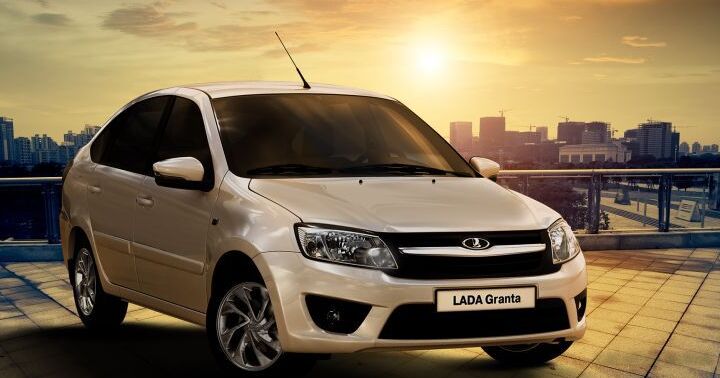
The Lada Granta I Hatchback 1.6 (106 hp) Automatic, produced between 2014 and 2018, represented a significant step in offering a more accessible and modern vehicle to the Russian domestic market. Positioned as a mid-range offering within the Granta hatchback lineup, it aimed to provide a balance between affordability, practicality, and the convenience of an automatic transmission. The Granta itself was a crucial model for AvtoVAZ (Lada’s manufacturer), designed to replace the aging Lada Classic range and offer a more contemporary alternative to imported subcompacts. It was built on the Lada B/C platform, a modified version of the Renault Logan’s architecture, reflecting a period of collaboration between Renault and AvtoVAZ.
Technical Specifications
| Brand | Lada |
| Model | Granta |
| Generation | Granta I Hatchback |
| Type (Engine) | 1.6 (106 Hp) Automatic |
| Start of production | 2014 |
| End of production | 2018 |
| Powertrain Architecture | Internal Combustion engine |
| Body type | Hatchback |
| Seats | 5 |
| Doors | 5 |
| Fuel consumption (urban) | 9 l/100 km (26.1 US mpg, 31.4 UK mpg, 11.1 km/l) |
| Fuel consumption (extra urban) | 5.2 l/100 km (45.2 US mpg, 54.3 UK mpg, 19.2 km/l) |
| Fuel consumption (combined) | 6.6 l/100 km (35.6 US mpg, 42.8 UK mpg, 15.2 km/l) |
| Fuel Type | Petrol (Gasoline) |
| Acceleration 0 – 100 km/h | 12.3 sec |
| Acceleration 0 – 62 mph | 12.3 sec |
| Acceleration 0 – 60 mph | 11.7 sec |
| Maximum speed | 179 km/h (111.23 mph) |
| Weight-to-power ratio | 10.2 kg/Hp, 97.7 Hp/tonne |
| Weight-to-torque ratio | 7.3 kg/Nm, 136.4 Nm/tonne |
| Power | 106 Hp @ 5800 rpm |
| Power per litre | 66.4 Hp/l |
| Torque | 148 Nm @ 4000 rpm (109.16 lb.-ft. @ 4000 rpm) |
| Engine layout | Front, Transverse |
| Engine Model/Code | 21127 |
| Engine displacement | 1596 cm3 (97.39 cu. in.) |
| Number of cylinders | 4 |
| Engine configuration | Inline |
| Number of valves per cylinder | 4 |
| Fuel injection system | Multi-port manifold injection |
| Engine aspiration | Naturally aspirated engine |
| Engine oil capacity | 4.4 l (4.65 US qt | 3.87 UK qt) |
| Coolant capacity | 6.5 l (6.87 US qt | 5.72 UK qt) |
| Kerb Weight | 1085 kg (2392.02 lbs.) |
| Max. weight | 1560 kg (3439.21 lbs.) |
| Max load | 475 kg (1047.2 lbs.) |
| Trunk (boot) space – minimum | 440 l (15.54 cu. ft.) |
| Trunk (boot) space – maximum | 760 l (26.84 cu. ft.) |
| Fuel tank capacity | 50 l (13.21 US gal | 11 UK gal) |
| Permitted trailer load with brakes (12%) | 900 kg (1984.16 lbs.) |
| Permitted trailer load without brakes | 450 kg (992.08 lbs.) |
| Length | 4246 mm (167.17 in.) |
| Width | 1700 mm (66.93 in.) |
| Height | 1500 mm (59.06 in.) |
| Wheelbase | 2476 mm (97.48 in.) |
| Front track | 1430 mm (56.3 in.) |
| Rear (Back) track | 1414 mm (55.67 in.) |
| Ride height (ground clearance) | 160 mm (6.3 in.) |
| Drivetrain Architecture | The Internal combustion engine (ICE) drives the front wheels of the vehicle. |
| Drive wheel | Front wheel drive |
| Number of gears and type of gearbox | 5 gears, automatic transmission |
| Front suspension | Independent, type McPherson with coil spring and anti-roll bar |
| Rear suspension | Semi-independent, coil spring |
| Assisting systems | ABS (Anti-lock braking system) |
| Steering type | Steering rack and pinion |
| Tires size | 175/65 R14; 185/60 R14; 185/55 R15 |
| Wheel rims size | 14; 15 |
Powertrain & Engine Architecture
The Granta 1.6 Automatic utilized the 21127 engine, a four-cylinder, inline, naturally aspirated gasoline engine with a displacement of 1.6 liters (1596 cm³). This engine was a development of the older Lada 16-valve engine, but with improvements to fuel injection and engine management. It employed a multi-point fuel injection system, which, while not cutting-edge, provided reasonable fuel efficiency and driveability. The engine featured a single overhead camshaft (SOHC) operating four valves per cylinder. The 106 horsepower output was achieved at 5800 rpm, with peak torque of 148 Nm (109.16 lb-ft) delivered at 4000 rpm. The automatic transmission was a Jatco-sourced 4-speed unit, a common choice for budget-oriented vehicles at the time. It wasn’t known for its speed or refinement, but it offered the convenience of automatic operation.
Driving Characteristics
The 1.6L Automatic Granta offered a comfortable, if uninspiring, driving experience. The 4-speed automatic transmission, while providing ease of use, resulted in noticeable acceleration delays and a tendency to hold onto gears longer than more modern transmissions. Acceleration from 0-100 km/h (0-62 mph) took around 12.3 seconds, making it noticeably slower than the manual transmission versions of the same engine. The gear ratios were optimized for fuel economy rather than performance. In real-world driving, the car felt adequate for city commuting and highway cruising, but lacked the punch needed for quick overtaking maneuvers. The suspension, tuned for comfort, absorbed bumps reasonably well, but didn’t offer particularly sporty handling.
Equipment & Trim Levels
The 1.6 Automatic Granta typically came with a base level of equipment, reflecting its position as a value-oriented vehicle. Standard features included power steering, central locking, front power windows, and an audio system (often a basic radio with MP3 playback). Safety features were limited, typically including ABS and driver and passenger airbags. Higher trim levels, available as options, added features such as air conditioning, electric rear windows, and upgraded interior trim. Interior upholstery was typically cloth, with a simple, functional dashboard layout. Optional extras included alloy wheels, fog lights, and a more sophisticated audio system.
Chassis & Braking
The Granta I Hatchback utilized a McPherson strut front suspension with a coil spring and anti-roll bar, providing a reasonable level of comfort and handling. The rear suspension was a semi-independent torsion beam setup, a cost-effective solution that prioritized space efficiency. Braking was typically accomplished with disc brakes on the front wheels and drum brakes on the rear. ABS (Anti-lock Braking System) was standard, enhancing safety during emergency braking situations. The steering system employed a rack and pinion setup, offering acceptable steering feel and precision.
Market Reception & Comparison
The Lada Granta 1.6 Automatic was generally well-received in the Russian market as an affordable and practical option. Critics acknowledged its value for money, but often pointed out its lack of refinement and relatively slow performance compared to imported competitors. Compared to the manual transmission Granta 1.6, the automatic version suffered a noticeable fuel economy penalty and slower acceleration. The higher-powered 1.6L (106 hp) version offered a slight performance advantage over the base 87 hp engine, but the automatic transmission largely negated this benefit. Its main competitors included other budget-oriented hatchbacks like the Renault Logan and Hyundai Solaris, which often offered more sophisticated features and better performance, but at a higher price point.
Legacy
The Lada Granta 1.6 Automatic, while not a performance icon, played a vital role in modernizing the Lada brand and providing a more accessible vehicle to Russian consumers. The 21127 engine, while aging, proved to be relatively reliable, and the Jatco automatic transmission, despite its limitations, offered a reasonable level of durability. In the used car market, these Granta models are still relatively common and are often sought after for their affordability and low running costs. However, potential buyers should be aware of the potential for age-related wear and tear, particularly on the suspension and braking systems. The Granta paved the way for subsequent Lada models, incorporating lessons learned in terms of design, engineering, and market expectations.

