
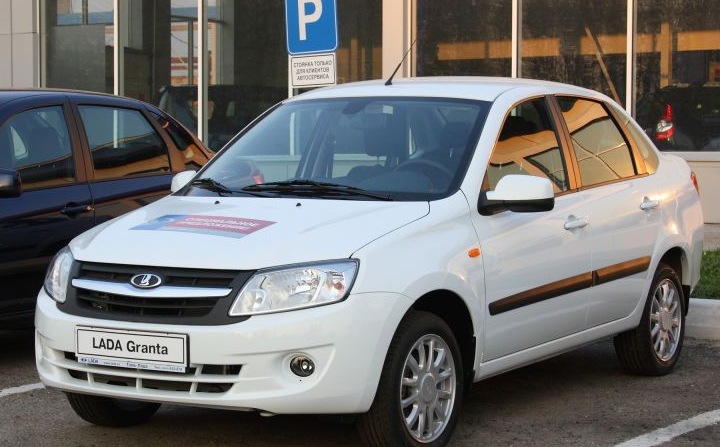
The Lada Granta I Sedan 1.6 (106 hp) Automatic, produced between 2011 and 2018, represented a significant entry point into the Lada lineup during that period. Positioned as an affordable and practical sedan, it was a key model in Lada’s efforts to modernize its offerings and appeal to a broader customer base, particularly within the Russian domestic market and export markets like those in Eastern Europe and Central Asia. The Granta was built on the aging, but cost-effective, 2190 platform – a heavily revised version of the original 2105 architecture – and aimed to provide reliable transportation with a focus on value. This specific 1.6-liter, 106 horsepower variant paired with an automatic transmission was designed to offer convenience and ease of use, appealing to drivers prioritizing comfort over outright performance.
Technical Specifications
| Brand | Lada |
| Model | Granta |
| Generation | Granta I Sedan |
| Type (Engine) | 1.6 (106 Hp) Automatic |
| Start of production | 2011 |
| End of production | 2018 |
| Powertrain Architecture | Internal Combustion engine |
| Body type | Sedan |
| Seats | 5 |
| Doors | 4 |
| Fuel consumption (urban) | 9 l/100 km (26.1 US mpg, 31.4 UK mpg, 11.1 km/l) |
| Fuel consumption (extra urban) | 5.2 l/100 km (45.2 US mpg, 54.3 UK mpg, 19.2 km/l) |
| Fuel consumption (combined) | 6.6 l/100 km (35.6 US mpg, 42.8 UK mpg, 15.2 km/l) |
| Fuel Type | Petrol (Gasoline) |
| Acceleration 0 – 100 km/h | 12.3 sec |
| Acceleration 0 – 62 mph | 12.3 sec |
| Acceleration 0 – 60 mph | 11.7 sec |
| Maximum speed | 180 km/h (111.85 mph) |
| Weight-to-power ratio | 10.1 kg/Hp, 98.6 Hp/tonne |
| Weight-to-torque ratio | 7.3 kg/Nm, 137.7 Nm/tonne |
| Power | 106 Hp @ 5800 rpm |
| Power per litre | 66.4 Hp/l |
| Torque | 148 Nm @ 4000 rpm (109.16 lb.-ft. @ 4000 rpm) |
| Engine layout | Front, Transverse |
| Engine Model/Code | 21127 |
| Engine displacement | 1596 cm3 (97.39 cu. in.) |
| Number of cylinders | 4 |
| Engine configuration | Inline |
| Number of valves per cylinder | 4 |
| Fuel injection system | Multi-port manifold injection |
| Engine aspiration | Naturally aspirated engine |
| Engine oil capacity | 4.4 l (4.65 US qt | 3.87 UK qt) |
| Coolant capacity | 6.5 l (6.87 US qt | 5.72 UK qt) |
| Kerb Weight | 1075 kg (2369.97 lbs.) |
| Max. weight | 1560 kg (3439.21 lbs.) |
| Max load | 485 kg (1069.24 lbs.) |
| Trunk (boot) space – minimum | 520 l (18.36 cu. ft.) |
| Fuel tank capacity | 50 l (13.21 US gal | 11 UK gal) |
| Permitted trailer load with brakes (12%) | 900 kg (1984.16 lbs.) |
| Permitted trailer load without brakes | 450 kg (992.08 lbs.) |
| Length | 4260 mm (167.72 in.) |
| Width | 1700 mm (66.93 in.) |
| Height | 1500 mm (59.06 in.) |
| Wheelbase | 2476 mm (97.48 in.) |
| Front track | 1430 mm (56.3 in.) |
| Rear (Back) track | 1414 mm (55.67 in.) |
| Ride height (ground clearance) | 160 mm (6.3 in.) |
| Drivetrain Architecture | The Internal combustion engine (ICE) drives the front wheels of the vehicle. |
| Drive wheel | Front wheel drive |
| Number of gears and type of gearbox | 5 gears, automatic transmission |
| Front suspension | Independent, type McPherson with coil spring and anti-roll bar |
| Rear suspension | Semi-independent, coil spring |
| Assisting systems | ABS (Anti-lock braking system) |
| Steering type | Steering rack and pinion |
| Tires size | 175/65 R14; 185/60 R14; 185/55 R15 |
| Wheel rims size | 14; 15 |
Powertrain & Engine Architecture
The Lada Granta 1.6 Automatic utilizes the 21127 engine, a four-cylinder, inline, naturally aspirated gasoline engine with a displacement of 1.6 liters (1596 cc). This engine is a descendant of the Volga engine family, a design that dates back to the 1980s, but has undergone numerous revisions over the years. The 21127 features a multi-point fuel injection system, which improves fuel efficiency and reduces emissions compared to earlier carburetor-equipped Lada models. The engine produces 106 horsepower at 5800 rpm and 148 Nm (109.16 lb-ft) of torque at 4000 rpm. The automatic transmission is a conventional four-speed unit, sourced from Japan, and was chosen for its simplicity and affordability. While not known for its responsiveness or fuel efficiency compared to modern automatic transmissions, it provided a convenient driving experience for many Granta owners.
Driving Characteristics
The 1.6-liter, 106 hp engine paired with the four-speed automatic transmission delivers modest performance. Acceleration from 0 to 100 km/h (0-62 mph) takes approximately 12.3 seconds, and top speed is limited to 180 km/h (112 mph). The automatic transmission’s gear ratios are geared towards fuel economy rather than spirited driving. Compared to the five-speed manual version of the Granta 1.6, the automatic feels noticeably slower, particularly during overtaking maneuvers. The transmission also exhibits a tendency to hunt for gears on inclines. However, the automatic provides a smoother and more relaxed driving experience, especially in urban traffic, making it a popular choice for drivers who prioritize convenience.
Equipment & Trim Levels
The Granta I Sedan 1.6 Automatic typically came with a relatively basic level of equipment, reflecting its position as an entry-level vehicle. Standard features generally included power steering, central locking, electric front windows, and an ABS anti-lock braking system. Interior upholstery was typically cloth, and the dashboard featured a simple, functional design. Optional extras included air conditioning, a radio with CD player, and power windows for the rear doors. Higher trim levels, such as the “Lux” variant, offered additional features like alloy wheels, fog lights, and upgraded interior trim.
Chassis & Braking
The Granta I Sedan utilizes a McPherson strut independent suspension system at the front and a semi-independent coil spring suspension at the rear. This suspension setup provides a reasonably comfortable ride, although it is not particularly sporty. The front brakes are disc brakes, while the rear brakes are typically drum brakes, a cost-saving measure common in this segment. The steering is a rack and pinion system, providing adequate steering feel and precision. The Granta’s chassis is relatively simple and robust, designed for durability and ease of maintenance.
Market Reception & Comparison
The Lada Granta 1.6 Automatic was generally well-received in its target market as an affordable and practical sedan. Critics praised its low price, spacious interior, and relatively comfortable ride. However, the automatic transmission was often criticized for its sluggish performance and lack of refinement. Compared to other trims in the Granta lineup, the 1.6 Automatic offered less performance than the 1.6 manual or the more powerful 1.4-liter turbocharged versions. However, it provided a more convenient driving experience, making it a popular choice for drivers who prioritized ease of use over performance. Fuel economy was considered average for its class.
Legacy
The Lada Granta I Sedan 1.6 Automatic, while not a performance icon, played a significant role in Lada’s modernization efforts. The powertrain, while based on an older design, proved to be relatively reliable and durable. In the used car market, these Granta models are known for their affordability and low running costs. However, potential buyers should be aware of the potential for age-related issues, such as corrosion and wear and tear on suspension components. The Granta’s simplicity makes it relatively easy and inexpensive to maintain, and spare parts are generally readily available. The Granta ultimately paved the way for subsequent Lada models, incorporating lessons learned from its development and market reception.

