
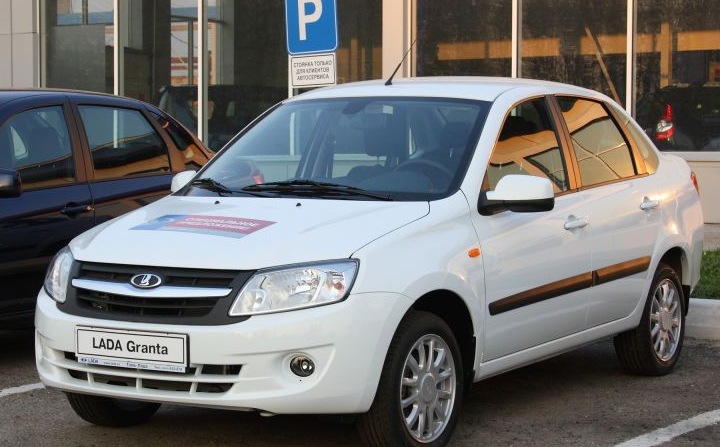
The Lada Granta I Sedan 1.6 (82 hp) represents a significant entry point into the Lada lineup during its production run from 2011 to 2018. Positioned as the most affordable variant of the Granta Sedan, it served as a crucial model for Lada, particularly in markets where price sensitivity was paramount. The Granta, as a whole, was designed to replace the aging Lada Classic range, offering a more modern, albeit still basic, vehicle. This 1.6-liter, 82 horsepower version, paired with a five-speed manual transmission, was intended to provide economical transportation for a broad customer base. It was built on the Lada B/C platform, a modified version of the Renault Logan’s architecture, reflecting Lada’s partnership with Renault at the time.
Technical Specifications
| Brand | Lada |
| Model | Granta |
| Generation | Granta I Sedan |
| Type (Engine) | 1.6 (82 Hp) |
| Start of production | 2011 |
| End of production | 2018 |
| Powertrain Architecture | Internal Combustion engine |
| Body type | Sedan |
| Seats | 5 |
| Doors | 4 |
| Fuel consumption (urban) | 9.7 l/100 km (24.2 US mpg) |
| Fuel consumption (extra urban) | 6.1 l/100 km (38.6 US mpg) |
| Fuel consumption (combined) | 7.4 l/100 km (31.8 US mpg) |
| Fuel Type | Petrol (Gasoline) |
| Acceleration 0 – 100 km/h | 12.6 sec |
| Acceleration 0 – 62 mph | 12.6 sec |
| Acceleration 0 – 60 mph | 12 sec |
| Maximum speed | 165 km/h (102.53 mph) |
| Weight-to-power ratio | 13.1 kg/Hp |
| Weight-to-torque ratio | 8.1 kg/Nm |
| Power | 82 Hp @ 5100 rpm |
| Torque | 132 Nm @ 3800 rpm (97.36 lb.-ft. @ 3800 rpm) |
| Engine layout | Front, Transverse |
| Engine displacement | 1596 cm3 (97.39 cu. in.) |
| Number of cylinders | 4 |
| Engine configuration | Inline |
| Number of valves per cylinder | 2 |
| Fuel injection system | Multi-port manifold injection |
| Engine aspiration | Naturally aspirated |
| Engine oil capacity | 3.2 l (3.38 US qt | 2.82 UK qt) |
| Coolant capacity | 6.5 l (6.87 US qt | 5.72 UK qt) |
| Kerb Weight | 1075 kg (2369.97 lbs.) |
| Max. weight | 1560 kg (3439.21 lbs.) |
| Max load | 485 kg (1069.24 lbs.) |
| Trunk (boot) space | 520 l (18.36 cu. ft.) |
| Fuel tank capacity | 50 l (13.21 US gal | 11 UK gal) |
| Permitted trailer load (braked) | 900 kg (1984.16 lbs.) |
| Permitted trailer load (unbraked) | 450 kg (992.08 lbs.) |
| Length | 4260 mm (167.72 in.) |
| Width | 1700 mm (66.93 in.) |
| Height | 1500 mm (59.06 in.) |
| Wheelbase | 2476 mm (97.48 in.) |
| Front track | 1430 mm (56.3 in.) |
| Rear track | 1414 mm (55.67 in.) |
| Ride height | 160 mm (6.3 in.) |
| Drivetrain | Front wheel drive |
| Number of gears | 5 |
| Gearbox type | Manual transmission |
| Front suspension | Independent, McPherson with coil spring and anti-roll bar |
| Rear suspension | Semi-independent, coil spring |
| Assisting systems | ABS (Anti-lock braking system) |
| Steering type | Steering rack and pinion |
| Tires size | 175/70 R13 |
| Wheel rims size | 13 |
Powertrain & Engine Architecture
The heart of the Granta 1.6 is the Lada 11186 engine, an 8-valve, 1.6-liter inline-four cylinder gasoline engine. This engine, while relatively simple in design, is known for its robustness and ease of maintenance. It utilizes a multi-point fuel injection system, a significant upgrade over the carburetors found in earlier Lada models. The engine’s 82 horsepower output at 5100 rpm and 97.36 lb-ft of torque at 3800 rpm are modest, but sufficient for basic transportation. The five-speed manual transmission is a standard unit, offering a fairly conventional gear ratio spread. The engine’s design prioritizes durability and low operating costs over outright performance. It’s a naturally aspirated engine, meaning it doesn’t employ a turbocharger or supercharger.
Driving Characteristics
The Granta 1.6 Automatic delivers a predictably unhurried driving experience. Acceleration from 0-60 mph takes around 12 seconds, and top speed is limited to 102.53 mph. The five-speed manual transmission helps to keep the engine within its optimal power band, but drivers will find themselves shifting frequently to maintain momentum, especially when overtaking or climbing hills. Compared to the more powerful 1.6-liter (106 hp) version, or the later 1.6-liter 16-valve engine, the 82 hp variant feels noticeably slower. The suspension is tuned for comfort rather than sporty handling, resulting in a somewhat soft and wallowy ride. However, this contributes to a relatively smooth experience on rough roads.
Equipment & Trim Levels
The Granta 1.6 in its base trim was fairly spartan, reflecting its position as the entry-level model. Standard equipment typically included power steering, central locking, and an immobilizer. Interior upholstery was typically a basic cloth material. Optional extras, depending on the market and year, could include power windows, air conditioning, and an upgraded audio system. Higher trim levels, such as the “Standard” and “Luxe,” added more features, but the core 1.6-liter engine remained consistent. The dashboard layout was functional but lacked the aesthetic refinement of more modern vehicles.
Chassis & Braking
The Granta I Sedan utilizes a McPherson strut independent suspension setup at the front, providing reasonable handling and ride comfort. The rear suspension is a semi-independent torsion beam design, which is cost-effective but less sophisticated than a fully independent setup. Braking is typically accomplished with disc brakes at the front and drum brakes at the rear. ABS (Anti-lock Braking System) was standard, enhancing safety. The steering is a rack and pinion system, providing adequate precision for everyday driving. The relatively light curb weight of around 2370 lbs helps to mitigate the effects of the modest engine power.
Market Reception & Comparison
The Lada Granta 1.6 was primarily judged on its affordability and practicality. Critics acknowledged its low price point but often criticized its basic interior, lack of refinement, and modest performance. Compared to the 1.6-liter 106 hp version, the 82 hp model offered significantly less power but at a lower purchase price. Fuel economy was a strong point, with combined fuel consumption around 31.8 US mpg. Reliability was generally considered good, owing to the engine’s simple design and robust construction. However, build quality was often inconsistent.
Legacy
The Lada Granta 1.6 (82 hp) played a vital role in Lada’s transition to a more modern vehicle lineup. While not a performance standout, it provided affordable and reliable transportation for a large segment of the market. In the used car market, these Granta Sedans remain popular due to their low running costs and readily available spare parts. The engine itself is known for its durability, and with proper maintenance, can provide many years of service. The Granta, in general, helped to establish Lada as a more competitive player in the budget car segment, paving the way for future models.

