
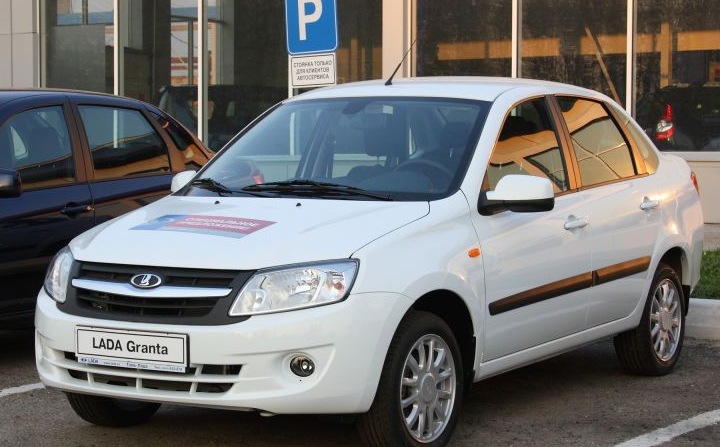
The Lada Granta I Sedan 1.6 (98 hp) represents a significant entry point into the Lada lineup during its production run from 2011 to 2018. Positioned as the most affordable variant of the Granta Sedan, it served as a crucial model for Lada, particularly in markets where budget-conscious consumers prioritized practicality and low running costs. The Granta itself was developed as a replacement for the aging Lada Classic series, aiming to offer a more modern and reliable vehicle while maintaining the brand’s reputation for affordability. This 1.6-liter, 98 horsepower version, paired with a five-speed manual transmission, was the mainstay of the Granta Sedan range, offering a balance between acceptable performance and fuel efficiency.
Technical Specifications
| Brand | Lada |
| Model | Granta |
| Generation | Granta I Sedan |
| Type (Engine) | 1.6 (98 Hp) |
| Start of production | 2011 |
| End of production | 2018 |
| Powertrain Architecture | Internal Combustion engine |
| Body type | Sedan |
| Seats | 5 |
| Doors | 4 |
| Fuel consumption (urban) | 8.8 l/100 km (26.7 US mpg, 32.1 UK mpg, 11.4 km/l) |
| Fuel consumption (extra urban) | 5.6 l/100 km (42 US mpg, 50.4 UK mpg, 17.9 km/l) |
| Fuel consumption (combined) | 6.8 l/100 km (34.6 US mpg, 41.5 UK mpg, 14.7 km/l) |
| Fuel Type | Petrol (Gasoline) |
| Acceleration 0 – 100 km/h | 11.2 sec |
| Acceleration 0 – 62 mph | 11.2 sec |
| Acceleration 0 – 60 mph | 10.6 sec |
| Maximum speed | 182 km/h (113.09 mph) |
| Weight-to-power ratio | 11 kg/Hp, 91.2 Hp/tonne |
| Weight-to-torque ratio | 7.4 kg/Nm, 134.9 Nm/tonne |
| Power | 98 Hp @ 5600 rpm |
| Power per litre | 61.4 Hp/l |
| Torque | 145 Nm @ 4000 rpm (106.95 lb.-ft. @ 4000 rpm) |
| Engine layout | Front, Transverse |
| Engine displacement | 1596 cm3 (97.39 cu. in.) |
| Number of cylinders | 4 |
| Engine configuration | Inline |
| Number of valves per cylinder | 4 |
| Fuel injection system | Multi-port manifold injection |
| Engine aspiration | Naturally aspirated engine |
| Engine oil capacity | 3.2 l (3.38 US qt | 2.82 UK qt) |
| Coolant capacity | 6.5 l (6.87 US qt | 5.72 UK qt) |
| Kerb Weight | 1075 kg (2369.97 lbs) |
| Max. weight | 1560 kg (3439.21 lbs) |
| Max load | 485 kg (1069.24 lbs) |
| Trunk (boot) space – minimum | 520 l (18.36 cu. ft) |
| Fuel tank capacity | 50 l (13.21 US gal | 11 UK gal) |
| Permitted trailer load with brakes (12%) | 900 kg (1984.16 lbs) |
| Permitted trailer load without brakes | 450 kg (992.08 lbs) |
| Length | 4260 mm (167.72 in) |
| Width | 1700 mm (66.93 in) |
| Height | 1500 mm (59.06 in) |
| Wheelbase | 2476 mm (97.48 in) |
| Front track | 1430 mm (56.3 in) |
| Rear (Back) track | 1414 mm (55.67 in) |
| Ride height (ground clearance) | 160 mm (6.3 in) |
| Drivetrain Architecture | Front wheel drive |
| Number of gears and type of gearbox | 5 gears, manual transmission |
| Front suspension | Independent, type McPherson with coil spring and anti-roll bar |
| Rear suspension | Semi-independent, coil spring |
| Assisting systems | ABS (Anti-lock braking system) |
| Steering type | Steering rack and pinion |
| Tires size | 175/65 R14; 185/60 R14; 185/55 R15 |
| Wheel rims size | 14; 15 |
INTRODUCTION
The Lada Granta I Sedan 1.6 (98 hp) was introduced in 2011 as a core model within the Granta range, designed to replace the aging Lada Classic series. Built on the Lada B/C platform (derived from the Renault Logan), the Granta aimed to provide a more modern and reliable vehicle at an extremely competitive price point. This particular variant, with its 1.6-liter engine and five-speed manual transmission, was the volume seller, targeting budget-conscious buyers who needed a dependable and practical sedan. It was primarily marketed in Russia and other Eastern European countries, as well as export markets where Lada had a presence.
Powertrain & Engine Architecture
The heart of the Granta 1.6 is the Lada 11186 engine, an 8-valve, 1.6-liter inline-four cylinder petrol engine. This engine, while relatively simple in design, proved to be robust and reliable. It utilizes a multi-point fuel injection system, providing adequate fuel delivery for its modest power output. The engine code is often associated with variations like the VAZ-11186, and later iterations. The 1.6L engine produces 98 horsepower at 5600 rpm and 145 Nm (107 lb-ft) of torque at 4000 rpm. The five-speed manual transmission is a standard unit, offering relatively long gear ratios geared towards fuel economy rather than outright performance. The transmission is known for its durability, but its shift quality can be described as notchy and imprecise by modern standards.
Driving Characteristics
The Granta 1.6 (98 hp) offers modest performance. Acceleration from 0 to 60 mph takes around 10.6 seconds, and the top speed is approximately 113 mph. The long gear ratios contribute to a relaxed driving experience at highway speeds, but also mean that the engine needs to be revved relatively high to achieve brisk acceleration. Compared to higher-output Granta variants (like those with the 1.6-liter 106 hp engine), the 98 hp version feels noticeably slower, particularly when fully loaded or climbing hills. The manual transmission allows for greater driver control compared to the available automated manual transmission (AMT) option, which was often criticized for its sluggishness. The suspension is tuned for comfort, providing a reasonably smooth ride on most road surfaces, but body roll is noticeable during cornering.
Equipment & Trim Levels
The Granta 1.6 (98 hp) typically came with a basic level of equipment. Standard features included power steering, central locking, and an immobilizer. Interior upholstery was typically cloth, and the dashboard featured a simple, functional design. Air conditioning, power windows, and a radio/CD player were often optional extras, depending on the trim level (Standard, Comfort, Luxe). The Comfort trim added features like heated front seats and electric front windows, while the Luxe trim offered more premium interior materials and additional convenience features. Safety equipment was limited, typically including only ABS and driver/passenger airbags.
Chassis & Braking
The Granta Sedan utilizes a McPherson strut front suspension and a semi-independent coil spring rear suspension. This setup provides a reasonable balance between ride comfort and handling. The front brakes are ventilated discs, while the rear brakes are typically drum brakes, a cost-saving measure common in this segment. The steering is a rack and pinion system, providing adequate steering feel. The Granta’s chassis is relatively lightweight, contributing to its fuel efficiency, but also limiting its handling capabilities. Stabilizer bars were often omitted on the base models, further reducing handling precision.
Market Reception & Comparison
The Lada Granta 1.6 (98 hp) was generally well-received in its target markets as an affordable and practical sedan. Critics praised its low price, fuel efficiency, and relatively simple mechanical design, which translated to lower maintenance costs. However, it was also criticized for its basic interior, lack of refinement, and modest performance. Compared to other trims in the Granta lineup, the 98 hp version offered the best fuel economy but the slowest acceleration. It competed primarily with other budget-oriented sedans, such as the Dacia Logan and various offerings from Chinese manufacturers.
Legacy
The Lada Granta 1.6 (98 hp) proved to be a reliable and durable vehicle, particularly in regions with harsh climates and poor road conditions. The engine, while not particularly powerful, is known for its longevity and relatively low maintenance requirements. In the used car market, these Granta Sedans remain affordable and represent a practical transportation option for budget-conscious buyers. While not known for its performance or luxury, the Granta 1.6 (98 hp) played a significant role in keeping Lada relevant in a competitive automotive landscape, offering a no-frills, dependable vehicle at a price point that few competitors could match.

