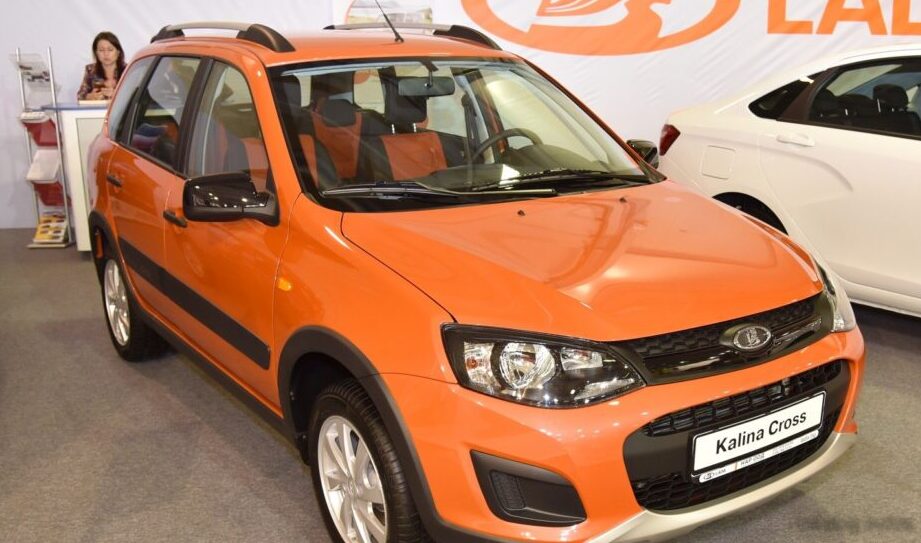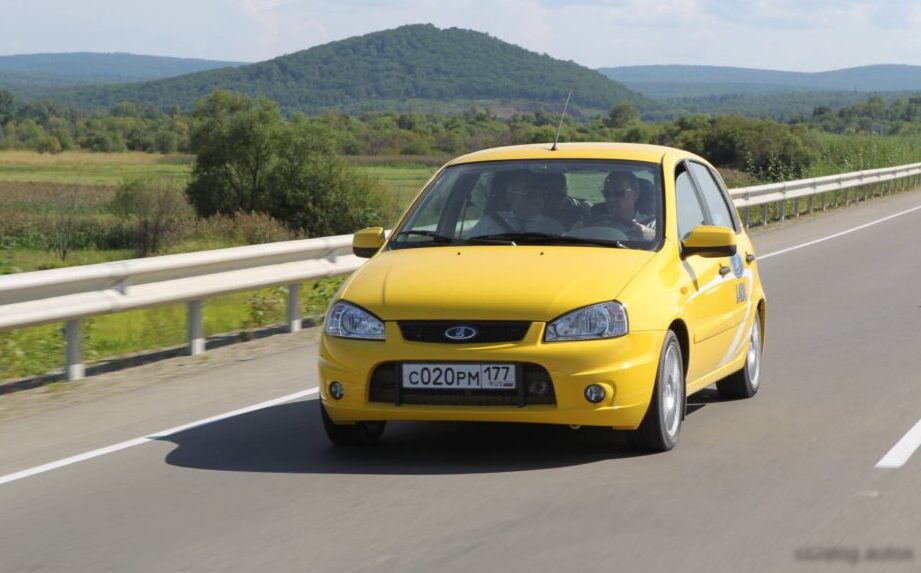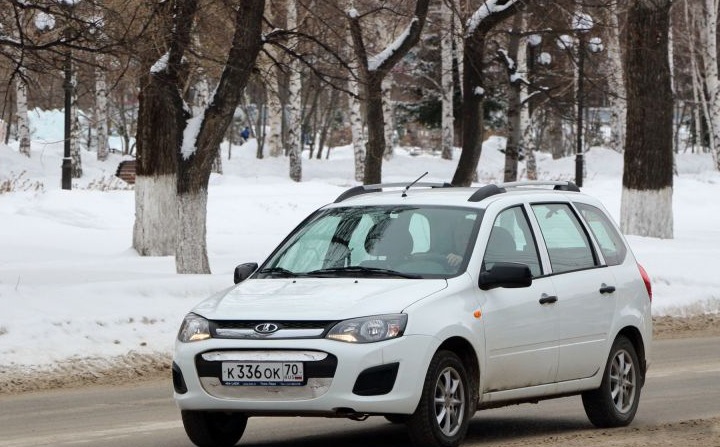
The Lada Kalina II Combi (2194) 1.6, producing 87 horsepower, was a station wagon variant of the second-generation Lada Kalina, manufactured from 2013 to 2018. Positioned as a practical and affordable family vehicle, it served as a key model in Lada’s lineup, primarily targeting the Russian domestic market and other Eastern European countries. The Kalina II represented a significant step forward for AvtoVAZ, Lada’s parent company, offering improved build quality, a more modern design, and enhanced features compared to its predecessor. This specific 1.6-liter engine and five-speed manual transmission combination was a mainstay of the Kalina II Combi range, offering a balance between fuel economy and usability.
Technical Specifications
| Brand | Lada |
| Model | Kalina |
| Generation | Kalina II Combi (2194) |
| Type (Engine) | 1.6 (87 Hp) |
| Start of production | 2013 |
| End of production | 2018 |
| Powertrain Architecture | Internal Combustion engine |
| Body type | Station wagon (estate) |
| Seats | 5 |
| Doors | 5 |
| Fuel consumption (urban) | 9 l/100 km (26.1 US mpg, 31.4 UK mpg, 11.1 km/l) |
| Fuel consumption (extra urban) | 5.8 l/100 km (40.6 US mpg, 48.7 UK mpg, 17.2 km/l) |
| Fuel consumption (combined) | 7 l/100 km (33.6 US mpg, 40.4 UK mpg, 14.3 km/l) |
| Fuel Type | Petrol (Gasoline) |
| Acceleration 0 – 100 km/h | 12.2 sec |
| Acceleration 0 – 62 mph | 12.2 sec |
| Acceleration 0 – 60 mph | 11.6 sec |
| Maximum speed | 168 km/h (104.39 mph) |
| Weight-to-power ratio | 12.9 kg/Hp, 77.3 Hp/tonne |
| Weight-to-torque ratio | 8 kg/Nm, 124.4 Nm/tonne |
| Power | 87 Hp @ 5100 rpm |
| Power per litre | 54.5 Hp/l |
| Torque | 140 Nm @ 3800 rpm (103.26 lb.-ft. @ 3800 rpm) |
| Engine layout | Front, Transverse |
| Engine Model/Code | 11186 |
| Engine displacement | 1596 cm3 (97.39 cu. in.) |
| Number of cylinders | 4 |
| Engine configuration | Inline |
| Number of valves per cylinder | 2 |
| Fuel injection system | Multi-port manifold injection |
| Engine aspiration | Naturally aspirated engine |
| Engine oil capacity | 3.2 l (3.38 US qt | 2.82 UK qt) |
| Coolant capacity | 7.84 l (8.28 US qt | 6.9 UK qt) |
| Kerb Weight | 1125 kg (2480.2 lbs) |
| Max. weight | 1560 kg (3439.21 lbs) |
| Max load | 435 kg (959.01 lbs) |
| Trunk (boot) space – minimum | 355 l (12.54 cu. ft) |
| Trunk (boot) space – maximum | 670 l (23.66 cu. ft) |
| Fuel tank capacity | 50 l (13.21 US gal | 11 UK gal) |
| Permitted trailer load with brakes (12%) | 900 kg (1984.16 lbs) |
| Permitted trailer load without brakes | 450 kg (992.08 lbs) |
| Length | 4084 mm (160.79 in) |
| Width | 1700 mm (66.93 in) |
| Height | 1504 mm (59.21 in) |
| Wheelbase | 2476 mm (97.48 in) |
| Front track | 1430 mm (56.3 in) |
| Rear track | 1414 mm (55.67 in) |
| Ride height (ground clearance) | 160 mm (6.3 in) |
| Drivetrain Architecture | Front wheel drive |
| Number of gears and type of gearbox | 5 gears, manual transmission |
| Front suspension | Independent, type McPherson with coil spring and anti-roll bar |
| Rear suspension | Semi-independent, coil spring |
| Assisting systems | ABS (Anti-lock braking system) |
| Steering type | Steering rack and pinion |
| Tires size | 175/65 R14; 185/60 R14 |
| Wheel rims size | 14 |
Powertrain & Engine Architecture
The Lada Kalina II Combi 1.6 utilized the 11186 engine, a four-cylinder, eight-valve (two valves per cylinder) naturally aspirated gasoline engine. This engine was a development of the older Lada 1.5 and 1.6-liter engines, but with improvements to fuel injection and engine management. It employed a multi-point fuel injection system, which improved fuel atomization and combustion efficiency compared to earlier carburetor-equipped Lada models. The engine’s relatively simple valvetrain design contributed to its robustness and ease of maintenance. The 87 horsepower output was achieved at 5100 rpm, while peak torque of 140 Nm (103.26 lb-ft) was delivered at 3800 rpm. The engine was transversely mounted in the front of the vehicle, driving the front wheels. The standard transmission was a five-speed manual gearbox, chosen for its affordability and reliability. While an automated manual transmission (AMT) was offered on other Kalina II variants, it wasn’t typically paired with this specific 1.6-liter engine.
Driving Characteristics
The 1.6-liter, 87 hp Kalina II Combi offered modest performance. Acceleration from 0 to 100 km/h (0-62 mph) took around 12.2 seconds, and the top speed was approximately 168 km/h (104 mph). The engine felt somewhat underpowered when fully loaded or tackling steep inclines. The five-speed manual transmission was geared to prioritize fuel economy over outright acceleration. Gear ratios were relatively long, requiring frequent downshifts when overtaking or climbing hills. Compared to the more powerful 1.6-liter 16-valve engine available in other Kalina II models, this variant felt noticeably slower. However, it provided a smoother and more relaxed driving experience, particularly in urban environments. The manual transmission offered a more engaging driving experience than the optional AMT.
Equipment & Trim Levels
The Kalina II Combi 1.6 typically came with a basic level of equipment, reflecting its position as an entry-level or mid-range trim. Standard features generally included power steering, central locking, front power windows, and an audio system with USB connectivity. Interior upholstery was typically cloth, with a simple and functional dashboard layout. Optional extras included air conditioning, heated front seats, and an upgraded audio system. Higher trim levels offered additional features such as alloy wheels, fog lights, and a more comprehensive interior trim. Safety features included ABS (Anti-lock Braking System) and driver and passenger airbags.
Chassis & Braking
The Kalina II Combi featured a McPherson strut independent suspension at the front and a semi-independent coil spring suspension at the rear. This suspension setup provided a reasonable level of ride comfort, although it wasn’t particularly sophisticated. The front suspension incorporated an anti-roll bar to reduce body roll during cornering. The braking system consisted of disc brakes at the front and drum brakes at the rear. ABS was standard, enhancing braking performance and stability. The steering was a rack and pinion system, providing reasonably precise steering feel.
Market Reception & Comparison
The Lada Kalina II Combi 1.6 was generally well-received in its target markets as a practical and affordable station wagon. Critics praised its improved build quality and more modern design compared to previous Lada models. However, the engine’s modest power output and relatively basic interior were often cited as drawbacks. Compared to other trims in the Kalina II lineup, such as the 1.6-liter 16-valve version, this variant offered lower performance but better fuel economy. It was a popular choice for buyers who prioritized practicality and affordability over outright performance. Fuel economy figures were competitive for its class, averaging around 7 liters per 100 kilometers (33.6 US mpg).
Legacy
The Lada Kalina II Combi 1.6, while not a performance standout, proved to be a reliable and durable vehicle. The 11186 engine, despite its relatively simple design, was known for its robustness and ease of maintenance. In the used car market, these Kalina II Combis are often sought after for their affordability and practicality. While they may not offer the refinement or features of more modern vehicles, they represent a good value for buyers looking for a basic, dependable station wagon. Parts availability remains relatively good, and maintenance costs are typically low, making them a popular choice for budget-conscious buyers.