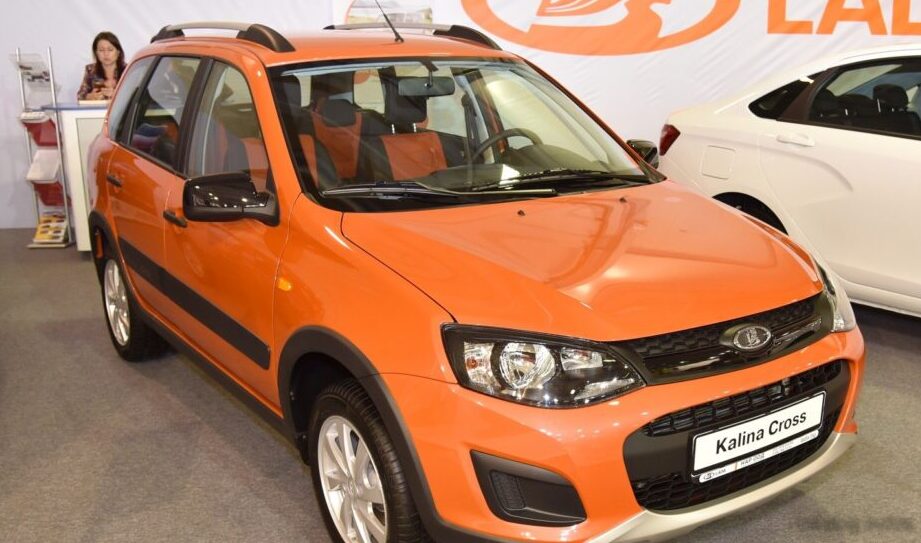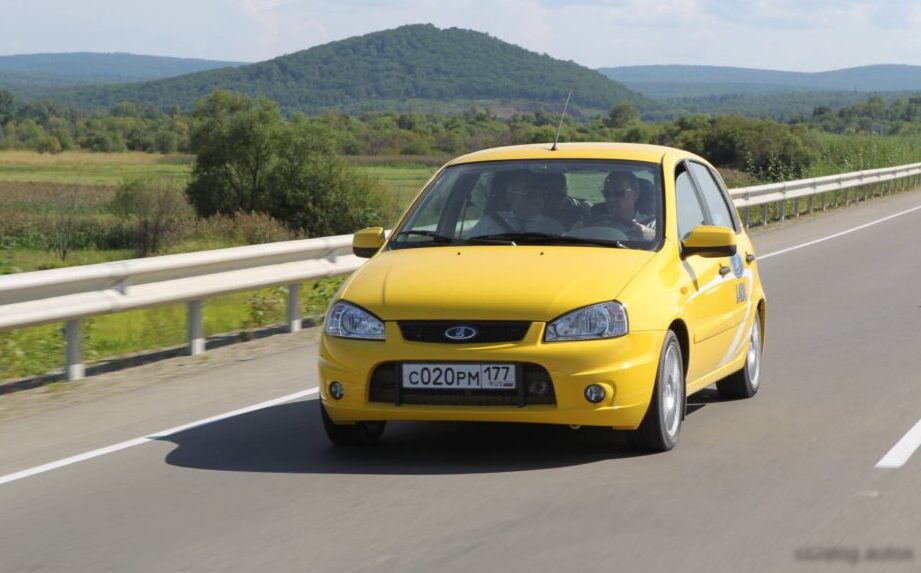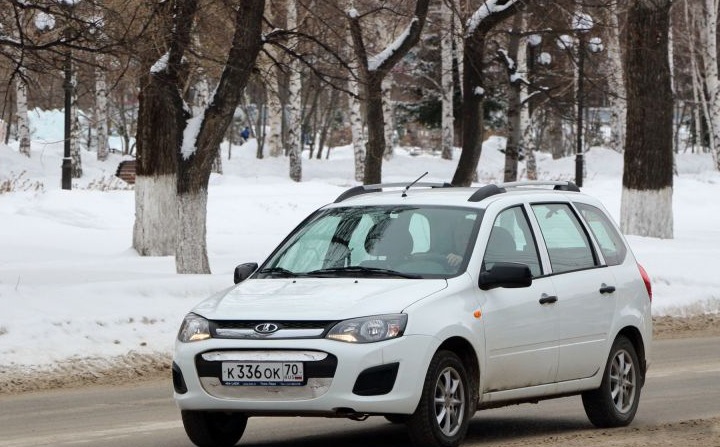
The Lada Kalina II Combi (2194) 1.6 (87 hp) Automatic, produced between 2013 and 2018, represented a practical and affordable station wagon option within the Lada lineup. Positioned as a mid-range offering, it aimed to provide a balance between economy, space, and convenience, particularly appealing to families and those requiring a versatile vehicle. The Kalina II Combi was built upon the B-platform, shared with other Dacia and Renault models, and was intended to modernize Lada’s image and appeal to a broader customer base, primarily within Russia and Eastern European markets. This variant, with its 1.6-liter engine and automatic transmission, offered a more accessible entry point into the Combi body style compared to higher-powered or manual transmission options.
Technical Specifications
| Brand | Lada |
| Model | Kalina |
| Generation | Kalina II Combi (2194) |
| Type (Engine) | 1.6 (87 Hp) Automatic |
| Start of production | 2013 |
| End of production | 2018 |
| Powertrain Architecture | Internal Combustion engine |
| Body type | Station wagon (estate) |
| Seats | 5 |
| Doors | 5 |
| Fuel consumption (urban) | 10.4 l/100 km (22.6 US mpg, 27.2 UK mpg, 9.6 km/l) |
| Fuel consumption (extra urban) | 6.1 l/100 km (38.6 US mpg, 46.3 UK mpg, 16.4 km/l) |
| Fuel consumption (combined) | 7.7 l/100 km (30.5 US mpg, 36.7 UK mpg, 13 km/l) |
| Fuel Type | Petrol (Gasoline) |
| Acceleration 0 – 100 km/h | 14.2 sec |
| Acceleration 0 – 62 mph | 14.2 sec |
| Acceleration 0 – 60 mph | 13.5 sec |
| Maximum speed | 161 km/h (100.04 mph) |
| Weight-to-power ratio | 12.9 kg/Hp, 77.3 Hp/tonne |
| Weight-to-torque ratio | 8 kg/Nm, 124.4 Nm/tonne |
| Power | 87 Hp @ 5100 rpm |
| Power per litre | 54.5 Hp/l |
| Torque | 140 Nm @ 3800 rpm (103.26 lb.-ft. @ 3800 rpm) |
| Engine layout | Front, Transverse |
| Engine Model/Code | 11186 |
| Engine displacement | 1596 cm3 (97.39 cu. in.) |
| Number of cylinders | 4 |
| Engine configuration | Inline |
| Number of valves per cylinder | 2 |
| Fuel injection system | Multi-port manifold injection |
| Engine aspiration | Naturally aspirated engine |
| Engine oil capacity | 4.4 l (4.65 US qt | 3.87 UK qt) |
| Coolant capacity | 7.84 l (8.28 US qt | 6.9 UK qt) |
| Kerb Weight | 1125 kg (2480.2 lbs) |
| Max. weight | 1560 kg (3439.21 lbs) |
| Max load | 435 kg (959.01 lbs) |
| Trunk (boot) space – minimum | 355 l (12.54 cu. ft) |
| Trunk (boot) space – maximum | 670 l (23.66 cu. ft) |
| Fuel tank capacity | 50 l (13.21 US gal | 11 UK gal) |
| Permitted trailer load with brakes (12%) | 900 kg (1984.16 lbs) |
| Permitted trailer load without brakes | 450 kg (992.08 lbs) |
| Length | 4084 mm (160.79 in) |
| Width | 1700 mm (66.93 in) |
| Height | 1504 mm (59.21 in) |
| Wheelbase | 2476 mm (97.48 in) |
| Front track | 1430 mm (56.3 in) |
| Rear (Back) track | 1414 mm (55.67 in) |
| Ride height (ground clearance) | 145 mm (5.71 in) |
| Drivetrain Architecture | Front wheel drive |
| Number of gears and type of gearbox | 4 gears, automatic transmission |
| Front suspension | Independent, type McPherson with coil spring and anti-roll bar |
| Rear suspension | Semi-independent, coil spring |
| Assisting systems | ABS (Anti-lock braking system) |
| Steering type | Steering rack and pinion |
| Tires size | 175/65 R14; 185/60 R14 |
| Wheel rims size | 14 |
Powertrain & Engine Architecture
The Kalina II Combi 1.6 Automatic utilized the Lada 11186 engine, a four-cylinder, inline, naturally aspirated gasoline engine with a displacement of 1.6 liters (1596 cm³). This engine featured a two-valve per cylinder configuration and a multi-point fuel injection system. The engine was designed for simplicity and durability, prioritizing reliability over outright performance. The 87 horsepower output at 5100 rpm and 140 Nm (103 lb-ft) of torque at 3800 rpm were typical figures for this class of engine in the early 2010s. The automatic transmission was a four-speed unit, sourced from Japan, and was chosen to provide ease of use, particularly in urban driving conditions. While not known for its sophistication, the transmission was generally reliable, though it did contribute to slightly lower fuel economy compared to the manual transmission options.
Driving Characteristics
The 1.6-liter engine paired with the four-speed automatic transmission delivered modest performance. Acceleration from 0 to 100 km/h (0-62 mph) took approximately 14.2 seconds, and top speed was limited to 161 km/h (100 mph). The automatic transmission’s gear ratios were geared towards fuel efficiency and smooth cruising rather than spirited acceleration. Compared to the five-speed manual version, the automatic felt noticeably slower, especially during overtaking maneuvers. The transmission’s shift points were relatively conservative, prioritizing fuel economy over maintaining optimal engine speed. The ride quality was generally comfortable, thanks to the McPherson strut front suspension and semi-independent rear suspension, but handling was not particularly sharp.
Equipment & Trim Levels
The Kalina II Combi 1.6 Automatic typically came equipped with basic features such as power steering, central locking, front power windows, and an audio system. Higher trim levels offered options like air conditioning, heated front seats, alloy wheels, and a more comprehensive audio system with Bluetooth connectivity. Interior upholstery was typically cloth, with a simple and functional dashboard layout. Safety features included ABS (Anti-lock Braking System) and driver and passenger airbags. The overall interior ambiance was basic but durable, reflecting the car’s affordable price point.
Chassis & Braking
The Kalina II Combi featured a front-wheel-drive layout with an independent McPherson strut suspension at the front and a semi-independent coil spring suspension at the rear. The braking system consisted of disc brakes on the front wheels and drum brakes on the rear wheels. The suspension setup was tuned for comfort and ride quality, prioritizing absorbing bumps and providing a stable ride over sporty handling. The steering was a rack and pinion system, providing adequate precision for everyday driving.
Market Reception & Comparison
The Lada Kalina II Combi 1.6 Automatic was generally viewed as a practical and affordable option in its segment. Critics acknowledged its spacious interior and reasonable fuel economy, but noted its lack of refinement and relatively slow performance. Compared to other station wagons available in the Russian market, such as the Renault Logan MCV, the Kalina II Combi offered a lower price point but lacked the same level of build quality and features. The automatic transmission, while convenient, was often criticized for its sluggishness and impact on fuel economy. Reliability was generally considered good, but maintenance costs were relatively low due to the simplicity of the engine and transmission.
Legacy
The Lada Kalina II Combi 1.6 Automatic, while not a groundbreaking vehicle, played an important role in modernizing Lada’s product lineup. The 11186 engine and four-speed automatic transmission proved to be reasonably reliable, and parts availability remains good in regions where the Kalina II Combi was sold. On the used car market, these models are often sought after for their affordability and practicality. While not a collector’s item, well-maintained examples continue to provide reliable transportation for budget-conscious buyers. The Kalina II Combi paved the way for subsequent Lada models, incorporating lessons learned in terms of design, engineering, and market appeal.