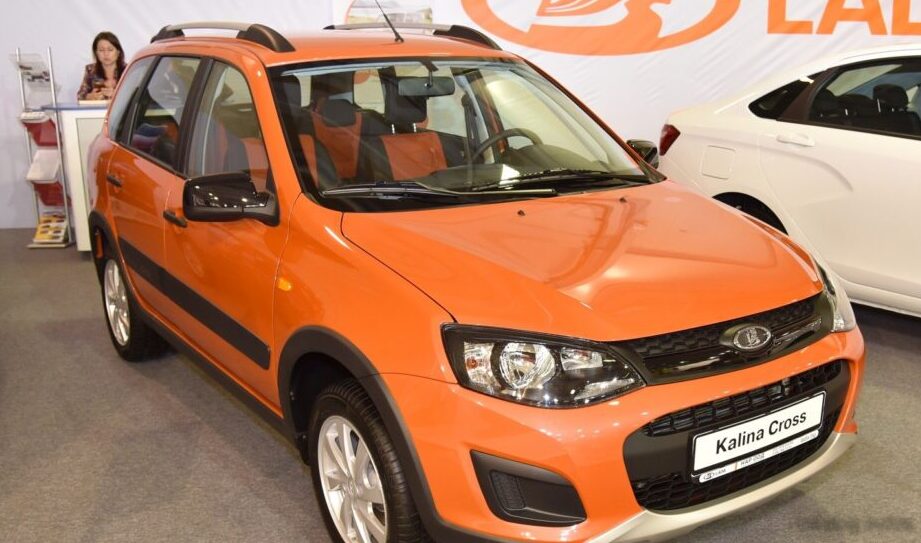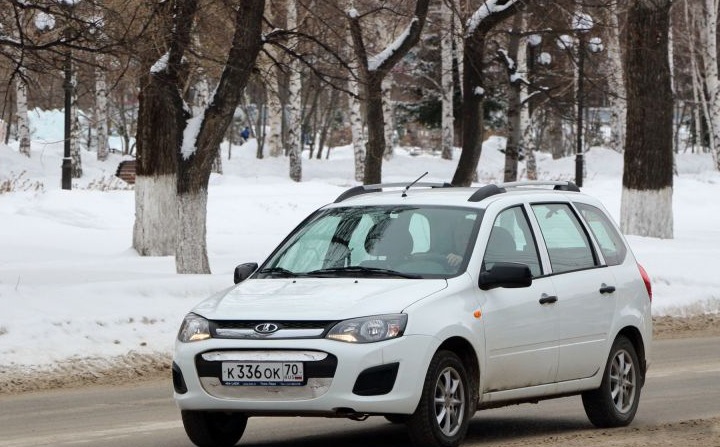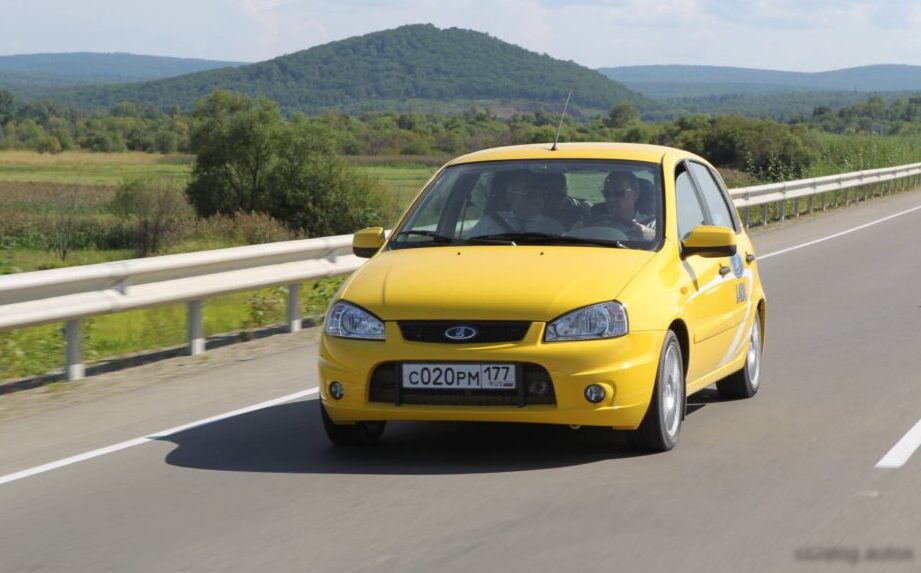
The Lada Kalina II Hatchback, specifically the 2192 variant powered by a 1.6-liter engine producing 87 horsepower and paired with an automatic transmission, was a key offering in Lada’s lineup from 2013 to 2018. Positioned as a relatively affordable and practical option, this version aimed to provide a more convenient driving experience than the standard manual transmission models, appealing to buyers prioritizing ease of use over outright performance. It represented Lada’s attempt to modernize and offer a broader range of choices within the increasingly competitive subcompact segment, primarily targeting the Russian domestic market and select export regions.
Technical Specifications
| Brand | Lada |
| Model | Kalina |
| Generation | Kalina II Hatchback (2192) |
| Type (Engine) | 1.6 (87 Hp) Automatic |
| Start of production | 2013 |
| End of production | 2018 |
| Powertrain Architecture | Internal Combustion engine |
| Body type | Hatchback |
| Seats | 5 |
| Doors | 5 |
| Fuel consumption (urban) | 10.4 l/100 km (22.6 US mpg, 27.2 UK mpg, 9.6 km/l) |
| Fuel consumption (extra urban) | 6.1 l/100 km (38.6 US mpg, 46.3 UK mpg, 16.4 km/l) |
| Fuel consumption (combined) | 7.7 l/100 km (30.5 US mpg, 36.7 UK mpg, 13 km/l) |
| Fuel Type | Petrol (Gasoline) |
| Acceleration 0 – 100 km/h | 14.2 sec |
| Acceleration 0 – 62 mph | 14.2 sec |
| Acceleration 0 – 60 mph | 13.5 sec |
| Maximum speed | 161 km/h (100.04 mph) |
| Weight-to-power ratio | 12.9 kg/Hp, 77.3 Hp/tonne |
| Weight-to-torque ratio | 8 kg/Nm, 124.4 Nm/tonne |
| Power | 87 Hp @ 5100 rpm |
| Power per litre | 54.5 Hp/l |
| Torque | 140 Nm @ 3800 rpm (103.26 lb.-ft. @ 3800 rpm) |
| Engine layout | Front, Transverse |
| Engine Model/Code | 11186 |
| Engine displacement | 1596 cm3 (97.39 cu. in.) |
| Number of cylinders | 4 |
| Engine configuration | Inline |
| Number of valves per cylinder | 2 |
| Fuel injection system | Multi-port manifold injection |
| Engine aspiration | Naturally aspirated engine |
| Engine oil capacity | 4.4 l (4.65 US qt | 3.87 UK qt) |
| Coolant capacity | 7.84 l (8.28 US qt | 6.9 UK qt) |
| Kerb Weight | 1125 kg (2480.2 lbs) |
| Max. weight | 1560 kg (3439.21 lbs) |
| Max load | 435 kg (959.01 lbs) |
| Trunk (boot) space – minimum | 240 l (8.48 cu. ft) |
| Trunk (boot) space – maximum | 550 l (19.42 cu. ft) |
| Fuel tank capacity | 50 l (13.21 US gal | 11 UK gal) |
| Permitted trailer load with brakes (12%) | 900 kg (1984.16 lbs) |
| Permitted trailer load without brakes | 450 kg (992.08 lbs) |
| Length | 3893 mm (153.27 in) |
| Width | 1700 mm (66.93 in) |
| Height | 1500 mm (59.06 in) |
| Wheelbase | 2476 mm (97.48 in) |
| Front track | 1430 mm (56.3 in) |
| Rear (Back) track | 1414 mm (55.67 in) |
| Ride height (ground clearance) | 145 mm (5.71 in) |
| Drivetrain Architecture | Front wheel drive |
| Number of gears and type of gearbox | 4 gears, automatic transmission |
| Front suspension | Independent, type McPherson with coil spring and anti-roll bar |
| Rear suspension | Semi-independent, coil spring |
| Assisting systems | ABS (Anti-lock braking system) |
| Steering type | Steering rack and pinion |
| Tires size | 175/65 R14; 185/60 R14 |
| Wheel rims size | 14 |
Powertrain & Engine Architecture
The heart of the Kalina II 1.6 Automatic is the Lada 11186 engine, an 8-valve, inline-four cylinder petrol engine with a displacement of 1.6 liters (1596 cc). This engine, a descendant of earlier Lada designs, utilizes a multi-point fuel injection system for improved fuel efficiency and emissions control. The engine’s relatively simple valvetrain – two valves per cylinder – contributes to its robustness and ease of maintenance. The 11186 engine is known for its durability, though it lacks the sophistication of more modern engine designs. Paired with this engine is a 4-speed automatic transmission. This transmission, while providing the convenience of automatic operation, is a relatively basic unit and contributes to the car’s somewhat leisurely acceleration. It’s a conventional hydraulic automatic, lacking the efficiency of more modern continuously variable transmissions (CVTs) or transmissions with more gears.
Driving Characteristics
The 1.6-liter, 87 horsepower engine coupled with the 4-speed automatic transmission delivers modest performance. Acceleration from 0 to 60 mph takes around 13.5-14.2 seconds, and the top speed is approximately 100 mph. The automatic transmission’s gear ratios are geared towards fuel economy rather than spirited driving. Compared to the manual transmission versions of the Kalina II 1.6, the automatic variant feels noticeably slower, particularly during overtaking maneuvers. The transmission’s shift points are not particularly refined, and can sometimes feel hesitant. However, for urban driving and relaxed cruising, the automatic provides a comfortable and convenient experience. The relatively low power output and simple suspension setup result in a ride that is generally comfortable, but not particularly engaging.
Equipment & Trim Levels
The Kalina II 1.6 Automatic typically came with a base level of equipment, reflecting its position as an affordable option. Standard features generally included power steering, central locking, front power windows, and an audio system. Air conditioning was often an optional extra. Interior upholstery was typically cloth, and the dashboard featured a functional but basic design. Higher trim levels, if available, might have added features such as alloy wheels, fog lights, and upgraded interior trim. Safety features were relatively basic, typically including ABS and driver and passenger airbags.
Chassis & Braking
The Kalina II utilizes a McPherson strut front suspension and a semi-independent coil spring rear suspension. This setup provides a reasonable balance between ride comfort and handling. The front brakes are typically disc brakes, while the rear brakes are drum brakes. This configuration is common for vehicles in this price segment. The steering is a rack and pinion system, providing adequate steering feel. Stabilizer bars were included to reduce body roll during cornering, but the car’s overall handling characteristics are best described as safe and predictable rather than sporty.
Market Reception & Comparison
The Lada Kalina II 1.6 Automatic was generally viewed as a practical and affordable option in the Russian market. Critics acknowledged its value for money, but also noted its lack of refinement and relatively slow performance. Compared to other trims in the Kalina II lineup, such as the 1.6-liter manual or the more powerful 1.4-liter turbocharged versions, the automatic variant offered less performance but greater convenience. Fuel economy was reasonable, but not class-leading. Reliability was generally considered to be good, owing to the engine’s simple design and robust construction.
Legacy
The Lada Kalina II 1.6 Automatic, while not a groundbreaking vehicle, played an important role in Lada’s efforts to modernize its product lineup. The powertrain, while not particularly sophisticated, proved to be relatively reliable and durable. In the used car market, these Kalinas are often sought after by buyers looking for an affordable and practical vehicle. Maintenance costs are generally low, and spare parts are readily available. However, potential buyers should be aware of the car’s limited performance and basic features. The Kalina II represents a transitional period for Lada, bridging the gap between its older, more basic models and its newer, more modern offerings.