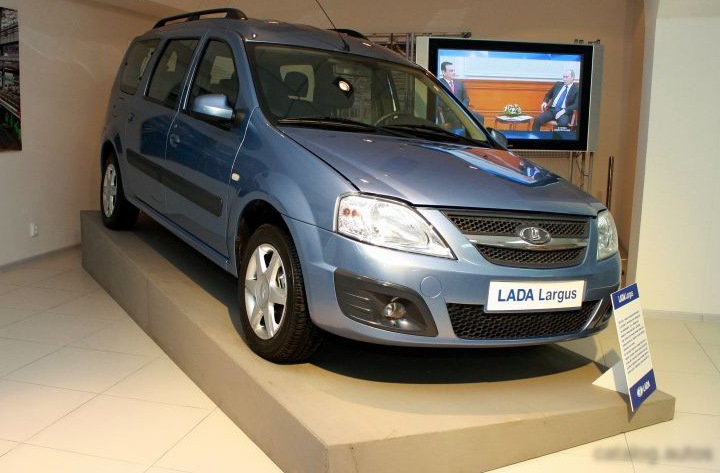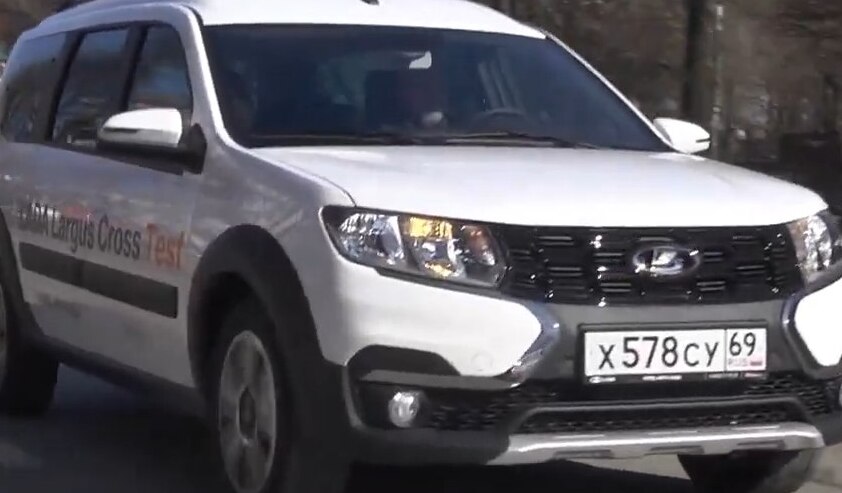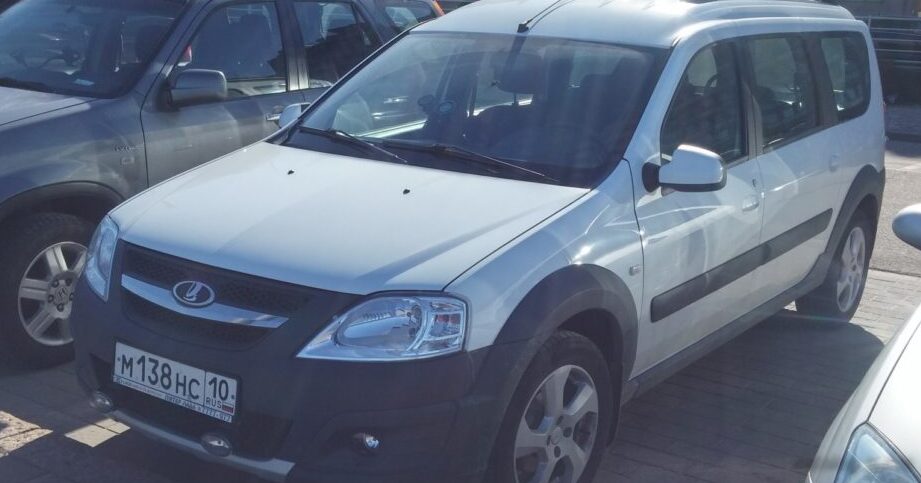
The Lada Largus Cross 1.6 (105 hp) 7-seat is a compact multi-purpose vehicle (MPV) produced by the Russian automaker Lada from 2014 to 2021. Based on the Dacia/Renault Logan MCV platform, the Largus Cross was designed to appeal to families and those needing a versatile vehicle capable of carrying passengers and cargo. The “Cross” designation indicates a slightly more rugged appearance and increased ground clearance compared to the standard Largus. This particular 1.6-liter, 105 horsepower variant occupied the entry-level position in the Largus Cross lineup, offering a balance of affordability and practicality. It was primarily marketed towards buyers in Russia and other Eastern European countries where demand for affordable, spacious vehicles is high.
Technical Specifications
| Brand | Lada |
| Model | Largus |
| Generation | Largus Cross |
| Type | 1.6 (105 Hp) 7 Seat |
| Start of production | 2014 |
| End of production | 2021 |
| Powertrain Architecture | Internal Combustion engine |
| Body type | MPV |
| Seats | 7 |
| Doors | 5 |
| Fuel consumption (urban) | 11.5 l/100 km (20.5 US mpg) |
| Fuel consumption (extra urban) | 7.5 l/100 km (31.4 US mpg) |
| Fuel consumption (combined) | 9 l/100 km (26.1 US mpg) |
| Fuel Type | Petrol (Gasoline) |
| Acceleration 0 – 100 km/h | 13.5 sec |
| Acceleration 0 – 62 mph | 13.5 sec |
| Acceleration 0 – 60 mph | 12.8 sec |
| Maximum speed | 165 km/h (102.53 mph) |
| Weight-to-power ratio | 12.7 kg/Hp |
| Weight-to-torque ratio | 9 kg/Nm |
| Power | 105 Hp @ 5750 rpm |
| Torque | 148 Nm @ 3750 rpm (109.16 lb.-ft. @ 3750 rpm) |
| Engine layout | Front, Transverse |
| Engine displacement | 1598 cm3 (97.52 cu. in.) |
| Number of cylinders | 4 |
| Engine configuration | Inline |
| Number of valves per cylinder | 4 |
| Fuel injection system | Multi-port manifold injection |
| Engine aspiration | Naturally aspirated |
| Kerb Weight | 1330 kg (2932.15 lbs) |
| Max. weight | 1810 kg (3990.37 lbs) |
| Max load | 480 kg (1058.22 lbs) |
| Trunk (boot) space – minimum | 135 l (4.77 cu. ft.) |
| Trunk (boot) space – maximum | 2350 l (82.99 cu. ft.) |
| Fuel tank capacity | 50 l (13.21 US gal) |
| Permitted trailer load with brakes (12%) | 1300 kg (2866.01 lbs) |
| Permitted trailer load without brakes | 650 kg (1433 lbs) |
| Length | 4470 mm (175.98 in) |
| Width | 1756 mm (69.13 in) |
| Height | 1682 mm (66.22 in) |
| Wheelbase | 2905 mm (114.37 in) |
| Front track | 1461 mm (57.52 in) |
| Rear track | 1466 mm (57.72 in) |
| Ride height (ground clearance) | 170 mm (6.69 in) |
| Drivetrain Architecture | Front wheel drive |
| Number of gears | 5 |
| Gearbox type | Manual transmission |
| Front suspension | Independent, McPherson with coil spring and anti-roll bar |
| Rear suspension | Semi-independent, coil spring |
| Assisting systems | ABS (Anti-lock braking system) |
| Steering type | Steering rack and pinion |
| Tires size | 205/55 R16 |
| Wheel rims size | 16 |
Powertrain & Engine Architecture
The Lada Largus Cross 1.6 utilizes a 1.6-liter inline-four cylinder gasoline engine, internally designated as the VAZ-21179. This engine is a relatively simple, naturally aspirated design featuring a multi-point fuel injection system. The engine produces 105 horsepower at 5750 rpm and 148 Nm (109 lb-ft) of torque at 3750 rpm. The engine’s architecture is based on designs originating from the early 1990s, representing a cost-effective solution for Lada. It’s paired with a five-speed manual transmission, which was the standard offering for this variant. The transmission is a conventional setup, prioritizing durability and ease of maintenance over sophisticated features. The engine’s relatively low output is characteristic of the entry-level trims, focusing on fuel efficiency and affordability rather than outright performance.
Driving Characteristics
The 1.6-liter engine and five-speed manual transmission combination in the Largus Cross delivers modest performance. Acceleration from 0 to 100 km/h (0-62 mph) takes approximately 13.5 seconds, and the top speed is around 165 km/h (102.5 mph). The gear ratios are tuned for practicality and fuel economy, rather than sporty driving. The engine feels somewhat strained when fully loaded or climbing hills, requiring frequent downshifts to maintain speed. Compared to potential higher-output variants (which were not commonly offered in the Cross trim), this 1.6L engine provides a more economical driving experience, but at the expense of responsiveness. The manual transmission offers a more engaging driving experience than an automatic would, and allows the driver to better utilize the available power.
Equipment & Trim Levels
The Largus Cross 1.6 7-seat typically came with a basic level of equipment, reflecting its position as the entry-level model. Standard features generally included power steering, central locking, front power windows, and an audio system with USB connectivity. The interior upholstery was typically a durable cloth material. Optional extras included air conditioning, alloy wheels, and a more advanced audio system. The “Cross” trim added some visual enhancements, such as plastic body cladding, roof rails, and increased ground clearance, giving it a more rugged appearance. Safety features were relatively basic, typically including ABS and driver/passenger airbags.
Chassis & Braking
The Largus Cross utilizes a front-wheel-drive chassis with an independent McPherson strut suspension at the front and a semi-independent coil spring suspension at the rear. The suspension is tuned for comfort and practicality, prioritizing ride quality over sporty handling. The brakes are disc brakes at the front and drum brakes at the rear. The braking system is adequate for everyday use, but lacks the stopping power of more advanced systems. The increased ground clearance of the “Cross” model, at 170mm, allows for better performance on unpaved roads and rough terrain.
Market Reception & Comparison
The Lada Largus Cross 1.6 7-seat was generally well-received in its target markets, particularly in Russia and neighboring countries. Critics praised its spacious interior, practicality, and affordability. However, the engine’s modest power output and relatively basic equipment levels were often noted. Compared to other MPVs available in the region, the Largus Cross offered a compelling value proposition, especially for families needing a versatile and affordable vehicle. Fuel economy was considered reasonable for its class, averaging around 9 liters per 100 kilometers (26.1 US mpg). Reliability was generally good, although the engine’s older design meant that maintenance was relatively frequent.
Legacy
The Lada Largus Cross 1.6 7-seat remains a popular choice in the used car market, particularly in Eastern Europe. Its affordability, spaciousness, and relatively simple mechanical design make it an attractive option for budget-conscious buyers. While the engine may require more frequent maintenance than more modern units, parts are readily available and relatively inexpensive. The Largus Cross represents a practical and durable vehicle that fulfilled a specific need in its target markets, offering a blend of affordability, versatility, and reliability.