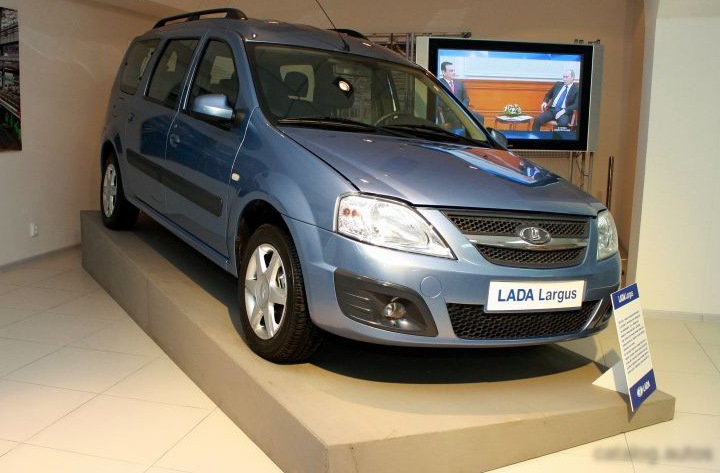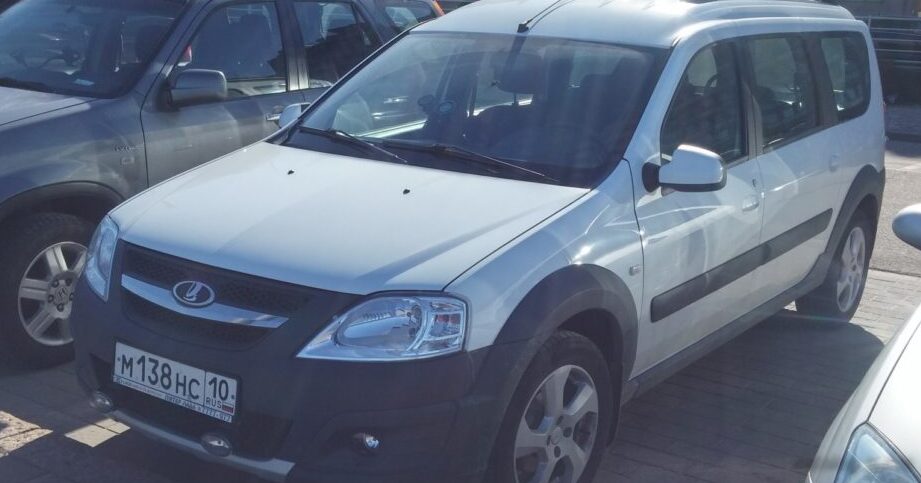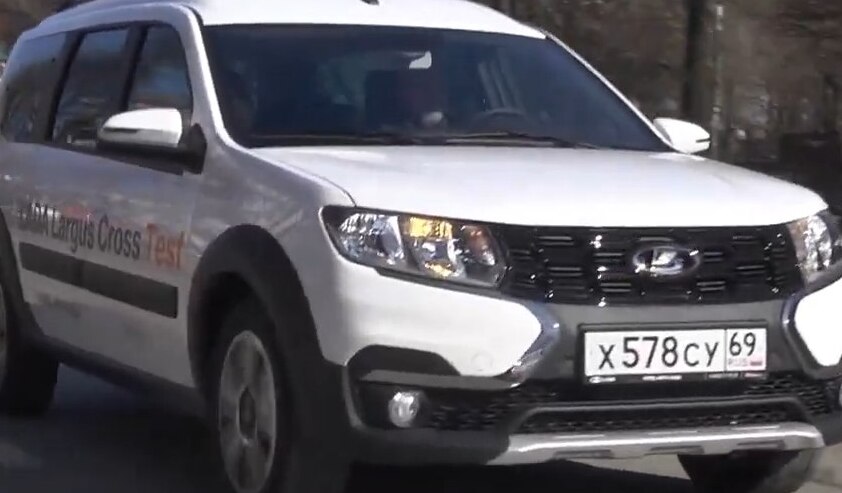
The Lada Largus Cross (facelift 2021) 1.6 (90 hp) 7-seat variant represents a practical and affordable option within the Lada lineup, primarily targeted towards families and those requiring versatile passenger and cargo space. Introduced as part of the Largus’s facelift in 2021, this version builds upon the original Largus platform, which itself is derived from the Renault Dacia Logan MCV, offering a blend of utility and cost-effectiveness. It was primarily sold in Russia and neighboring markets, filling a niche for a budget-friendly, seven-passenger vehicle.
Technical Specifications
| Brand | Lada |
| Model | Largus |
| Generation | Largus Cross (facelift 2021) |
| Type (Engine) | 1.6 (90 Hp) 7 Seat |
| Start of production | 2021 |
| Powertrain Architecture | Internal Combustion engine |
| Body type | MPV |
| Seats | 7 |
| Doors | 5 |
| Fuel consumption (combined) | 7.8 l/100 km (30.2 US mpg, 36.2 UK mpg, 12.8 km/l) |
| Fuel Type | Petrol (Gasoline) |
| Acceleration 0 – 100 km/h | 16.2 sec |
| Acceleration 0 – 62 mph | 16.2 sec |
| Acceleration 0 – 60 mph | 15.4 sec |
| Maximum speed | 160 km/h (99.42 mph) |
| Emission standard | Euro 5 |
| Weight-to-power ratio | 14.8 kg/Hp (67.7 Hp/tonne) |
| Weight-to-torque ratio | 9.3 kg/Nm (107.5 Nm/tonne) |
| Power | 90 Hp @ 5000 rpm |
| Power per litre | 56.4 Hp/l |
| Torque | 143 Nm @ 3800 rpm (105.47 lb.-ft. @ 3800 rpm) |
| Engine layout | Front, Transverse |
| Engine Model/Code | 11182 |
| Engine displacement | 1596 cm3 (97.39 cu. in.) |
| Number of cylinders | 4 |
| Engine configuration | Inline |
| Number of valves per cylinder | 2 |
| Fuel injection system | Multi-port manifold injection |
| Engine aspiration | Naturally aspirated engine |
| Engine oil capacity | 3.85 l (4.07 US qt | 3.39 UK qt) |
| Coolant capacity | 6.4 l (6.76 US qt | 5.63 UK qt) |
| Kerb Weight | 1330 kg (2932.15 lbs.) |
| Max. weight | 1810 kg (3990.37 lbs.) |
| Max load | 480 kg (1058.22 lbs.) |
| Trunk (boot) space – minimum | 135 l (4.77 cu. ft.) |
| Fuel tank capacity | 50 l (13.21 US gal | 11 UK gal) |
| Permitted trailer load with brakes (12%) | 1300 kg (2866.01 lbs.) |
| Permitted trailer load without brakes | 650 kg (1433 lbs.) |
| Length | 4496 mm (177.01 in.) |
| Width | 1754 mm (69.06 in.) |
| Height | 1682 mm (66.22 in.) |
| Wheelbase | 2905 mm (114.37 in.) |
| Front track | 1461 mm (57.52 in.) |
| Rear (Back) track | 1466 mm (57.72 in.) |
| Ride height (ground clearance) | 200 mm (7.87 in.) |
| Drivetrain Architecture | Front wheel drive, Internal Combustion engine |
| Number of gears and type of gearbox | 5 gears, manual transmission |
| Front suspension | Independent, type McPherson with coil spring and anti-roll bar |
| Rear suspension | Semi-independent, coil spring |
| Front brakes | Ventilated discs |
| Rear brakes | Drum |
| Assisting systems | ABS (Anti-lock braking system) |
| Steering type | Steering rack and pinion |
| Tires size | 205/55 R16 |
| Wheel rims size | 16 |
Positioning and Market Role
The 1.6-liter, 90 horsepower engine with a five-speed manual transmission represented the entry-level powertrain option for the Largus Cross. Lada offered more powerful engines, including a 1.6-liter with 106 hp, but the 90 hp version prioritized fuel economy and affordability. The “Cross” designation indicated a slightly more rugged appearance with plastic body cladding and increased ground clearance (200mm), making it suitable for less-than-ideal road conditions common in many parts of Russia. The seven-seat configuration further enhanced its practicality, making it a popular choice for larger families or those needing to transport multiple passengers.
Engine and Performance Characteristics
The 1.6-liter inline-four engine (model 11182) is a relatively simple and robust design, known for its reliability and ease of maintenance. Its 90 horsepower output, while not particularly high by modern standards, was sufficient for the Largus Cross’s intended purpose. Acceleration was modest, with a 0-60 mph time of around 15.4 seconds, and a top speed of 99.42 mph. The engine’s torque peak of 105.47 lb.-ft. at 3800 rpm provided adequate pulling power for everyday driving and carrying a full load of passengers and cargo. The five-speed manual transmission offered a direct and engaging driving experience, although it lacked the convenience of an automatic option.
Comparison with Other Largus Variants
Compared to the higher-powered 106 hp version of the 1.6-liter engine, the 90 hp variant offered a trade-off between performance and fuel efficiency. The 106 hp engine provided noticeably quicker acceleration and better highway passing power, but at the expense of slightly higher fuel consumption. Lada did not offer diesel engines on the Largus Cross, unlike some other markets where diesel MPVs were common. The 90 hp Largus Cross was positioned as the most economical option, appealing to budget-conscious buyers who prioritized practicality and low running costs over outright performance. Maintenance costs for the 90 hp engine were generally lower due to its simpler design and fewer components.
Suspension and Handling
The Largus Cross featured a McPherson strut front suspension and a semi-independent coil spring rear suspension. This setup provided a comfortable ride quality, absorbing bumps and imperfections in the road surface effectively. The increased ground clearance of the “Cross” model improved its ability to navigate rough terrain and unpaved roads. Steering was provided by a rack and pinion system, offering reasonable precision and feedback. However, the Largus Cross was not designed for sporty handling; its focus was on providing a stable and predictable driving experience.
Interior and Features
The interior of the Largus Cross 1.6 (90 hp) 7-seat was functional and utilitarian, prioritizing space and practicality over luxury. The seven-seat configuration offered flexible seating arrangements, with the third-row seats typically folded down to maximize cargo space when not in use. Standard features included ABS brakes, power steering, and basic instrumentation. Higher trim levels offered additional features such as air conditioning, power windows, and a basic audio system. The overall build quality was modest, reflecting the vehicle’s affordable price point.
Legacy and Impact
The Lada Largus Cross, including the 1.6 (90 hp) 7-seat variant, played a significant role in the Russian automotive market, providing a much-needed affordable and practical MPV option. Its robust construction, spacious interior, and relatively low running costs made it a popular choice for families and commercial users alike. While not a technologically advanced vehicle, the Largus Cross offered a compelling value proposition, filling a gap in the market that few other vehicles could match. Its enduring popularity is a testament to its practicality and affordability.