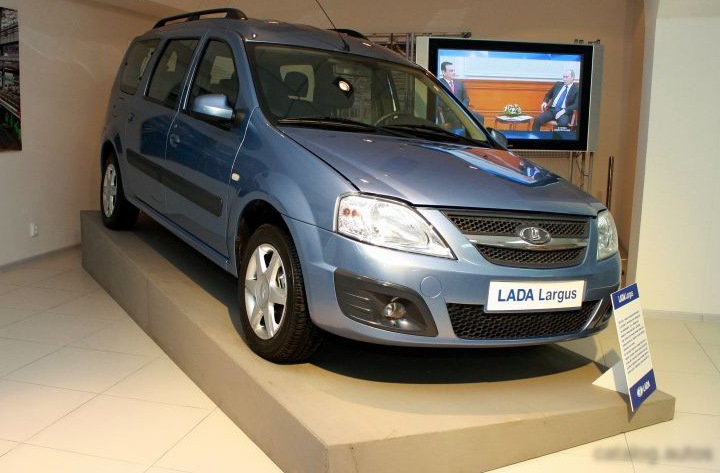
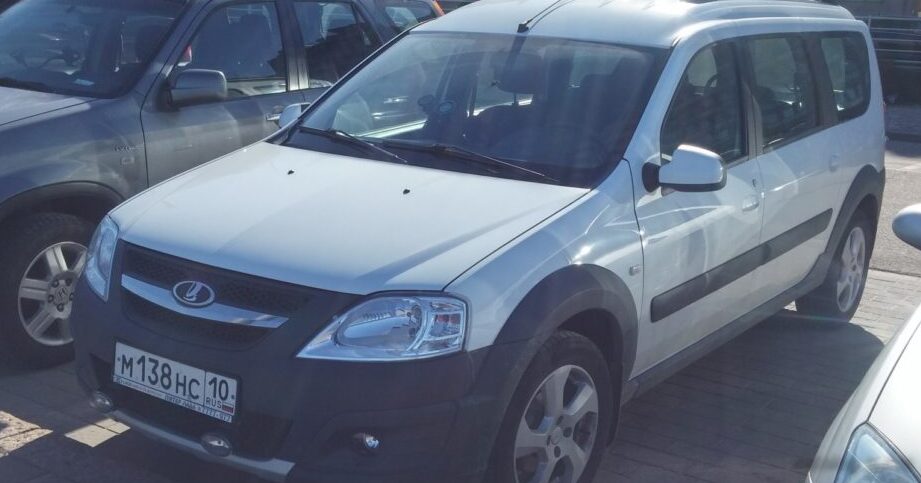
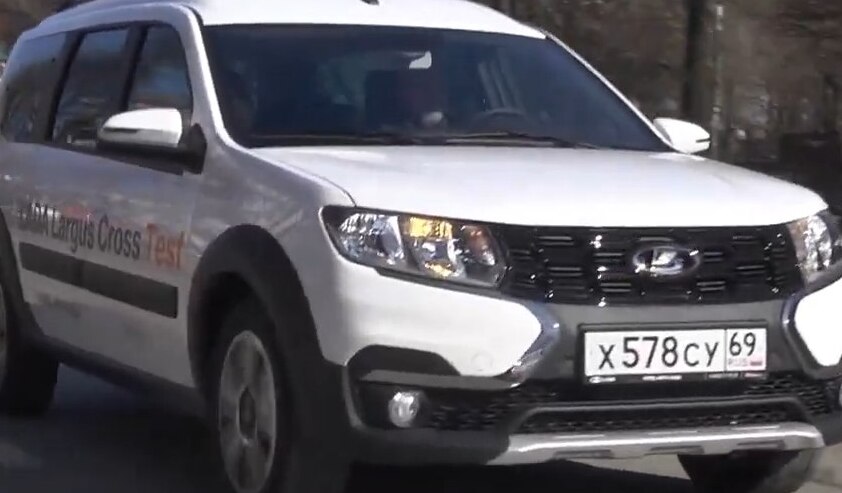
The Lada Largus Universal, particularly the facelifted version introduced in 2021 with the 1.6-liter 106 horsepower engine and seven-seat configuration, represents a significant offering in the budget-friendly MPV (Multi-Purpose Vehicle) segment. Positioned as a practical and spacious vehicle, the Largus aimed to cater to families and those requiring versatile cargo capacity. The 2021 facelift brought modest styling updates and refinements to the already established Largus platform, which itself is based on the Renault Dacia Logan MCV. This variant occupied a middle ground within the Largus lineup, offering a balance between affordability and usability, sitting below the more basic trims and above any potential future, higher-specification models.
Technical Specifications
| Brand | Lada |
| Model | Largus |
| Generation | Largus Universal (facelift 2021) |
| Type (Engine) | 1.6 (106 Hp) 7 Seat |
| Start of production | 2021 |
| Powertrain Architecture | Internal Combustion engine |
| Body type | MPV |
| Seats | 7 |
| Doors | 5 |
| Fuel consumption (urban) | 10.2 l/100 km (23.1 US mpg, 27.7 UK mpg, 9.8 km/l) |
| Fuel consumption (extra urban) | 6.3 l/100 km (37.3 US mpg, 44.8 UK mpg, 15.9 km/l) |
| Fuel consumption (combined) | 7.8 l/100 km (30.2 US mpg, 36.2 UK mpg, 12.8 km/l) |
| Fuel Type | Petrol (Gasoline) |
| Acceleration 0 – 100 km/h | 13.6 sec |
| Acceleration 0 – 62 mph | 13.6 sec |
| Acceleration 0 – 60 mph | 12.9 sec |
| Maximum speed | 170 km/h (105.63 mph) |
| Emission standard | Euro 5 |
| Weight-to-power ratio | 12.9 kg/Hp, 77.4 Hp/tonne |
| Weight-to-torque ratio | 9.3 kg/Nm, 108 Nm/tonne |
| Power | 106 Hp @ 5800 rpm |
| Power per litre | 66.4 Hp/l |
| Torque | 148 Nm @ 4200 rpm (109.16 lb.-ft. @ 4200 rpm) |
| Engine layout | Front, Transverse |
| Engine Model/Code | 21129 |
| Engine displacement | 1596 cm3 (97.39 cu. in.) |
| Number of cylinders | 4 |
| Engine configuration | Inline |
| Number of valves per cylinder | 4 |
| Fuel injection system | Multi-port manifold injection |
| Engine aspiration | Naturally aspirated engine |
| Engine oil capacity | 3.85 l (4.07 US qt | 3.39 UK qt) |
| Coolant capacity | 6.4 l (6.76 US qt | 5.63 UK qt) |
| Kerb Weight | 1370 kg (3020.33 lbs.) |
| Max. weight | 1850 kg (4078.55 lbs.) |
| Max load | 480 kg (1058.22 lbs.) |
| Trunk (boot) space – minimum | 135 l (4.77 cu. ft.) |
| Fuel tank capacity | 50 l (13.21 US gal | 11 UK gal) |
| Permitted trailer load with brakes (12%) | 1300 kg (2866.01 lbs.) |
| Permitted trailer load without brakes | 650 kg (1433 lbs.) |
| Length | 4488 mm (176.69 in.) |
| Width | 1735 mm (68.31 in.) |
| Height | 1656 mm (65.2 in.) |
| Wheelbase | 2905 mm (114.37 in.) |
| Front track | 1469 mm (57.83 in.) |
| Rear (Back) track | 1466 mm (57.72 in.) |
| Front overhang | 813 mm (32.01 in.) |
| Rear overhang | 770 mm (30.31 in.) |
| Ride height (ground clearance) | 172 mm (6.77 in.) |
| Drivetrain Architecture | Front wheel drive |
| Number of gears and type of gearbox | 5 gears, manual transmission |
| Front suspension | Independent, type McPherson with coil spring and anti-roll bar |
| Rear suspension | Semi-independent, coil spring |
| Front brakes | Ventilated discs |
| Rear brakes | Drum |
| Assisting systems | ABS (Anti-lock braking system) |
| Steering type | Steering rack and pinion |
| Tires size | 185/65 R15 |
| Wheel rims size | 15 |
Powertrain & Engine Architecture
The heart of this Largus variant is the Lada 21129 1.6-liter inline-four cylinder engine. This engine, a mainstay of the Lada lineup for many years, is a relatively simple, naturally aspirated design. It utilizes a multi-port fuel injection system, providing adequate fuel delivery for its modest power output. The engine features a single overhead camshaft (SOHC) operating four valves per cylinder. The 106 horsepower peak is achieved at 5800 rpm, while the 148 Nm (109.16 lb-ft) of torque is delivered at 4200 rpm. Paired with this engine is a five-speed manual transmission, chosen for its affordability and reliability. While an automated manual transmission (AMT) was offered on some Largus models, this 1.6L 106hp version was primarily sold with the standard manual gearbox.
Driving Characteristics
The 1.6-liter engine, coupled with the five-speed manual transmission, provides adequate, though not exhilarating, performance. Acceleration from 0-100 km/h (0-62 mph) takes around 13.6 seconds. The Largus isn’t designed for sporty driving; instead, it prioritizes usability and fuel efficiency. The gear ratios are tuned for everyday driving, offering reasonable acceleration in lower gears and comfortable cruising at highway speeds. Compared to potential higher-output versions (had they existed), this variant would feel noticeably slower, particularly when fully loaded with passengers and cargo. The manual transmission allows for greater driver control and potentially better fuel economy compared to an automatic, but requires more driver involvement.
Equipment & Trim Levels
The 2021 facelifted Largus 1.6 (106 Hp) 7 Seat typically came with a basic, yet functional, equipment list. Standard features generally included power steering, central locking, front power windows, and an audio system with USB connectivity. Safety features included ABS (Anti-lock Braking System). Interior upholstery was typically cloth, with a durable, easy-to-clean finish. Optional extras could include air conditioning, power windows for the rear doors, and an upgraded audio system. The trim level was generally considered entry-level to mid-range within the Largus family, focusing on providing essential features at an affordable price point.
Chassis & Braking
The Largus utilizes a McPherson strut independent suspension setup at the front, providing a reasonable level of ride comfort. The rear suspension is a semi-independent coil spring design, which is a cost-effective solution for MPVs. Braking duties are handled by ventilated discs at the front and drum brakes at the rear. The braking system, while adequate for the vehicle’s weight and performance, isn’t particularly sophisticated. The steering is a rack and pinion system, offering reasonable precision and feedback.
Market Reception & Comparison
The Lada Largus, in general, enjoyed a positive reception in Russia and other markets where it was sold, primarily due to its affordability, spaciousness, and practicality. The 1.6-liter 106 hp variant was particularly popular with budget-conscious buyers. Critics often praised its value for money, but noted its relatively basic interior and lack of advanced features. Compared to other trims, this variant offered the best fuel economy and a lower purchase price, making it an attractive option for families and those needing a versatile vehicle for work or leisure. Reliability was generally considered good, although the simplicity of the engine and components contributed to its ease of maintenance.
Legacy
The Lada Largus, and specifically this 1.6-liter variant, has established itself as a reliable and affordable MPV in its target markets. Its simple design and robust construction contribute to its longevity. On the used car market, these Largus models continue to be sought after by buyers looking for a practical and economical vehicle. While not a performance icon, the Largus 1.6 (106 Hp) 7 Seat represents a pragmatic solution for those prioritizing space, affordability, and dependability over driving thrills.