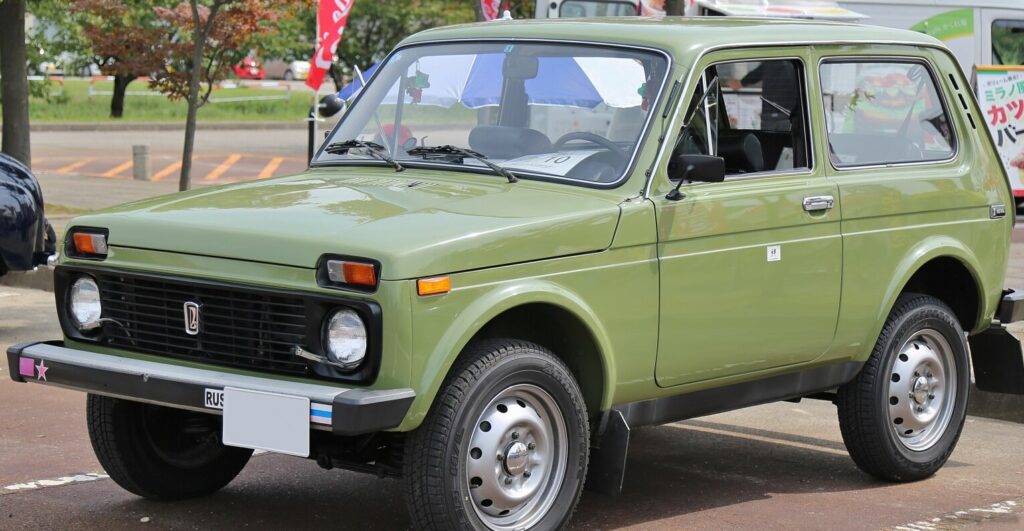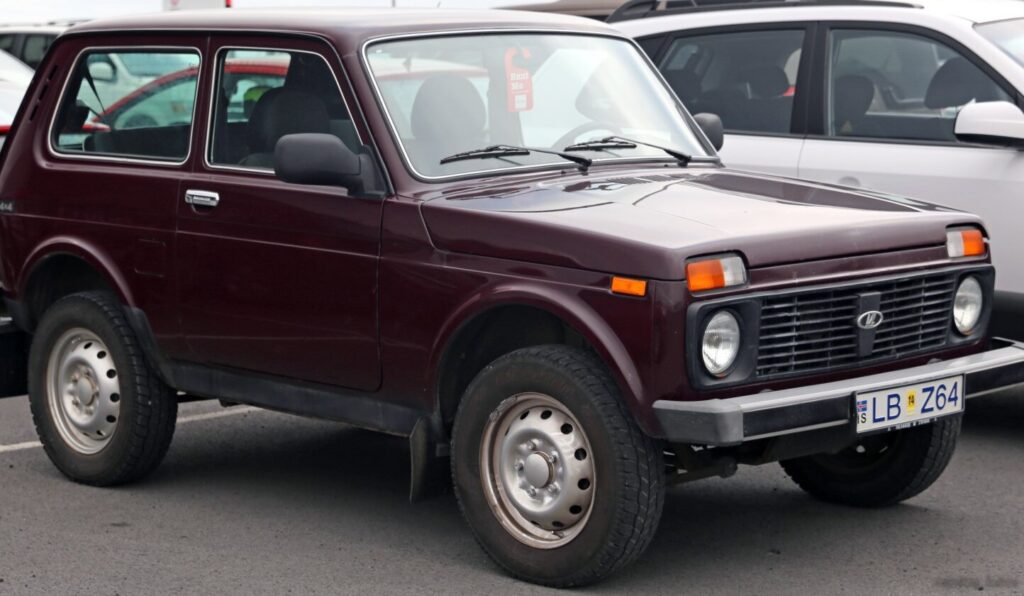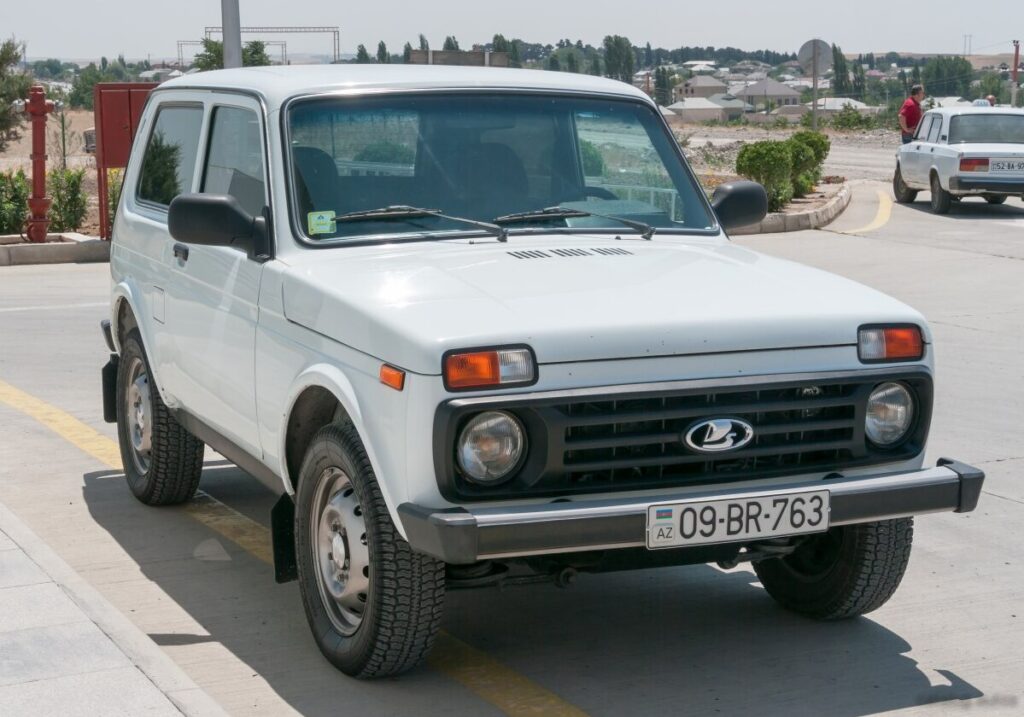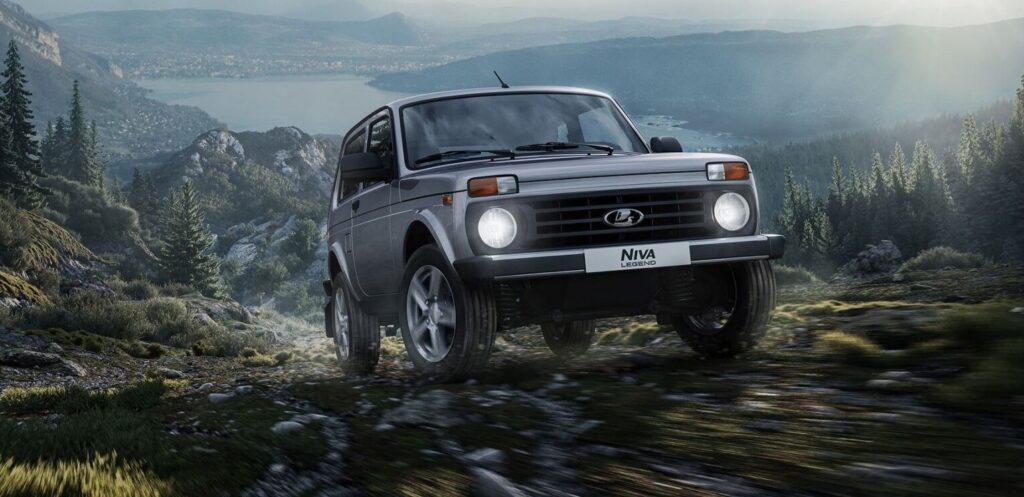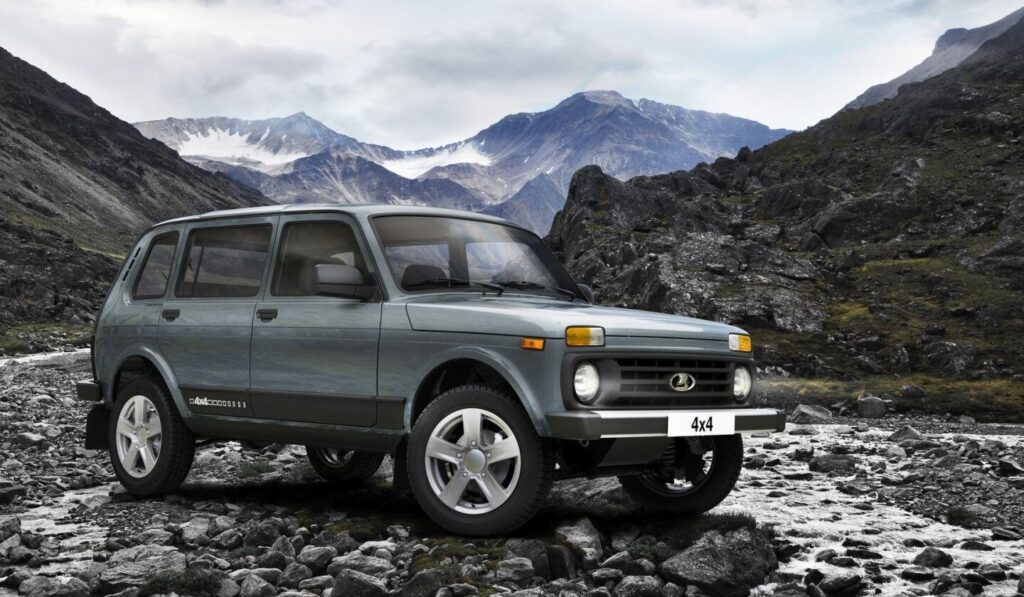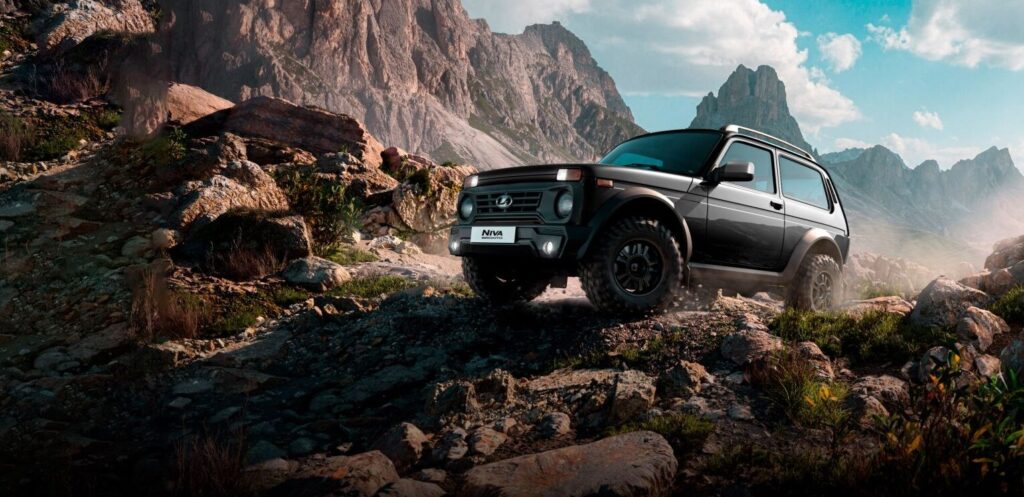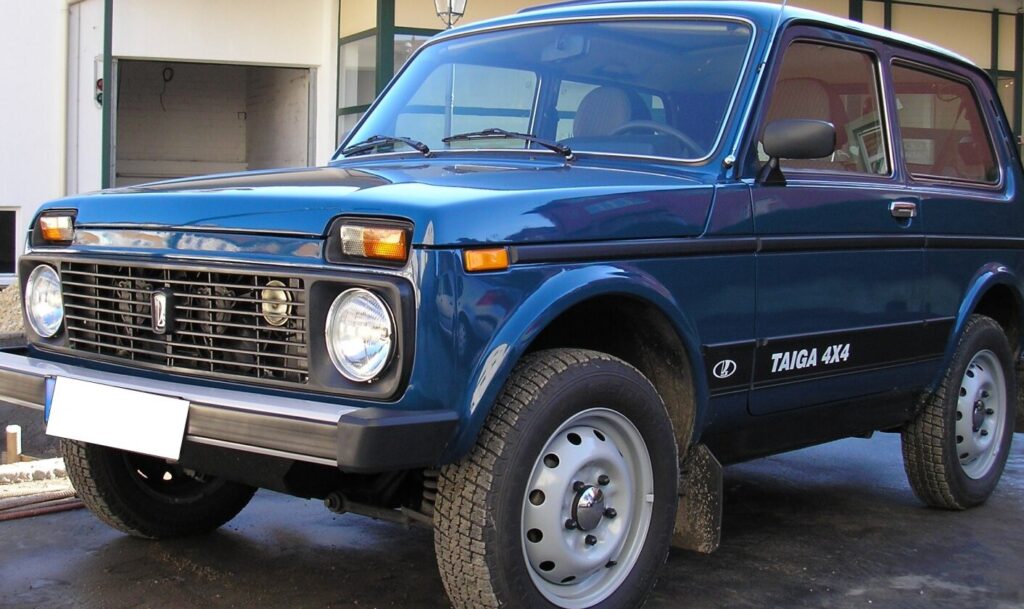
The Lada Niva 3-door, particularly the facelifted version introduced in 1993, represents a significant iteration of the iconic Soviet-era off-roader. Produced from 1993 through 2003, this variant, equipped with the 1.7-liter engine producing 79 horsepower, served as a mainstay in both the domestic Russian market and export destinations. It continued the Niva’s reputation for rugged simplicity and exceptional off-road capability, offering a relatively affordable and durable 4×4 solution. This specific configuration, while not the most powerful in the Niva lineup, was a popular choice for buyers prioritizing practicality and low running costs over outright performance.
Technical Specifications
| Brand | Lada |
| Model | Niva |
| Generation | Niva 3-door (facelift 1993) |
| Type (Engine) | 1.7 (79 Hp) 4×4 |
| Start of production | 1993 |
| End of production | 2003 |
| Powertrain Architecture | Internal Combustion engine |
| Body type | SUV |
| Seats | 4 |
| Doors | 3 |
| Fuel consumption (extra urban) | 9-12.1 l/100 km (26.1 – 19.4 US mpg, 31.4 – 23.3 UK mpg, 11.1 – 8.3 km/l) |
| Fuel Type | Petrol (Gasoline) |
| Acceleration 0 – 100 km/h | 19 sec |
| Acceleration 0 – 62 mph | 19 sec |
| Acceleration 0 – 60 mph | 18.1 sec |
| Maximum speed | 137 km/h (85.13 mph) |
| Weight-to-power ratio | 15.3 kg/Hp, 65.3 Hp/tonne |
| Power | 79 Hp @ 5200 rpm |
| Power per litre | 46.7 Hp/l |
| Maximum engine speed | 6000 rpm |
| Engine layout | Front, Longitudinal |
| Engine Model/Code | VAZ-21213 |
| Engine displacement | 1690 cm3 (103.13 cu. in.) |
| Number of cylinders | 4 |
| Engine configuration | Inline |
| Cylinder Bore | 82 mm (3.23 in.) |
| Piston Stroke | 80 mm (3.15 in.) |
| Compression ratio | 9.3:1 |
| Number of valves per cylinder | 2 |
| Fuel injection system | Carburettor |
| Engine aspiration | Naturally aspirated engine |
| Valvetrain | SOHC |
| Engine oil capacity | 3.75 l (3.96 US qt | 3.3 UK qt) |
| Coolant | 10.7 l (11.31 US qt | 9.41 UK qt) |
| Kerb Weight | 1210 kg (2667.59 lbs.) |
| Max. weight | 1610 kg (3549.44 lbs.) |
| Max load | 400 kg (881.85 lbs.) |
| Fuel tank capacity | 42 l (11.1 US gal | 9.24 UK gal) |
| Max. roof load | 50 kg (110.23 lbs.) |
| Permitted trailer load with brakes (12%) | 600 kg (1322.77 lbs.) |
| Permitted trailer load without brakes | 300 kg (661.39 lbs.) |
| Permitted towbar download | 50 kg (110.23 lbs.) |
| Length | 3740 mm (147.24 in.) |
| Width | 1680 mm (66.14 in.) |
| Width including mirrors | 1814 mm (71.42 in.) |
| Height | 1640 mm (64.57 in.) |
| Wheelbase | 2200 mm (86.61 in.) |
| Front track | 1430 mm (56.3 in.) |
| Rear (Back) track | 1400 mm (55.12 in.) |
| Front overhang | 705 mm (27.76 in.) |
| Rear overhang | 835 mm (32.87 in.) |
| Ride height (ground clearance) | 213 mm (8.39 in.) |
| Minimum turning circle | 11 m (36.09 ft.) |
| Wading depth | 500 mm (19.69 in.) |
| Drivetrain Architecture | All wheel drive (4×4). ICE drives permanently the four wheels. |
| Number of gears and type of gearbox | 5 gears, manual transmission |
| Front suspension | Independent coil spring |
| Rear suspension | dependent spring suspension |
| Front brakes | Disc |
| Rear brakes | Drum |
| Tires size | 175/80 R16; 185/75 R16 |
| Wheel rims size | 5J x 16 |
INTRODUCTION
The Lada Niva, originally launched in 1977, was a groundbreaking vehicle for its time, offering genuine four-wheel-drive capability in a compact and affordable package. The 1993 facelift brought subtle but important updates to the Niva’s exterior and interior, improving its overall refinement and appeal. The 1.7-liter, 79 horsepower variant occupied the entry-level position in the Niva range, appealing to buyers who needed a robust and reliable off-road vehicle for work or leisure, but didn’t require the higher performance of the more expensive models. It was primarily sold in Russia and other Eastern European countries, but also found its way to Western Europe and other markets as a budget-friendly alternative to more established 4x4s.
Powertrain & Engine Architecture
The heart of this Niva variant is the VAZ-21213 engine, a 1.7-liter inline-four cylinder petrol engine. This engine is a descendant of the original Niva powerplant, but with some modifications to improve reliability and emissions. Notably, it utilizes a carburetor fuel system, a relatively archaic technology by the 1990s, but one that contributed to the engine’s simplicity and ease of maintenance. The engine features a single overhead camshaft (SOHC) valvetrain with two valves per cylinder. The 79 horsepower output is achieved at 5200 rpm, and the engine produces a modest amount of torque, sufficient for off-road work but not particularly strong on paved roads. The engine is longitudinally mounted, driving all four wheels through a five-speed manual transmission. The transmission is known for its robust construction, but its shift quality can be somewhat agricultural compared to more modern gearboxes.
Driving Characteristics
The 1.7-liter Niva is not a fast vehicle. Acceleration is leisurely, taking around 19 seconds to reach 62 mph. However, its performance isn’t about speed; it’s about capability. The Niva’s high ground clearance, combined with its permanent four-wheel drive system and low-range gearbox, makes it exceptionally capable off-road. The carburetor can sometimes make smooth throttle control challenging, and the engine feels strained at higher speeds. The suspension is designed for absorbing rough terrain, resulting in a somewhat bouncy ride on paved roads. The steering is direct but lacks power assistance, requiring some effort, especially at low speeds. Compared to later Niva variants with fuel injection and more powerful engines, this 1.7-liter version feels underpowered, but its simplicity and durability are significant advantages.
Equipment & Trim Levels
The 1993 facelifted Niva 1.7 was typically sparsely equipped, reflecting its position as the entry-level model. Standard features generally included basic steel wheels, vinyl or cloth upholstery, and a simple dashboard layout. Power windows and central locking were not typically included, although some export models may have offered them as optional extras. The interior was functional and utilitarian, designed for durability rather than luxury. Optional extras could include a sunroof, upgraded upholstery, and a radio. The focus was on providing a basic, reliable vehicle that could withstand harsh conditions.
Chassis & Braking
The Niva’s chassis is a body-on-frame construction, providing excellent strength and durability. The front suspension utilizes independent coil springs, while the rear suspension employs a dependent spring setup. This configuration contributes to the Niva’s off-road prowess, allowing for significant wheel articulation. The brakes are disc brakes at the front and drum brakes at the rear. The braking system is adequate for normal use, but lacks the stopping power of more modern vehicles. The tires are typically 175/80 R16 or 185/75 R16, chosen for their off-road traction and durability.
Market Reception & Comparison
The Niva 1.7 was generally well-received as a practical and affordable off-road vehicle. Critics praised its ruggedness, simplicity, and exceptional off-road capability. However, it was also criticized for its lack of refinement, slow performance, and outdated technology. Compared to other Niva variants, such as those with fuel injection or larger engines, the 1.7-liter version offered lower running costs and simpler maintenance, but at the expense of performance. Fuel economy was reasonable for its class, but not exceptional. Its reliability was generally good, although the carburetor required periodic adjustment and maintenance.
Legacy
The Lada Niva, in all its variants, has achieved a cult following among off-road enthusiasts. The 1.7-liter version, while not the most desirable in terms of performance, remains a popular choice for those seeking a simple, reliable, and affordable 4×4. Today, these vehicles are relatively inexpensive to purchase and maintain, making them attractive to budget-conscious buyers. Parts availability can be a challenge in some regions, but a dedicated community of Niva owners and enthusiasts helps to keep these vehicles on the road. The Niva’s enduring legacy is a testament to its rugged design and exceptional off-road capability, solidifying its place as a true icon of the automotive world.