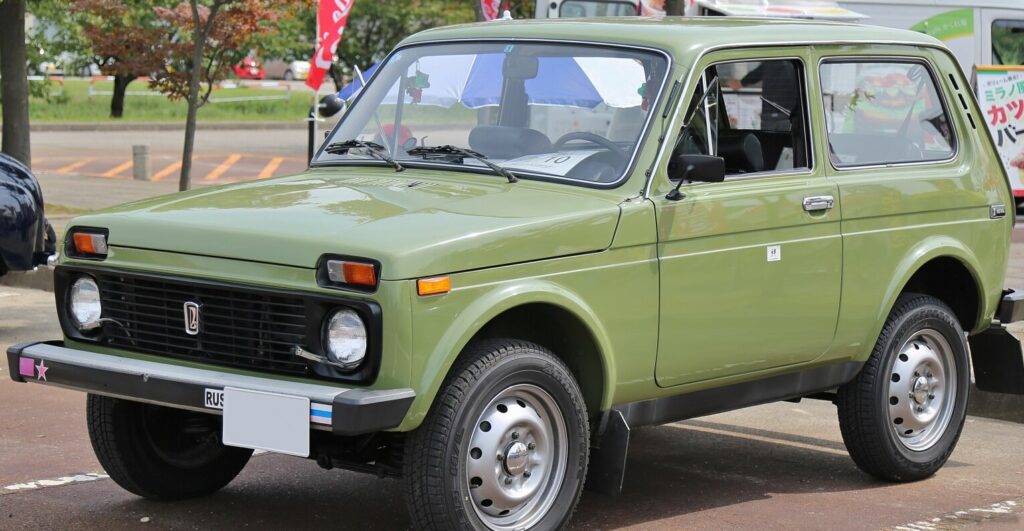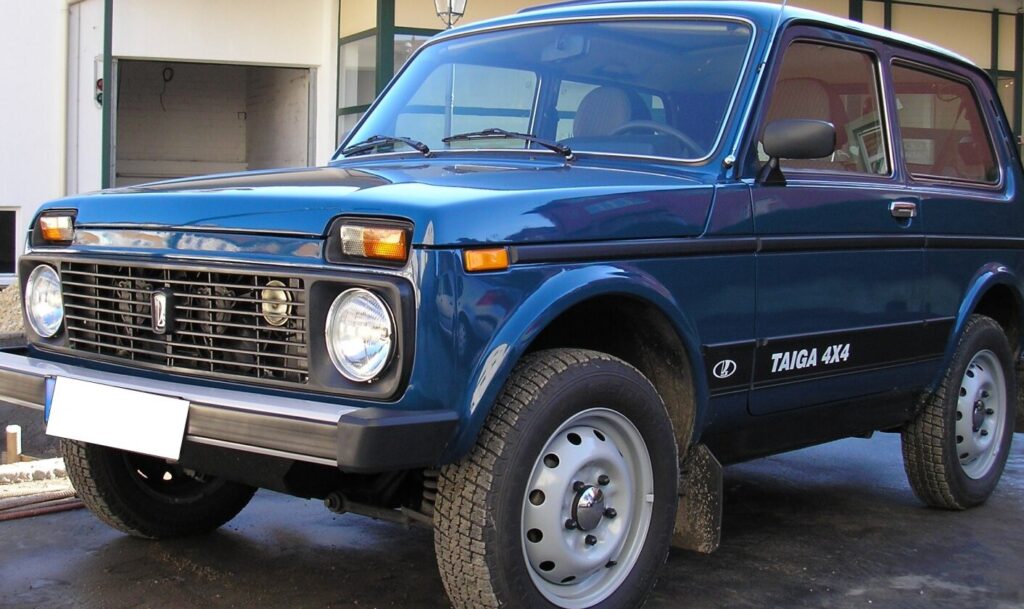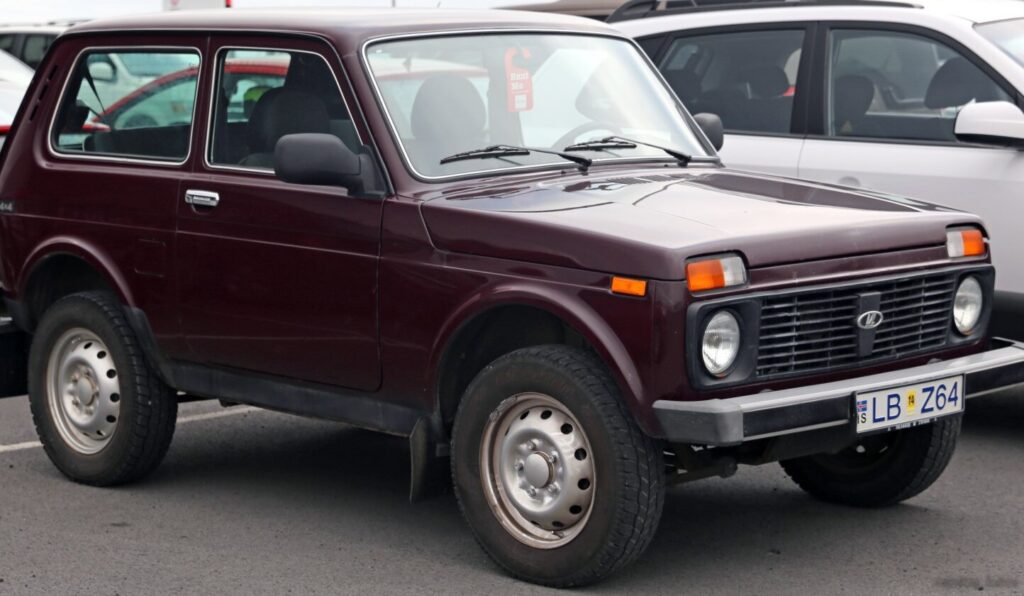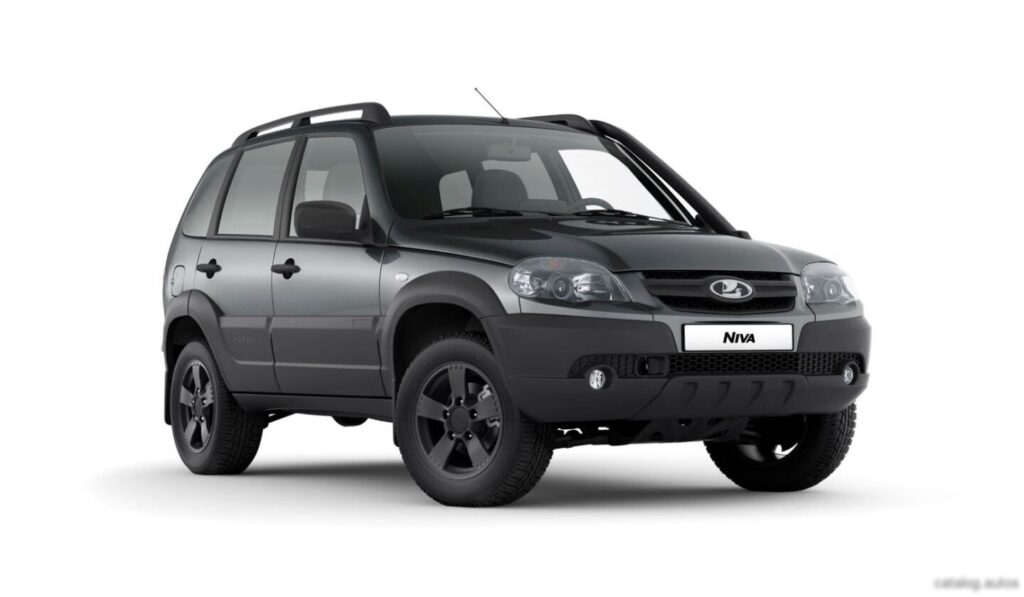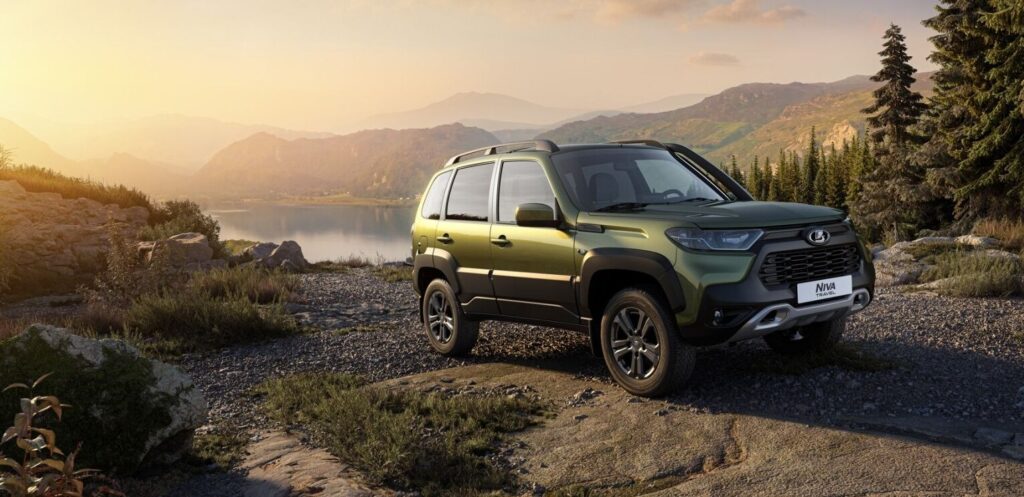
The Lada Niva Travel 1.7 (80 hp) 4×4, introduced in 2021, represents a significant evolution of the iconic Niva lineage. Positioned as an entry-level offering within the broader Niva Travel range, this variant aimed to provide affordable four-wheel-drive capability to a wider audience. It builds upon the foundations of the original Niva, known for its rugged simplicity and off-road prowess, but incorporates modern styling and some updated features. The Niva Travel replaced the previous Chevrolet Niva model, marking a return to the Lada brand for this popular off-roader. This specific 1.7-liter, 80 horsepower configuration with a five-speed manual transmission was designed to balance cost-effectiveness with acceptable performance for both on- and off-road use.
Technical Specifications
| Brand | Lada |
| Model | Niva |
| Generation | Niva Travel |
| Type (Engine) | 1.7 (80 Hp) 4×4 |
| Start of production | 2021 |
| Powertrain Architecture | Internal Combustion engine |
| Body type | SUV |
| Seats | 5 |
| Doors | 5 |
| Fuel consumption (urban) | 13.4 l/100 km (17.6 US mpg, 21.1 UK mpg, 7.5 km/l) |
| Fuel consumption (extra urban) | 8.5 l/100 km (27.7 US mpg, 33.2 UK mpg, 11.8 km/l) |
| Fuel consumption (combined) | 10.2 l/100 km (23.1 US mpg, 27.7 UK mpg, 9.8 km/l) |
| Fuel Type | Petrol (Gasoline) |
| Acceleration 0 – 100 km/h | 19 sec |
| Acceleration 0 – 62 mph | 19 sec |
| Acceleration 0 – 60 mph | 18.1 sec |
| Maximum speed | 140 km/h (86.99 mph) |
| Emission standard | Euro 5 |
| Weight-to-power ratio | 18.6 kg/Hp, 53.9 Hp/tonne |
| Weight-to-torque ratio | 11.7 kg/Nm, 85.5 Nm/tonne |
| Power | 80 Hp @ 5000 rpm |
| Power per litre | 47.3 Hp/l |
| Torque | 127 Nm @ 4000 rpm (93.67 lb.-ft. @ 4000 rpm) |
| Engine layout | Front, Longitudinal |
| Engine Model/Code | 2123 |
| Engine displacement | 1690 cm3 (103.13 cu. in.) |
| Number of cylinders | 4 |
| Engine configuration | Inline |
| Cylinder Bore | 82 mm (3.23 in.) |
| Piston Stroke | 80 mm (3.15 in.) |
| Compression ratio | 9.3:1 |
| Number of valves per cylinder | 2 |
| Fuel injection system | Multi-port manifold injection |
| Engine aspiration | Naturally aspirated engine |
| Kerb Weight | 1485 kg (3273.86 lbs.) |
| Max. weight | 1860 kg (4100.6 lbs.) |
| Max load | 375 kg (826.73 lbs.) |
| Trunk (boot) space – minimum | 320 l (11.3 cu. ft.) |
| Trunk (boot) space – maximum | 650 l (22.95 cu. ft.) |
| Fuel tank capacity | 58 l (15.32 US gal | 12.76 UK gal) |
| Permitted trailer load with brakes (12%) | 1200 kg (2645.55 lbs.) |
| Permitted trailer load without brakes | 600 kg (1322.77 lbs.) |
| Length | 4099 mm (161.38 in.) |
| Width | 1804 mm (71.02 in.) |
| Height | 1690 mm (66.54 in.) |
| Wheelbase | 2450 mm (96.46 in.) |
| Front track | 1466 mm (57.72 in.) |
| Rear (Back) track | 1456 mm (57.32 in.) |
| Ride height (ground clearance) | 220 mm (8.66 in.) |
| Drivetrain Architecture | The Internal combustion engine (ICE) drives permanently the four wheels of the vehicle. |
| Drive wheel | All wheel drive (4×4) |
| Number of gears and type of gearbox | 5 gears, manual transmission |
| Front suspension | Independent coil spring |
| Rear suspension | dependent spring suspension |
| Front brakes | Disc |
| Rear brakes | Drum |
| Assisting systems | ABS (Anti-lock braking system) |
| Tires size | 205/70 R15; 205/75 R15; 215/65 R16 |
| Wheel rims size | 15; 16 |
Powertrain & Engine Architecture
The Niva Travel 1.7 utilizes the 2123 engine, a 1.7-liter inline-four cylinder gasoline engine. This engine is a relatively simple design, featuring a cast iron block and aluminum cylinder head. It employs a multi-port fuel injection system, a step up from the carburetor systems found in earlier Niva models, contributing to improved fuel efficiency and reduced emissions. The engine produces 80 horsepower at 5000 rpm and 127 Nm (93.67 lb.-ft.) of torque at 4000 rpm. The engine’s longitudinal mounting and the permanent four-wheel-drive system necessitate a transfer case to distribute power to all four wheels. The five-speed manual transmission is a conventional design, chosen for its robustness and simplicity. It’s important to note that this engine, while reliable, is not known for its refinement or high performance.
Driving Characteristics
The 1.7-liter engine and five-speed manual transmission combination delivers modest performance. Acceleration is slow, with a 0-60 mph time of around 18.1 seconds. The engine feels strained at higher speeds, and the Niva Travel 1.7 is best suited for relaxed driving. The gear ratios are geared towards low-speed torque, making it capable in off-road situations. Compared to potential higher-output versions (which weren’t commonly offered in many markets), this variant prioritizes fuel economy and affordability over outright speed. The permanent four-wheel-drive system provides excellent traction on loose surfaces, but it also contributes to a slightly heavier steering feel on paved roads.
Equipment & Trim Levels
The Niva Travel 1.7 typically came with a basic level of equipment. Standard features generally included power steering, central locking, and electric front windows. Interior upholstery was typically cloth, and the dashboard featured a functional, if somewhat utilitarian, design. Optional extras could include air conditioning, a radio with Bluetooth connectivity, and alloy wheels. The trim level was generally considered the base model, focusing on providing essential functionality at a low price point. Higher trim levels, if available, would add features like upgraded interior materials and additional convenience items.
Chassis & Braking
The Niva Travel retains the robust ladder-frame chassis that has been a hallmark of the Niva family for decades. This provides excellent durability and off-road capability. The front suspension utilizes independent coil springs, while the rear suspension employs a dependent spring suspension setup. This configuration contributes to a comfortable ride on rough terrain, but it can also result in some body roll during cornering on paved roads. The braking system features disc brakes on the front wheels and drum brakes on the rear wheels. ABS (Anti-lock Braking System) is standard, enhancing safety during emergency braking situations. The relatively high ground clearance of 220 mm (8.66 in.) is a key asset for off-road driving.
Market Reception & Comparison
The Niva Travel 1.7 was generally well-received as an affordable and capable off-road vehicle. Critics praised its ruggedness and simplicity, but also noted its lack of refinement and slow performance. Compared to other trims in the Niva Travel lineup, the 1.7-liter version offered the lowest price point, making it accessible to a wider range of buyers. Fuel economy, while not exceptional, was reasonable for a four-wheel-drive vehicle of this type. Reliability was generally considered good, although the engine’s simplicity meant that maintenance was relatively straightforward.
Legacy
The Lada Niva Travel 1.7 (80 hp) 4×4 continues to be a popular choice in the used car market, particularly among those seeking an affordable and capable off-road vehicle. The 2123 engine is known for its durability, and parts availability is generally good. While not a performance machine, this variant offers a unique combination of ruggedness, simplicity, and affordability that has cemented its place in automotive history. Its enduring appeal lies in its ability to tackle challenging terrain and provide reliable transportation in a variety of conditions.