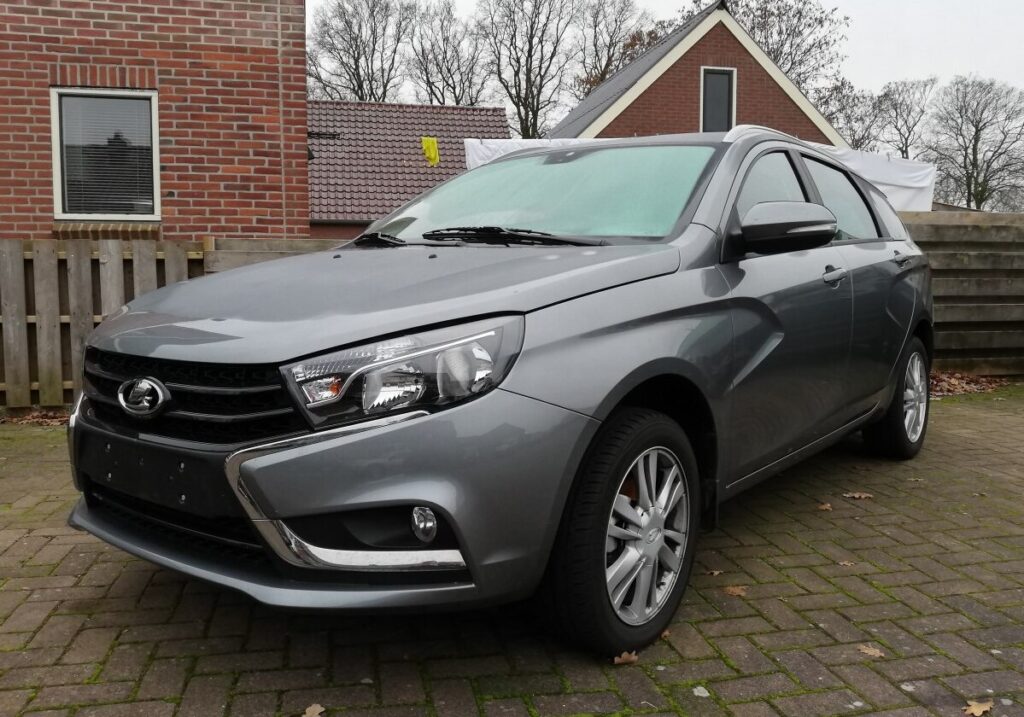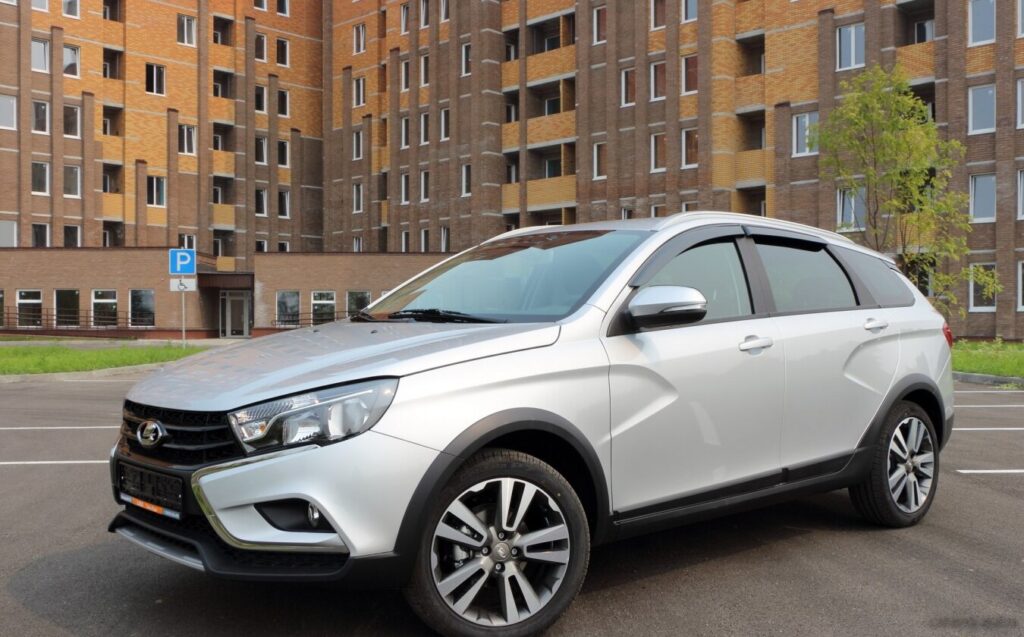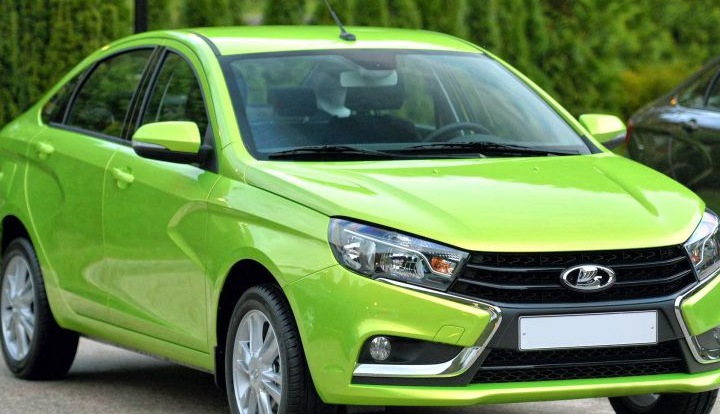
The Lada Vesta Sport 1.8 16V, introduced in 2015, represents a performance-oriented variant within the Vesta family, Lada’s attempt to modernize and appeal to a broader market. Positioned as a sporty trim level, it aimed to offer a more engaging driving experience than the standard Vesta models. The Vesta itself was a significant vehicle for AvtoVAZ (Lada’s manufacturer), representing a departure from older designs and a move towards more contemporary automotive standards. The Sport 1.8 16V, with its increased horsepower, was intended to attract buyers seeking a blend of practicality and performance in a budget-friendly package, primarily within the Russian domestic market and select export regions.
Technical Specifications
| Brand | Lada |
| Model | Vesta |
| Type | Sport 1.8 16V (145 Hp) |
| Start of production | 2015 |
| Powertrain Architecture | Internal Combustion engine |
| Body type | Sedan |
| Seats | 5 |
| Doors | 4 |
| Fuel consumption (combined) | 7.9 l/100 km (29.8 US mpg, 35.8 UK mpg, 12.7 km/l) |
| Fuel Type | Petrol (Gasoline) |
| Acceleration 0 – 100 km/h | 9.6 sec |
| Acceleration 0 – 62 mph | 9.6 sec |
| Acceleration 0 – 60 mph | 9.1 sec |
| Maximum speed | 193 km/h (119.92 mph) |
| Emission standard | Euro 5 |
| Weight-to-power ratio | 9.1 kg/Hp, 109.7 Hp/tonne |
| Weight-to-torque ratio | 7.2 kg/Nm, 139.2 Nm/tonne |
| Power | 145 Hp @ 6000 rpm |
| Power per litre | 81.7 Hp/l |
| Torque | 184 Nm @ 3600 rpm (135.71 lb.-ft. @ 3600 rpm) |
| Engine layout | Front, Transverse |
| Engine displacement | 1774 cm3 (108.26 cu. in.) |
| Number of cylinders | 4 |
| Engine configuration | Inline |
| Cylinder Bore | 82 mm (3.23 in.) |
| Piston Stroke | 84 mm (3.31 in.) |
| Compression ratio | 10.5:1 |
| Number of valves per cylinder | 4 |
| Fuel injection system | Multi-port manifold injection |
| Engine aspiration | Naturally aspirated engine |
| Kerb Weight | 1322 kg (2914.51 lbs.) |
| Max. weight | 1670 kg (3681.72 lbs.) |
| Max load | 348 kg (767.21 lbs.) |
| Trunk (boot) space – minimum | 480 l (16.95 cu. ft.) |
| Fuel tank capacity | 55 l (14.53 US gal | 12.1 UK gal) |
| Length | 4420 mm (174.02 in.) |
| Width | 1774 mm (69.84 in.) |
| Width including mirrors | 2040 mm (80.31 in.) |
| Height | 1478 mm (58.19 in.) |
| Wheelbase | 2635 mm (103.74 in.) |
| Front track | 1528 mm (60.16 in.) |
| Rear (Back) track | 1514 mm (59.61 in.) |
| Ride height (ground clearance) | 147 mm (5.79 in.) |
| Drivetrain Architecture | The Internal combustion engine (ICE) drives the front wheels of the vehicle. |
| Drive wheel | Front wheel drive |
| Number of gears and type of gearbox | 5 gears, manual transmission |
| Front suspension | Independent, type McPherson with coil spring and anti-roll bar |
| Rear suspension | Semi-independent, coil spring |
| Front brakes | Ventilated discs |
| Rear brakes | Disc |
| Assisting systems | ABS (Anti-lock braking system) |
| Steering type | Steering rack and pinion |
| Tires size | 205/50 R17 92V |
| Wheel rims size | 6.5J x 17 ET45 |
Powertrain & Engine Architecture
The Lada Vesta Sport 1.8 16V is powered by a 1.8-liter inline-four cylinder engine. This engine, internally designated as the VK7, is a naturally aspirated unit featuring a multi-point fuel injection system. The 16-valve configuration (four valves per cylinder) contributes to improved breathing and higher engine speeds. The engine produces 145 horsepower at 6000 rpm and 184 Nm (135.71 lb-ft) of torque at 3600 rpm. The engine’s design represents a significant upgrade over the older Lada engines, incorporating modern materials and manufacturing techniques. The engine is transversely mounted, driving the front wheels. The Vesta Sport utilizes a five-speed manual transmission, chosen to enhance the driving experience and provide more driver control compared to an automatic option which wasn’t available for this trim.
Driving Characteristics
The Vesta Sport 1.8 16V offers a noticeable improvement in performance over the standard Vesta models. The 0-60 mph acceleration time of around 9.1 seconds, while not exceptionally quick by modern standards, was competitive within its price bracket. The five-speed manual transmission allows for precise gear selection and helps to keep the engine within its optimal power band. The gear ratios are tuned to provide a balance between acceleration and fuel efficiency. Compared to the base Vesta engines, the Sport variant feels more responsive and eager to rev. However, it’s important to note that the Vesta Sport isn’t a dedicated sports car; it’s a performance-oriented version of a family sedan, prioritizing practicality and affordability alongside a more engaging driving experience.
Equipment & Trim Levels
The Vesta Sport trim level included several features designed to enhance both the aesthetic and functional aspects of the vehicle. Standard equipment typically included alloy wheels, a sport-tuned suspension, upgraded interior trim, and air conditioning. The interior often featured sport seats with enhanced bolstering to provide better support during cornering. Optional extras could include a more advanced audio system, power windows, and heated front seats. The dashboard layout was generally functional and straightforward, reflecting the car’s overall focus on value and practicality. The Sport trim also featured unique exterior styling cues, such as a rear spoiler and revised front bumper, to differentiate it from the standard Vesta models.
Chassis & Braking
The Vesta Sport utilizes a McPherson strut front suspension and a semi-independent coil spring rear suspension. The suspension was tuned to provide a firmer ride and improved handling compared to the standard Vesta. The front brakes are ventilated discs, offering better stopping power and heat dissipation, while the rear brakes are solid discs. An Anti-lock Braking System (ABS) is standard, enhancing safety and control during emergency braking situations. The steering system is a rack and pinion type, providing precise and responsive steering feel. The Vesta Sport is equipped with 205/50 R17 tires, which offer a good balance between grip and ride comfort.
Market Reception & Comparison
The Lada Vesta Sport 1.8 16V was generally well-received in the Russian market as a compelling option for buyers seeking an affordable and relatively sporty sedan. Critics praised its improved performance and handling compared to the standard Vesta models, as well as its value for money. However, some reviewers noted that the interior quality and refinement were not on par with some of its foreign competitors. In terms of fuel economy, the Vesta Sport offered reasonable efficiency, with a combined fuel consumption of around 7.9 l/100 km (29.8 US mpg). Compared to other trims in the Vesta lineup, the Sport variant offered a more engaging driving experience but at the expense of slightly higher fuel consumption. It positioned itself as a step up from the base models, offering a more dynamic driving experience without the higher price tag of more premium vehicles.
Legacy
The Lada Vesta Sport 1.8 16V represents a significant step forward for AvtoVAZ in terms of design, engineering, and performance. While not without its shortcomings, it offered a compelling package for buyers in its target market. The VK7 engine proved to be relatively reliable, and parts availability remains good in regions where the Vesta is still commonly found. On the used car market, the Vesta Sport 1.8 16V is often sought after by enthusiasts who appreciate its affordability and sporty character. Its legacy lies in demonstrating Lada’s ability to produce a modern and competitive vehicle that appeals to a wider range of customers.