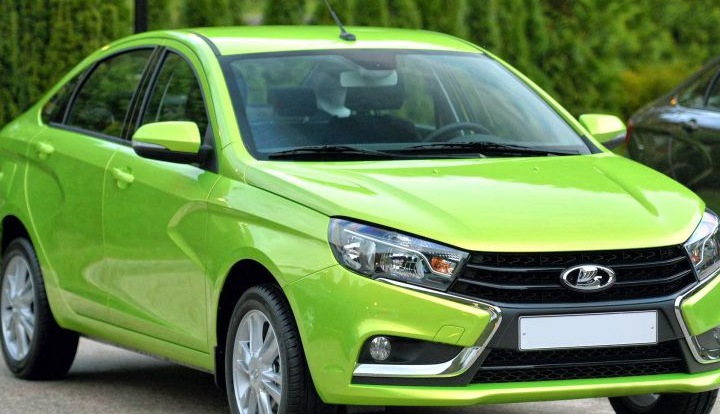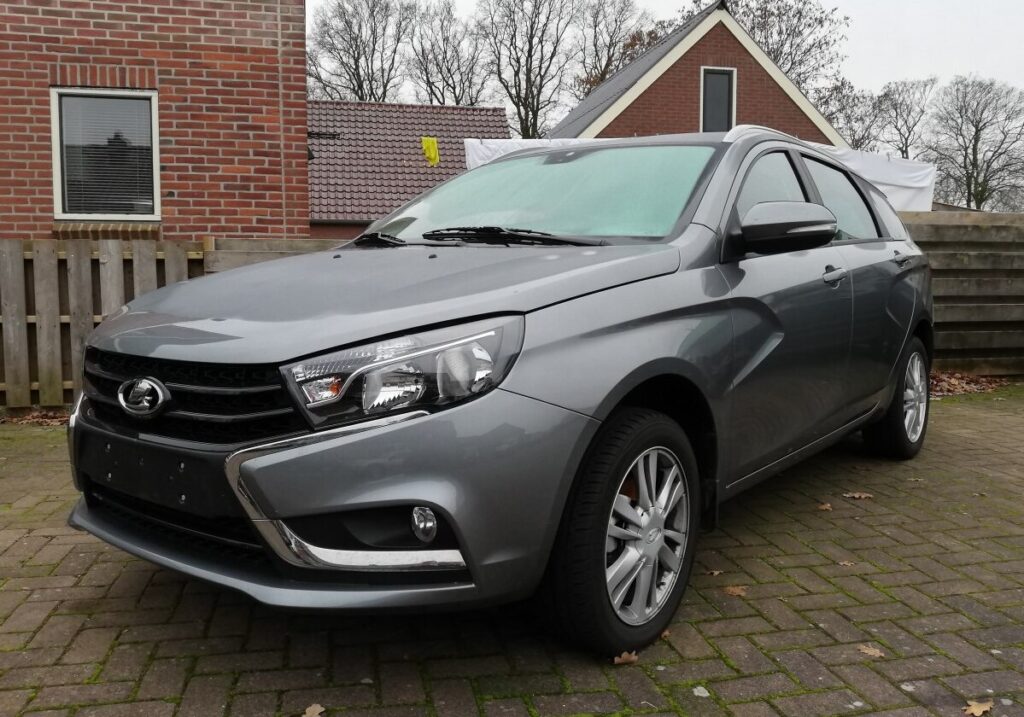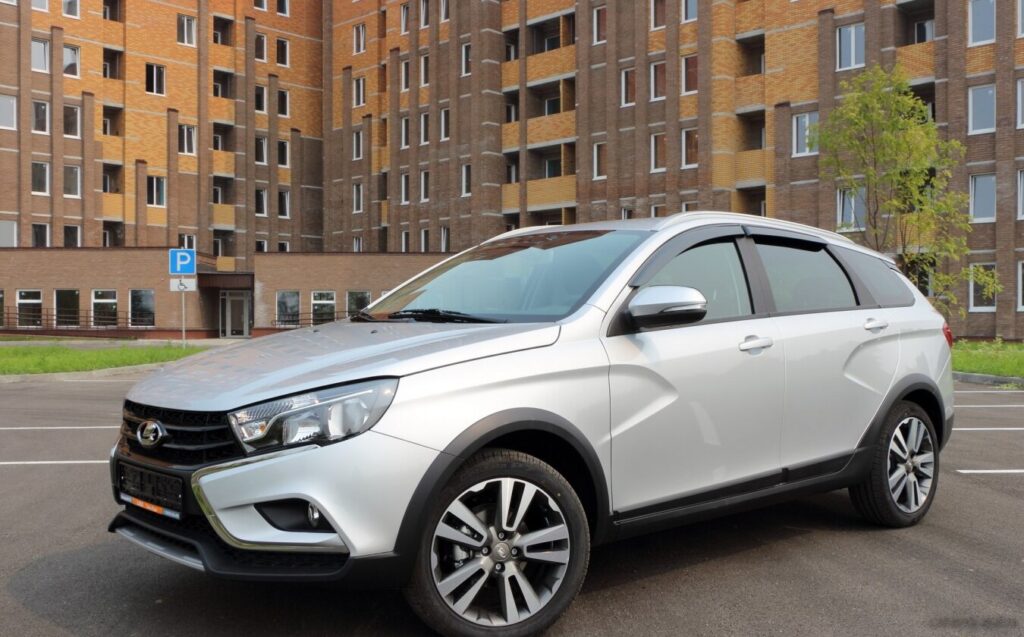
The Lada Vesta SW Cross 1.6 (106 hp) is a front-wheel-drive, five-door crossover introduced in 2017 as part of the Vesta family, representing a significant step forward for the Russian automaker. Positioned as a more rugged and versatile variant of the standard Vesta SW (Station Wagon), the Cross model aimed to capitalize on the growing popularity of crossovers both within Russia and in export markets. This particular 1.6-liter, 106 horsepower configuration served as a key entry point into the Vesta SW Cross lineup, offering a balance of affordability and practicality. It was built on the Lada B/C platform, also known as the 1HX0 platform, shared with other Vesta models.
Technical Specifications
| Brand | Lada |
| Model | Vesta |
| Generation | Vesta SW Cross |
| Type (Engine) | 1.6 (106 Hp) |
| Start of production | 2017 |
| Powertrain Architecture | Internal Combustion engine |
| Body type | Crossover |
| Seats | 5 |
| Doors | 5 |
| Fuel consumption (urban) | 9.7 l/100 km (24.2 US mpg) |
| Fuel consumption (extra urban) | 6 l/100 km (39.2 US mpg) |
| Fuel consumption (combined) | 7.5 l/100 km (31.4 US mpg) |
| Fuel Type | Petrol (Gasoline) |
| Acceleration 0 – 100 km/h | 12.6 sec |
| Acceleration 0 – 62 mph | 12.6 sec |
| Acceleration 0 – 60 mph | 12 sec |
| Maximum speed | 178 km/h (110.6 mph) |
| Power | 106 Hp @ 5800 rpm |
| Torque | 148 Nm @ 4200 rpm (109.16 lb.-ft. @ 4200 rpm) |
| Engine layout | Front, Transverse |
| Engine Model/Code | VAZ-21129 |
| Engine displacement | 1596 cm3 (97.39 cu. in.) |
| Number of cylinders | 4 |
| Engine configuration | Inline |
| Number of valves per cylinder | 4 |
| Fuel injection system | Multi-port manifold injection |
| Engine aspiration | Naturally aspirated engine |
| Engine oil capacity | 4.1 l (4.33 US qt | 3.61 UK qt) |
| Coolant capacity | 6.4 l (6.76 US qt | 5.63 UK qt) |
| Max. weight | 1730 kg (3814 lbs.) |
| Trunk (boot) space – minimum | 480 l (16.95 cu. ft.) |
| Trunk (boot) space – maximum | 825 l (29.13 cu. ft.) |
| Fuel tank capacity | 55 l (14.53 US gal | 12.1 UK gal) |
| Permitted trailer load with brakes (12%) | 900 kg (1984.16 lbs.) |
| Permitted trailer load without brakes | 600 kg (1322.77 lbs.) |
| Length | 4424 mm (174.17 in.) |
| Width | 1785 mm (70.28 in.) |
| Height | 1537 mm (60.51 in.) |
| Wheelbase | 2635 mm (103.74 in.) |
| Front track | 1524 mm (60 in.) |
| Rear track | 1524 mm (60 in.) |
| Front overhang | 862 mm (33.94 in.) |
| Rear overhang | 927 mm (36.5 in.) |
| Ride height (ground clearance) | 203 mm (7.99 in.) |
| Drivetrain Architecture | Front wheel drive |
| Number of gears and type of gearbox | 5 gears, manual transmission |
| Front suspension | Independent, type McPherson with coil spring and anti-roll bar |
| Rear suspension | Semi-independent, coil spring |
| Front brakes | Disc |
| Rear brakes | Disc |
| Assisting systems | ABS (Anti-lock braking system) |
| Steering type | Steering rack and pinion |
| Power steering | Electric Steering |
| Tires size | 205/50 R17 |
| Wheel rims size | 17 |
Powertrain & Engine Architecture
The Lada Vesta SW Cross 1.6 utilizes the VAZ-21129 engine, a 1.6-liter inline-four cylinder gasoline engine. This engine is a naturally aspirated unit featuring a multi-point fuel injection system. The engine produces 106 horsepower at 5800 rpm and 148 Nm (109.16 lb-ft) of torque at 4200 rpm. It’s a relatively simple design, prioritizing reliability and affordability over outright performance. The engine features a single overhead camshaft (SOHC) and four valves per cylinder. The 5-speed manual transmission was the standard offering for this trim, chosen for its cost-effectiveness and suitability for the engine’s power characteristics. While an automated manual transmission (AMT) was available on other Vesta models, it wasn’t typically paired with this specific engine and trim level.
Driving Characteristics
The 1.6-liter engine in the Vesta SW Cross provides adequate, but not exhilarating, performance. Acceleration from 0 to 100 km/h (0-62 mph) takes around 12.6 seconds, and the top speed is 178 km/h (110.6 mph). The 5-speed manual transmission is geared for practicality, offering reasonable fuel economy and acceptable performance in everyday driving situations. Compared to higher-output versions of the Vesta SW Cross (which were available with a 1.8-liter engine), the 1.6-liter model feels noticeably less powerful, particularly when fully loaded or tackling steep inclines. However, the lower engine capacity also contributes to slightly better fuel economy. The raised suspension and all-season tires of the Cross model provide a more comfortable ride on uneven surfaces and improved grip in inclement weather compared to the standard Vesta SW.
Equipment & Trim Levels
The Vesta SW Cross 1.6 typically came with a decent level of standard equipment, focusing on practicality and comfort. This included power windows, central locking, air conditioning, and an audio system with USB connectivity. Safety features such as ABS (Anti-lock Braking System) and front airbags were also standard. Higher trim levels offered additional features like heated front seats, a rear-view camera, and a more advanced infotainment system. Interior upholstery was typically cloth, with a durable and functional design. The dashboard layout was straightforward and easy to use, prioritizing ergonomics over luxury.
Chassis & Braking
The Vesta SW Cross features a McPherson strut front suspension and a semi-independent coil spring rear suspension. This setup provides a good balance of ride comfort and handling. The increased ride height of the Cross model (203 mm / 7.99 inches) provides improved ground clearance for navigating rough roads. The braking system consists of disc brakes on all four wheels, providing adequate stopping power for the vehicle’s weight and performance. The electric power steering offers light and precise steering feel.
Market Reception & Comparison
The Lada Vesta SW Cross 1.6 was generally well-received in the Russian market as an affordable and practical crossover. Critics praised its spacious interior, comfortable ride, and improved off-road capability compared to the standard Vesta SW. However, the 1.6-liter engine was often criticized for its lack of power, particularly when compared to competitors offering larger displacement engines. Fuel economy was considered to be competitive, and the Vesta SW Cross offered a good value proposition for budget-conscious buyers. Compared to the 1.8-liter Vesta SW Cross, the 1.6-liter model was more appealing to those prioritizing fuel efficiency and affordability over outright performance.
Legacy
The Lada Vesta SW Cross 1.6 has proven to be a relatively reliable vehicle, with the VAZ-21129 engine being known for its durability. While not without its quirks, the engine is generally easy to maintain and repair. In the used car market, the Vesta SW Cross 1.6 remains a popular choice for those seeking an affordable and practical crossover. Its simple design and readily available parts contribute to its low cost of ownership. The Vesta family, including the SW Cross, represented a significant improvement in quality and design for Lada, helping to rebuild the brand’s reputation in both domestic and international markets.