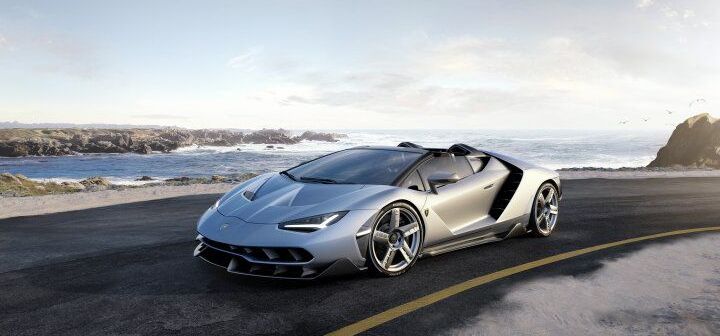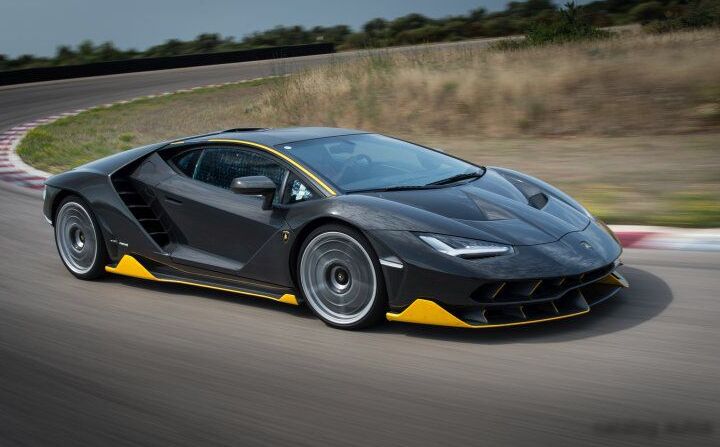
The Lamborghini Centenario LP 770-4, produced from October 2016 to August 2018, is a limited-production, mid-engine, all-wheel drive supercar built by the Italian manufacturer Lamborghini. Created to honor Ferruccio Lamborghini, the company’s founder, on the occasion of his 100th birthday, the Centenario represents the pinnacle of Lamborghini’s engineering and design capabilities during that period. Only 20 coupes and 20 roadsters were ever produced, making it one of the rarest Lamborghinis ever created. The LP 770-4 designation refers to the engine’s output of 770 horsepower and the all-wheel drive system.
Technical Specifications
| Brand | Lamborghini |
| Model | Centenario |
| Generation | Centenario LP 770-4 |
| Type (Engine) | 6.5 V12 (770 Hp) 4WD ISR |
| Start of production | October, 2016 |
| End of production | August, 2018 |
| Powertrain Architecture | Internal Combustion engine |
| Body type | Coupe |
| Seats | 2 |
| Doors | 2 |
| Fuel consumption (economy) – urban | 24.7 l/100 km (9.5 US mpg, 11.4 UK mpg, 4 km/l) |
| Fuel consumption (economy) – extra urban | 10.7 l/100 km (22 US mpg, 26.4 UK mpg, 9.3 km/l) |
| Fuel consumption (economy) – combined | 16 l/100 km (14.7 US mpg, 17.7 UK mpg, 6.3 km/l) |
| CO2 emissions | 370 g/km |
| Fuel Type | Petrol (Gasoline) |
| Acceleration 0 – 100 km/h | 2.8 sec |
| Acceleration 0 – 62 mph | 2.8 sec |
| Acceleration 0 – 60 mph | 2.7 sec |
| Acceleration 0 – 200 km/h | 8.6 sec |
| Acceleration 0 – 300 km/h | 23.5 sec |
| 100 km/h – 0 | 30 m |
| Emission standard | Euro 6 |
| Weight-to-power ratio | 2 kg/Hp, 506.6 Hp/tonne |
| Weight-to-torque ratio | 2.2 kg/Nm, 453.9 Nm/tonne |
| Power | 770 Hp @ 8500 rpm |
| Power per litre | 118.5 Hp/l |
| Torque | 690 Nm @ 5500 rpm (508.92 lb.-ft. @ 5500 rpm) |
| Engine layout | Middle, Longitudinal |
| Engine Model/Code | L539 |
| Engine displacement | 6498 cm3 (396.53 cu. in.) |
| Number of cylinders | 12 |
| Engine configuration | V-engine |
| Cylinder Bore | 95 mm (3.74 in.) |
| Piston Stroke | 76.4 mm (3.01 in.) |
| Compression ratio | 11.8:1 |
| Number of valves per cylinder | 4 |
| Fuel injection system | Multi-port manifold injection |
| Engine aspiration | Naturally aspirated engine |
| Kerb Weight | 1520 kg (3351.03 lbs.) |
| Length | 4924 mm (193.86 in.) |
| Width including mirrors | 2062 mm (81.18 in.) |
| Height | 1143 mm (45 in.) |
| Wheelbase | 2700 mm (106.3 in.) |
| Drive wheel | All wheel drive (4×4) |
| Number of gears and type of gearbox | 7 gears, automatic transmission ISR |
| Front suspension | Double wishbone |
| Rear suspension | Double wishbone |
| Front brakes | Ventilated discs |
| Rear brakes | Ventilated discs |
| Assisting systems | ABS (Anti-lock braking system) |
| Steering type | Steering rack and pinion |
| Power steering | Electric Steering |
| Tires size | 255/30 ZR20; 355/25 ZR21 |
| Wheel rims size | 9J x 20; 13J x 21 |
Powertrain & Engine Architecture
At the heart of the Centenario lies Lamborghini’s naturally aspirated 6.5-liter V12 engine, designated the L539. This engine is a direct evolution of the powerplant found in the Aventador, but extensively modified to produce a staggering 770 horsepower at 8,500 rpm and 508.92 lb-ft of torque at 5,500 rpm. The engine utilizes a multi-point fuel injection system and a high 11.8:1 compression ratio. The engine is mounted longitudinally in a mid-engine configuration, contributing to the car’s exceptional balance. Power is transmitted to all four wheels via a 7-speed Independent Shifting Rod (ISR) automated manual transmission. This ISR transmission, while offering rapid shifts, is known for its somewhat jerky low-speed operation compared to traditional dual-clutch transmissions.
Driving Characteristics
The Centenario’s performance is nothing short of breathtaking. Its 0-60 mph acceleration time of 2.7 seconds and a top speed exceeding 221 mph place it among the fastest production cars in the world. The all-wheel drive system provides immense traction, allowing for confident acceleration even in challenging conditions. The ISR transmission, while quick during aggressive upshifts, can feel less refined during everyday driving. The suspension, tuned for performance, provides a firm ride, prioritizing handling over comfort. The car’s lightweight construction, utilizing extensive carbon fiber, contributes to its agility and responsiveness.
Equipment & Trim Levels
Given its limited production run and ultra-high price point, the Centenario was largely customizable to individual client specifications. Standard features included a fully digital instrument cluster, a high-end audio system, and extensive use of carbon fiber throughout the interior. The interior was trimmed in fine leather and Alcantara, with a focus on creating a driver-focused environment. Optional extras included bespoke paint finishes, personalized interior detailing, and advanced telemetry systems. The Centenario did not offer traditional trim levels; each car was essentially a one-off creation tailored to the buyer’s preferences.
Chassis & Braking
The Centenario’s chassis is a carbon fiber monocoque, providing exceptional rigidity and minimizing weight. The suspension utilizes a double-wishbone setup at both the front and rear, with magnetorheological dampers to adjust damping rates in real-time. The braking system consists of ventilated discs at all four corners, providing immense stopping power. Lamborghini’s advanced electronic stability control system helps to manage the car’s prodigious power and maintain control during aggressive driving. The steering is a rack-and-pinion system with electric power assistance, offering precise and responsive steering feel.
Market Reception & Comparison
The Lamborghini Centenario was met with widespread acclaim from automotive journalists and enthusiasts. Critics praised its stunning design, incredible performance, and exclusivity. However, the ISR transmission received some criticism for its lack of smoothness at low speeds. Compared to other hypercars of the era, such as the Ferrari LaFerrari and the McLaren P1, the Centenario stood out for its naturally aspirated V12 engine and its more traditional Lamborghini styling. Its fuel economy, predictably, was poor, with combined figures around 14.7 US mpg. Reliability, given the limited production run, has not been extensively documented, but Lamborghini’s reputation for build quality suggests that the Centenario is a relatively robust machine.
Legacy
The Lamborghini Centenario represents a significant milestone in the company’s history. It showcased Lamborghini’s ability to create truly exceptional and technologically advanced supercars. Today, the Centenario is highly sought after by collectors, with prices exceeding its original MSRP by a substantial margin. The car’s rarity, performance, and stunning design ensure its place as a modern automotive icon. The Centenario’s influence can be seen in subsequent Lamborghini models, particularly in the Aventador SVJ and the Sián FKP 37, which continue to push the boundaries of performance and design.