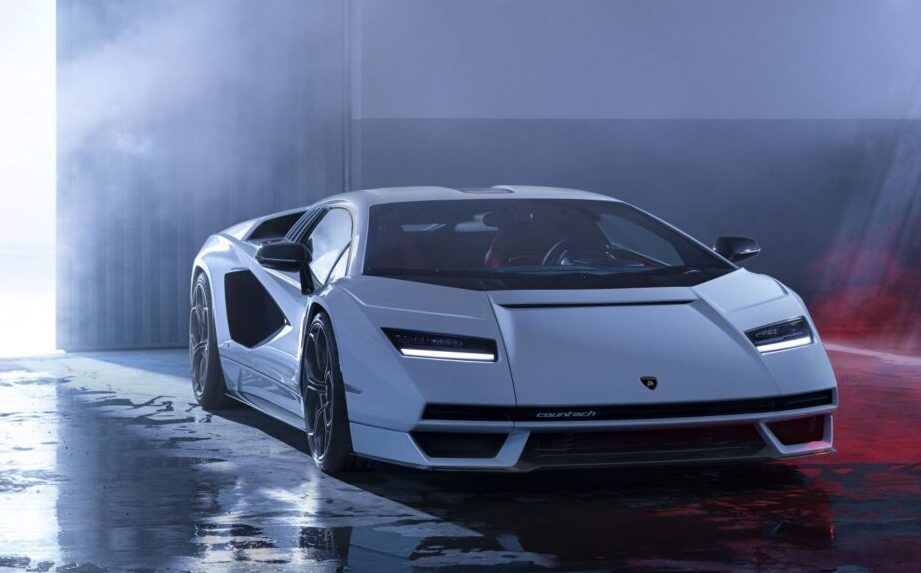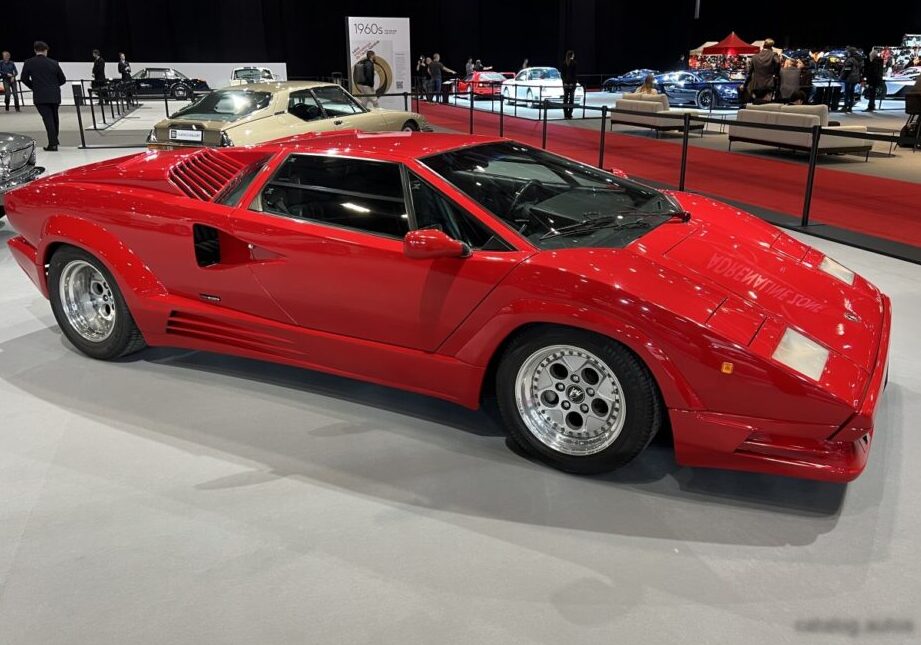
The Lamborghini Countach LP500 S, produced between 1982 and 1985, represents a significant evolution of the iconic Countach lineage. Following the initial LP400 and LP500 models, the LP500 S (S standing for “Series”) aimed to broaden the Countach’s appeal while retaining its groundbreaking design and performance. It served as a bridge between the earlier, more raw Countach iterations and the later, more refined models like the QV. The LP500 S was a key model in cementing Lamborghini’s status as a producer of exotic, high-performance supercars, and remains a highly sought-after vehicle among collectors today.
Technical Specifications
| Brand | Lamborghini |
| Model | Countach |
| Generation | Countach |
| Type (Engine) | LP500 S V12 (375 Hp) |
| Start of production | 1982 |
| End of production | 1985 |
| Powertrain Architecture | Internal Combustion engine |
| Body type | Coupe |
| Seats | 2 |
| Doors | 2 |
| Fuel Type | Petrol (Gasoline) |
| Maximum speed | 290 km/h (180.2 mph) |
| Weight-to-power ratio | 3.9 kg/Hp, 253.4 Hp/tonne |
| Weight-to-torque ratio | 3.6 kg/Nm, 277 Nm/tonne |
| Power | 375 Hp @ 7000 rpm |
| Power per litre | 78.9 Hp/l |
| Torque | 410 Nm @ 4500 rpm (302.4 lb.-ft. @ 4500 rpm) |
| Engine layout | Middle, Longitudinal |
| Engine displacement | 4754 cm3 (290.11 cu. in.) |
| Number of cylinders | 12 |
| Engine configuration | V-engine |
| Cylinder Bore | 85.5 mm (3.37 in.) |
| Piston Stroke | 69 mm (2.72 in.) |
| Compression ratio | 9.2:1 |
| Number of valves per cylinder | 2 |
| Fuel injection system | Carburettor |
| Engine aspiration | Naturally aspirated engine |
| Valvetrain | DOHC |
| Kerb Weight | 1480 kg (3262.84 lbs.) |
| Trunk (boot) space – minimum | 240 l (8.48 cu. ft.) |
| Fuel tank capacity | 120 l (31.7 US gal | 26.4 UK gal) |
| Length | 4140 mm (162.99 in.) |
| Width | 2000 mm (78.74 in.) |
| Height | 1070 mm (42.13 in.) |
| Wheelbase | 2450 mm (96.46 in.) |
| Front track | 1492 mm (58.74 in.) |
| Rear (Back) track | 1606 mm (63.23 in.) |
| Front overhang | 933 mm (36.73 in.) |
| Rear overhang | 757 mm (29.8 in.) |
| Drivetrain Architecture | The Internal combustion engine (ICE) drives the rear wheels of the vehicle. |
| Drive wheel | Rear wheel drive |
| Number of gears and type of gearbox | 5 gears, manual transmission |
| Front suspension | Double wishbone, Transverse stabilizer |
| Rear suspension | Double wishbone, Transverse stabilizer |
| Front brakes | Ventilated discs |
| Rear brakes | Ventilated discs |
| Steering type | Steering rack and pinion |
| Front wheel tires | 205/50 R15 |
| Rear wheel tires | 345/35 R15 |
| Front wheel rims | 8.5J x 15 |
| Rear wheel rims | 12J x 15 |
Powertrain & Engine Architecture
The heart of the LP500 S is its 4.8-liter, naturally aspirated V12 engine, designated the Lamborghini 354 engine. This engine produced 375 horsepower at 7,000 rpm and 302.4 lb-ft of torque at 4,500 rpm. Unlike later Countach models that adopted fuel injection, the LP500 S retained the Weber 48 IDA3C carburetors, a characteristic that contributed to its slightly more raw and demanding driving experience. The engine features a 60-degree V-angle, dual overhead camshafts (DOHC), and two valves per cylinder. The longitudinal engine placement and rear-wheel drive configuration were standard for the Countach. Power was transmitted to the rear wheels via a five-speed manual transmission. The engine’s architecture, while relatively simple by modern standards, was a masterpiece of engineering for its time, delivering a distinctive and intoxicating exhaust note.
Driving Characteristics
The LP500 S offered a thrilling, albeit challenging, driving experience. The carbureted engine demanded a skilled driver to manage its power delivery effectively. Acceleration was brisk, with a 0-60 mph time of around 5.4 seconds and a top speed of 180 mph. However, the car’s wide tires, low ride height, and lack of modern driver aids meant that it required constant attention and precise control. Compared to the earlier LP400, the LP500 S offered slightly improved performance and refinement. Compared to the later QV models with fuel injection, the LP500 S felt more visceral and less forgiving. The five-speed manual transmission provided a direct connection to the engine, allowing drivers to fully exploit the V12’s power. The car’s handling was characterized by its responsiveness and tendency towards oversteer, making it a rewarding but demanding machine to drive.
Equipment & Trim Levels
The LP500 S was relatively sparsely equipped by modern standards, reflecting its focus on performance. Standard features included leather upholstery, power windows, and air conditioning. However, options were limited. The interior design was functional and driver-focused, with a minimalist dashboard and large analog gauges. The exterior was typically finished in vibrant colors, such as Rosso Corsa or Bianco, and featured the Countach’s signature scissor doors. The LP500 S did receive some minor styling updates compared to earlier models, including a revised front spoiler and wider rear wheel arches to accommodate the larger tires.
Chassis & Braking
The Countach LP500 S utilized a tubular steel chassis, providing a rigid and lightweight platform. The suspension consisted of independent double wishbones with transverse stabilizers at both the front and rear. Braking was handled by ventilated discs on all four wheels, providing adequate stopping power for the car’s performance capabilities. However, the braking system lacked the sophistication of modern anti-lock braking systems (ABS). The car’s wide track and low center of gravity contributed to its stable handling characteristics. The tires, measuring 205/50R15 at the front and 345/35R15 at the rear, provided ample grip.
Market Reception & Comparison
The LP500 S was well-received by automotive critics and enthusiasts alike. It was praised for its stunning design, exhilarating performance, and overall driving experience. However, its high price and demanding driving characteristics limited its appeal to a relatively small segment of the market. Compared to the earlier LP400, the LP500 S offered a slight improvement in performance and refinement. Compared to the later QV models, the LP500 S was considered by some to be more authentic and engaging, due to its carbureted engine and lack of electronic aids. Fuel economy was predictably poor, averaging around 10-12 mpg in real-world driving.
Legacy
The Lamborghini Countach LP500 S remains a highly collectible and iconic supercar. Its combination of striking design, powerful engine, and challenging driving dynamics has cemented its place in automotive history. The LP500 S is considered by many to be one of the most desirable Countach variants, due to its relative rarity and its representation of a transitional period in the Countach’s evolution. While maintenance can be expensive due to the car’s age and complexity, the LP500 S continues to be a rewarding and exhilarating machine to own and drive. Today, well-maintained examples command significant prices in the collector car market, reflecting their enduring appeal and historical significance.