Technical Specifications
| Brand | Lamborghini |
| Model | Countach |
| Generation | Countach |
| Type (Engine) | S Quattrovalvole (426 Hp) |
| Start of Production | 1985 |
| End of Production | 1991 |
| Powertrain Architecture | Internal Combustion Engine |
| Body Type | Coupe |
| Fuel Type | Petrol (Gasoline) |
| Acceleration 0-100 km/h | 4.8 sec |
| Acceleration 0-62 mph | 4.8 sec |
| Acceleration 0-60 mph | 4.6 sec |
| Power | 426 Hp |
| Engine Aspiration | Naturally Aspirated |
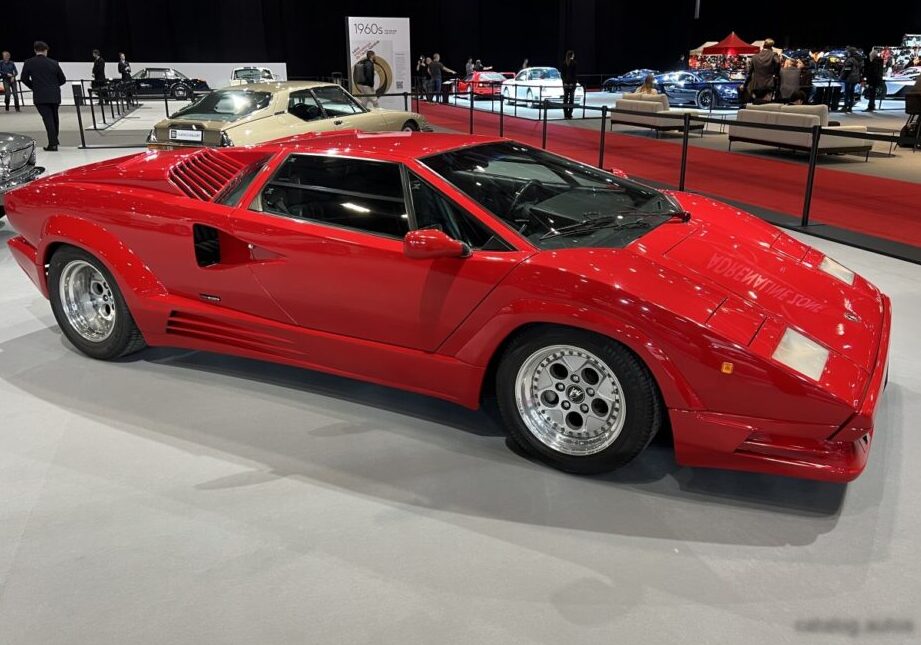
The Lamborghini Countach S Quattrovalvole, produced from 1985 to 1991, represents a significant evolution of the iconic Countach lineage. Positioned as a high-performance variant within the Countach series, the S Quattrovalvole (often simply referred to as the QV) addressed criticisms leveled at earlier models regarding power delivery and overall refinement. It served as the penultimate iteration of the original Countach design before the introduction of the 25th Anniversary model. The QV’s introduction marked a shift towards greater usability without sacrificing the Countach’s signature dramatic styling and exhilarating performance. It remains a highly sought-after vehicle among collectors and enthusiasts, embodying the excess and innovation of 1980s supercar design.
Powertrain & Engine Architecture
The heart of the Countach S Quattrovalvole is its 5.2-liter naturally aspirated V12 engine, designated the L400S. This engine represents a substantial upgrade over the earlier 4.8-liter and 5.1-liter versions. The key improvement, as the “Quattrovalvole” name suggests, is the adoption of four valves per cylinder – a significant advancement in engine technology for the time. This four-valve cylinder head, designed by Gian Paolo Dallara, dramatically improved breathing and allowed for a higher compression ratio (9.2:1) and increased power output. The engine utilizes a Bosch K-Jetronic fuel injection system, a mechanical system known for its reliability and precise fuel delivery, though it lacked the sophistication of later electronic systems. The V12 produces 426 horsepower at 8,000 rpm and 361 lb-ft of torque at 6,200 rpm. Power is transmitted to the rear wheels through a five-speed manual transmission. The engine is mounted longitudinally in a mid-engine configuration, contributing to the car’s exceptional balance and handling characteristics. The engine block itself is constructed from aluminum alloy, helping to keep weight down, a critical factor in supercar design. The intake system features six individual Weber carburetors, contributing to the engine’s distinctive sound and throttle response.
Driving Characteristics
The Countach S Quattrovalvole delivers a driving experience that is both visceral and demanding. The increased power output compared to earlier Countachs results in significantly improved acceleration. The 0-60 mph sprint is achievable in approximately 4.6 seconds, making it exceptionally quick even by modern standards. However, the QV is not a forgiving car. The steering is heavy and direct, requiring considerable driver input. The five-speed transmission, while robust, has a long throw and requires precise shifting. The car’s wide track and low-slung suspension provide excellent cornering grip, but the QV demands respect and careful throttle control due to its rear-wheel-drive configuration and powerful engine. The QV’s power delivery is more linear than earlier Countachs, making it slightly more manageable, but it still requires a skilled driver to fully exploit its potential. The lack of modern driver aids like traction control or ABS means that the driver is entirely responsible for controlling the car’s immense power. The car’s weight distribution, approximately 40/60 front to rear, contributes to its neutral handling balance, but requires a deft touch to maintain at the limit. The exhaust note is characteristically loud and aggressive, adding to the overall sensory experience.
Equipment & Trim Levels
The Countach S Quattrovalvole was relatively sparsely equipped by modern standards, reflecting its focus on performance rather than luxury. Standard features included leather upholstery, power windows, and air conditioning. The interior design is minimalist, with a focus on functionality. The dashboard features a comprehensive array of gauges, including a speedometer, tachometer, oil pressure gauge, water temperature gauge, and fuel gauge. Optional extras included a stereo system, upgraded leather upholstery, and a rear spoiler. The QV was available in a variety of exterior colors, with red, white, and black being the most popular choices. The interior was typically trimmed in black leather, although other colors were available on request. The S Quattrovalvole generally represented a step up in interior quality compared to earlier Countachs, with improved materials and fit and finish. While not lavish, the interior prioritized driver information and control, with all essential functions within easy reach. The seats were manually adjustable, offering a firm and supportive driving position.
Chassis & Braking
The Countach S Quattrovalvole utilizes a tubular steel chassis, providing a rigid and lightweight platform. The suspension consists of independent double wishbones with coil springs and anti-roll bars at the front and rear. The QV features larger brakes than earlier Countachs, with ventilated discs at all four corners. However, the braking system lacks ABS, requiring the driver to exercise caution when braking hard. The car rides on Pirelli P7 tires, which provide excellent grip in dry conditions. The QV’s chassis and suspension are tuned for performance, resulting in a firm ride. The car’s low ground clearance makes it susceptible to damage from speed bumps and uneven road surfaces. The steering is unassisted, providing a direct and responsive feel, but requiring significant effort at low speeds. The chassis was designed to maximize torsional rigidity, crucial for handling performance. The suspension geometry was carefully optimized to minimize body roll and maximize tire contact patch during cornering.
Market Reception & Comparison
The Countach S Quattrovalvole was widely praised by automotive journalists for its performance and dramatic styling. Critics noted the improved power delivery and refinement compared to earlier Countachs. However, the QV was also criticized for its demanding driving characteristics and lack of modern amenities. Compared to the earlier 5000QV, the S version offered subtle styling updates, including a revised front spoiler and side skirts, along with minor mechanical improvements. Compared to the later 25th Anniversary model, the QV is often considered to be more raw and visceral, offering a more authentic Countach experience. Fuel economy was predictably poor, averaging around 12 mpg in city driving and 16 mpg on the highway. Reliability was also a concern, with the complex engine and electrical systems requiring frequent maintenance. The QV represented a significant price increase over the 5000QV, reflecting its enhanced performance and exclusivity.
Legacy
The Lamborghini Countach S Quattrovalvole remains a highly collectible and iconic supercar. Its innovative design and exhilarating performance cemented its place in automotive history. The QV’s four-valve engine was a significant technological advancement, paving the way for future Lamborghini engines. Today, well-maintained examples of the Countach S Quattrovalvole command high prices in the collector car market. The QV’s long-term reliability is generally good, provided that it has been properly maintained. However, parts availability can be a challenge, and repairs can be expensive. The Countach S Quattrovalvole represents the pinnacle of the original Countach design, offering a unique and unforgettable driving experience that continues to captivate enthusiasts around the world. It’s a testament to Lamborghini’s commitment to pushing the boundaries of automotive performance and design. The QV’s influence can be seen in subsequent Lamborghini models, and it continues to inspire automotive designers today.