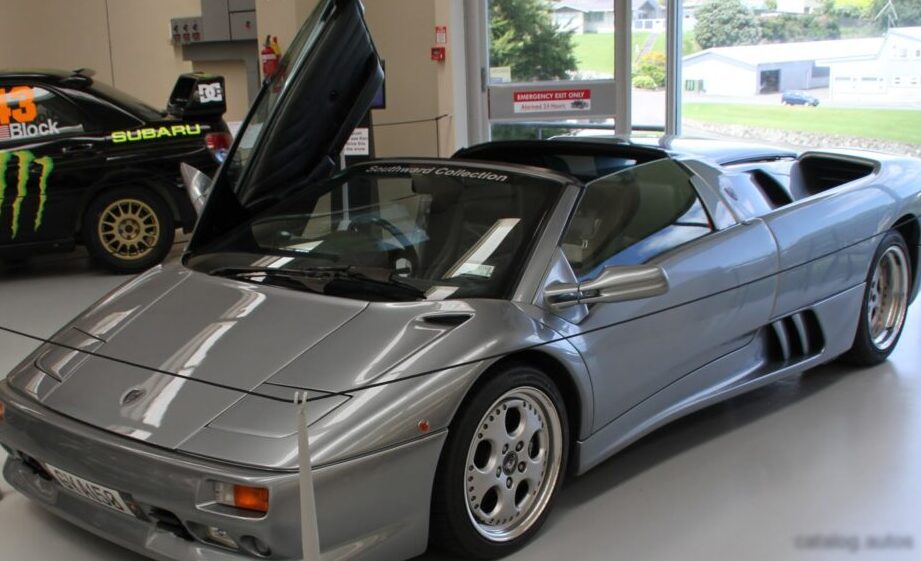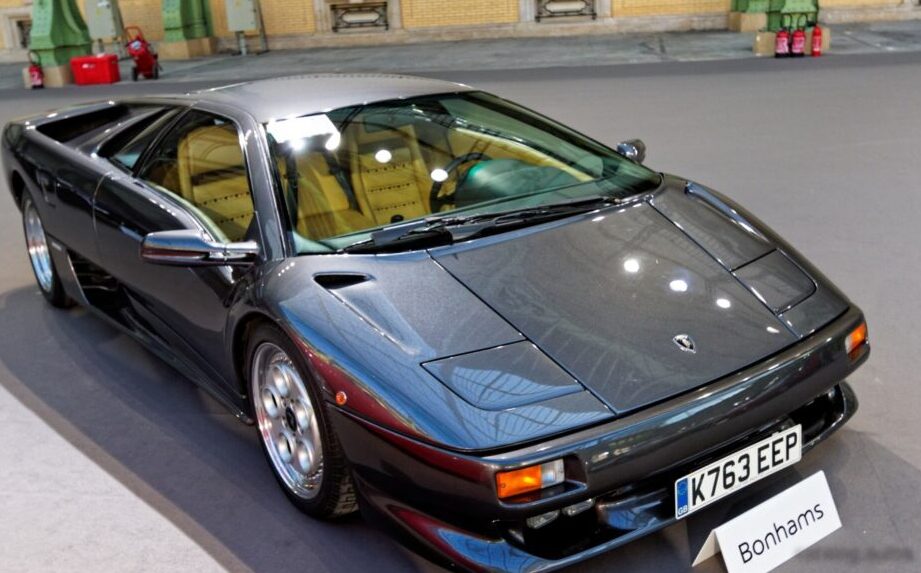
The Lamborghini Diablo 6.0 i V12 48V GT, producing 575 horsepower, represents the pinnacle of the original Diablo lineage. Produced from 1998 to 1999, it was the final evolution of the Diablo before the introduction of the Murciélago. This model served as a potent, high-performance flagship for Lamborghini, embodying the company’s commitment to extreme performance and exotic design. It sat at the very top of the Diablo range, offering the most power and advanced features available during its short production run. The 6.0 i GT was a direct response to market demands for increased power and refinement, building upon the foundations laid by earlier Diablo variants.
Technical Specifications
| Brand | Lamborghini |
| Model | Diablo |
| Generation | Diablo |
| Type (Engine) | 6.0 i V12 48V GT (575 Hp) |
| Start of production | 1998 |
| End of production | 1999 |
| Powertrain Architecture | Internal Combustion engine |
| Body type | Coupe |
| Seats | 2 |
| Doors | 2 |
| Fuel consumption (urban) | 38.2 l/100 km (6.2 US mpg) |
| Fuel consumption (extra urban) | 17.5 l/100 km (13.4 US mpg) |
| Fuel Type | Petrol (Gasoline) |
| Acceleration 0 – 100 km/h | 3.7 sec |
| Acceleration 0 – 62 mph | 3.7 sec |
| Acceleration 0 – 60 mph | 3.5 sec |
| Maximum speed | 338 km/h (210.02 mph) |
| Weight-to-power ratio | 2.6 kg/Hp |
| Weight-to-torque ratio | 2.4 kg/Nm |
| Power | 575 Hp @ 7300 rpm |
| Power per litre | 96 Hp/l |
| Torque | 630 Nm @ 5500 rpm (464.66 lb.-ft. @ 5500 rpm) |
| Engine layout | Middle, Longitudinal |
| Engine displacement | 5992 cm3 (365.65 cu. in.) |
| Number of cylinders | 12 |
| Engine configuration | V-engine |
| Cylinder Bore | 87 mm (3.43 in.) |
| Piston Stroke | 84 mm (3.31 in.) |
| Compression ratio | 10.7:1 |
| Number of valves per cylinder | 4 |
| Fuel injection system | Multi-port manifold injection |
| Engine aspiration | Naturally aspirated engine |
| Valvetrain | DOHC |
| Engine oil capacity | 15 l (15.85 US qt | 13.2 UK qt) |
| Coolant | 15 l (15.85 US qt | 13.2 UK qt) |
| Kerb Weight | 1490 kg (3284.89 lbs.) |
| Max. weight | 1895 kg (4177.76 lbs.) |
| Max load | 405 kg (892.87 lbs.) |
| Trunk (boot) space | 140 l (4.94 cu. ft.) |
| Fuel tank capacity | 100 l (26.42 US gal | 22 UK gal) |
| Length | 4430 mm (174.41 in.) |
| Width | 2040 mm (80.31 in.) |
| Height | 1115 mm (43.9 in.) |
| Wheelbase | 2650 mm (104.33 in.) |
| Front track | 1650 mm (64.96 in.) |
| Rear track | 1670 mm (65.75 in.) |
| Drivetrain Architecture | Rear wheel drive |
| Number of gears | 5 gears, manual transmission |
| Front suspension | Double wishbone |
| Rear suspension | Double wishbone |
| Front brakes | Ventilated discs |
| Rear brakes | Ventilated discs |
| Assisting systems | ABS (Anti-lock braking system) |
| Steering type | Steering rack and pinion |
| Power steering | Hydraulic Steering |
| Tires size | Front: 245/35 ZR18, Rear: 335/30 ZR18 |
Powertrain & Engine Architecture
The heart of the Diablo 6.0 i GT is its 6.0-liter naturally aspirated V12 engine, designated the L400. This engine represents a significant increase in displacement over earlier Diablo models. The 48-valve DOHC (Double Overhead Camshaft) configuration, coupled with multi-port fuel injection, allows for exceptional breathing and power output. The engine produces 575 horsepower at 7,300 rpm and 465 lb-ft of torque at 5,500 rpm. The engine’s architecture is a 60-degree V12, providing a balance of smoothness and rigidity. A 5-speed manual transmission was the only gearbox option, designed to handle the immense power and torque. The transmission features a robust design with close ratios optimized for performance. Lamborghini deliberately avoided automatic transmissions in this top-tier model, prioritizing driver engagement and performance.
Driving Characteristics
The Diablo 6.0 i GT delivers a visceral and exhilarating driving experience. Acceleration is brutal, with 0-60 mph achieved in approximately 3.5 seconds and a top speed exceeding 210 mph. The manual transmission requires a skilled driver to fully exploit the engine’s potential. The close-ratio gearbox allows for precise control and keeps the engine within its optimal power band. While incredibly fast, the Diablo 6.0 i GT isn’t necessarily a forgiving car. It demands respect and attention due to its raw power and relatively limited electronic aids. Compared to earlier Diablos, the 6.0 i GT offers improved throttle response and a more refined overall driving experience, though it remains a challenging machine to master. The steering is direct and communicative, providing ample feedback to the driver. The car feels planted and stable at high speeds, inspiring confidence even for experienced drivers.
Equipment & Trim Levels
The Diablo 6.0 i GT was largely a performance-focused vehicle, but it did offer a degree of luxury and customization. Standard features included leather upholstery, air conditioning, and power windows. However, Lamborghini offered a wide range of options allowing buyers to personalize their cars. These options included upgraded audio systems, custom paint colors, and carbon fiber interior trim. The interior design, while luxurious, retained a functional and driver-focused layout. The instrument panel featured a combination of analog gauges and digital displays, providing the driver with essential information. The emphasis was on creating a driver-centric environment, with minimal distractions and a focus on performance.
Chassis & Braking
The Diablo 6.0 i GT utilizes a lightweight chassis constructed from a combination of steel and carbon fiber. The suspension system consists of independent double wishbones at all four corners, providing excellent handling and stability. Ventilated disc brakes are fitted on all wheels, providing ample stopping power. An ABS (Anti-lock Braking System) is standard, enhancing safety and control during hard braking. The car’s wide track and low center of gravity contribute to its exceptional cornering ability. The steering is a hydraulic rack and pinion system, offering precise and responsive control. The chassis was designed to maximize rigidity while minimizing weight, contributing to the car’s overall performance.
Market Reception & Comparison
The Diablo 6.0 i GT was widely praised by automotive journalists for its incredible performance and exotic appeal. Critics lauded the engine’s power and responsiveness, as well as the car’s overall handling and braking capabilities. However, some reviewers noted the car’s challenging driving dynamics and relatively high price tag. Compared to other Diablo variants, the 6.0 i GT represented the ultimate expression of the model, offering the highest level of performance and refinement. It was significantly more expensive than the standard Diablo VT or the SV, reflecting its exclusive status. The 6.0 i GT was positioned as a direct competitor to other high-performance supercars of the era, such as the Ferrari F50 and the Porsche 911 Turbo.
Legacy
The Lamborghini Diablo 6.0 i GT remains a highly sought-after collector’s car. Its limited production run and exceptional performance have made it a valuable asset in the classic car market. The L400 engine is considered a masterpiece of engineering, and the Diablo 6.0 i GT represents the culmination of Lamborghini’s efforts to create a truly world-class supercar. While maintenance can be expensive due to the car’s age and complexity, the Diablo 6.0 i GT continues to provide an unforgettable driving experience for those fortunate enough to own one. Its influence can be seen in subsequent Lamborghini models, particularly the Murciélago, which carried forward the Diablo’s spirit of extreme performance and exotic design. The 6.0 i GT serves as a reminder of a golden age of supercar design and engineering, and its legacy continues to inspire automotive enthusiasts today.