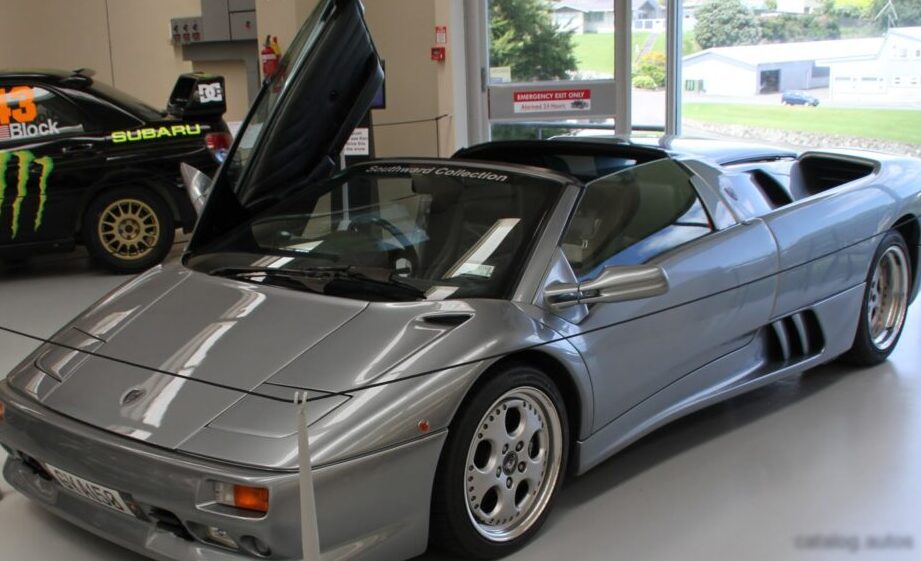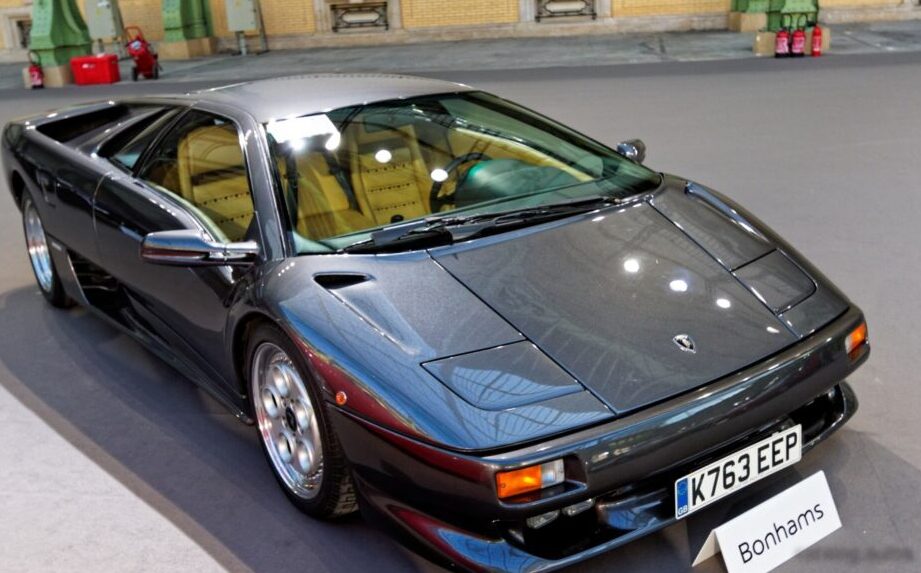
The Lamborghini Diablo 6.0 V12, produced from 1991 to 2001, represents the successor to the iconic Countach and served as Lamborghini’s flagship model throughout the 1990s. This iteration, boasting a 6.0-liter V12 engine producing 550 horsepower, marked a significant leap in performance and refinement for the Italian automaker. The Diablo 6.0 was the final evolution of the original Diablo design, incorporating numerous improvements over earlier models and solidifying Lamborghini’s position in the high-performance supercar market. It was offered exclusively as a coupe with a two-door, two-seat configuration.
Technical Specifications
| Brand | Lamborghini |
| Model | Diablo |
| Generation | Diablo |
| Type (Engine) | 6.0 V12 (550 Hp) |
| Start of production | 1991 |
| End of production | 2001 |
| Powertrain Architecture | Internal Combustion engine |
| Body type | Coupe |
| Seats | 2 |
| Doors | 2 |
| Fuel consumption (economy) – urban | 37.9 l/100 km (6.2 US mpg, 7.5 UK mpg, 2.6 km/l) |
| Fuel consumption (economy) – extra urban | 17.3 l/100 km (13.6 US mpg, 16.3 UK mpg, 5.8 km/l) |
| Fuel consumption (economy) – combined | 22.9 l/100 km (10.3 US mpg, 12.3 UK mpg, 4.4 km/l) |
| Fuel Type | Petrol (Gasoline) |
| Acceleration 0 – 100 km/h | 3.9 sec |
| Acceleration 0 – 62 mph | 3.9 sec |
| Acceleration 0 – 60 mph | 3.7 sec |
| Maximum speed | 330 km/h (205.05 mph) |
| Weight-to-power ratio | 3 kg/Hp, 338.5 Hp/tonne |
| Weight-to-torque ratio | 2.6 kg/Nm, 381.5 Nm/tonne |
| Power | 550 Hp @ 7100 rpm |
| Power per litre | 91.8 Hp/l |
| Torque | 620 Nm @ 5500 rpm (457.29 lb.-ft. @ 5500 rpm) |
| Engine layout | Middle, Longitudinal |
| Engine displacement | 5992 cm3 (365.65 cu. in.) |
| Number of cylinders | 12 |
| Engine configuration | V-engine |
| Cylinder Bore | 87 mm (3.43 in.) |
| Piston Stroke | 84 mm (3.31 in.) |
| Compression ratio | 10.7:1 |
| Number of valves per cylinder | 4 |
| Fuel injection system | Multi-port manifold injection |
| Engine aspiration | Naturally aspirated engine |
| Valvetrain | DOHC |
| Engine oil capacity | 15 l (15.85 US qt | 13.2 UK qt) |
| Coolant | 15 l (15.85 US qt | 13.2 UK qt) |
| Kerb Weight | 1625 kg (3582.51 lbs.) |
| Max. weight | 1850 kg (4078.55 lbs.) |
| Max load | 225 kg (496.04 lbs.) |
| Trunk (boot) space – minimum | 140 l (4.94 cu. ft.) |
| Fuel tank capacity | 100 l (26.42 US gal | 22 UK gal) |
| Length | 4470 mm (175.98 in.) |
| Width | 2040 mm (80.31 in.) |
| Height | 1105 mm (43.5 in.) |
| Wheelbase | 2650 mm (104.33 in.) |
| Front track | 1610 mm (63.39 in.) |
| Rear (Back) track | 1670 mm (65.75 in.) |
| Drive wheel | All wheel drive (4×4) |
| Number of gears and type of gearbox | 5 gears, manual transmission |
| Front suspension | Double wishbone |
| Rear suspension | Double wishbone |
| Front brakes | Ventilated discs |
| Rear brakes | Ventilated discs |
| Assisting systems | ABS (Anti-lock braking system) |
| Steering type | Steering rack and pinion |
| Power steering | Hydraulic Steering |
| Tires size | 235/40 ZR18; 335/30ZR18 |
Powertrain & Engine Architecture
The heart of the Diablo 6.0 is its 6.0-liter naturally aspirated V12 engine, designated the LDA engine code. This engine represents a significant increase in displacement over earlier Diablo models. The LDA engine features a 60-degree V-angle, four valves per cylinder, and dual overhead camshafts (DOHC). Fuel delivery is managed by a Bosch multi-port fuel injection system, optimized for performance and efficiency. The engine’s robust construction and careful engineering contribute to its high output of 550 horsepower at 7,100 rpm and 457 lb-ft of torque at 5,500 rpm. The engine is mounted longitudinally in a mid-engine configuration, contributing to the car’s balanced handling characteristics. The Diablo 6.0 exclusively utilized a five-speed manual transmission, providing drivers with direct control over the engine’s immense power.
Driving Characteristics
The Diablo 6.0 delivers a visceral and engaging driving experience. The 550 hp engine provides exhilarating acceleration, capable of propelling the car from 0 to 60 mph in approximately 3.7 seconds and reaching a top speed of 205 mph. The manual transmission requires a skilled driver to fully exploit the engine’s potential, but offers a rewarding level of control. The all-wheel-drive system provides excellent traction, particularly during acceleration and cornering. However, the Diablo 6.0 is a large and heavy car, requiring respect and careful handling. Compared to earlier Diablos, the 6.0 offers improved refinement and drivability, making it more suitable for everyday use, although it remains a demanding machine.
Equipment & Trim Levels
The Diablo 6.0 was relatively sparsely equipped by modern standards, focusing on delivering a pure driving experience. Standard features included leather upholstery, power windows, and air conditioning. The interior design is functional and driver-focused, with a prominent center console and analog gauges. Optional extras included upgraded audio systems, custom paint colors, and various interior trim options. The Diablo 6.0 did not offer a wide range of trim levels; it was primarily differentiated by optional equipment and bespoke customizations offered through Lamborghini’s personalization program.
Chassis & Braking
The Diablo 6.0 utilizes a tubular steel chassis, providing a rigid and lightweight foundation for the car. Suspension is handled by independent double wishbone setups at both the front and rear, offering a balance of comfort and handling performance. Braking duties are performed by ventilated disc brakes on all four wheels, assisted by an anti-lock braking system (ABS). The braking system is powerful and effective, but requires significant effort due to the car’s weight and speed. The Diablo 6.0’s chassis and braking systems were designed to handle the immense power of the V12 engine and provide a secure and confident driving experience.
Market Reception & Comparison
The Diablo 6.0 was widely praised by automotive critics for its stunning performance, dramatic styling, and improved refinement. It was considered a worthy successor to the Countach and a formidable competitor to other high-performance supercars of the era, such as the Ferrari F512M and the Porsche 911 Turbo. Fuel economy was, unsurprisingly, poor, with combined figures around 10.3 US mpg. Reliability was generally good for a supercar of its time, but maintenance costs were high due to the complexity of the engine and the need for specialized parts and expertise. Compared to earlier Diablo models, the 6.0 offered a more refined and user-friendly experience, making it a more appealing option for a wider range of buyers.
Legacy
The Lamborghini Diablo 6.0 V12 remains a highly sought-after collector’s car today. Its iconic design, powerful engine, and limited production numbers contribute to its enduring appeal. The LDA engine is known for its durability and reliability, provided it is properly maintained. However, maintenance costs remain high, and finding qualified technicians can be challenging. The Diablo 6.0 represents a pivotal moment in Lamborghini’s history, bridging the gap between the analog era of the Countach and the more technologically advanced supercars of the 21st century. It continues to be celebrated as one of the greatest supercars of all time.