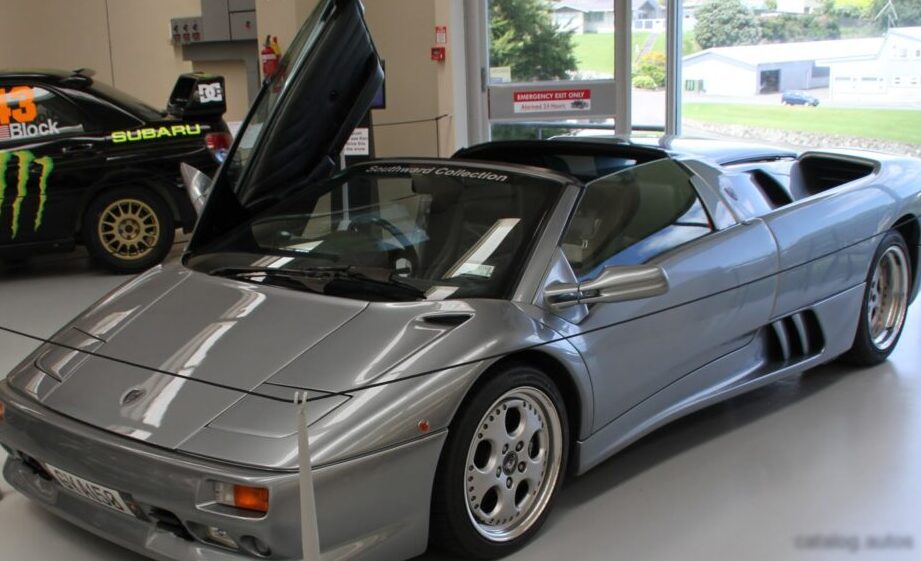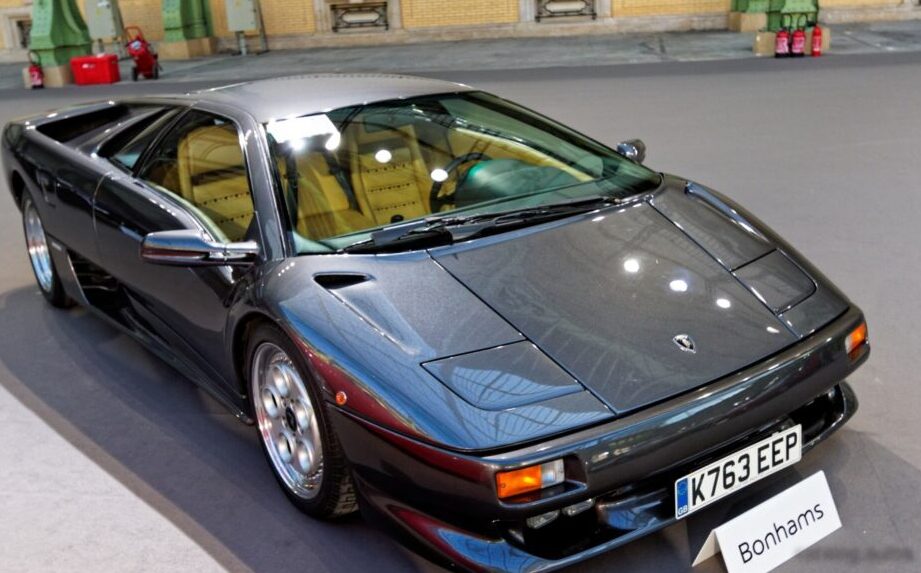
The Lamborghini Diablo VT, introduced in 1990 and produced through 1998, represents a pivotal moment in the evolution of the iconic Italian supercar. The “VT” designation, standing for Viscous Traction, signified the introduction of all-wheel drive to the Diablo line, dramatically improving handling and stability. Positioned as the flagship model within the Diablo range for much of its production run, the VT offered a significant performance upgrade over the initially released rear-wheel drive versions. It was built upon the Diablo chassis, part of the broader Lamborghini lineage that followed the Countach, and served as a technological showcase for the company during a period of ownership transitions. The VT’s combination of a powerful V12 engine and all-wheel drive system established a new benchmark for supercar performance and cemented Lamborghini’s reputation for building extreme, high-performance vehicles.
Technical Specifications
| Brand | Lamborghini |
| Model | Diablo |
| Generation | Diablo |
| Type (Engine) | VT (492 Hp) |
| Start of production | 1990 year |
| End of production | 1998 year |
| Powertrain Architecture | Internal Combustion engine |
| Body type | Coupe |
| Seats | 2 |
| Doors | 2 |
| Fuel consumption (economy) – urban | 20 l/100 km (11.8 US mpg, 14.1 UK mpg, 5 km/l) |
| Fuel consumption (economy) – extra urban | 13.3 l/100 km (17.7 US mpg, 21.2 UK mpg, 7.5 km/l) |
| Fuel consumption (economy) – combined | 15.2 l/100 km (15.5 US mpg, 18.6 UK mpg, 6.6 km/l) |
| Fuel Type | Petrol (Gasoline) |
| Acceleration 0 – 100 km/h | 4.1 sec |
| Acceleration 0 – 62 mph | 4.1 sec |
| Acceleration 0 – 60 mph | 3.9 sec |
| Maximum speed | 325 km/h (201.95 mph) |
| Weight-to-power ratio | 3.3 kg/Hp, 302.8 Hp/tonne |
| Weight-to-torque ratio | 2.8 kg/Nm, 356.9 Nm/tonne |
| Power | 492 Hp @ 6800 rpm |
| Power per litre | 86.2 Hp/l |
| Torque | 580 Nm @ 5200 rpm (427.79 lb.-ft. @ 5200 rpm) |
| Engine layout | Middle, Longitudinal |
| Engine Model/Code | L 522 |
| Engine displacement | 5707 cm3 (348.26 cu. in.) |
| Number of cylinders | 12 |
| Engine configuration | V-engine |
| Cylinder Bore | 87 mm (3.43 in.) |
| Piston Stroke | 80 mm (3.15 in.) |
| Compression ratio | 10:1 |
| Number of valves per cylinder | 4 |
| Fuel injection system | Multi-port manifold injection |
| Engine aspiration | Naturally aspirated engine |
| Valvetrain | DOHC |
| Engine oil capacity | 14 l (14.79 US qt | 12.32 UK qt) |
| Coolant | 15 l (15.85 US qt | 13.2 UK qt) |
| Kerb Weight | 1625 kg (3582.51 lbs.) |
| Max. weight | 1840 kg (4056.51 lbs.) |
| Max load | 215 kg (473.99 lbs.) |
| Trunk (boot) space – minimum | 140 l (4.94 cu. ft.) |
| Fuel tank capacity | 100 l (26.42 US gal | 22 UK gal) |
| Length | 4460 mm (175.59 in.) |
| Width | 2040 mm (80.31 in.) |
| Height | 1105 mm (43.5 in.) |
| Wheelbase | 2650 mm (104.33 in.) |
| Front track | 1540 mm (60.63 in.) |
| Rear (Back) track | 1640 mm (64.57 in.) |
| Drive wheel | All wheel drive (4×4) |
| Number of gears and type of gearbox | 5 gears, manual transmission |
| Front suspension | Double wishbone |
| Rear suspension | Double wishbone |
| Front brakes | Ventilated discs |
| Rear brakes | Ventilated discs |
| Assisting systems | ABS (Anti-lock braking system) |
| Steering type | Steering rack and pinion |
| Power steering | Hydraulic Steering |
| Tires size | 245/40 ZR17; 335/35ZR17 |
INTRODUCTION
The Diablo VT, launched in 1990, marked a significant departure from its predecessor, the Countach, and represented Lamborghini’s attempt to create a more refined and technologically advanced supercar. The introduction of all-wheel drive was a key innovation, addressing the Countach’s sometimes challenging handling characteristics. The VT was produced alongside rear-wheel drive Diablos for several years, but quickly became the preferred choice for many buyers due to its superior stability and traction. The model remained in production until 1998, undergoing several revisions and updates throughout its lifespan, including the introduction of the more powerful VT 6.0 in 1999. The Diablo VT was a critical success, helping to revitalize the Lamborghini brand and establish it as a major player in the high-performance automotive market.
Powertrain & Engine Architecture
At the heart of the Diablo VT lies the Lamborghini L522, a 60-degree V12 engine displacing 5.7 liters (5707 cc). This naturally aspirated powerplant produced 492 horsepower at 6,800 rpm and 428 lb-ft of torque at 5,200 rpm. The engine featured a DOHC (Double Overhead Camshaft) valvetrain with four valves per cylinder, and utilized multi-port fuel injection. The L522 was a largely hand-built engine, reflecting Lamborghini’s commitment to craftsmanship. The VT’s all-wheel drive system employed a viscous coupling center differential, distributing power between the front and rear axles as needed. This system, while not as sophisticated as later electronically controlled systems, provided a significant improvement in traction and stability, particularly in adverse weather conditions. The transmission was a five-speed manual, known for its robust construction and precise shift feel.
Driving Characteristics
The Diablo VT offered a dramatically different driving experience compared to the rear-wheel drive Diablo. The all-wheel drive system instilled a level of confidence that was previously absent, allowing drivers to exploit more of the engine’s power without fear of losing control. Acceleration was blistering, with 0-60 mph times consistently falling in the 3.9-4.1 second range. The VT felt planted and stable at high speeds, making it a more approachable supercar for a wider range of drivers. While the manual transmission provided a direct and engaging driving experience, the clutch was heavy and the gearshift required considerable effort. Compared to later, more technologically advanced supercars, the Diablo VT felt raw and visceral, demanding respect and skill from its driver.
Equipment & Trim Levels
The Diablo VT was positioned as a premium model, and as such, came standard with a relatively high level of equipment. The interior featured leather upholstery, power windows, and air conditioning. Optional extras included a premium sound system, upgraded leather trim, and a variety of exterior color options. The dashboard layout was relatively simple and functional, with clearly marked gauges and controls. The VT’s interior, while luxurious for a supercar of its era, prioritized functionality over outright opulence.
Chassis & Braking
The Diablo VT utilized a tubular steel chassis, providing a rigid and lightweight foundation for the car. The suspension consisted of double wishbones at all four corners, with adjustable dampers and anti-roll bars. Braking duties were handled by ventilated disc brakes at all four wheels, assisted by an ABS (Anti-lock Braking System). The VT’s braking performance was impressive for its time, but lacked the sophistication of later systems. The car’s relatively low weight (around 3,583 lbs) contributed to its agile handling and responsive braking.
Market Reception & Comparison
The Diablo VT was widely praised by automotive critics for its performance, handling, and overall refinement. The all-wheel drive system was particularly lauded for its ability to improve traction and stability. Compared to the rear-wheel drive Diablo, the VT was considered to be a more user-friendly and accessible supercar. Fuel economy, however, was predictably poor, with combined fuel consumption averaging around 15.5 US mpg. Reliability was also a concern, as with many exotic cars of this era, and maintenance costs were substantial. The VT’s price tag placed it firmly in the realm of exclusivity, making it a status symbol as much as a performance machine.
Legacy
The Lamborghini Diablo VT remains a highly sought-after collector’s car today. Its combination of iconic styling, powerful V12 engine, and all-wheel drive system has cemented its place in automotive history. The L522 engine, while aging, is known for its durability and relatively straightforward maintenance. However, parts availability can be a challenge, and specialized knowledge is required for proper servicing. The Diablo VT represents a pivotal moment in Lamborghini’s history, bridging the gap between the flamboyant Countach and the more modern Murciélago. It continues to be celebrated by enthusiasts as a true icon of the supercar era.