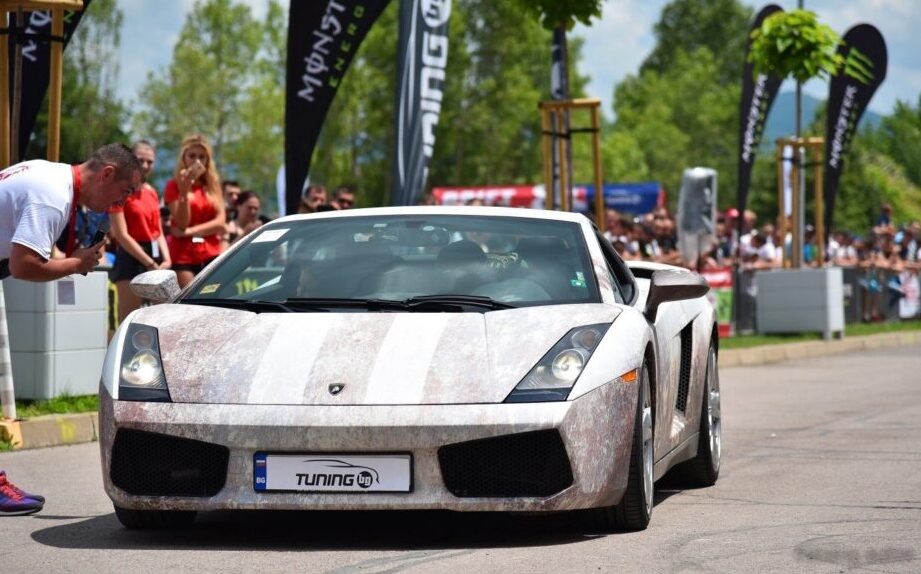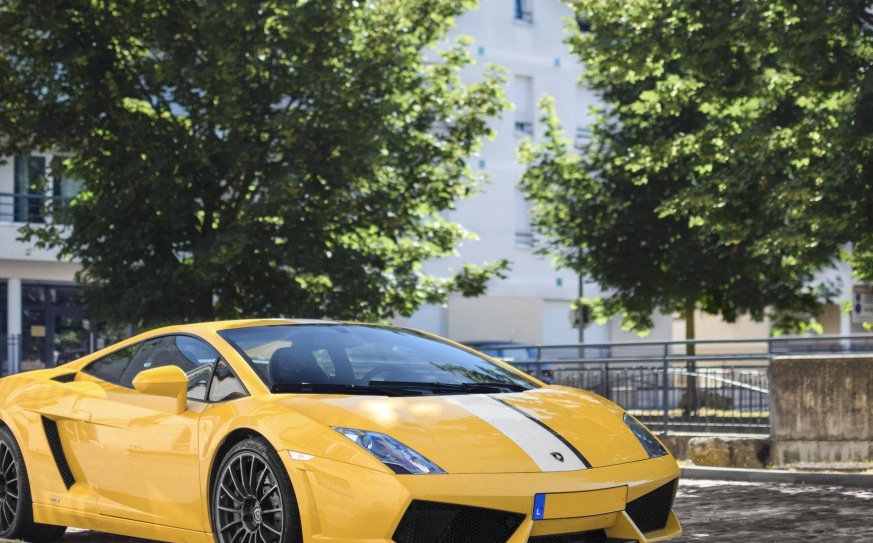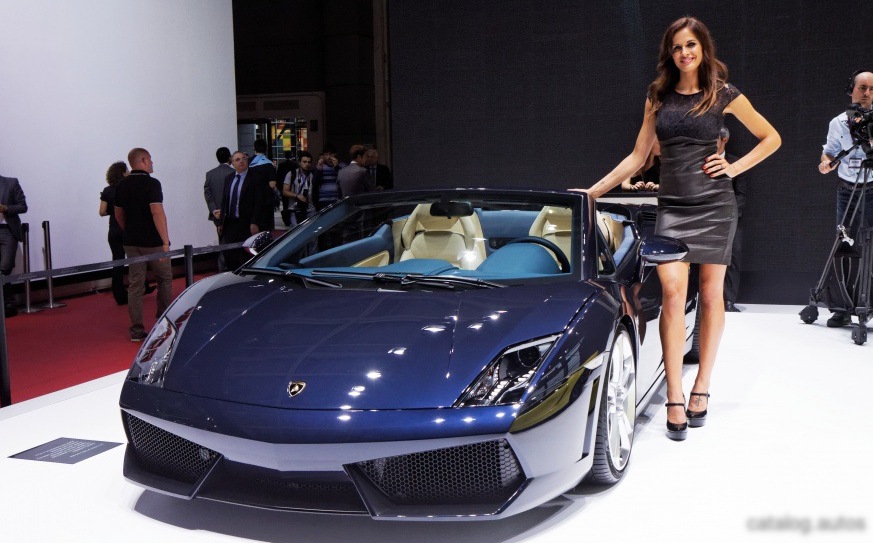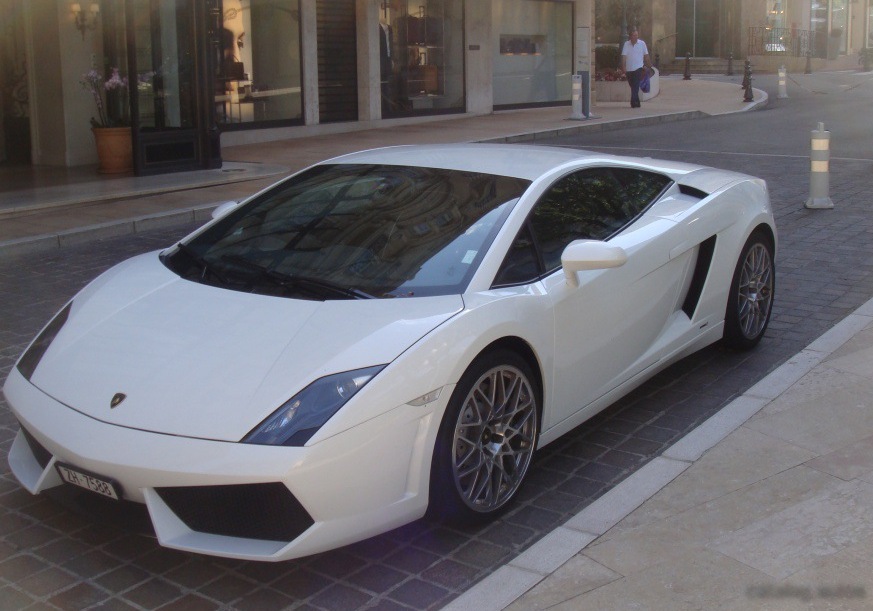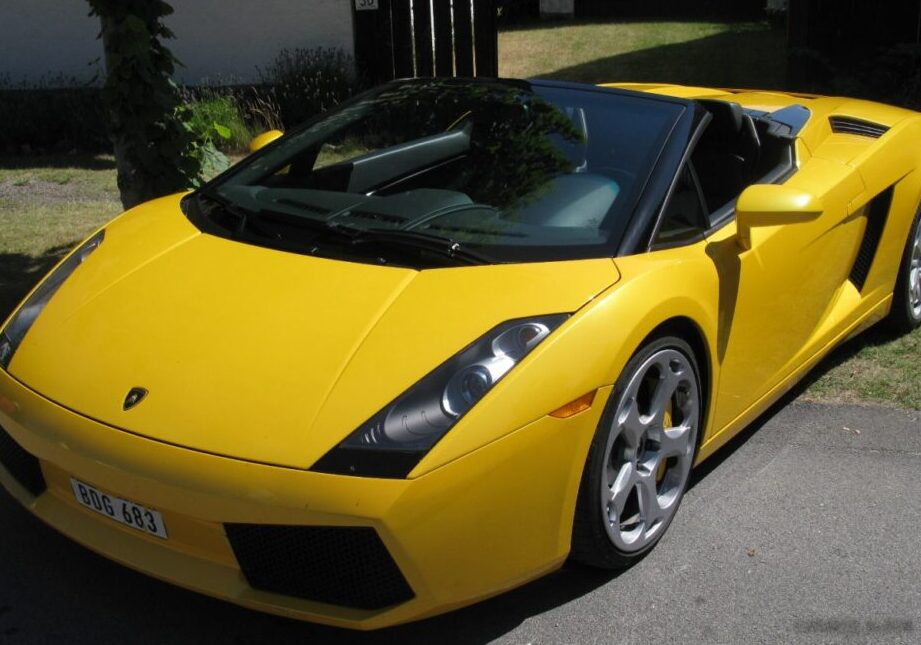
The Lamborghini Gallardo Spyder 5.0i V10, produced from 2005 to 2008, represented the open-top variant of Lamborghini’s entry-level model, the Gallardo. Positioned as a more accessible (though still exceptionally expensive) alternative to the larger Murciélago, the Gallardo aimed to broaden Lamborghini’s customer base while maintaining the brand’s reputation for high performance and dramatic styling. The Spyder, specifically with the 5.0-liter V10 engine producing 520 horsepower, offered an exhilarating driving experience combining the visceral thrill of a naturally aspirated V10 with the freedom of open-air motoring. It was built on the Audi-derived aluminum space frame chassis, part of the broader Volkswagen Group’s strategy to leverage component sharing and reduce development costs. This particular iteration of the Spyder was a key part of the first generation (2003-2008) Gallardo lineup, bridging the gap between the initial 5.0-liter models and the later, more powerful 5.2-liter versions.
Technical Specifications
| Brand | Lamborghini |
| Model | Gallardo |
| Generation | Gallardo Spyder |
| Type (Engine) | 5.0i V10 (520 Hp) AWD |
| Start of production | 2005 |
| End of production | 2008 |
| Powertrain Architecture | Internal Combustion engine |
| Body type | Roadster |
| Seats | 2 |
| Doors | 2 |
| Fuel consumption (economy) – urban | 24.8 l/100 km (9.5 US mpg, 11.4 UK mpg, 4 km/l) |
| Fuel consumption (economy) – extra urban | 12.4 l/100 km (19 US mpg, 22.8 UK mpg, 8.1 km/l) |
| Fuel consumption (economy) – combined | 17 l/100 km (13.8 US mpg, 16.6 UK mpg, 5.9 km/l) |
| CO2 emissions | 400 g/km |
| Fuel Type | Petrol (Gasoline) |
| Acceleration 0 – 100 km/h | 4.3 sec |
| Acceleration 0 – 62 mph | 4.3 sec |
| Acceleration 0 – 60 mph | 4.1 sec |
| Maximum speed | 314 km/h (195.11 mph) |
| Emission standard | Euro 4 |
| Weight-to-power ratio | 3 kg/Hp, 331.2 Hp/tonne |
| Weight-to-torque ratio | 3.1 kg/Nm, 324.8 Nm/tonne |
| Power | 520 Hp @ 8000 rpm |
| Power per litre | 104.8 Hp/l |
| Torque | 510 Nm @ 4250 rpm (376.16 lb.-ft. @ 4250 rpm) |
| Engine layout | Middle, Longitudinal |
| Engine Model/Code | 07L |
| Engine displacement | 4961 cm3 (302.74 cu. in.) |
| Number of cylinders | 10 |
| Engine configuration | V-engine |
| Cylinder Bore | 82.5 mm (3.25 in.) |
| Piston Stroke | 92.8 mm (3.65 in.) |
| Compression ratio | 11:1 |
| Number of valves per cylinder | 4 |
| Fuel injection system | Multi-port manifold injection |
| Engine aspiration | Naturally aspirated engine |
| Valvetrain | DOHC, VVT |
| Engine oil capacity | 9.5 l (10.04 US qt | 8.36 UK qt) |
| Coolant | 21 l (22.19 US qt | 18.48 UK qt) |
| Kerb Weight | 1570 kg (3461.26 lbs.) |
| Trunk (boot) space – minimum | 110 l (3.88 cu. ft.) |
| Fuel tank capacity | 80 l (21.13 US gal | 17.6 UK gal) |
| Length | 4300 mm (169.29 in.) |
| Width | 1900 mm (74.8 in.) |
| Height | 1184 mm (46.61 in.) |
| Wheelbase | 2560 mm (100.79 in.) |
| Front track | 1622 mm (63.86 in.) |
| Rear (Back) track | 1592 mm (62.68 in.) |
| Drag coefficient (Cd) | 0.36 |
| Minimum turning circle (turning diameter) | 11.5 m (37.73 ft.) |
| Drive wheel | All wheel drive (4×4) |
| Number of gears and type of gearbox | 6 gears, manual transmission |
| Front suspension | Double wishbone |
| Rear suspension | Double wishbone |
| Front brakes | Ventilated discs |
| Rear brakes | Ventilated discs |
| Assisting systems | ABS (Anti-lock braking system) |
| Steering type | Steering rack and pinion |
| Tires size | 235/35 R19ZR; 295/30 R19ZR |
| Wheel rims size | 8.5J x 19; 11J x 19 |
Powertrain & Engine Architecture
The heart of the Gallardo Spyder 5.0i was the 07L engine, a 4.961-liter naturally aspirated V10. This engine, derived from Lamborghini’s collaboration with Audi, featured a 90-degree V-angle and all-aluminum construction. It utilized multi-point fuel injection and double overhead camshafts (DOHC) with variable valve timing (VVT) on both intake and exhaust valves. This configuration allowed for a broad powerband and a distinctive, high-revving character. The 520 horsepower and 376 lb-ft of torque were substantial for the time, providing exhilarating acceleration. The engine was mounted longitudinally in a mid-engine layout, contributing to the car’s balanced handling. The standard transmission for this model was a 6-speed manual, although an optional e-gear automated manual transmission was also available. The all-wheel-drive system employed a viscous coupling to distribute power between the front and rear axles, enhancing traction and stability.
Driving Characteristics
The Gallardo Spyder 5.0i with the manual transmission delivered a raw and engaging driving experience. Acceleration was brisk, with 0-60 mph times consistently around 4.1 seconds. The engine’s responsiveness and willingness to rev were hallmarks of its character. The all-wheel-drive system provided confidence-inspiring grip, particularly in challenging conditions. Compared to later Gallardo models with the 5.2-liter engine, the 5.0-liter version felt slightly less urgent in its acceleration, but it offered a more linear power delivery. The manual gearbox, while requiring skill to operate smoothly, provided a direct connection between driver and machine. The Spyder’s open-top configuration amplified the engine’s sound and the sensation of speed, creating a truly immersive driving experience.
Equipment & Trim Levels
The Gallardo Spyder 5.0i came reasonably well-equipped, though options were plentiful, allowing buyers to personalize their vehicles. Standard features included leather upholstery, power-adjustable seats, air conditioning, and a premium audio system. The interior design was driver-focused, with a minimalist dashboard and aluminum trim. Optional extras included navigation, upgraded audio systems, carbon fiber interior trim, and various exterior styling enhancements. The convertible top was a manually operated soft top, requiring physical effort to raise and lower.
Chassis & Braking
The Gallardo Spyder utilized a lightweight aluminum space frame chassis, providing a rigid and strong foundation for the vehicle. The suspension consisted of double wishbones at all four corners, with coil springs and adjustable dampers. This setup provided a good balance between ride comfort and handling precision. Braking duties were handled by ventilated disc brakes at all four wheels, providing ample stopping power. The ABS (Anti-lock Braking System) was standard, enhancing safety and control. The Spyder’s chassis was slightly reinforced compared to the coupe to compensate for the loss of structural rigidity due to the open-top design.
Market Reception & Comparison
The Gallardo Spyder 5.0i was generally well-received by automotive critics. It was praised for its stunning design, exhilarating performance, and engaging driving experience. However, some critics noted the relatively high price tag and the somewhat compromised practicality of a two-seat, mid-engine roadster. Compared to the Gallardo coupe, the Spyder offered a more visceral and sensory driving experience, but at the expense of some structural rigidity and potentially slightly slower lap times. Compared to other exotic roadsters of the time, such as the Ferrari 360 Spider, the Gallardo Spyder offered a more aggressive and modern design, as well as the added benefit of all-wheel drive. Fuel economy was predictably poor, reflecting the car’s high-performance nature.
Legacy
The Lamborghini Gallardo Spyder 5.0i remains a desirable and collectible exotic car. The 5.0-liter engine, while superseded by the more powerful 5.2-liter version, is considered robust and reliable, provided it receives regular maintenance. The aluminum space frame chassis has also proven durable over time. Today, these early Gallardo Spyders are sought after by enthusiasts who appreciate their unique combination of performance, style, and open-air driving enjoyment. Values have generally held steady, and well-maintained examples command premium prices in the used car market. The Gallardo, in general, played a crucial role in revitalizing the Lamborghini brand and establishing it as a major player in the high-performance automotive segment.