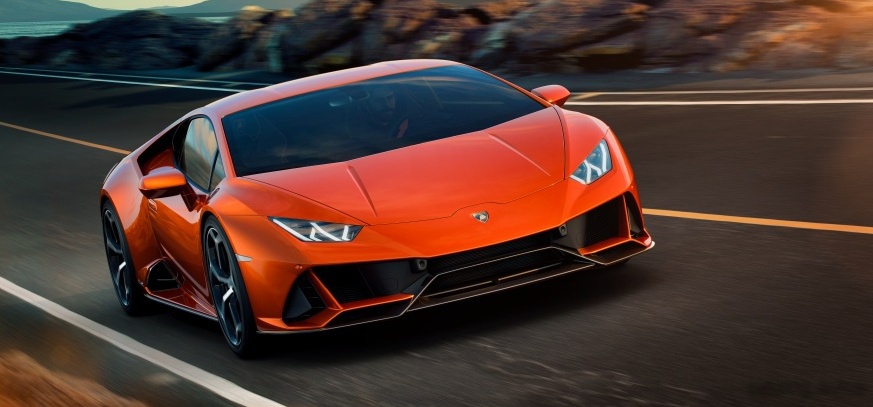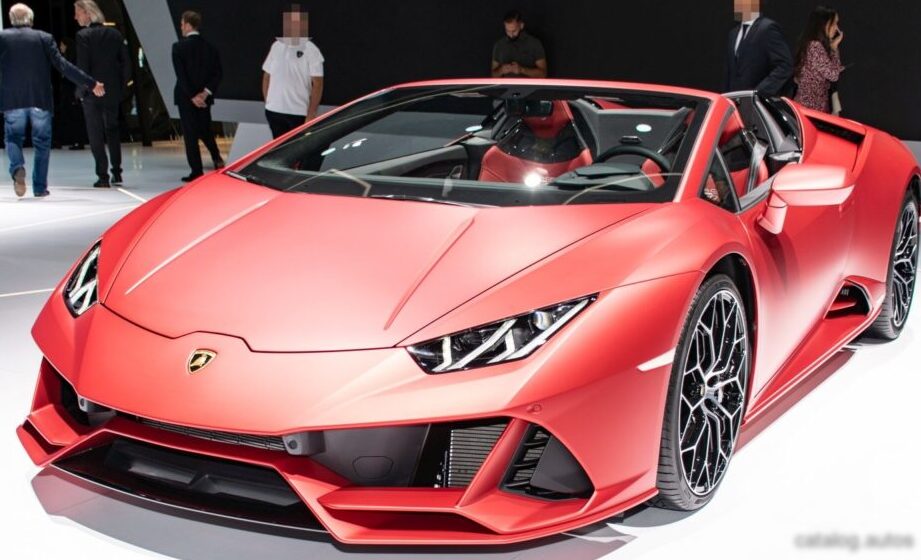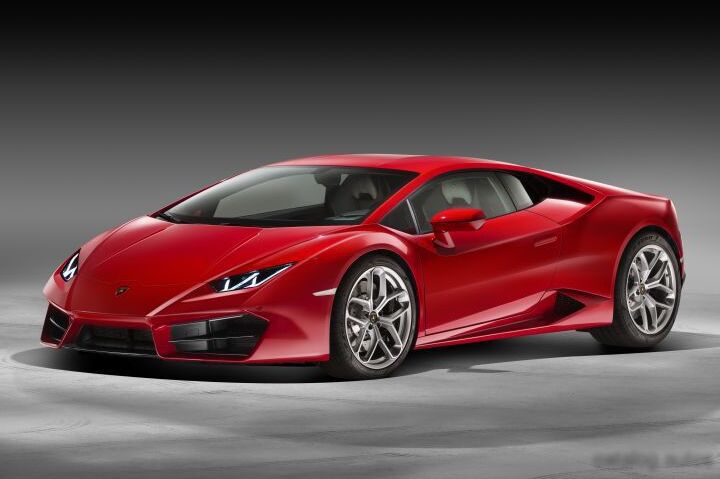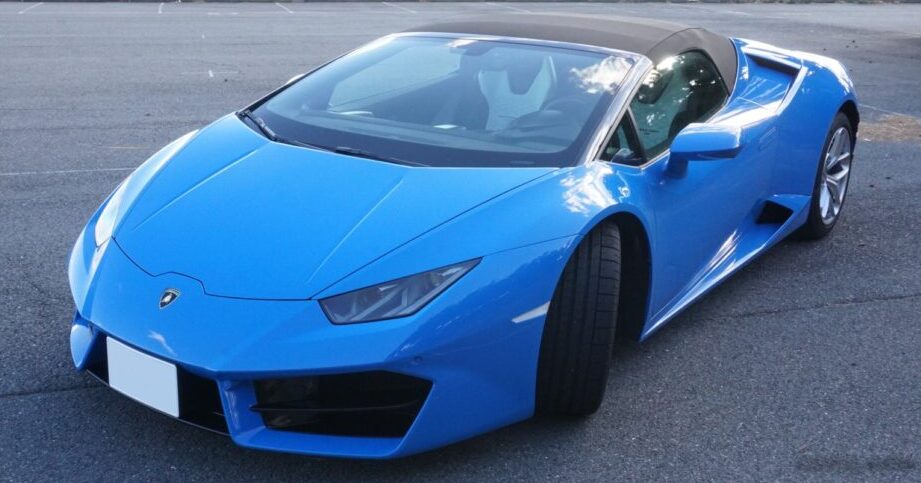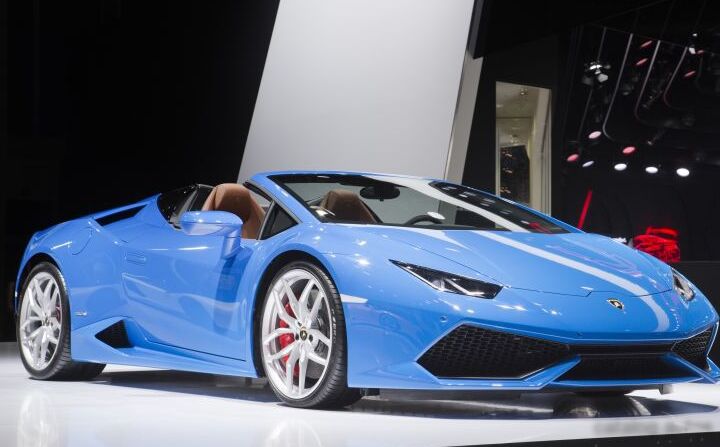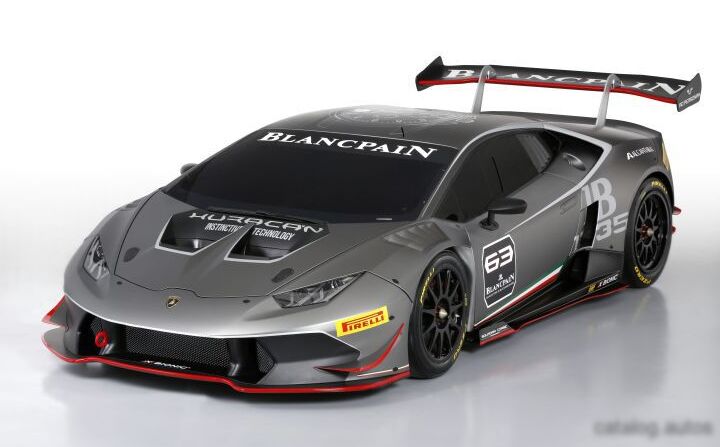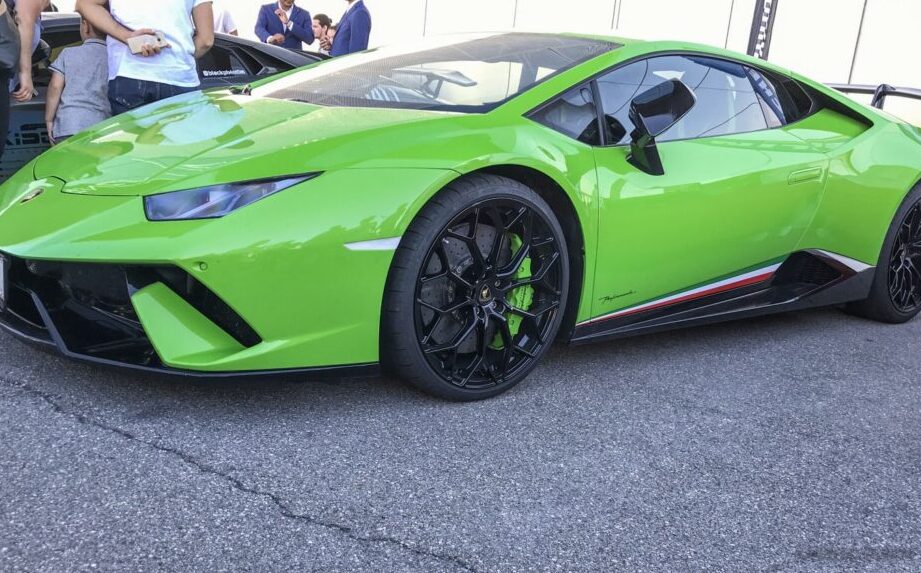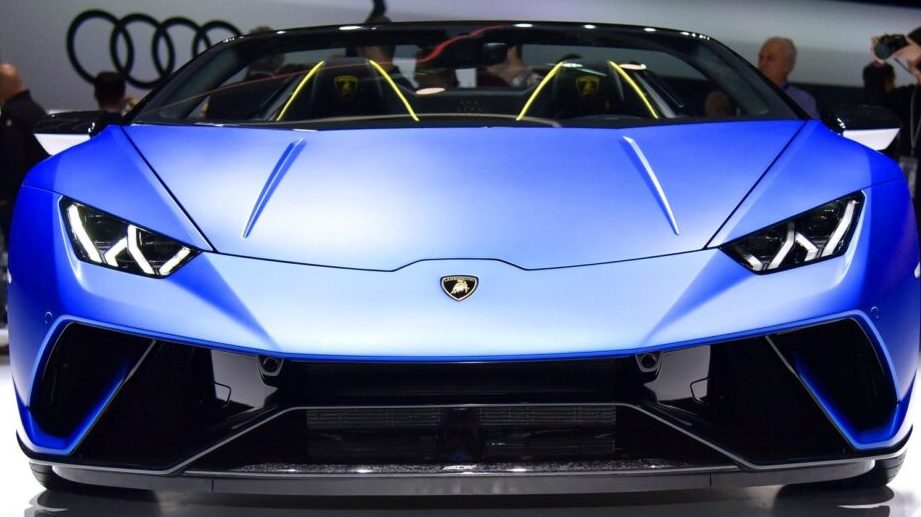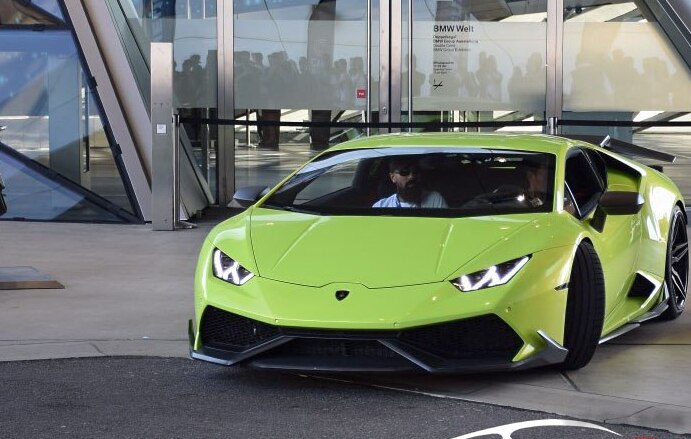
The Lamborghini Huracán LP 610-4, launched in 2014, marked a pivotal moment for the Italian automaker, succeeding the long-running Gallardo as the entry-level model in the Lamborghini lineup. The “LP 610-4” designation signifies its 610 horsepower (metric) output and all-wheel-drive system. Produced through 2019, the Huracán LP 610-4 established a new benchmark for performance and technology within its segment, blending the visceral experience expected of a Lamborghini with increased usability and refinement. It was built on a new platform, utilizing a hybrid aluminum and carbon fiber chassis, representing a significant advancement over its predecessor.
Technical Specifications
| Brand | Lamborghini |
| Model | Huracan |
| Generation | Huracan LP 610-4 |
| Type (Engine) | 5.2 V10 (610 Hp) AWD LDF |
| Start of production | 2014 |
| End of production | 2019 |
| Powertrain Architecture | Internal Combustion engine |
| Body type | Coupe |
| Seats | 2 |
| Doors | 2 |
| Fuel consumption (economy) – urban (NEDC) | 17.8 l/100 km (13.2 US mpg, 15.9 UK mpg, 5.6 km/l) |
| Fuel consumption (economy) – extra urban (NEDC) | 9.4 l/100 km (25 US mpg, 30.1 UK mpg, 10.6 km/l) |
| Fuel consumption (economy) – combined (NEDC) | 12.5 l/100 km (18.8 US mpg, 22.6 UK mpg, 8 km/l) |
| CO2 emissions (NEDC) | 290 g/km |
| Fuel Type | Petrol (Gasoline) |
| Acceleration 0 – 100 km/h | 3.2 sec |
| Acceleration 0 – 62 mph | 3.2 sec |
| Acceleration 0 – 60 mph | 3 sec |
| Acceleration 0 – 200 km/h | 9.9 sec |
| Maximum speed | 325 km/h (201.95 mph) |
| Emission standard | Euro 6 |
| Weight-to-power ratio | 2.3 kg/Hp, 429 Hp/tonne |
| Weight-to-torque ratio | 2.5 kg/Nm, 393.8 Nm/tonne |
| Power | 610 Hp @ 8250 rpm |
| Power per litre | 117.2 Hp/l |
| Torque | 560 Nm @ 6500 rpm (413.03 lb.-ft. @ 6500 rpm) |
| Engine layout | Middle, Longitudinal |
| Engine Model/Code | CSJB |
| Engine displacement | 5204 cm3 (317.57 cu. in.) |
| Number of cylinders | 10 |
| Engine configuration | V-engine |
| Cylinder Bore | 84.5 mm (3.33 in.) |
| Piston Stroke | 92.8 mm (3.65 in.) |
| Compression ratio | 12.7:1 |
| Number of valves per cylinder | 4 |
| Fuel injection system | Direct injection and Multi-port manifold injection |
| Engine aspiration | Naturally aspirated engine |
| Valvetrain | DOHC |
| Engine oil capacity | 7.5 l (7.93 US qt | 6.6 UK qt) |
| Coolant | 22 l (23.25 US qt | 19.36 UK qt) |
| Kerb Weight | 1422 kg (3134.97 lbs.) |
| Fuel tank capacity | 80 l (21.13 US gal | 17.6 UK gal) |
| Length | 4459 mm (175.55 in.) |
| Width | 1924 mm (75.75 in.) |
| Width including mirrors | 2236 mm (88.03 in.) |
| Height | 1165 mm (45.87 in.) |
| Wheelbase | 2620 mm (103.15 in.) |
| Front track | 1668 mm (65.67 in.) |
| Rear (Back) track | 1620 mm (63.78 in.) |
| Minimum turning circle | 11.5 m (37.73 ft.) |
| Drivetrain Architecture | The Internal combustion engine (ICE) drives the rear wheels permanently, and the front wheels are driven through an electrically or mechanically operated clutch if necessary. |
| Drive wheel | All wheel drive (4×4) |
| Number of gears and type of gearbox | 7 gears, automatic transmission LDF |
| Front suspension | Coil spring, Double wishbone, Transverse stabilizer |
| Rear suspension | Double wishbone, Transverse stabilizer, Coil spring |
| Front brakes | Ventilated discs, 380×38 mm |
| Rear brakes | Ventilated discs, 356×32 mm |
| Assisting systems | ABS (Anti-lock braking system) |
| Steering type | Steering rack and pinion |
| Power steering | Electric Steering |
| Tires size | Front wheel tires: 245/30 R20Rear wheel tires: 305/30 R20 |
| Wheel rims size | Front wheel rims: 8.5J x 20Rear wheel rims: 11J x 20 |
Powertrain & Engine Architecture
At the heart of the Huracán LP 610-4 lies Lamborghini’s naturally aspirated 5.2-liter V10 engine, designated the CSJB. This engine is a direct descendant of the powerplant used in the Gallardo, but significantly revised for improved performance and efficiency. It features a 90-degree V-angle and utilizes a dry-sump lubrication system, crucial for maintaining oil supply during the high G-forces experienced in performance driving. The engine employs both direct and multi-point fuel injection, optimizing combustion across the rev range. The valvetrain is a dual overhead camshaft (DOHC) design with four valves per cylinder. The 7-speed LDF dual-clutch transmission, developed by Lamborghini, provides incredibly rapid shifts and contributes to the car’s overall responsiveness. This transmission is not a traditional automatic; it’s a highly sophisticated automated manual gearbox offering both fully automatic and paddle-shifted manual control.
Driving Characteristics
The Huracán LP 610-4 delivers a driving experience characterized by its immediacy and raw power. The 610 horsepower and 413 lb-ft of torque are readily available, providing exhilarating acceleration. The all-wheel-drive system, utilizing an electronically controlled multi-plate clutch, distributes power between the front and rear axles, optimizing traction and stability. The LDF dual-clutch transmission’s quick shifts minimize power interruption, contributing to a seamless surge of acceleration. Compared to a potential manual transmission version (not widely available in the US market), the LDF offers greater ease of use, particularly in traffic, without sacrificing significant performance. While not as brutally raw as some older Lamborghinis, the LP 610-4 still demands respect and provides a highly engaging driving experience.
Equipment & Trim Levels
The Huracán LP 610-4 came standard with a comprehensive suite of features, reflecting its positioning as a modern supercar. Interior appointments included leather upholstery, a multi-function steering wheel, and a high-quality infotainment system. Standard equipment also included climate control, power-adjustable seats, and a sophisticated driver assistance suite. Optional extras were plentiful, allowing buyers to personalize their vehicles extensively. These included carbon fiber interior trim, upgraded audio systems, various exterior styling packages, and performance-enhancing options like carbon ceramic brakes. The interior design prioritized a driver-focused layout, with controls logically arranged and easily accessible.
Chassis & Braking
The Huracán LP 610-4 utilizes a hybrid chassis construction, combining aluminum and carbon fiber for optimal rigidity and lightweight construction. The suspension system employs double wishbones at all four corners, with coil springs and transverse stabilizer bars to minimize body roll. The braking system features ventilated discs on all wheels, providing exceptional stopping power. The front brakes measure 380x38mm, while the rear brakes are 356x32mm. An advanced anti-lock braking system (ABS) is standard, enhancing stability during hard braking. The car’s relatively low weight, combined with the high-performance braking system, results in impressive deceleration capabilities.
Market Reception & Comparison
The Lamborghini Huracán LP 610-4 was widely praised by automotive critics for its performance, handling, and overall refinement. It was seen as a significant improvement over the Gallardo, offering a more polished and user-friendly experience. Compared to other supercars in its class, such as the Ferrari 458 Italia and McLaren 650S, the Huracán LP 610-4 was often lauded for its naturally aspirated engine, which provided a more visceral and engaging driving experience. Fuel economy, while not a primary concern for buyers in this segment, was reasonable for a supercar, averaging around 18.8 US mpg in combined driving. Reliability proved to be generally good, although maintenance costs remained high, as expected for a vehicle of this caliber.
Legacy
The Huracán LP 610-4 established the Huracán model line as a successful successor to the Gallardo. The 5.2L V10 engine, while requiring regular maintenance, has proven to be a robust and reliable powerplant when properly cared for. On the used car market, the LP 610-4 remains a desirable and sought-after model, commanding premium prices. Its combination of performance, styling, and relative usability has ensured its enduring appeal among supercar enthusiasts. The LP 610-4 represents a significant chapter in Lamborghini’s history, bridging the gap between the brand’s traditional values and the demands of a modern supercar.