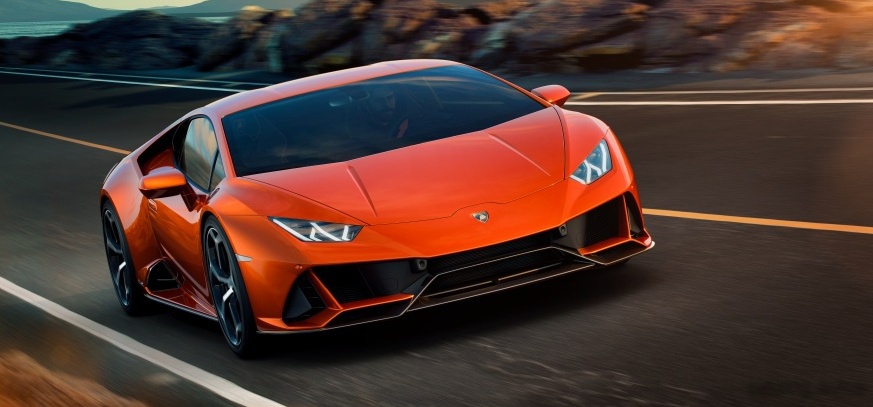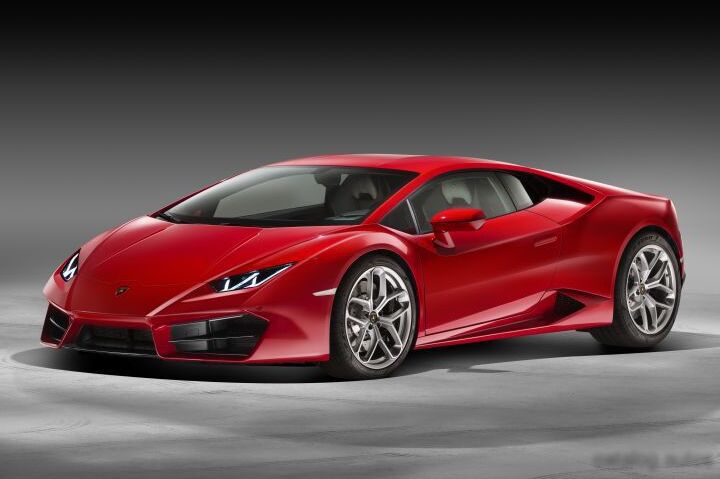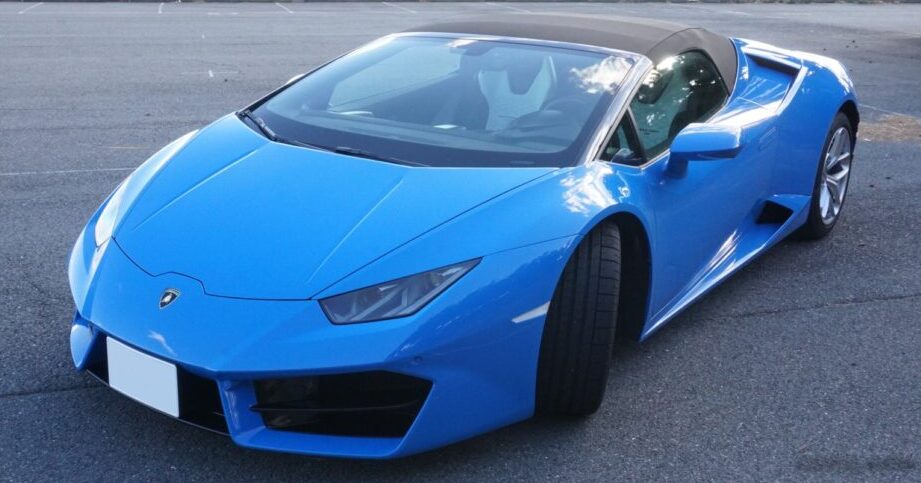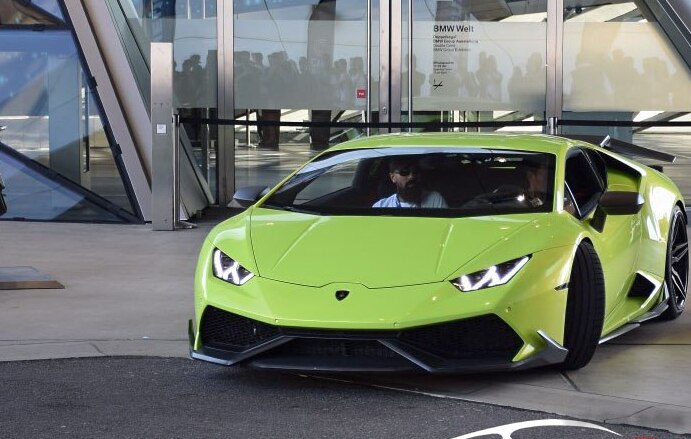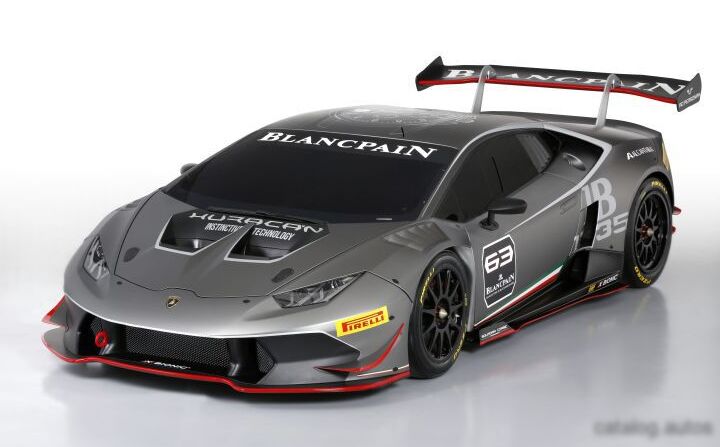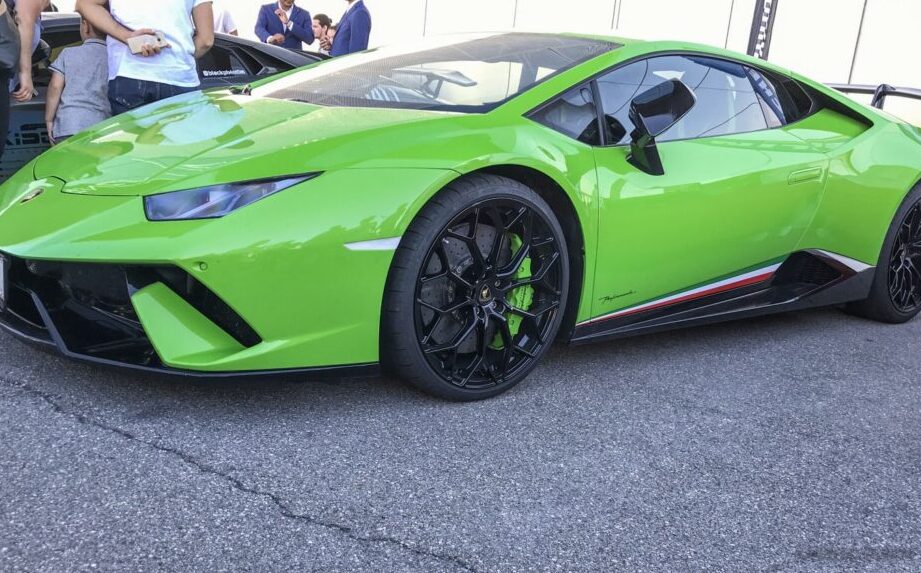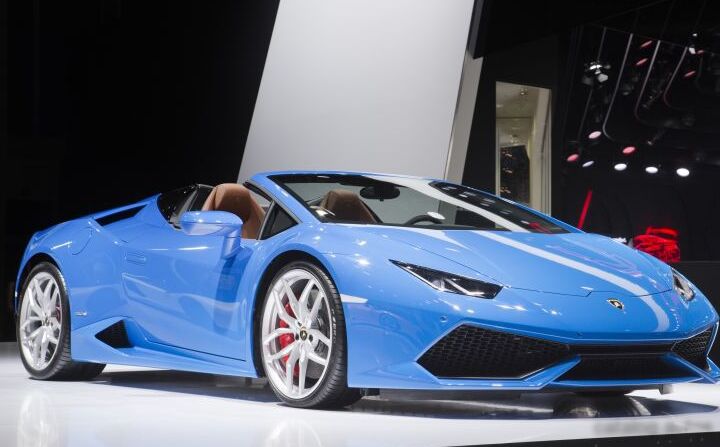
The Lamborghini Huracán LP 610-4 Spyder, produced from 2016 to 2019, represents the open-top variant of Lamborghini’s entry-level supercar, positioned below the Aventador in the Italian manufacturer’s lineup. It builds upon the foundation of the Huracán LP 610-4 coupe, offering the same exhilarating performance with the added experience of open-air driving. The “LP 610-4” designation signifies the engine’s power output (610 horsepower), and the all-wheel-drive system (4). The Spyder utilizes a lightweight soft top, allowing drivers to transition between a closed coupe and an open roadster experience. It is built on the Volkswagen Group’s modular MLB platform, shared with other high-performance vehicles like the Audi R8.
Technical Specifications
| Brand | Lamborghini |
| Model | Huracan |
| Generation | Huracan LP 610-4 Spyder |
| Type (Engine) | 5.2 V10 (610 Hp) AWD LDF |
| Start of production | 2016 |
| End of production | 2019 |
| Powertrain Architecture | Internal Combustion engine |
| Body type | Cabriolet |
| Seats | 2 |
| Doors | 2 |
| Fuel consumption (economy) – urban (NEDC) | 17.5 l/100 km (13.4 US mpg, 16.1 UK mpg, 5.7 km/l) |
| Fuel consumption (economy) – extra urban (NEDC) | 9.2 l/100 km (25.6 US mpg, 30.7 UK mpg, 10.9 km/l) |
| Fuel consumption (economy) – combined (NEDC) | 12.3 l/100 km (19.1 US mpg, 23 UK mpg, 8.1 km/l) |
| CO2 emissions (NEDC) | 285 g/km |
| Fuel Type | Petrol (Gasoline) |
| Acceleration 0 – 100 km/h | 3.4 sec |
| Acceleration 0 – 62 mph | 3.4 sec |
| Acceleration 0 – 60 mph | 3.2 sec |
| Acceleration 0 – 200 km/h | 10.2 sec |
| Maximum speed | 324 km/h (201.32 mph) |
| Emission standard | Euro 6 |
| Weight-to-power ratio | 2.5 kg/Hp, 395.6 Hp/tonne |
| Weight-to-torque ratio | 2.8 kg/Nm, 363.2 Nm/tonne |
| Power | 610 Hp @ 8250 rpm |
| Power per litre | 117.2 Hp/l |
| Torque | 560 Nm @ 6500 rpm (413.03 lb.-ft. @ 6500 rpm) |
| Engine layout | Middle, Longitudinal |
| Engine Model/Code | CSJB |
| Engine displacement | 5204 cm3 (317.57 cu. in.) |
| Number of cylinders | 10 |
| Engine configuration | V-engine |
| Cylinder Bore | 84.5 mm (3.33 in.) |
| Piston Stroke | 92.8 mm (3.65 in.) |
| Compression ratio | 12.7:1 |
| Number of valves per cylinder | 4 |
| Fuel injection system | Direct injection and Multi-port manifold injection |
| Engine aspiration | Naturally aspirated engine |
| Valvetrain | DOHC |
| Engine oil capacity | 7.5 l (7.93 US qt | 6.6 UK qt) |
| Coolant | 22 l (23.25 US qt | 19.36 UK qt) |
| Kerb Weight | 1542 kg (3399.53 lbs.) |
| Fuel tank capacity | 83 l (21.93 US gal | 18.26 UK gal) |
| Length | 4459 mm (175.55 in.) |
| Width | 1924 mm (75.75 in.) |
| Width including mirrors | 2236 mm (88.03 in.) |
| Height | 1180 mm (46.46 in.) |
| Wheelbase | 2620 mm (103.15 in.) |
| Front track | 1668 mm (65.67 in.) |
| Rear (Back) track | 1620 mm (63.78 in.) |
| Minimum turning circle | 11.5 m (37.73 ft.) |
| Drivetrain Architecture | All wheel drive (4×4). ICE drives rear wheels, front wheels engaged via clutch. |
| Number of gears and type of gearbox | 7 gears, automatic transmission LDF |
| Front suspension | Coil spring, Double wishbone, Transverse stabilizer |
| Rear suspension | Double wishbone, Transverse stabilizer, Coil spring |
| Front brakes | Ventilated discs, 380×38 mm |
| Rear brakes | Ventilated discs, 356×32 mm |
| Assisting systems | ABS (Anti-lock braking system) |
| Steering type | Steering rack and pinion |
| Power steering | Electric Steering |
| Tires size | Front: 245/30 R20, Rear: 305/30 R20 |
| Wheel rims size | Front: 8.5J x 20, Rear: 11J x 20 |
Powertrain & Engine Architecture
At the heart of the Huracán LP 610-4 Spyder lies Lamborghini’s naturally aspirated 5.2-liter V10 engine, designated the CSJB. This engine is a direct descendant of the V10 used in the Gallardo, but significantly revised for increased power and efficiency. It features a 90-degree V-angle, contributing to a smooth power delivery and reduced vibrations. The engine employs both direct injection and multi-point fuel injection, optimizing combustion across the rev range. The valvetrain utilizes double overhead camshafts (DOHC) with four valves per cylinder, enabling high airflow and maximizing engine performance. The engine produces 610 horsepower at 8,250 rpm and 413 lb-ft of torque at 6,500 rpm. The engine is mated to a 7-speed dual-clutch transmission (LDF), known for its incredibly fast and precise shifts. This transmission sends power to all four wheels via Lamborghini’s all-wheel-drive system, which utilizes an electronically controlled multi-plate clutch to distribute torque between the front and rear axles.
Driving Characteristics
The Huracán LP 610-4 Spyder delivers a thrilling driving experience, characterized by its responsive engine, precise handling, and exhilarating acceleration. The naturally aspirated V10 provides immediate throttle response, and the dual-clutch transmission ensures seamless gear changes. The all-wheel-drive system provides exceptional traction, allowing for confident acceleration even in challenging conditions. Compared to the standard Huracán coupe, the Spyder adds a layer of sensory engagement with the open-top configuration. While the soft top adds a slight weight penalty, the impact on performance is minimal. The 7-speed dual-clutch transmission is geared for rapid acceleration, with shorter ratios in the lower gears. The Spyder’s suspension is tuned for a balance between comfort and performance, providing a relatively compliant ride for a supercar while maintaining excellent body control.
Equipment & Trim Levels
The Huracán LP 610-4 Spyder came standard with a comprehensive list of features, including leather upholstery, power-adjustable seats, a navigation system, and a premium sound system. The interior design is driver-focused, with a minimalist dashboard and a 12.3-inch TFT display that provides information on vehicle performance and navigation. Optional extras included a variety of interior trim options, carbon fiber accents, and advanced driver-assistance systems. Customers could also personalize their Spyder with a wide range of exterior colors and wheel designs. The soft top was available in a variety of colors to complement the exterior paint.
Chassis & Braking
The Huracán LP 610-4 Spyder features a lightweight aluminum chassis, contributing to its impressive power-to-weight ratio. The suspension utilizes double wishbones at all four corners, with coil springs and transverse stabilizers to minimize body roll. The braking system consists of ventilated discs with six-piston calipers at the front and four-piston calipers at the rear, providing exceptional stopping power. The Spyder is equipped with Lamborghini’s Dynamic Steering system, which provides variable steering assist based on speed and driving conditions. ABS (Anti-lock Braking System) is standard, enhancing braking stability and control.
Market Reception & Comparison
The Huracán LP 610-4 Spyder was widely praised by automotive critics for its exhilarating performance, stunning design, and engaging driving experience. It was often compared to its rivals, such as the Ferrari 488 Spider and the McLaren 720S Spider. While the Spyder’s fuel economy was not a primary concern for its target audience, it was noted to be relatively efficient for a supercar, achieving around 19 mpg in combined driving. Reliability was generally good, although maintenance costs were high, as expected for a high-performance Italian exotic. Compared to the Huracán coupe, the Spyder commanded a premium price due to its convertible top mechanism.
Legacy
The Lamborghini Huracán LP 610-4 Spyder has established itself as a desirable and collectible supercar. The naturally aspirated V10 engine is particularly appreciated by enthusiasts, as it delivers a unique and visceral driving experience. The Spyder’s open-top configuration adds another dimension to the Huracán’s appeal. On the used car market, well-maintained examples of the LP 610-4 Spyder command significant values, reflecting their performance, exclusivity, and enduring appeal. The powertrain, while requiring diligent maintenance, has proven to be relatively robust, and parts availability remains good. The Huracán LP 610-4 Spyder represents a significant chapter in Lamborghini’s history, bridging the gap between the Gallardo and the newer Huracán EVO models.