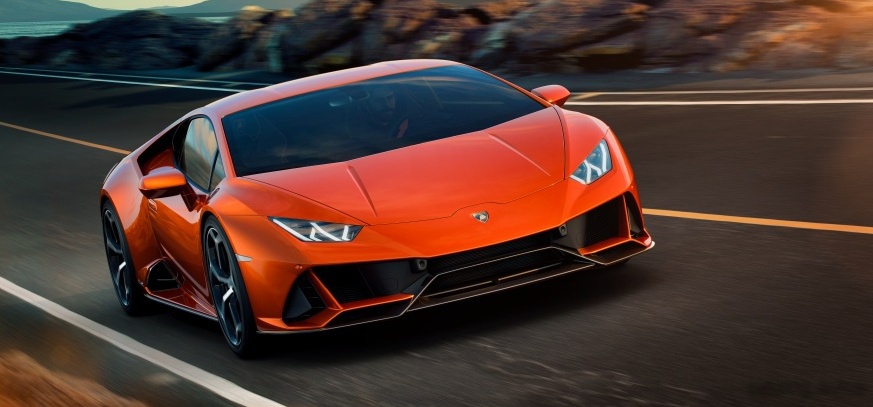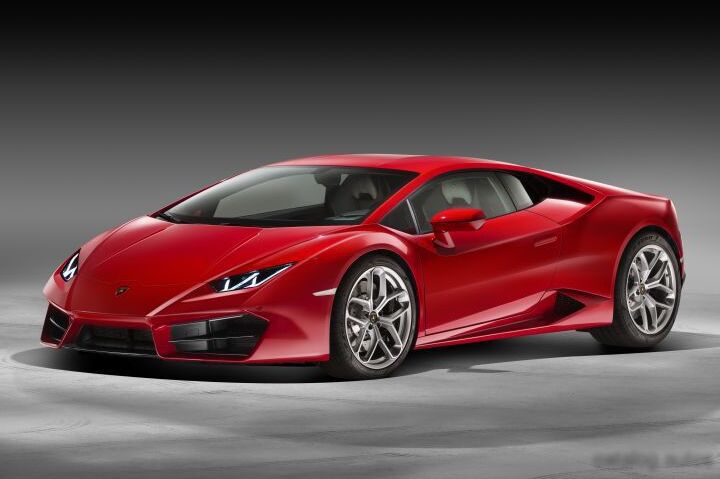
The Lamborghini Huracán Sterrato, introduced in February 2023, represents a unique and adventurous iteration of the Huracán model line. Positioned as a high-performance, all-terrain supercar, the Sterrato (meaning “dirt road” in Italian) expands the Huracán’s capabilities beyond the confines of paved roads. This facelifted version, built upon the existing Huracán platform (specifically the Evo generation), distinguishes itself with increased ride height, reinforced bodywork, and a focus on delivering a thrilling driving experience on loose surfaces. It’s a two-door, two-seat coupe designed to blend Lamborghini’s signature performance with a newfound sense of rugged versatility.
Technical Specifications
| Brand | Lamborghini |
| Model | Huracan |
| Generation | Huracan Sterrato (facelift 2023) |
| Type (Engine) | 5.2 V10 (610 Hp) AWD LDF |
| Start of production | February, 2023 |
| Powertrain Architecture | Internal Combustion engine |
| Body type | Off-road vehicle, Coupe |
| Seats | 2 |
| Doors | 2 |
| Combined fuel consumption (WLTP) | 14.9 l/100 km (15.8 US mpg, 19 UK mpg, 6.7 km/l) |
| CO2 emissions (WLTP) | 337 g/km |
| Fuel consumption (economy) – combined (NEDC) | 14.6 l/100 km (16.1 US mpg, 19.3 UK mpg, 6.8 km/l) |
| CO2 emissions (NEDC) | 333 g/km |
| Fuel Type | Petrol (Gasoline) |
| Acceleration 0 – 100 km/h | 3.4 sec |
| Acceleration 0 – 62 mph | 3.4 sec |
| Acceleration 0 – 60 mph | 3.2 sec |
| Acceleration 0 – 200 km/h | 9.8 sec |
| Maximum speed | 260 km/h (161.56 mph) |
| Power | 610 Hp @ 8000 rpm |
| Power per litre | 117.2 Hp/l |
| Torque | 565 Nm @ 6500 rpm (416.72 lb.-ft. @ 6500 rpm) |
| Engine layout | Middle, Longitudinal |
| Engine Model/Code | DGFA |
| Engine displacement | 5204 cm3 (317.57 cu. in.) |
| Number of cylinders | 10 |
| Engine configuration | V-engine |
| Cylinder Bore | 84.5 mm (3.33 in.) |
| Piston Stroke | 92.8 mm (3.65 in.) |
| Compression ratio | 12.7:1 |
| Number of valves per cylinder | 4 |
| Fuel injection system | Direct injection and Multi-port manifold injection |
| Engine aspiration | Naturally aspirated engine |
| Valvetrain | DOHC |
| Engine oil capacity | 7.5 l (7.93 US qt | 6.6 UK qt) |
| Coolant | 22 l (23.25 US qt | 19.36 UK qt) |
| Kerb Weight | 1470 kg (3240.8 lbs.) |
| Trunk (boot) space – minimum | 100 l (3.53 cu. ft.) |
| Fuel tank capacity | 80 l (21.13 US gal | 17.6 UK gal) |
| Length | 4525 mm (178.15 in.) |
| Width | 1956 mm (77.01 in.) |
| Width including mirrors | 2236 mm (88.03 in.) |
| Height | 1248 mm (49.13 in.) |
| Wheelbase | 2629 mm (103.5 in.) |
| Front track | 1698 mm (66.85 in.) |
| Rear (Back) track | 1654 mm (65.12 in.) |
| Ride height (ground clearance) | 162 mm (6.38 in.) |
| Minimum turning circle (turning diameter) | 11.5 m (37.73 ft.) |
| Approach angle | 10.4° |
| Departure angle | 10.4° |
| Ramp-over (brakeover) angle | 14.7° |
| Drivetrain Architecture | The Internal combustion engine (ICE) drives the rear wheels permanently, and the front wheels are driven through an electrically or mechanically operated clutch if necessary. |
| Drive wheel | All wheel drive (4×4) |
| Number of gears and type of gearbox | 7 gears, automatic transmission LDF |
| Front suspension | Coil spring, Double wishbone, Transverse stabilizer |
| Rear suspension | Double wishbone, Transverse stabilizer, Coil spring |
| Front brakes | Ventilated discs, 380×38 mm |
| Rear brakes | Ventilated discs, 356×32 mm |
| Assisting systems | ABS (Anti-lock braking system) |
| Steering type | Steering rack and pinion |
| Power steering | Electric Steering |
| Tires size | Front wheel tires: 235/40 R19 Rear wheel tires: 285/40 R19 |
| Wheel rims size | Front wheel rims: 8.5J x 19 Rear wheel rims: 11J x 19 |
Powertrain & Engine Architecture
At the heart of the Huracán Sterrato lies Lamborghini’s naturally aspirated 5.2-liter V10 engine, designated the DGFA code. This engine produces 610 horsepower at 8,000 rpm and 416.72 lb-ft of torque at 6,500 rpm. It utilizes both direct injection and multi-port fuel injection to optimize combustion efficiency and power delivery. The engine features a double overhead camshaft (DOHC) valvetrain with four valves per cylinder, contributing to its high-revving nature. The Sterrato employs a 7-speed dual-clutch transmission (LDF) which is tuned for quicker shifts and improved responsiveness. Unlike some competitors, Lamborghini opted to retain a naturally aspirated engine, prioritizing the unique sound and linear power delivery that enthusiasts appreciate. The all-wheel-drive system is a permanent system, with the front axle engaging as needed via an electronically controlled clutch.
Driving Characteristics
The Sterrato’s driving experience is markedly different from its pavement-focused siblings. The increased ride height (6.38 inches of ground clearance) and reinforced underbody allow it to tackle rough terrain with confidence. The 7-speed dual-clutch transmission provides rapid gear changes, but the gear ratios are optimized for both on-road performance and off-road crawling. While the Sterrato retains the Huracán’s inherent agility, the all-terrain tires and revised suspension setup introduce a degree of compliance that enhances comfort on uneven surfaces. The all-wheel-drive system provides excellent traction, allowing for controlled acceleration even on loose gravel or dirt. Compared to the standard Huracán, the Sterrato feels less razor-sharp on the road, but offers a broader range of driving environments.
Equipment & Trim Levels
The Huracán Sterrato comes generously equipped, reflecting its premium positioning. Standard features include a lightweight carbon fiber hood, flared wheel arches, and a distinctive roof rail. The interior boasts sport seats upholstered in Alcantara, a digital instrument cluster, and a touchscreen infotainment system. Optional extras include a variety of exterior color options, interior trim packages, and a premium sound system. The Sterrato’s interior is designed to balance luxury with a rugged aesthetic, featuring durable materials and a driver-focused layout.
Chassis & Braking
The Sterrato’s chassis has been significantly modified to accommodate its off-road capabilities. The suspension utilizes coil springs and double wishbone setups at both the front and rear, with transverse stabilizers to minimize body roll. The braking system consists of ventilated discs all around – 380mm at the front and 356mm at the rear – providing ample stopping power. The anti-lock braking system (ABS) is calibrated to work effectively on various surfaces. The increased ride height and reinforced suspension components contribute to the Sterrato’s ability to absorb bumps and maintain stability on challenging terrain.
Market Reception & Comparison
The Huracán Sterrato received generally positive reviews from automotive critics. It was praised for its unique blend of performance and versatility, as well as its willingness to venture beyond the traditional supercar habitat. However, some reviewers noted that the increased ride height and all-terrain tires slightly compromise on-road handling precision. Compared to the standard Huracán Evo, the Sterrato offers a more comfortable ride and greater capability on unpaved surfaces, but sacrifices some of the Evo’s track-focused sharpness. Fuel economy, as expected for a high-performance V10, is relatively poor at 15.8 US mpg (combined WLTP).
Legacy
The Lamborghini Huracán Sterrato represents a bold and unconventional step for the Italian automaker. It’s a limited-production model that is likely to become a highly sought-after collectible. The durability of the 5.2-liter V10 engine and the robust construction of the chassis suggest that the Sterrato will prove to be a reliable and long-lasting supercar, even when subjected to the rigors of off-road driving. In the used car market, the Sterrato is expected to command a premium due to its rarity and unique character. It stands as a testament to Lamborghini’s willingness to push boundaries and redefine the supercar experience.