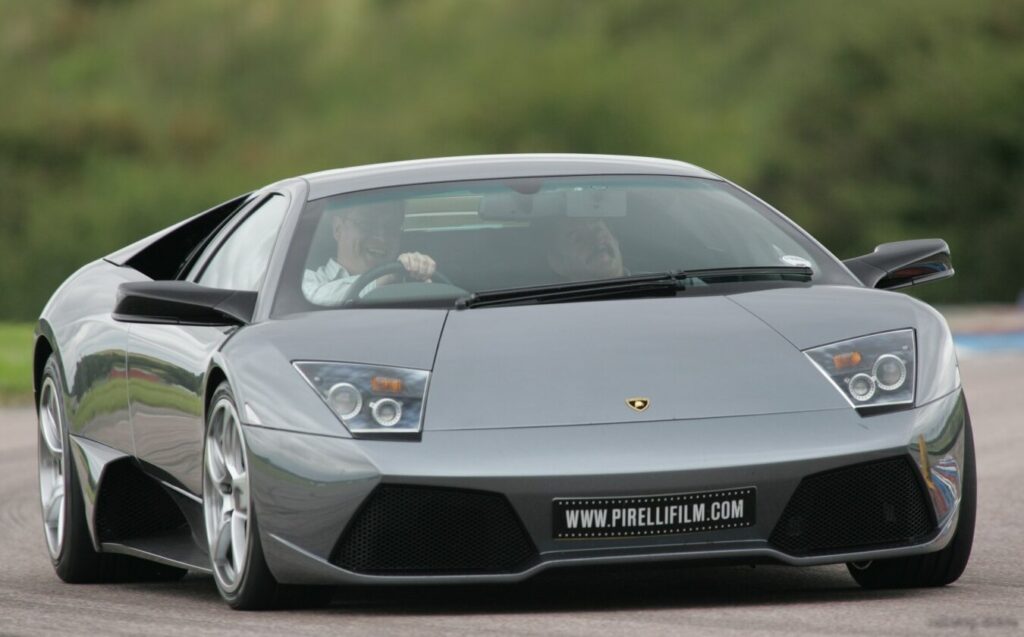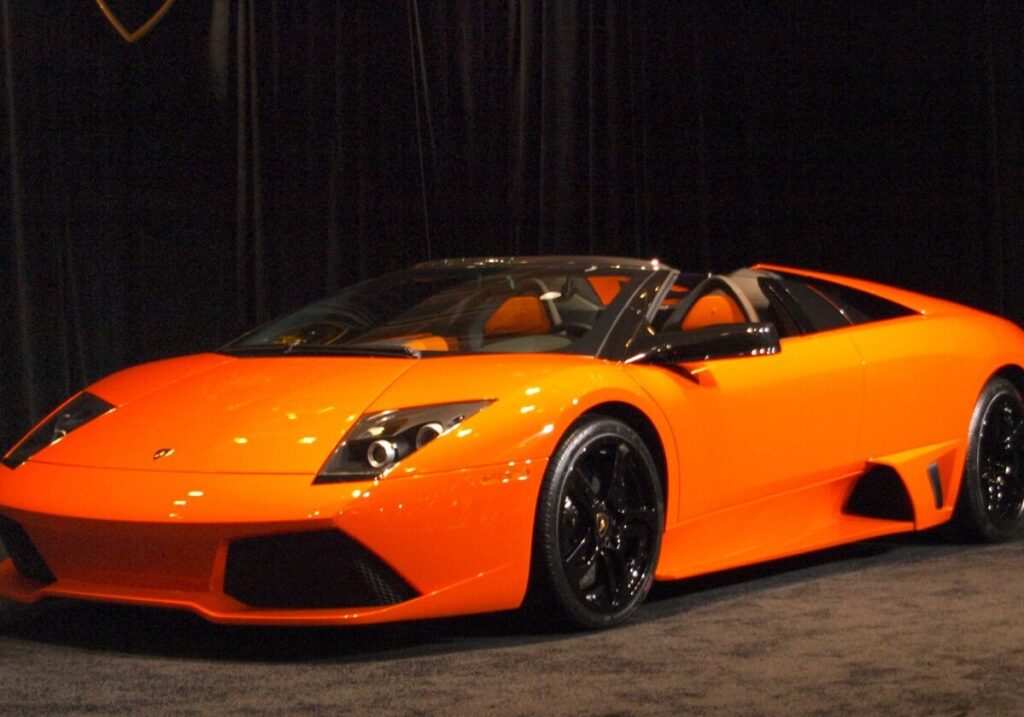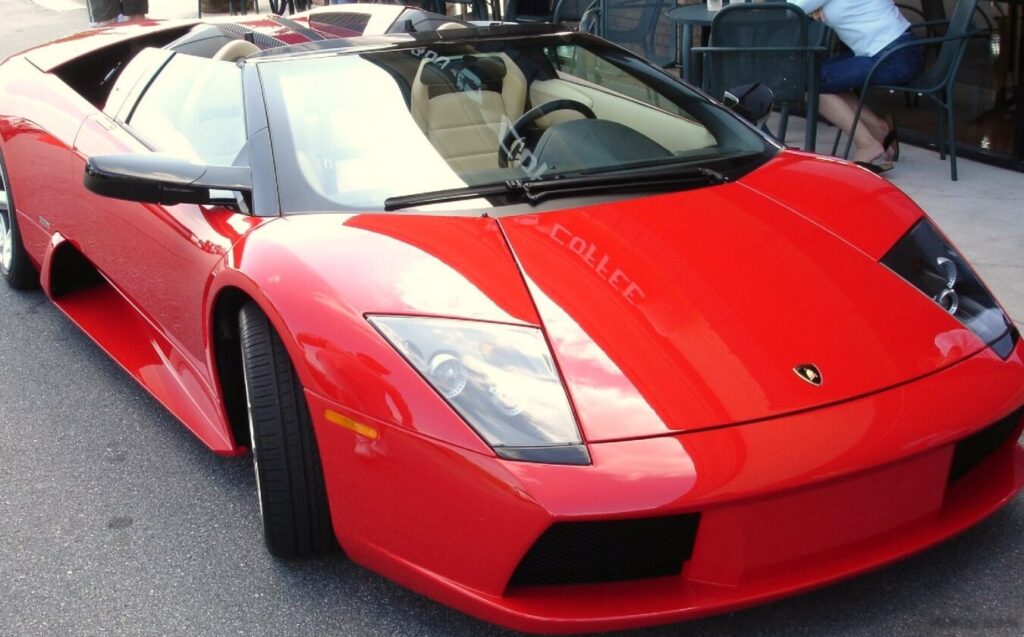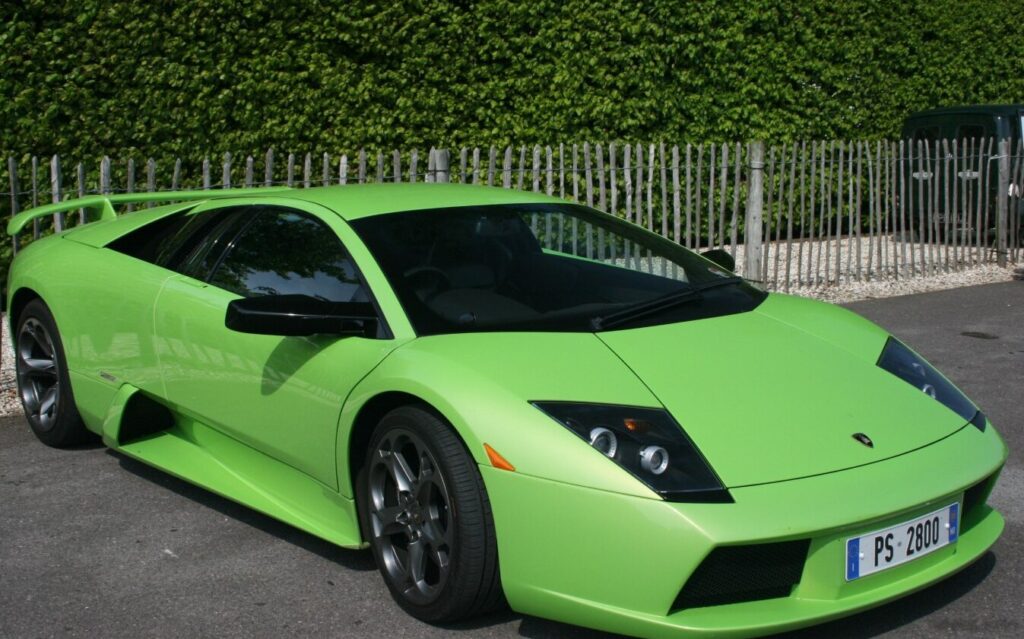
The Lamborghini Murciélago 6.2 V12 48V (580 Hp) represents the first entirely new Lamborghini model produced under the ownership of Audi AG, debuting in 2001 and continuing through 2006. It served as the successor to the Diablo and marked a significant shift in Lamborghini’s design and engineering philosophy, blending the company’s traditional flair with modern technology and build quality. The Murciélago established a new benchmark for the brand, becoming a highly sought-after supercar and solidifying Lamborghini’s position in the high-performance automotive market. This specific 580 horsepower variant was the initial offering, setting the stage for subsequent, more powerful iterations.
Technical Specifications
| Brand | Lamborghini |
| Model | Murcielago |
| Generation | Murcielago |
| Type (Engine) | 6.2 V12 48V (580 Hp) |
| Start of production | 2001 |
| End of production | 2006 |
| Powertrain Architecture | Internal Combustion engine |
| Body type | Coupe |
| Seats | 2 |
| Doors | 2 |
| Fuel consumption (economy) – urban | 32.6 l/100 km (7.2 US mpg, 8.7 UK mpg, 3.1 km/l) |
| Fuel consumption (economy) – extra urban | 15.1 l/100 km (15.6 US mpg, 18.7 UK mpg, 6.6 km/l) |
| Fuel Type | Petrol (Gasoline) |
| Acceleration 0 – 100 km/h | 3.85 sec |
| Acceleration 0 – 62 mph | 3.85 sec |
| Acceleration 0 – 60 mph | 3.1 sec |
| Maximum speed | 330 km/h (205.05 mph) |
| Weight-to-power ratio | 2.8 kg/Hp, 351.5 Hp/tonne |
| Weight-to-torque ratio | 2.5 kg/Nm, 393.9 Nm/tonne |
| Power | 580 Hp @ 7500 rpm |
| Power per litre | 93.7 Hp/l |
| Torque | 650 Nm @ 5400 rpm (479.42 lb.-ft. @ 5400 rpm) |
| Engine layout | Middle, Longitudinal |
| Engine Model/Code | L535 |
| Engine displacement | 6192 cm3 (377.86 cu. in.) |
| Number of cylinders | 12 |
| Engine configuration | V-engine |
| Cylinder Bore | 87 mm (3.43 in.) |
| Piston Stroke | 86.8 mm (3.42 in.) |
| Compression ratio | 10.7:1 |
| Number of valves per cylinder | 4 |
| Fuel injection system | Multi-port manifold injection |
| Engine aspiration | Naturally aspirated engine |
| Valvetrain | DOHC |
| Engine oil capacity | 12 l (12.68 US qt | 10.56 UK qt) |
| Coolant | 15 l (15.85 US qt | 13.2 UK qt) |
| Kerb Weight | 1650 kg (3637.63 lbs.) |
| Max. weight | 2000 kg (4409.25 lbs.) |
| Max load | 350 kg (771.62 lbs.) |
| Trunk (boot) space – minimum | 140 l (4.94 cu. ft.) |
| Fuel tank capacity | 100 l (26.42 US gal | 22 UK gal) |
| Length | 4580 mm (180.31 in.) |
| Width | 2045 mm (80.51 in.) |
| Height | 1140 mm (44.88 in.) |
| Wheelbase | 2665 mm (104.92 in.) |
| Front track | 1635 mm (64.37 in.) |
| Rear (Back) track | 1695 mm (66.73 in.) |
| Drive wheel | All wheel drive (4×4) |
| Number of gears and type of gearbox | 6 gears, manual transmission |
| Front suspension | Double wishbone |
| Rear suspension | Double wishbone |
| Front brakes | Ventilated discs |
| Rear brakes | Ventilated discs |
| Assisting systems | ABS (Anti-lock braking system) |
| Steering type | Steering rack and pinion |
| Power steering | Hydraulic Steering |
| Tires size | 245/35 R18; 335/30 R18 |
Powertrain & Engine Architecture
At the heart of the Murciélago 6.2 is the L535 engine, a naturally aspirated 6.2-liter (6192 cc) V12. This engine, derived from the earlier Lamborghini V12s but heavily revised, produces 580 horsepower at 7500 rpm and 479 lb-ft of torque at 5400 rpm. The engine features a 65-degree V-angle, four valves per cylinder, and double overhead camshafts (DOHC). Fuel is delivered via a multi-port fuel injection system. The 48-valve configuration contributes to the engine’s high output and responsiveness. The engine is mounted longitudinally in a mid-engine layout, contributing to optimal weight distribution. The initial Murciélago was exclusively offered with a six-speed manual transmission, delivering power to all four wheels via Lamborghini’s Viscous Traction system. This system normally distributes 30% of the power to the front wheels and 70% to the rear, but can dynamically adjust this split based on traction conditions.
Driving Characteristics
The Murciélago 6.2 with the manual transmission delivers a raw and visceral driving experience. Acceleration is breathtaking, with a 0-60 mph time of around 3.1 seconds and a top speed exceeding 205 mph. The engine’s power delivery is linear and predictable, building to a crescendo at higher RPMs. The manual gearbox, while requiring skill to operate smoothly, provides a direct connection between driver and machine. The all-wheel-drive system provides exceptional grip and stability, inspiring confidence even in challenging conditions. Compared to later Murciélago variants with the e-gear automated manual transmission, the standard manual offers a more engaging and traditional supercar experience, favored by purists. The gear ratios are tuned for acceleration, prioritizing rapid sprints over fuel efficiency.
Equipment & Trim Levels
The initial Murciélago 6.2 was relatively sparsely equipped compared to later iterations, focusing on delivering a pure driving experience. Standard features included leather upholstery, power windows, power locks, and air conditioning. The interior design was minimalist and driver-focused, with a prominent center console and analog gauges. Optional extras included upgraded audio systems, navigation, and various customization options for the interior trim and exterior paint. The early Murciélago did not offer the extensive personalization options that became available in later years.
Chassis & Braking
The Murciélago features a lightweight chassis constructed from a combination of aluminum and carbon fiber, contributing to its impressive performance. The suspension utilizes double wishbones at all four corners, providing excellent handling and ride quality. Braking is handled by ventilated disc brakes on all four wheels, providing ample stopping power. An anti-lock braking system (ABS) is standard. The steering is a hydraulic rack and pinion system, offering precise and responsive control. The car’s relatively low weight (around 3638 lbs) further enhances its agility and handling characteristics.
Market Reception & Comparison
The Murciélago was widely praised by automotive critics for its stunning design, exhilarating performance, and improved build quality compared to previous Lamborghini models. The 580 hp variant was considered a potent and engaging supercar, although some critics noted its relatively high fuel consumption. Compared to the later Murciélago LP640, the 6.2 offered a more raw and analog driving experience, appealing to drivers who preferred a more direct connection to the car. Reliability was generally good for a supercar of its era, although maintenance costs remained high.
Legacy
The Lamborghini Murciélago 6.2 V12 48V (580 Hp) remains a highly desirable supercar in the used car market. Its iconic design, powerful engine, and engaging driving experience have cemented its place in automotive history. The L535 engine proved to be robust and reliable when properly maintained. Today, well-maintained examples command significant prices, reflecting their rarity and desirability. The Murciélago paved the way for future Lamborghini models, establishing a new standard for the brand and solidifying its position as a leader in the supercar segment. It represents a pivotal moment in Lamborghini’s history, bridging the gap between its past and its future.