
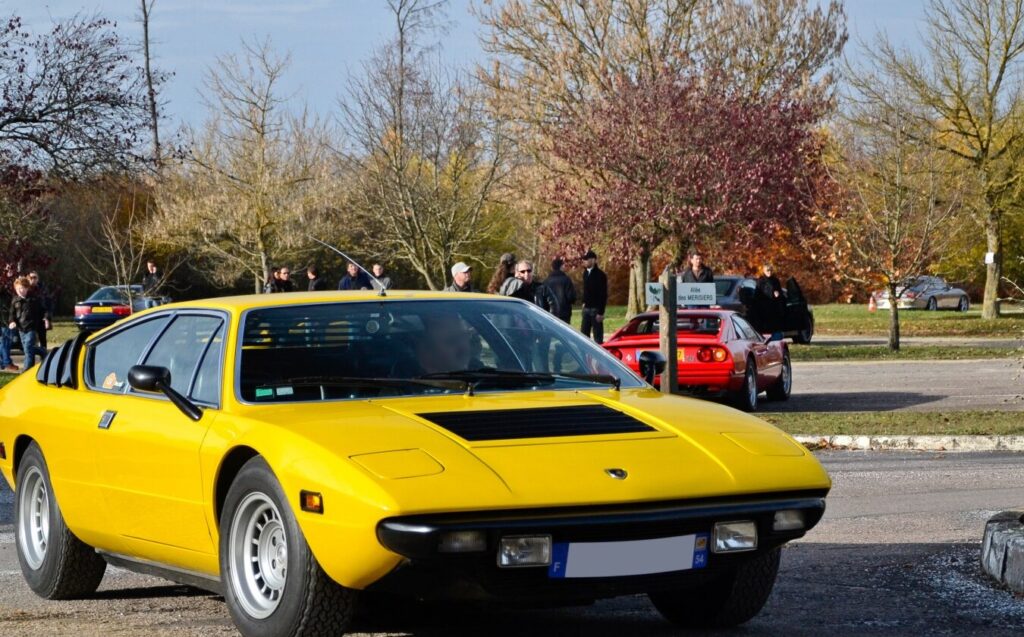
The Lamborghini Urraco P250, produced between 1972 and 1979, represented a significant departure for the Italian automaker. Positioned as a more accessible, entry-level Lamborghini, the Urraco aimed to broaden the brand’s appeal beyond the exclusive realm of the Countach and Miura. The P250 designation refers to the engine’s output and signifies the initial iteration of the Urraco, built on the LM01 chassis. It was Lamborghini’s first model to feature a mid-engine layout as standard, a design element that would become a hallmark of the brand. The Urraco was intended to compete with smaller, more nimble sports cars of the era, offering a blend of Italian flair and performance in a relatively compact package.
Technical Specifications
| Brand | Lamborghini |
| Model | Urraco |
| Generation | Urraco |
| Type (Engine) | P250 (220 Hp) |
| Start of production | 1972 |
| End of production | 1979 |
| Powertrain Architecture | Internal Combustion engine |
| Body type | Coupe |
| Seats | 4 |
| Doors | 2 |
| Fuel Type | Petrol (Gasoline) |
| Maximum speed | 241 km/h (149.75 mph) |
| Weight-to-power ratio | 5 kg/Hp, 200 Hp/tonne |
| Weight-to-torque ratio | 4.9 kg/Nm, 204.5 Nm/tonne |
| Power | 220 Hp @ 7500 rpm |
| Power per litre | 89.3 Hp/l |
| Torque | 225 Nm @ 5750 rpm (165.95 lb.-ft. @ 5750 rpm) |
| Engine layout | Middle, Transverse |
| Engine Model/Code | L240 |
| Engine displacement | 2463 cm3 (150.3 cu. in.) |
| Number of cylinders | 8 |
| Engine configuration | V-engine |
| Compression ratio | 10.4:1 |
| Fuel injection system | Carburettor |
| Engine aspiration | Naturally aspirated engine |
| Engine oil capacity | 7 l (7.4 US qt | 6.16 UK qt) |
| Coolant | 12 l (12.68 US qt | 10.56 UK qt) |
| Kerb Weight | 1100 kg (2425.08 lbs) |
| Fuel tank capacity | 80 l (21.13 US gal | 17.6 UK gal) |
| Length | 4250 mm (167.32 in) |
| Width | 1760 mm (69.29 in) |
| Height | 1115 mm (43.9 in) |
| Wheelbase | 2450 mm (96.46 in) |
| Front track | 1460 mm (57.48 in) |
| Rear track | 1460 mm (57.48 in) |
| Drivetrain | Rear wheel drive |
| Number of gears and type of gearbox | 5 gears, manual transmission |
| Front brakes | Ventilated discs, 278 mm |
| Rear brakes | Ventilated discs, 278 mm |
| Tires size | 250/70 VR14 |
| Wheel rims size | 7.5J x 14 |
Powertrain & Engine Architecture
The heart of the Urraco P250 is the Lamborghini L240 engine, a 2.5-liter (2463 cc) naturally aspirated V8. This engine, derived from the earlier Lamborghini V12, was designed by Gian Paolo Dallara and featured a 90-degree V-angle. It utilized a single overhead camshaft per cylinder bank, operating four valves per cylinder. Fuel delivery was managed by three twin-choke Weber 40 DCN F carburetors, a relatively conventional setup for the time. The engine produced 220 horsepower at 7,500 rpm and 225 Nm (165.95 lb-ft) of torque at 5,750 rpm. The engine was mounted transversely behind the driver and passenger, a configuration that contributed to the car’s balanced handling. The P250 was exclusively offered with a five-speed manual transmission, providing drivers with full control over the engine’s power.
Driving Characteristics
The Urraco P250 offered a distinctly sporty driving experience. Its relatively lightweight construction (1100 kg or 2425 lbs) and mid-engine layout resulted in nimble handling and responsive steering. While not possessing the raw power of the Miura or Countach, the Urraco’s 220 hp was sufficient for brisk acceleration and a top speed of approximately 149.75 mph. The five-speed manual transmission allowed for precise gear selection, maximizing the engine’s performance. Compared to later Urraco variants like the P300, the P250 felt less aggressive, with a more linear power delivery. The carburetor setup, while providing a classic engine sound, could sometimes be finicky, requiring careful adjustment for optimal performance.
Equipment & Trim Levels
The Urraco P250 was relatively sparsely equipped compared to modern luxury sports cars. Standard features included leather upholstery, a wood-rimmed steering wheel, and basic instrumentation. Air conditioning was often an optional extra, as were power windows. The interior design was functional and driver-focused, reflecting the car’s sporting intentions. Trim levels were limited, with most customization options revolving around exterior paint colors and interior upholstery choices. The Urraco’s interior, while stylish, was not particularly spacious, reflecting the car’s compact dimensions.
Chassis & Braking
The Urraco P250 utilized a tubular steel chassis, providing a rigid and lightweight foundation for the car. Suspension consisted of independent double wishbones all around, with coil springs and hydraulic shock absorbers. This setup provided a comfortable ride while maintaining excellent handling characteristics. Braking was handled by ventilated disc brakes on all four wheels, offering adequate stopping power for the car’s performance capabilities. The steering was unassisted, providing a direct and engaging feel for the driver. The relatively narrow tires (250/70 VR14) contributed to the car’s nimble handling but limited ultimate grip.
Market Reception & Comparison
The Urraco P250 was generally well-received by automotive critics, who praised its handling, styling, and relatively affordable price point (compared to other Lamborghinis). However, some critics noted the car’s limited interior space and the occasional quirks of the carburetor-fed engine. Compared to the later P300 variant, the P250 offered a more balanced and predictable driving experience, making it a more accessible option for less experienced drivers. The P250 also benefited from slightly better fuel economy than the more powerful P300. In terms of reliability, the Urraco P250 was generally considered to be reasonably dependable, although maintenance could be expensive due to the car’s exotic nature.
Legacy
The Lamborghini Urraco P250 holds a significant place in Lamborghini’s history as the brand’s first truly accessible sports car. It paved the way for the Jalpa, which further refined the Urraco’s concept. Today, the Urraco P250 is a sought-after classic car, appreciated by collectors for its unique styling, engaging driving experience, and historical significance. While maintenance can be challenging due to the car’s age and complexity, the Urraco P250 remains a rewarding and enjoyable vehicle for enthusiasts. The L240 engine, while not as iconic as Lamborghini’s V12, is a robust and reliable powerplant when properly maintained. The Urraco’s mid-engine layout and balanced handling continue to inspire Lamborghini’s design philosophy today.
