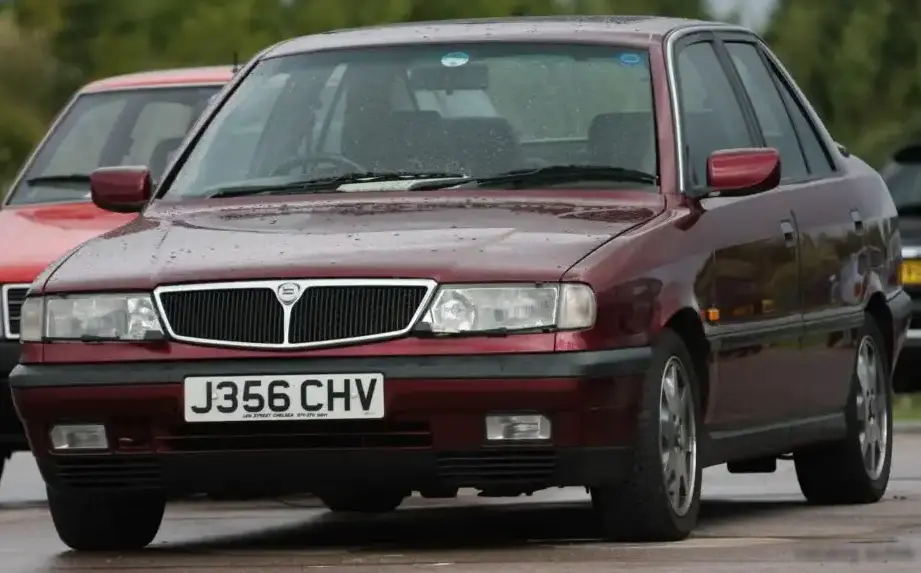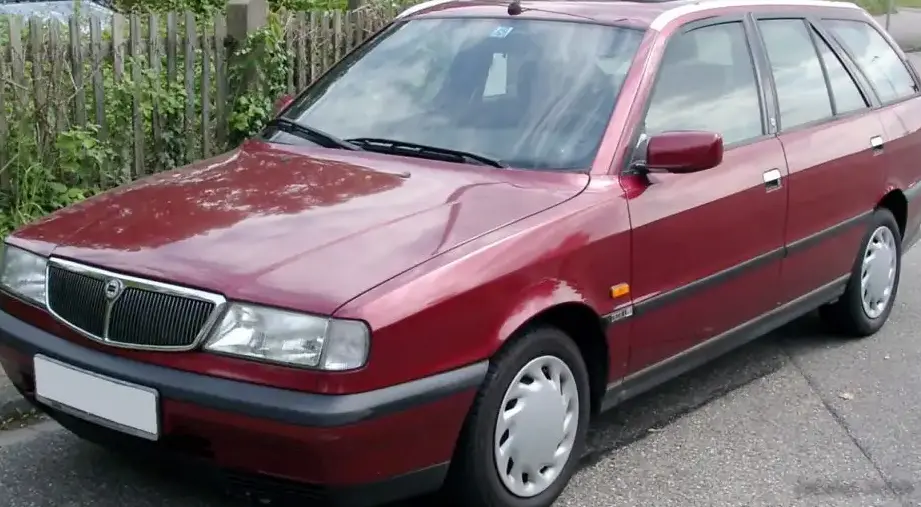
The Lancia Dedra Station Wagon (835) 2.0 16V, produced between 1994 and 1999, represented a sophisticated offering in the European market’s mid-size family car segment. Positioned as a more premium alternative to mainstream competitors like the Ford Mondeo and Vauxhall/Opel Vectra, the Dedra combined Italian styling with a focus on comfort and performance. The 835 series specifically denotes the station wagon (estate) body style. This 2.0 16V variant occupied a mid-to-upper position within the Dedra lineup, offering a significant step up in power and refinement compared to the lower-displacement engines, but remaining more accessible than the flagship models. It was built on the Tipo-derived 835 platform, shared with the Fiat Croma.
Technical Specifications
| Brand | Lancia |
| Model | Dedra |
| Generation | Dedra Station Wagon (835) |
| Type (Engine) | 2.0 16V (139 Hp) |
| Start of production | 1994 |
| End of production | 1999 |
| Powertrain Architecture | Internal Combustion engine |
| Body type | Station wagon (estate) |
| Seats | 5 |
| Doors | 5 |
| Fuel consumption (combined) | 8.9 l/100 km |
| Fuel consumption (US mpg) | 26.4 US mpg |
| Fuel consumption (UK mpg) | 31.7 UK mpg |
| Fuel consumption (km/l) | 11.2 km/l |
| Fuel Type | Petrol (Gasoline) |
| Acceleration 0 – 100 km/h | 10 sec |
| Acceleration 0 – 62 mph | 10 sec |
| Acceleration 0 – 60 mph | 9.5 sec |
| Maximum speed | 202 km/h (125.52 mph) |
| Weight-to-power ratio | 9.4 kg/Hp |
| Power | 139 Hp @ 6000 rpm |
| Power per litre | 69.7 Hp/l |
| Torque | 180 Nm @ 4500 rpm (132.76 lb.-ft. @ 4500 rpm) |
| Engine layout | Front, Transverse |
| Engine Model/Code | 836 A3.000 |
| Engine displacement | 1995 cm3 (121.74 cu. in.) |
| Number of cylinders | 4 |
| Engine configuration | Inline |
| Cylinder Bore | 84 mm (3.31 in.) |
| Piston Stroke | 90 mm (3.54 in.) |
| Compression ratio | 9.5:1 |
| Number of valves per cylinder | 4 |
| Fuel injection system | Multi-port manifold injection |
| Engine aspiration | Naturally aspirated engine |
| Valvetrain | DOHC |
| Engine oil capacity | 5.2 l (5.49 US qt | 4.58 UK qt) |
| Coolant capacity | 8.2 l (8.66 US qt | 7.21 UK qt) |
| Kerb Weight | 1300 kg (2866.01 lbs.) |
| Trunk (boot) space – minimum | 448 l (15.82 cu. ft.) |
| Trunk (boot) space – maximum | 1338 l (47.25 cu. ft.) |
| Fuel tank capacity | 60 l (15.85 US gal | 13.2 UK gal) |
| Length | 4343 mm (170.98 in.) |
| Width | 1703 mm (67.05 in.) |
| Height | 1449 mm (57.05 in.) |
| Wheelbase | 2540 mm (100 in.) |
| Front track | 1436 mm (56.54 in.) |
| Rear track | 1415 mm (55.71 in.) |
| Drivetrain Architecture | Front wheel drive |
| Number of gears | 5 |
| Gearbox type | Manual transmission |
| Front suspension | Spring Strut |
| Rear suspension | Trailing arm |
| Front brakes | Ventilated discs |
| Rear brakes | Disc |
| Assisting systems | ABS (Anti-lock braking system) |
| Steering type | Steering rack and pinion |
| Power steering | Hydraulic Steering |
| Tires size | 185/60 R14 |
Powertrain & Engine Architecture
The heart of the Dedra 2.0 16V is the 836 A3.000 engine, a 1995cc inline-four cylinder unit. This engine is a development of the Fiat/Lancia Twin Cam engine family, known for its robust construction and relatively simple design. The “16V” designation indicates a four-valve-per-cylinder configuration, enhancing breathing and contributing to the engine’s increased power output. It utilizes a multi-port fuel injection system, delivering fuel directly to each intake port for precise control and improved efficiency. The engine features a double overhead camshaft (DOHC) valvetrain, further optimizing valve timing and airflow. The five-speed manual transmission was the standard offering, providing a balance between performance and fuel economy. The engine’s transverse mounting within the front-wheel-drive configuration contributes to efficient packaging within the Dedra’s engine bay.
Driving Characteristics
The 2.0 16V Dedra Station Wagon offered a noticeably more engaging driving experience than its lower-powered siblings. With 139 horsepower on tap, acceleration to 60 mph took approximately 9.5 seconds, and it could achieve a top speed of around 125 mph. While not a sports car, the engine provided ample power for comfortable highway cruising and overtaking maneuvers. The five-speed manual transmission allowed drivers to effectively utilize the engine’s powerband, while the front-wheel-drive layout offered predictable handling. Compared to the 1.8L versions, the 2.0 16V provided a more responsive throttle and a greater sense of urgency. The gear ratios were well-matched to the engine’s characteristics, providing good acceleration in each gear. However, it wasn’t as fuel-efficient as the smaller-displacement engines.
Equipment & Trim Levels
The Dedra 2.0 16V typically came equipped with a reasonable level of standard features, reflecting its position as a mid-range to upper-mid-range model. These included central locking, electric front windows, power steering, and an anti-lock braking system (ABS). Interior upholstery was typically cloth, although leather options were available. Dashboard design was functional and ergonomically laid out, with a focus on ease of use. Optional extras could include air conditioning, a sunroof, alloy wheels, and upgraded audio systems. The trim level often dictated the quality of the interior materials and the availability of certain features.
Chassis & Braking
The Dedra Station Wagon utilized a relatively conventional chassis setup. Front suspension consisted of MacPherson strut springs, while the rear employed a trailing arm configuration. This setup provided a good balance between ride comfort and handling. Braking duties were handled by ventilated discs at the front and solid discs at the rear, providing adequate stopping power for the vehicle’s weight and performance. The hydraulic power steering offered light and precise steering feel. Stabilizer bars were fitted to both the front and rear axles to reduce body roll during cornering.
Market Reception & Comparison
The Lancia Dedra 2.0 16V was generally well-received by automotive critics, who praised its comfortable ride, refined engine, and spacious interior. However, it faced stiff competition from established rivals like the Ford Mondeo and Opel Vectra, which often offered lower prices and a wider dealer network. Fuel economy was considered adequate but not exceptional, particularly compared to some of the diesel-powered alternatives. Reliability was generally good, although some owners reported minor electrical issues. Compared to the 1.8L Dedra, the 2.0 16V offered a significant performance upgrade, but at a higher purchase price and with slightly increased running costs. The 2.0 16V was also a more compelling alternative to the turbocharged versions, offering a smoother power delivery and potentially lower maintenance costs.
Legacy
The Lancia Dedra, while not a massive sales success, remains a fondly remembered car among enthusiasts. The 2.0 16V powertrain has proven to be relatively durable, and well-maintained examples can still be found on the road today. Parts availability can be a challenge, but many components are shared with other Fiat and Lancia models, making sourcing replacements easier. In the used car market, the Dedra 2.0 16V represents a unique and affordable option for those seeking a comfortable, stylish, and relatively well-equipped European family car from the 1990s. Its blend of Italian flair and practical functionality continues to appeal to a niche but dedicated following.