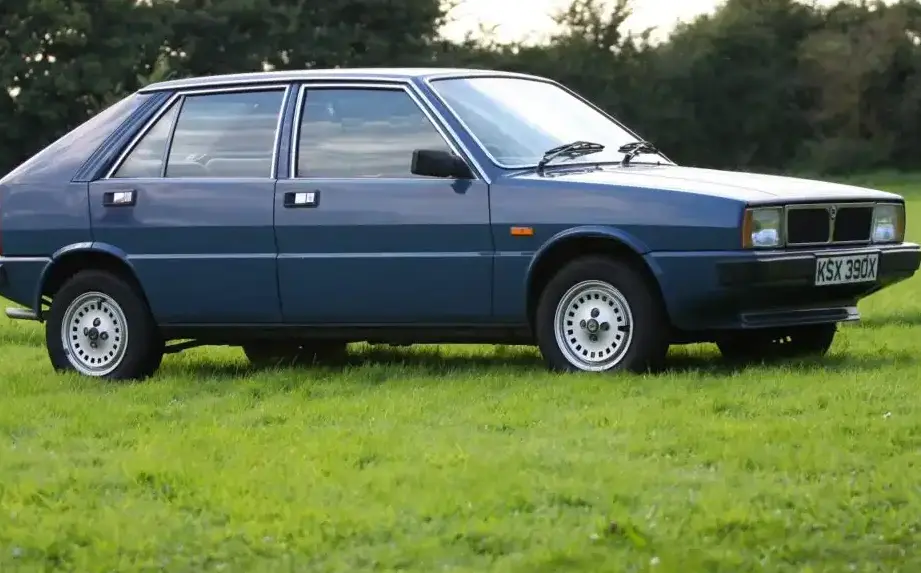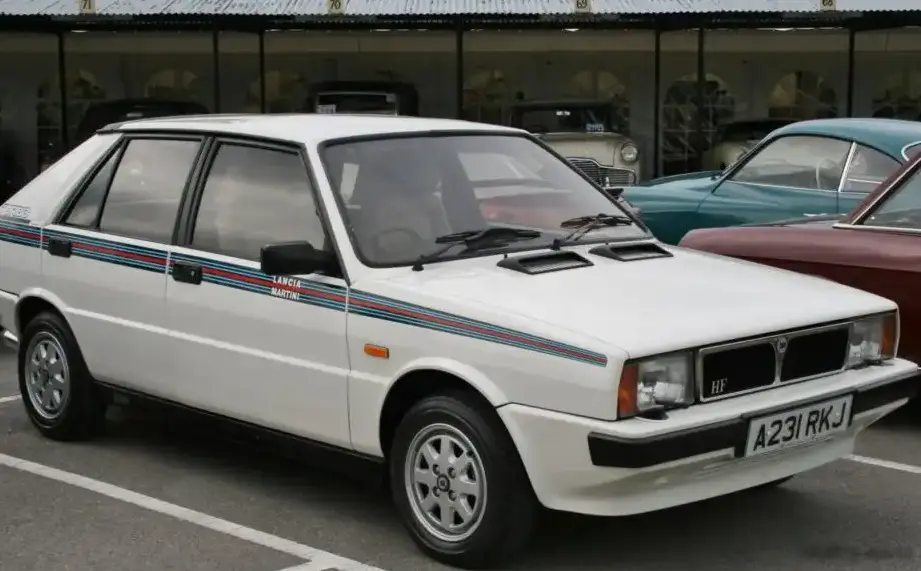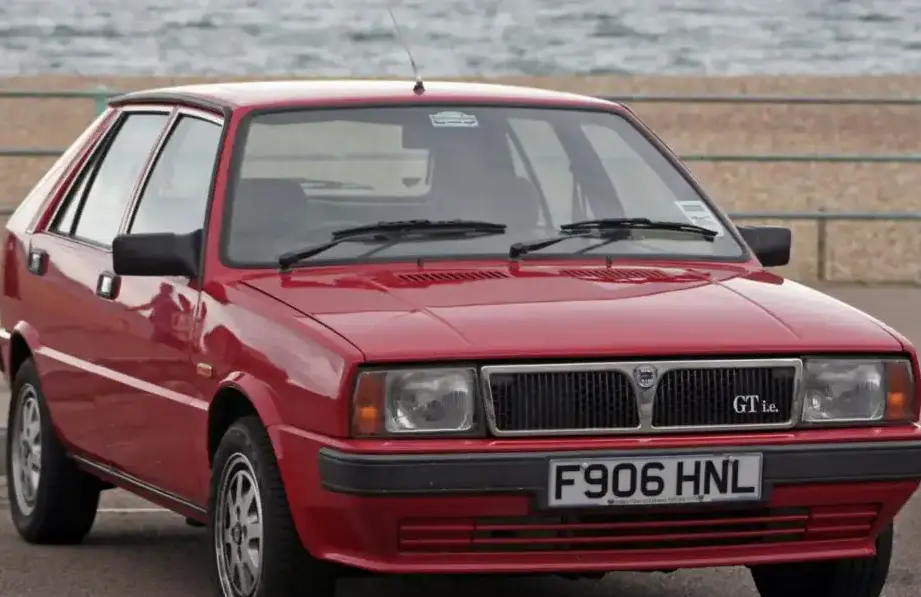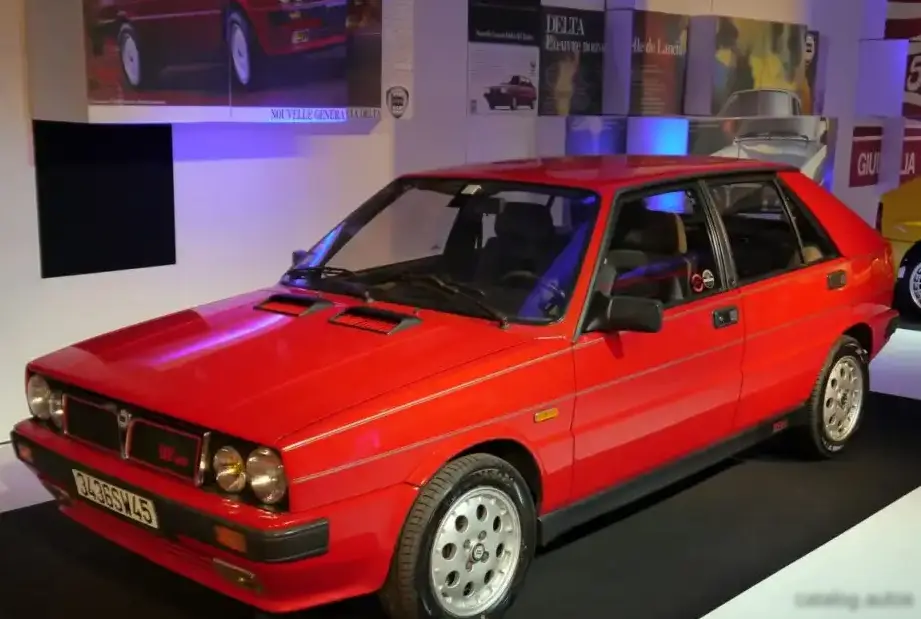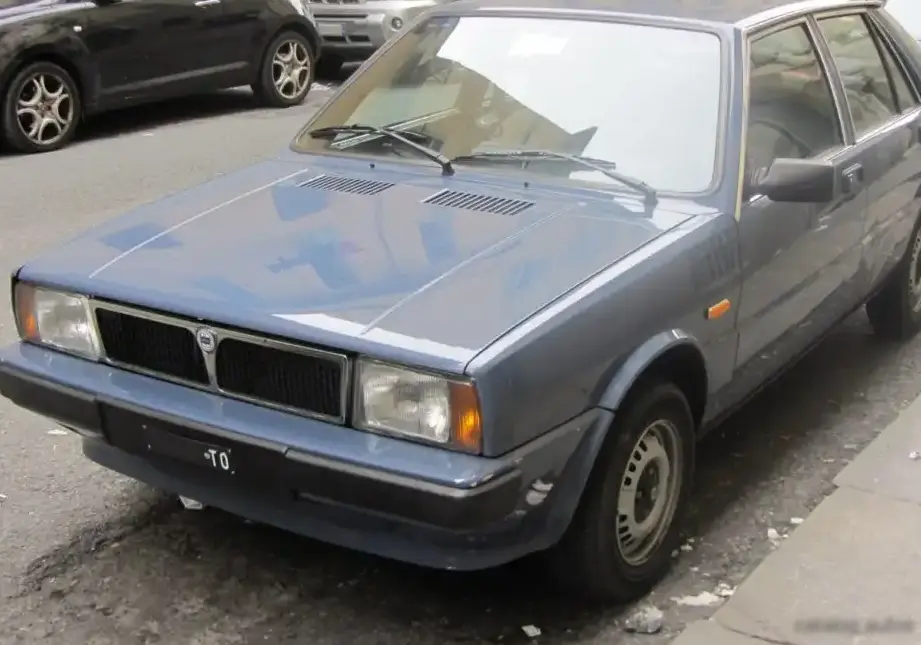
The Lancia Delta 1300, produced from November 1982 to May 1986, represented the entry point into the innovative first generation (831 series) of Lancia’s groundbreaking hatchback. Positioned as the most affordable variant of the Delta range, it aimed to bring Lancia’s reputation for engineering and style to a wider audience. This facelifted version, introduced in 1982, refined the original Delta design and solidified its place as a popular choice in the European market, particularly in Italy and other parts of Western Europe. The 1300 model was crucial in establishing the Delta as a versatile and modern family car, paving the way for the more powerful and performance-oriented versions that would follow.
Technical Specifications
| Brand | Lancia |
| Model | Delta |
| Generation | Delta I (831, facelift 1982) |
| Type (Engine) | 1300 1.3 (78 Hp) |
| Start of production | November, 1982 |
| End of production | May, 1986 |
| Powertrain Architecture | Internal Combustion engine |
| Body type | Hatchback |
| Seats | 5 |
| Doors | 5 |
| Fuel consumption (urban) | 8.9 l/100 km (26.4 US mpg, 31.7 UK mpg, 11.2 km/l) |
| Fuel consumption (extra urban) | 5.8 l/100 km (40.6 US mpg, 48.7 UK mpg, 17.2 km/l) |
| Fuel Type | Petrol (Gasoline) |
| Acceleration 0 – 100 km/h | 14.3 sec |
| Acceleration 0 – 62 mph | 14.3 sec |
| Acceleration 0 – 60 mph | 13.8 sec |
| Maximum speed | 160 km/h (99.42 mph) |
| Weight-to-power ratio | 12 kg/Hp, 83.4 Hp/tonne |
| Weight-to-torque ratio | 8.9 kg/Nm, 112.3 Nm/tonne |
| Power | 78 Hp @ 5800 rpm |
| Power per litre | 60 Hp/l |
| Torque | 105 Nm @ 3400 rpm (77.44 lb.-ft. @ 3400 rpm) |
| Engine layout | Front, Transverse |
| Engine Model/Code | 831A2000 |
| Engine displacement | 1301 cm3 (79.39 cu. in.) |
| Number of cylinders | 4 |
| Engine configuration | Inline |
| Cylinder Bore | 86.4 mm (3.4 in.) |
| Piston Stroke | 55.5 mm (2.19 in.) |
| Compression ratio | 9.1:1 |
| Number of valves per cylinder | 2 |
| Fuel injection system | Carburettor |
| Engine aspiration | Naturally aspirated engine |
| Valvetrain | SOHC |
| Engine oil capacity | 4.3 l (4.54 US qt | 3.78 UK qt) |
| Coolant | 6 l (6.34 US qt | 5.28 UK qt) |
| Kerb Weight | 935 kg (2061.32 lbs.) |
| Max. weight | 1385 kg (3053.4 lbs.) |
| Max load | 450 kg (992.08 lbs.) |
| Trunk (boot) space – minimum | 260 l (9.18 cu. ft.) |
| Trunk (boot) space – maximum | 1000 l (35.31 cu. ft.) |
| Fuel tank capacity | 45 l (11.89 US gal | 9.9 UK gal) |
| Length | 3895 mm (153.35 in.) |
| Width | 1620 mm (63.78 in.) |
| Height | 1380 mm (54.33 in.) |
| Wheelbase | 2475 mm (97.44 in.) |
| Front track | 1400 mm (55.12 in.) |
| Rear (Back) track | 1400 mm (55.12 in.) |
| Minimum turning circle | 10.6 m (34.78 ft.) |
| Drivetrain Architecture | The Internal combustion engine (ICE) drives the front wheels of the vehicle. |
| Drive wheel | Front wheel drive |
| Number of gears and type of gearbox | 5 gears, manual transmission |
| Front suspension | Independent, type McPherson with coil spring and anti-roll bar |
| Rear suspension | McPherson, Transverse stabilizer |
| Front brakes | Disc |
| Rear brakes | Drum |
| Steering type | Steering rack and pinion |
| Tires size | 165/70 R13 |
| Wheel rims size | 5J x 13 |
Powertrain & Engine Architecture
The Lancia Delta 1300 was powered by the 831A2000 engine, a 1301cc inline-four cylinder unit. This engine, a mainstay of several Fiat and Lancia models of the era, featured a single overhead camshaft (SOHC) valvetrain with two valves per cylinder. Fuel delivery was managed by a Weber 32 ADFA carburetor, a common setup for European cars of this period. The engine produced 78 horsepower at 5800 rpm and 105 Nm (77.44 lb-ft) of torque at 3400 rpm. The engine’s relatively modest output was typical for a car in this segment during the early 1980s. The transmission was a standard five-speed manual gearbox, offering a reasonable balance between fuel economy and drivability. The engine was mounted transversely at the front of the vehicle, driving the front wheels.
Driving Characteristics
The 1.3-liter Delta offered a comfortable, if not particularly exhilarating, driving experience. Acceleration was modest, taking around 14.3 seconds to reach 62 mph (100 km/h). The carburetor-fed engine delivered smooth, predictable power, but lacked the responsiveness of fuel-injected counterparts or the higher-output versions of the Delta. The five-speed gearbox was well-matched to the engine’s characteristics, allowing drivers to keep the engine in its optimal power band. Compared to the later 1.6-liter and turbocharged models, the 1300 felt noticeably slower, but it excelled in urban driving and on longer journeys where fuel efficiency was a priority. The front-wheel-drive layout provided predictable handling, although it wasn’t as sporty as some of its rear-wheel-drive competitors.
Equipment & Trim Levels
The Delta 1300 was typically equipped with basic, yet functional, features. Standard equipment included cloth upholstery, a basic instrument cluster, and manual windows and door locks. The interior was designed with practicality in mind, offering ample space for passengers and luggage. Optional extras included a sunroof, upgraded stereo system, and metallic paint. The trim level was generally quite spartan compared to higher-spec Delta models, reflecting its position as the entry-level variant. The focus was on providing a reliable and affordable family car rather than luxury or performance.
Chassis & Braking
The Delta 1300 featured an independent McPherson strut suspension at the front, providing a comfortable ride and decent handling. The rear suspension utilized a McPherson strut setup with a transverse stabilizer bar. Braking duties were handled by disc brakes at the front and drum brakes at the rear. The braking system was adequate for the car’s weight and performance, but lacked the stopping power of more advanced systems found on higher-end models. The steering was a rack-and-pinion system, offering precise and responsive control. The car rode on 165/70 R13 tires, mounted on 5J x 13 steel wheels.
Market Reception & Comparison
The Lancia Delta 1300 was well-received in the European market as a practical and stylish hatchback. Critics praised its spacious interior, comfortable ride, and fuel efficiency. However, some reviewers noted its modest performance and basic equipment levels. Compared to other cars in its class, such as the Volkswagen Golf and Ford Escort, the Delta offered a more distinctive design and a reputation for Italian engineering flair. The 1.6-liter Delta offered significantly more performance, while the diesel-powered models provided superior fuel economy. The 1300 model appealed to buyers who prioritized affordability and practicality over outright performance.
Legacy
The Lancia Delta 1300, while not the most powerful or technologically advanced version of the Delta, played a vital role in establishing the model’s success. The 831A2000 engine proved to be relatively reliable, and parts availability remains reasonable even today. In the used car market, the 1300 model is often the most affordable entry point into Delta ownership. While it may not offer the same driving experience as the more potent versions, it represents a charming and well-engineered example of 1980s Italian automotive design. Its simplicity and durability have made it a popular choice among enthusiasts looking for a classic hatchback that is easy to maintain and enjoy.