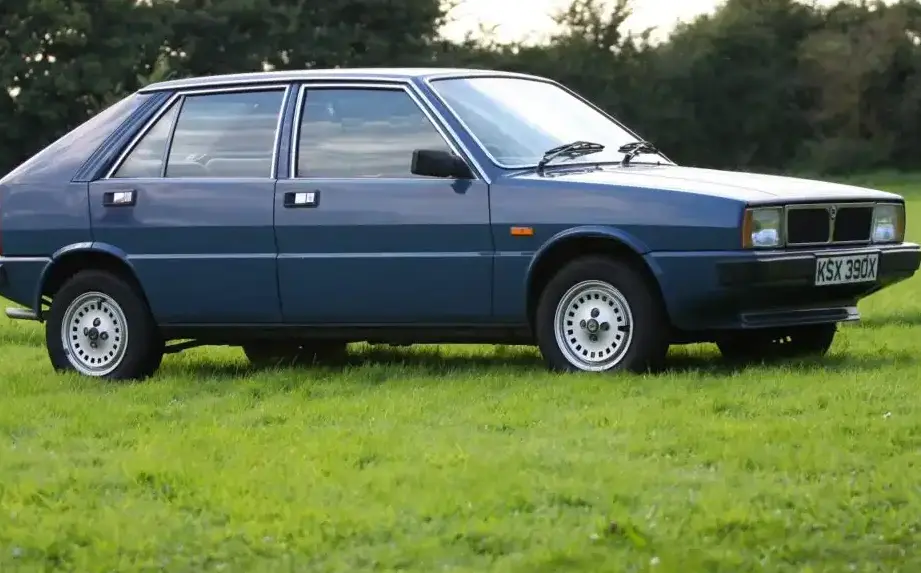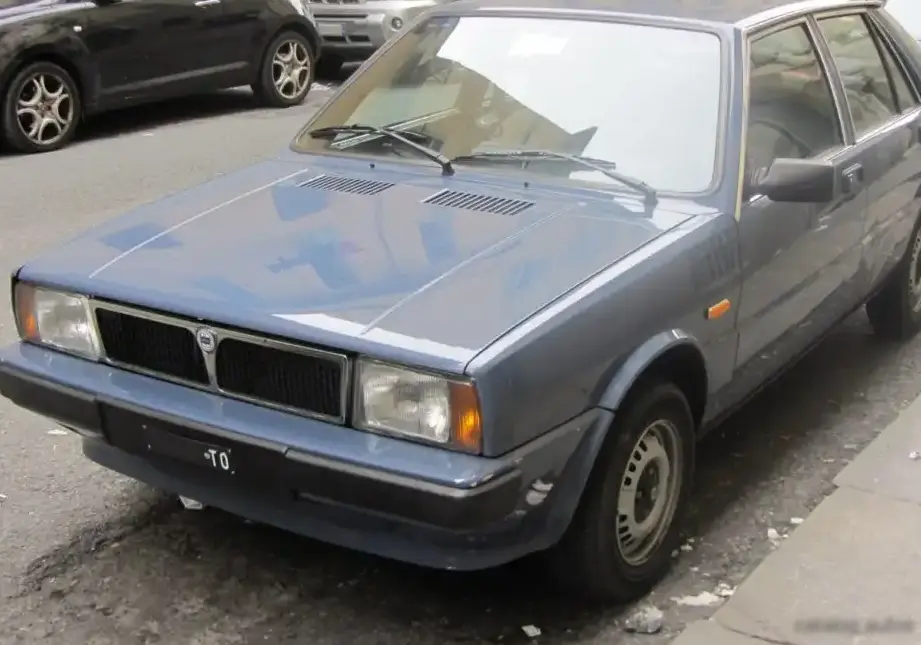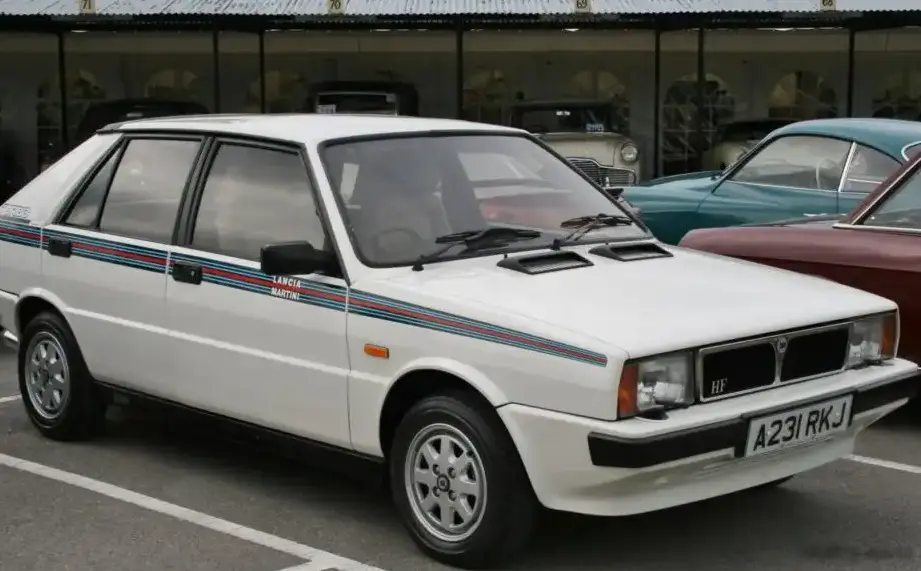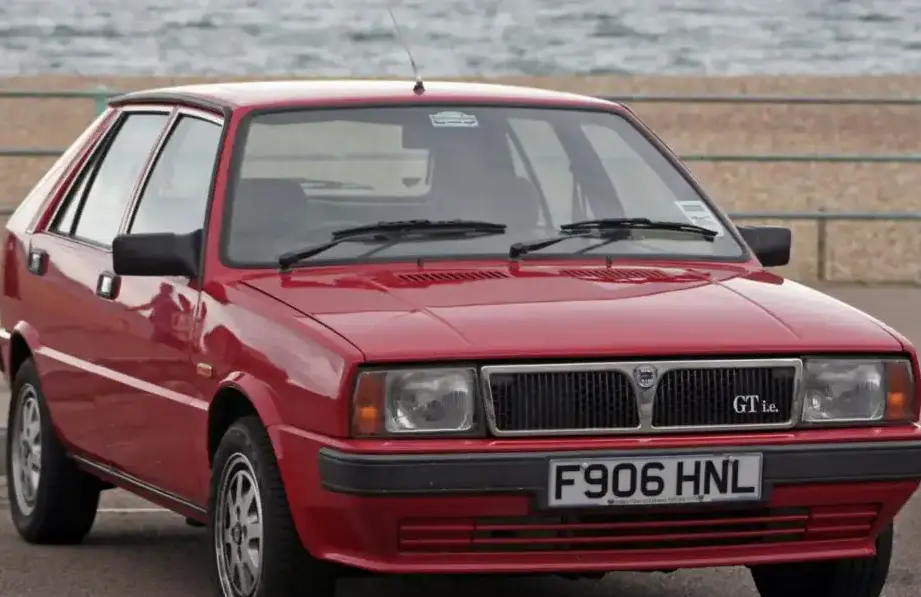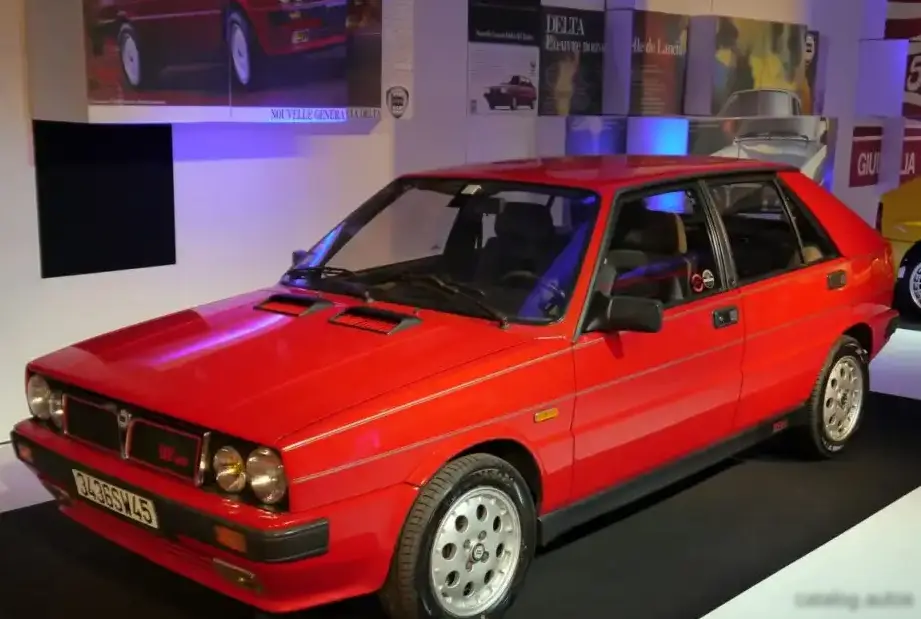
The Lancia Delta HF 4WD 2.0, produced from 1986 to 1988, represents a high-performance iteration of the first-generation Delta (Project 831). This model, distinguished by its all-wheel-drive system and turbocharged 2.0-liter engine, was a key player in Lancia’s rally heritage and offered a compelling blend of practicality and performance for the European market. It sat at the top of the Delta range, offering significantly more power and capability than the base models. The ‘HF’ designation, standing for “High Fidelity,” denoted Lancia’s performance-oriented sub-brand.
Technical Specifications
| Brand | Lancia |
| Model | Delta |
| Generation | Delta I (831, facelift 1986) |
| Type (Engine) | HF 4WD 2.0 (165 Hp) |
| Start of production | 1986 |
| End of production | 1988 |
| Powertrain Architecture | Internal Combustion engine |
| Body type | Hatchback |
| Seats | 5 |
| Doors | 5 |
| Fuel consumption (urban) | 10.8 l/100 km (21.8 US mpg) |
| Fuel consumption (extra urban) | 7.8 l/100 km (30.2 US mpg) |
| Fuel Type | Petrol (Gasoline) |
| Acceleration 0 – 100 km/h | 7.8 sec |
| Acceleration 0 – 62 mph | 7.8 sec |
| Acceleration 0 – 60 mph | 7.4 sec |
| Maximum speed | 208 km/h (129.25 mph) |
| Weight-to-power ratio | 7.2 kg/Hp |
| Weight-to-torque ratio | 4.7 kg/Nm |
| Power | 165 Hp @ 5250 rpm |
| Power per litre | 82.7 Hp/l |
| Torque | 255 Nm @ 2500 rpm (188.08 lb.-ft. @ 2500 rpm) |
| Engine layout | Front, Transverse |
| Engine Model/Code | 831B5000 |
| Engine displacement | 1995 cm3 (121.74 cu. in.) |
| Number of cylinders | 4 |
| Engine configuration | Inline |
| Cylinder Bore | 84 mm (3.31 in.) |
| Piston Stroke | 90 mm (3.54 in.) |
| Compression ratio | 8:1 |
| Number of valves per cylinder | 2 |
| Fuel injection system | Multi-port manifold injection |
| Engine aspiration | Turbocharger, Intercooler |
| Valvetrain | DOHC |
| Engine oil capacity | 5.8 l (6.13 US qt | 5.1 UK qt) |
| Coolant | 6 l (6.34 US qt | 5.28 UK qt) |
| Kerb Weight | 1190 kg (2623.5 lbs.) |
| Max. weight | 1640 kg (3615.58 lbs.) |
| Max load | 450 kg (992.08 lbs.) |
| Trunk (boot) space – minimum | 200 l (7.06 cu. ft.) |
| Trunk (boot) space – maximum | 940 l (33.2 cu. ft.) |
| Fuel tank capacity | 57 l (15.06 US gal | 12.54 UK gal) |
| Length | 3895 mm (153.35 in.) |
| Width | 1620 mm (63.78 in.) |
| Height | 1380 mm (54.33 in.) |
| Wheelbase | 2475 mm (97.44 in.) |
| Front track | 1409 mm (55.47 in.) |
| Rear (Back) track | 1404 mm (55.28 in.) |
| Front overhang | 750 mm (29.53 in.) |
| Rear overhang | 670 mm (26.38 in.) |
| Minimum turning circle | 10.4 m (34.12 ft.) |
| Drivetrain Architecture | All wheel drive (4×4) |
| Number of gears | 5 |
| Gearbox type | Manual transmission |
| Front suspension | Independent, McPherson with coil spring and anti-roll bar |
| Rear suspension | McPherson, Transverse stabilizer |
| Front brakes | Ventilated discs, 257 mm |
| Rear brakes | Disc, 227 mm |
| Steering type | Steering rack and pinion |
| Power steering | Hydraulic |
| Tires size | 185/60 R14 |
| Wheel rims size | 5.5J x 14 |
INTRODUCTION
The Lancia Delta HF 4WD 2.0, launched in 1986, was a significant evolution of the Delta platform. Building upon the success of the original Delta, which debuted in 1979, the HF 4WD offered a substantial performance upgrade. It was positioned as the flagship model, appealing to enthusiasts seeking a practical yet exhilarating driving experience. The Delta I, and particularly the facelifted versions from 1986 onwards, benefited from improved build quality and refinement. This model year saw updates to the interior and exterior styling, enhancing its overall appeal. The Delta’s innovative design, combining a spacious interior with a relatively compact footprint, made it a popular choice in Europe.
Powertrain & Engine Architecture
At the heart of the Delta HF 4WD 2.0 lies the 831B5000 engine, a 1995cc inline-four cylinder unit. This engine featured a Garrett T2 turbocharger with an intercooler, boosting power output to 165 horsepower at 5250 rpm and 255 Nm (188 lb-ft) of torque at 2500 rpm. The engine utilized multi-port fuel injection, contributing to improved fuel efficiency and throttle response. The cylinder head employed a double overhead camshaft (DOHC) valvetrain with two valves per cylinder. The 8:1 compression ratio was a compromise between performance and reliability, necessary for use with the available fuel grades in European markets. The engine was transversely mounted, a common configuration for front-wheel-drive and all-wheel-drive vehicles, optimizing space utilization. The five-speed manual transmission was specifically chosen to handle the increased power and torque, providing precise gear changes and a sporty driving feel.
Driving Characteristics
The Delta HF 4WD 2.0 delivered a noticeably more engaging driving experience compared to lower-spec Delta models. The turbocharged engine provided strong acceleration, with 0-60 mph times around 7.4 seconds and a top speed of 129.25 mph. The all-wheel-drive system significantly enhanced traction, particularly on slippery surfaces, making it a capable performer in all weather conditions. The gear ratios were well-matched to the engine’s powerband, providing ample torque for everyday driving and responsive acceleration when needed. While not as raw or visceral as some contemporary sports cars, the Delta HF 4WD offered a refined and balanced driving experience, combining performance with practicality. The all-wheel drive system, while adding weight, instilled confidence in cornering and provided a secure feel on the road.
Equipment & Trim Levels
The HF 4WD 2.0 was generously equipped, reflecting its position as the top-of-the-line Delta model. Standard features included power windows, central locking, and a high-quality stereo system. The interior featured supportive sports seats upholstered in a combination of fabric and Alcantara. The dashboard was typically finished in a dark color scheme, with a focus on functionality and ergonomics. Optional extras included a sunroof, air conditioning, and upgraded audio systems. The exterior was distinguished by unique alloy wheels, a rear spoiler, and subtle badging. The overall interior ambiance was one of understated elegance, prioritizing comfort and practicality over outright luxury.
Chassis & Braking
The Delta HF 4WD 2.0 featured an independent suspension system, with McPherson struts at the front and a trailing arm setup at the rear. Anti-roll bars were fitted to both axles, reducing body roll and improving handling stability. The braking system consisted of ventilated discs at the front and solid discs at the rear, providing adequate stopping power for the vehicle’s weight and performance. Hydraulic power steering was standard, offering light and precise steering feel. The chassis was reinforced to handle the increased power and torque, ensuring structural rigidity and durability. The all-wheel-drive system added weight, but the suspension was tuned to compensate, maintaining a comfortable ride quality.
Market Reception & Comparison
The Lancia Delta HF 4WD 2.0 was generally well-received by automotive critics, who praised its performance, handling, and practicality. It was often compared to rivals such as the Volkswagen Golf GTI and the Ford Escort RS Turbo. While the Delta offered a more sophisticated and refined driving experience, some critics noted its higher price tag. Fuel economy was reasonable for a turbocharged vehicle of its era, averaging around 21.8 mpg in urban driving and 30.2 mpg on the highway. Reliability was generally good, although the turbocharger and all-wheel-drive system required regular maintenance. Compared to the naturally aspirated 1.6-liter and 1.8-liter Delta models, the HF 4WD 2.0 offered a significant performance advantage, but at a higher cost of ownership.
Legacy
The Lancia Delta HF 4WD 2.0 remains a highly regarded classic car, particularly among enthusiasts. Its robust powertrain and well-engineered chassis have proven to be durable over time. While finding well-maintained examples can be challenging, the Delta HF 4WD 2.0 continues to command a strong following in the used car market. The engine, while requiring regular maintenance, is generally considered reliable if properly cared for. The all-wheel-drive system, however, can be prone to wear and tear. The Delta’s legacy extends beyond its performance capabilities; it represents a high point in Lancia’s engineering and design prowess, and its influence can be seen in subsequent generations of the Delta model.