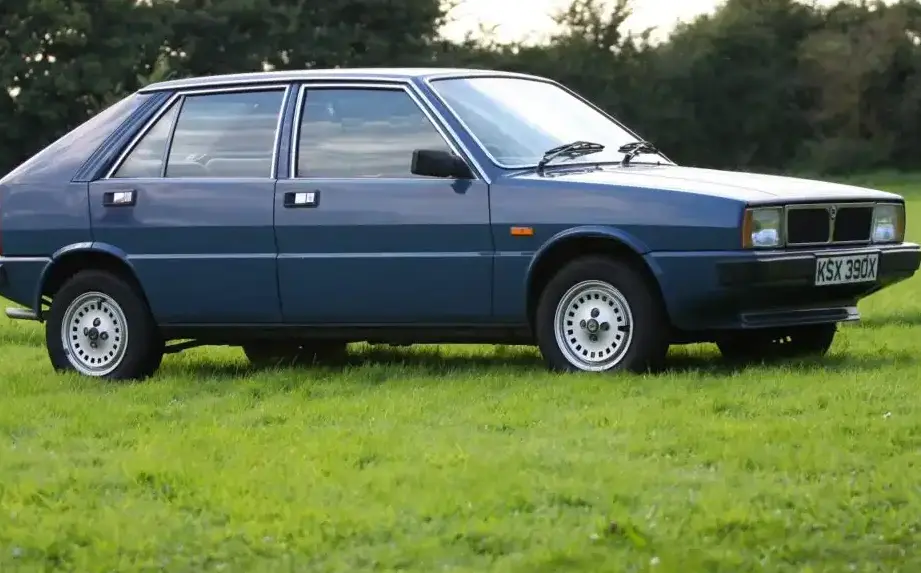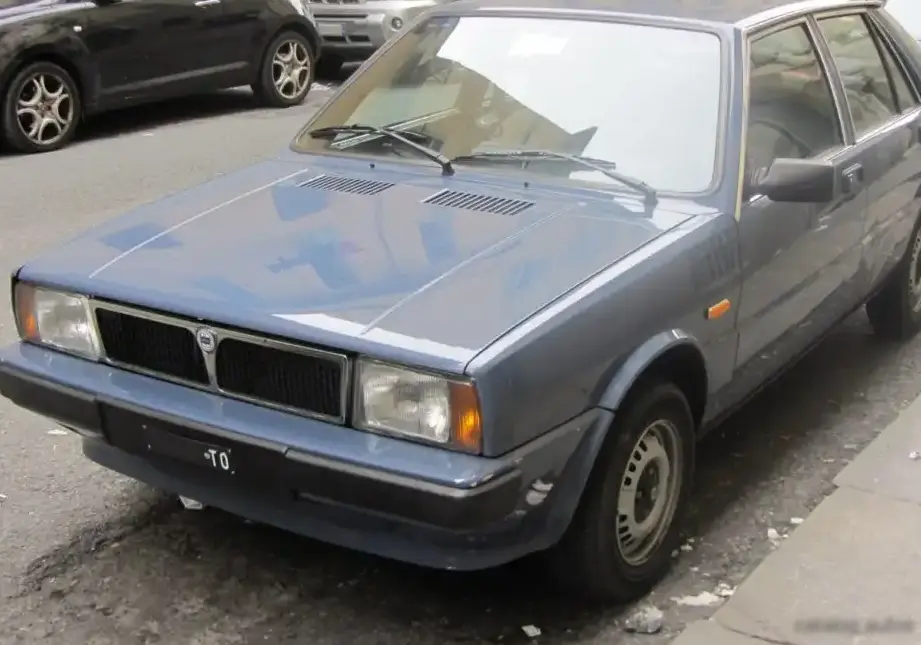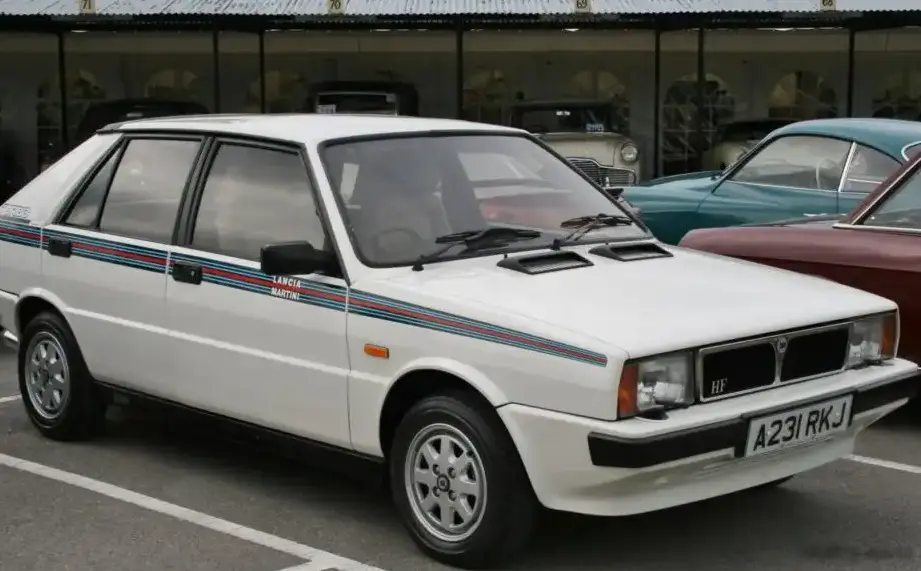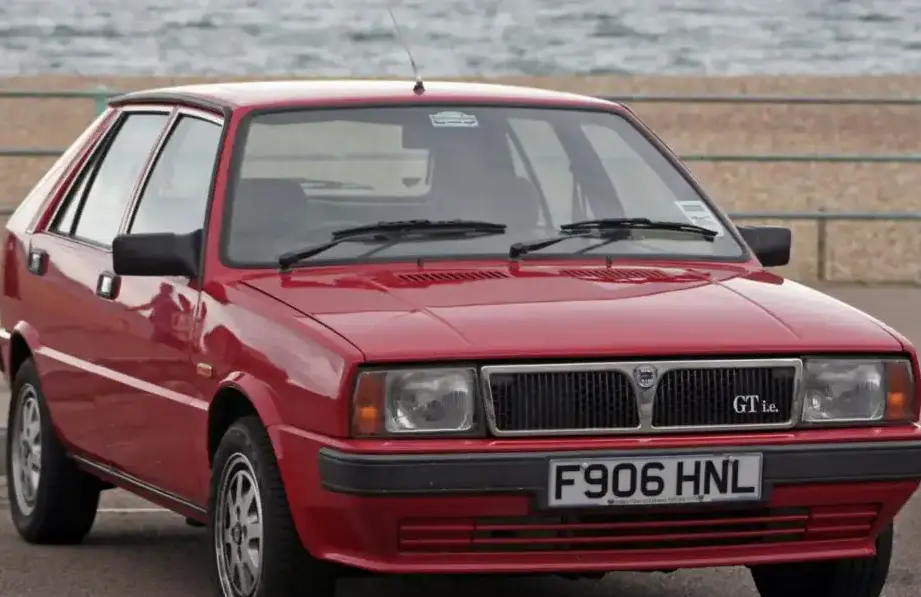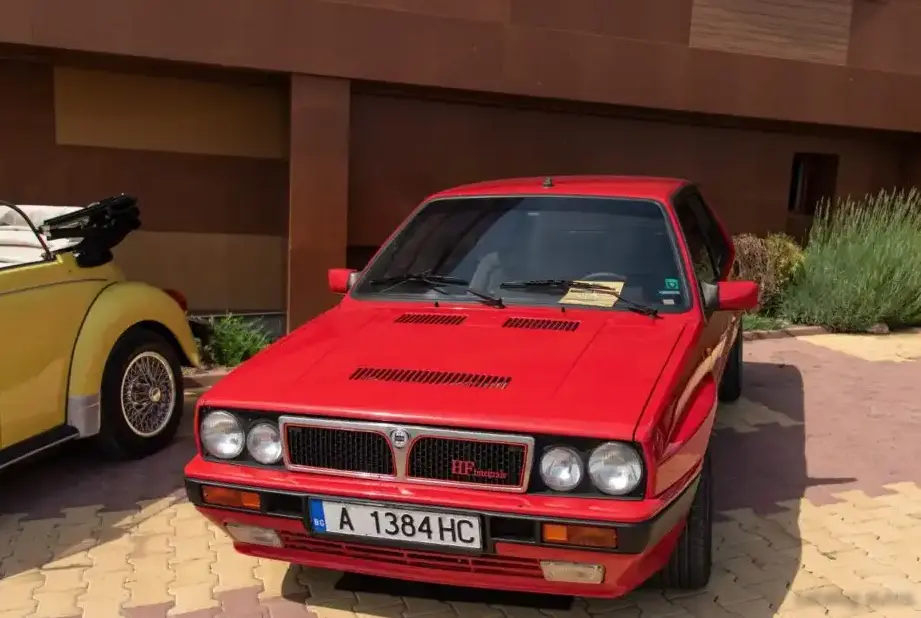
The Lancia Delta HF Integrale 2.0 8V, produced from 1987 to 1989, represents a pivotal point in the evolution of the first-generation Delta (831 series, post-1986 facelift). This variant, distinguished by its 2.0-liter turbocharged engine and permanent four-wheel drive, cemented the Delta’s reputation as a formidable rally competitor and a performance hatchback icon. It sat at the top of the Delta range, offering a significant performance upgrade over the more pedestrian 1.5 and 1.6-liter models. The HF Integrale was a direct descendant of Lancia’s successful rally cars, bringing motorsport technology to the road-going public.
Technical Specifications
| Brand | Lancia |
| Model | Delta |
| Generation | Delta I (831, facelift 1986) |
| Type (Engine) | HF Integrale 2.0 8V (185 Hp) 4WD |
| Start of production | 1987 |
| End of production | 1989 |
| Powertrain Architecture | Internal Combustion engine |
| Body type | Hatchback |
| Seats | 5 |
| Doors | 5 |
| Fuel consumption (urban) | 10.8 l/100 km (21.8 US mpg) |
| Fuel consumption (extra urban) | 7.7 l/100 km (30.5 US mpg) |
| Fuel Type | Petrol (Gasoline) |
| Acceleration 0 – 100 km/h | 6.6 sec |
| Acceleration 0 – 62 mph | 6.6 sec |
| Acceleration 0 – 60 mph | 6.3 sec |
| Maximum speed | 215 km/h (133.59 mph) |
| Weight-to-power ratio | 6.6 kg/Hp |
| Weight-to-torque ratio | 4.1 kg/Nm |
| Power | 185 Hp @ 5300 rpm |
| Power per litre | 92.7 Hp/l |
| Torque | 298 Nm @ 3500 rpm (219.79 lb.-ft. @ 3500 rpm) |
| Engine layout | Front, Transverse |
| Engine Model/Code | 831C5000 |
| Engine displacement | 1995 cm3 (121.74 cu. in.) |
| Number of cylinders | 4 |
| Engine configuration | Inline |
| Cylinder Bore | 84 mm (3.31 in.) |
| Piston Stroke | 90 mm (3.54 in.) |
| Compression ratio | 8:1 |
| Number of valves per cylinder | 2 |
| Fuel injection system | Multi-port manifold injection |
| Engine aspiration | Turbocharger, Intercooler |
| Valvetrain | DOHC |
| Engine oil capacity | 5.3 l (5.6 US qt | 4.66 UK qt) |
| Coolant | 6.2 l (6.55 US qt | 5.46 UK qt) |
| Kerb Weight | 1215 kg (2678.62 lbs.) |
| Max. weight | 1665 kg (3670.7 lbs.) |
| Max load | 450 kg (992.08 lbs.) |
| Trunk (boot) space – minimum | 200 l (7.06 cu. ft.) |
| Trunk (boot) space – maximum | 940 l (33.2 cu. ft.) |
| Fuel tank capacity | 57 l (15.06 US gal | 12.54 UK gal) |
| Length | 3900 mm (153.54 in.) |
| Width | 1700 mm (66.93 in.) |
| Height | 1380 mm (54.33 in.) |
| Wheelbase | 2480 mm (97.64 in.) |
| Front track | 1426 mm (56.14 in.) |
| Rear (Back) track | 1426 mm (56.14 in.) |
| Minimum turning circle | 10.4 m (34.12 ft.) |
| Drivetrain Architecture | All wheel drive (4×4) |
| Number of gears | 5 |
| Gearbox type | Manual transmission |
| Front suspension | Independent, McPherson with coil spring and anti-roll bar |
| Rear suspension | McPherson, Transverse stabilizer |
| Front brakes | Ventilated discs, 284 mm |
| Rear brakes | Disc, 227 mm |
| Steering type | Steering rack and pinion |
| Power steering | Hydraulic |
| Tires size | 195/55 R15 |
| Wheel rims size | 6J x 15 |
Powertrain & Engine Architecture
The heart of the HF Integrale 2.0 8V is the 831C5000 engine, a 1995cc inline-four cylinder unit. This engine featured a Garrett T25 turbocharger with an intercooler, boosting power output to 185 horsepower at 5300 rpm and 298 Nm (219.79 lb-ft) of torque at 3500 rpm. The engine utilized multi-port fuel injection and a dual overhead camshaft (DOHC) valvetrain with two valves per cylinder. The 8:1 compression ratio was a compromise between performance and reliability, necessary for running boosted pressures on the available fuel quality of the time. The engine’s transverse mounting and four-wheel drive configuration contributed to its excellent traction and handling characteristics. The transmission was a robust, but not particularly refined, five-speed manual gearbox.
Driving Characteristics
The HF Integrale 2.0 8V offered a distinctly engaging driving experience. While not as brutally fast as some contemporary sports cars, its combination of turbo boost, all-wheel drive, and relatively light weight (1215 kg / 2678.62 lbs) resulted in strong acceleration – 0 to 60 mph in around 6.3 seconds and a top speed of 133.59 mph. The turbocharger did introduce some lag, but once spooled up, the engine delivered a potent surge of power. The four-wheel drive system provided exceptional grip, particularly on loose surfaces, making it a confident handler in all weather conditions. Compared to the later 16V Integrale, the 8V felt more accessible and less demanding to drive, with a broader, more usable powerband. The manual gearbox, while precise, had a relatively long throw.
Equipment & Trim Levels
The HF Integrale 2.0 8V was relatively well-equipped for its time, though luxury wasn’t its primary focus. Standard features included power steering, alloy wheels, and a sporty interior with bolstered seats. The interior trim typically featured a combination of cloth and Alcantara upholstery. Optional extras included a sunroof, electric windows, and upgraded audio systems. The dashboard layout was functional and driver-focused, with clear instrumentation and logically placed controls. The HF Integrale also featured distinctive exterior styling cues, including wider wheel arches, a rear spoiler, and unique badging.
Chassis & Braking
The Delta Integrale’s chassis was a key element of its success. It featured independent suspension all around, with McPherson struts at the front and a twist-beam rear axle. Anti-roll bars were fitted front and rear to reduce body roll during cornering. Braking was provided by ventilated discs at the front and solid discs at the rear. The braking system was effective, but lacked the sophistication of more modern setups. The steering was a rack-and-pinion system with hydraulic assistance, providing good feel and responsiveness.
Market Reception & Comparison
The Lancia Delta HF Integrale 2.0 8V was widely praised by automotive journalists for its performance, handling, and all-weather capability. It was seen as a genuine alternative to more traditional hot hatchbacks, offering a unique blend of Italian flair and rally-bred engineering. Compared to the later 16V Integrale, the 8V was considered more forgiving and easier to drive, making it a popular choice for everyday use. Fuel economy was reasonable for a performance car of this era, averaging around 21.8 US mpg in the city and 30.5 US mpg on the highway. Reliability was generally good, although the turbocharger and associated components required regular maintenance.
Legacy
The Lancia Delta HF Integrale 2.0 8V remains a highly sought-after classic car today. Its success in rallying, combined with its distinctive styling and engaging driving experience, has cemented its place in automotive history. Well-maintained examples are becoming increasingly rare and valuable. The 8V version, while often overshadowed by the later 16V model, is appreciated by enthusiasts for its simplicity, accessibility, and character. The powertrain, while aging, is generally considered robust if properly maintained, but turbocharger issues and age-related wear on seals and hoses are common concerns for owners. The Delta Integrale continues to be celebrated as one of the greatest hot hatchbacks of all time.