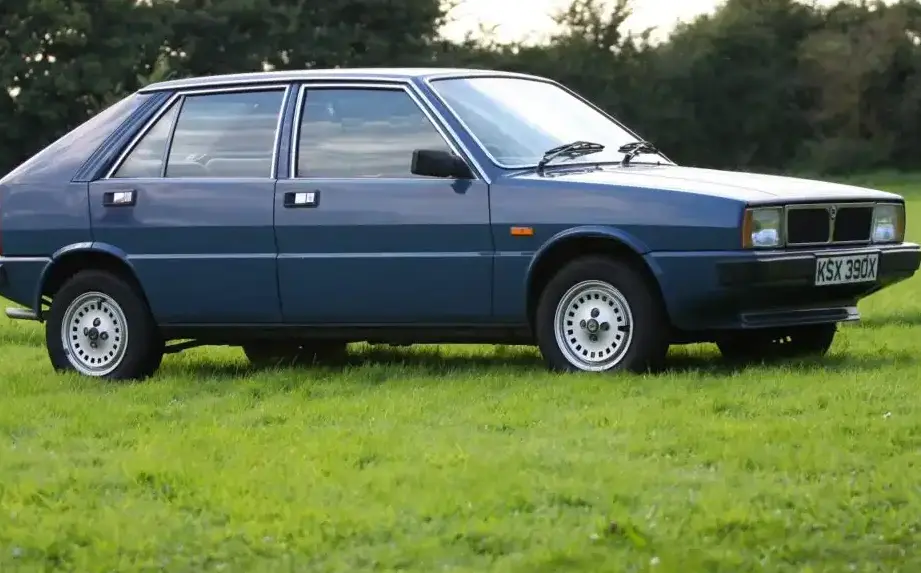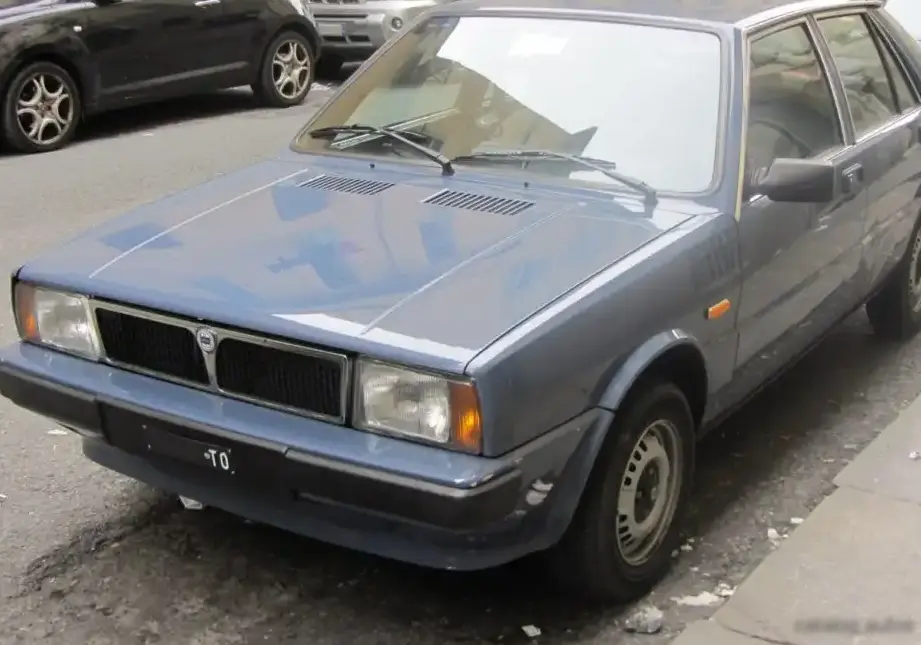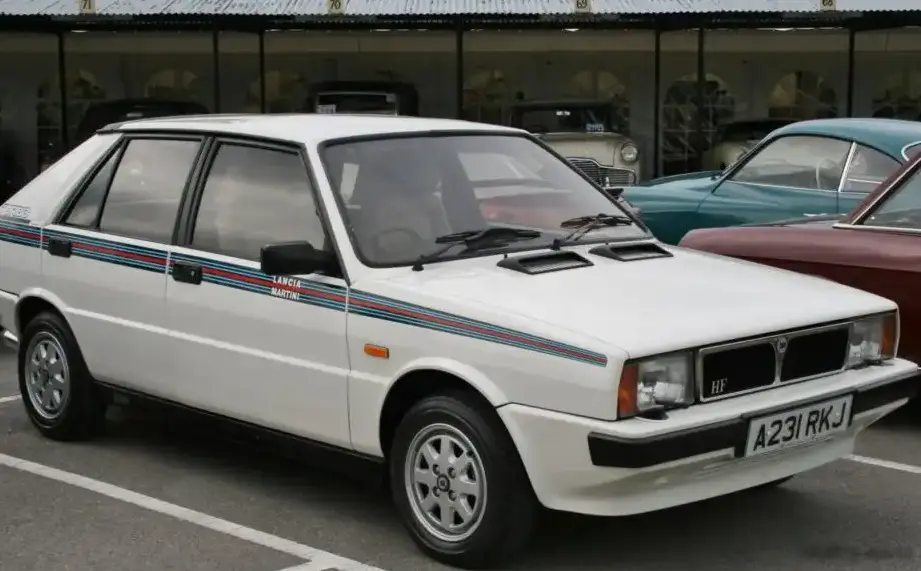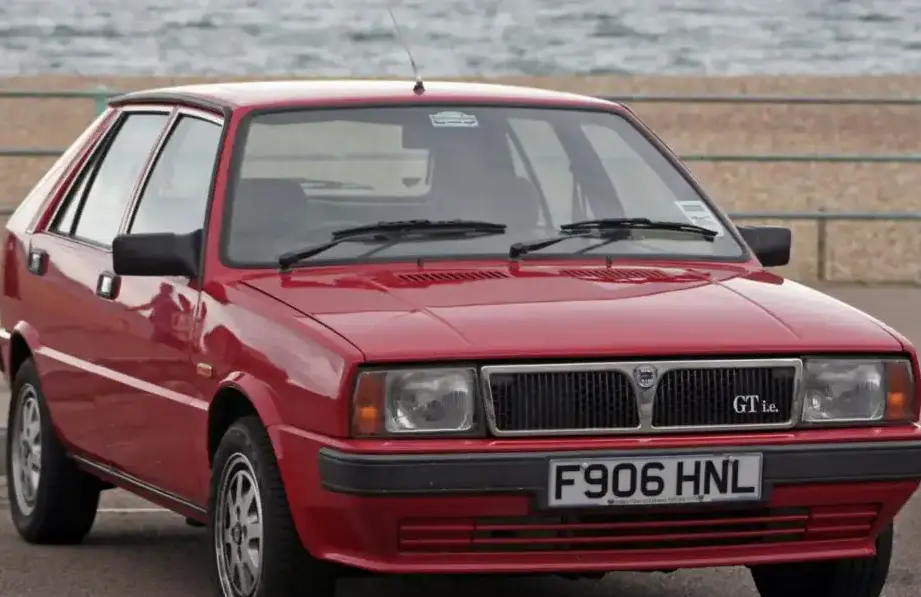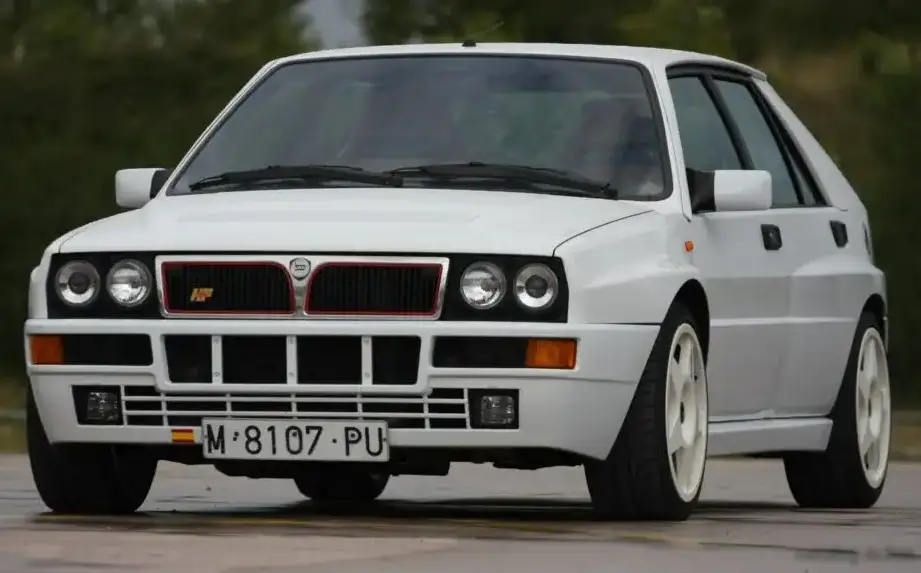
The Lancia Delta HF Integrale Evo 2.0 16V, produced from 1993 to 1994, represents the pinnacle of the first-generation Delta (Project 831) development. This high-performance hatchback was the final iteration of the Integrale, building upon the success of its predecessors in both rally racing and the broader automotive market. The “Evo 2” designation signifies further refinements to the already potent Integrale formula, focusing on increased power, improved aerodynamics, and enhanced driving dynamics. It was a flagship model for Lancia, embodying Italian engineering and a commitment to all-wheel-drive performance. The Delta I facelift (post-1991) brought subtle but important styling changes, and the Evo 2 was built on this updated platform.
Technical Specifications
| Brand | Lancia |
| Model | Delta |
| Generation | Delta I (831, facelift 1991) |
| Type | HF Integrale Evo 2.0 16V (215 Hp) 4WD |
| Start of production | 1993 |
| End of production | 1994 |
| Powertrain Architecture | Internal Combustion engine |
| Body type | Hatchback |
| Seats | 5 |
| Doors | 5 |
| Fuel consumption (urban) | 13 l/100 km (18.1 US mpg, 21.7 UK mpg, 7.7 km/l) |
| Fuel consumption (extra urban) | 8.2 l/100 km (28.7 US mpg, 34.4 UK mpg, 12.2 km/l) |
| Fuel Type | Petrol (Gasoline) |
| Acceleration 0 – 100 km/h | 5.7 sec |
| Acceleration 0 – 62 mph | 5.7 sec |
| Acceleration 0 – 60 mph | 5.4 sec |
| Maximum speed | 220 km/h (136.7 mph) |
| Weight-to-power ratio | 6.2 kg/Hp, 160.4 Hp/tonne |
| Weight-to-torque ratio | 4.4 kg/Nm, 229.9 Nm/tonne |
| Power | 215 Hp @ 5750 rpm |
| Power per litre | 107.8 Hp/l |
| Torque | 308 Nm @ 2500 rpm (227.17 lb.-ft. @ 2500 rpm) |
| Engine layout | Front, Transverse |
| Engine Model/Code | 831E5046 |
| Engine displacement | 1995 cm3 (121.74 cu. in.) |
| Number of cylinders | 4 |
| Engine configuration | Inline |
| Cylinder Bore | 84 mm (3.31 in.) |
| Piston Stroke | 90 mm (3.54 in.) |
| Compression ratio | 8:1 |
| Number of valves per cylinder | 4 |
| Fuel injection system | Multi-port manifold injection |
| Engine aspiration | Turbocharger, Intercooler |
| Valvetrain | DOHC |
| Engine oil capacity | 5.3 l (5.6 US qt | 4.66 UK qt) |
| Coolant | 6.2 l (6.55 US qt | 5.46 UK qt) |
| Kerb Weight | 1340 kg (2954.19 lbs.) |
| Max. weight | 1790 kg (3946.27 lbs.) |
| Max load | 450 kg (992.08 lbs.) |
| Trunk (boot) space – minimum | 200 l (7.06 cu. ft.) |
| Trunk (boot) space – maximum | 940 l (33.2 cu. ft.) |
| Fuel tank capacity | 57 l (15.06 US gal | 12.54 UK gal) |
| Max. roof load | 80 kg (176.37 lbs.) |
| Permitted trailer load with brakes (12%) | 800 kg (1763.7 lbs.) |
| Permitted trailer load without brakes | 500 kg (1102.31 lbs.) |
| Permitted towbar download | 70 kg (154.32 lbs.) |
| Length | 3898 mm (153.46 in.) |
| Width | 1767 mm (69.57 in.) |
| Height | 1365 mm (53.74 in.) |
| Wheelbase | 2479 mm (97.6 in.) |
| Front track | 1506 mm (59.29 in.) |
| Rear (Back) track | 1504 mm (59.21 in.) |
| Front overhang | 762 mm (30 in.) |
| Rear overhang | 657 mm (25.87 in.) |
| Minimum turning circle | 10.4 m (34.12 ft.) |
| Drivetrain Architecture | All wheel drive (4×4). Internal Combustion engine. |
| Drive wheel | All wheel drive (4×4) |
| Number of gears and type of gearbox | 5 gears, manual transmission |
| Front suspension | Independent, type McPherson with coil spring and anti-roll bar |
| Rear suspension | McPherson, Transverse stabilizer |
| Front brakes | Ventilated discs, 281 mm |
| Rear brakes | Disc, 251 mm |
| Assisting systems | ABS (Anti-lock braking system) |
| Steering type | Steering rack and pinion |
| Power steering | Hydraulic Steering |
| Tires size | 205/45 R16 |
| Wheel rims size | 7.5J x 16 |
Powertrain & Engine Architecture
The heart of the Delta HF Integrale Evo 2 is the 831E5046 2.0-liter inline-four cylinder engine. This engine is a heavily revised version of the earlier 1.8 and 2.0-liter units used in previous Integrales. It features a Garrett T25 turbocharger with an intercooler, boosting power output to 215 horsepower at 5750 rpm and 308 Nm (227 lb-ft) of torque at 2500 rpm. The engine utilizes multi-port fuel injection and a dual overhead camshaft (DOHC) valvetrain with four valves per cylinder, contributing to its responsive nature and high specific output. The compression ratio is set at 8:1. The engine is transversely mounted, a common layout for front-wheel-drive and all-wheel-drive vehicles, optimizing space utilization. The five-speed manual transmission is robust, designed to handle the engine’s substantial torque.
Driving Characteristics
The Evo 2 delivers a thrilling driving experience. The all-wheel-drive system, a key component of the Integrale’s success, provides exceptional traction and stability, particularly on loose surfaces. The 215 hp engine provides brisk acceleration, achieving 0-60 mph in approximately 5.4 seconds and a top speed of 136.7 mph. Compared to the earlier 1.8L Integrales, the Evo 2 offers a noticeable increase in power and torque throughout the rev range. While the manual transmission requires skillful operation, it allows for precise control and engagement. The gear ratios are well-matched to the engine’s powerband, providing strong acceleration in all gears. The Evo 2 feels more refined and composed than its predecessors, offering a balance between performance and usability.
Equipment & Trim Levels
The HF Integrale Evo 2 was a well-equipped vehicle, even by 1990s standards. Standard features included power windows, central locking, and an upgraded interior with supportive Recaro seats upholstered in Alcantara and fabric. The dashboard featured a distinctive layout with a comprehensive instrument cluster. Optional extras included air conditioning, a sunroof, and upgraded audio systems. The exterior was characterized by its flared wheel arches, aggressive front and rear spoilers, and distinctive alloy wheels. The Evo 2 was positioned as the premium offering in the Delta range, representing the ultimate expression of Lancia’s rally-bred technology.
Chassis & Braking
The Delta Integrale Evo 2 features an independent suspension system with McPherson struts at the front and a McPherson setup with a transverse stabilizer at the rear. This suspension configuration provides a good balance between ride comfort and handling precision. The braking system consists of ventilated discs at the front and solid discs at the rear, coupled with an anti-lock braking system (ABS) for enhanced safety. The steering is rack and pinion with hydraulic power assistance, providing precise and responsive control. The tires are 205/45 R16, offering good grip and handling characteristics.
Market Reception & Comparison
The Lancia Delta HF Integrale Evo 2 was widely praised by automotive critics for its exceptional performance, handling, and all-wheel-drive capabilities. It was considered a benchmark in the hot hatchback segment. Compared to other trims in the Delta lineup, such as the 1.6 or 1.8 models, the Evo 2 offered a significantly higher level of performance and refinement. While fuel economy was not a primary concern for buyers of this vehicle, it was reasonable for its performance level. Reliability was generally good, although the turbocharger and complex all-wheel-drive system required regular maintenance.
Legacy
The Lancia Delta HF Integrale Evo 2 remains a highly sought-after vehicle among collectors and enthusiasts. Its rally heritage, exceptional performance, and distinctive styling have cemented its status as a modern classic. The 831E5046 engine, while requiring careful maintenance, is known for its durability and potential for further tuning. Today, well-maintained examples command high prices in the used car market. The Delta Integrale Evo 2 represents a high point in Lancia’s history and a testament to Italian automotive engineering.