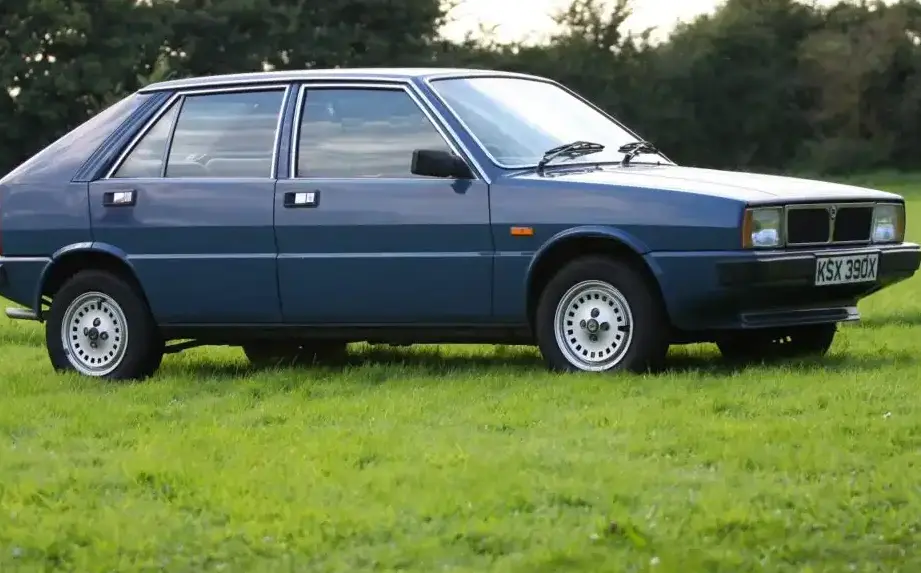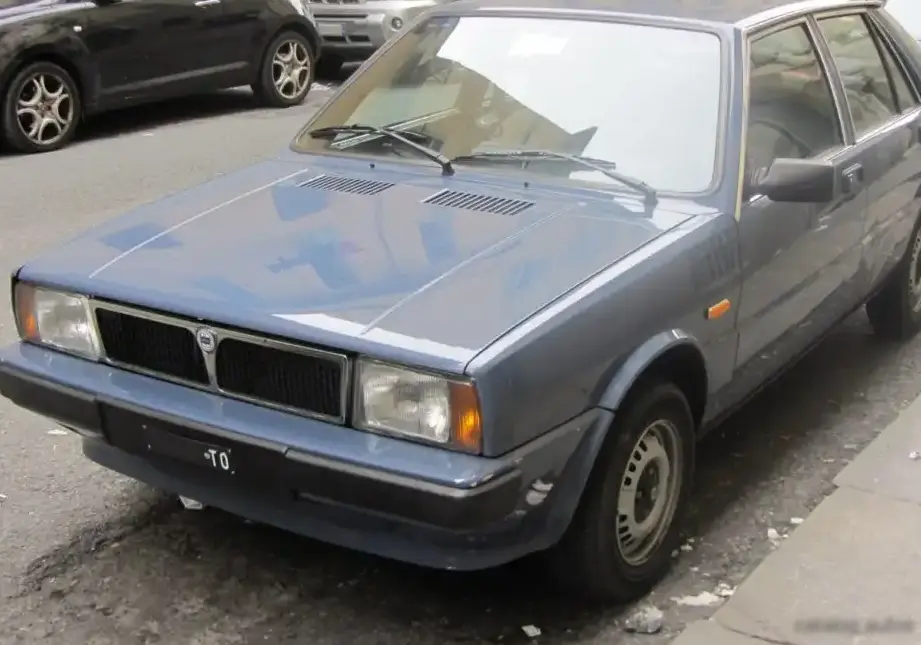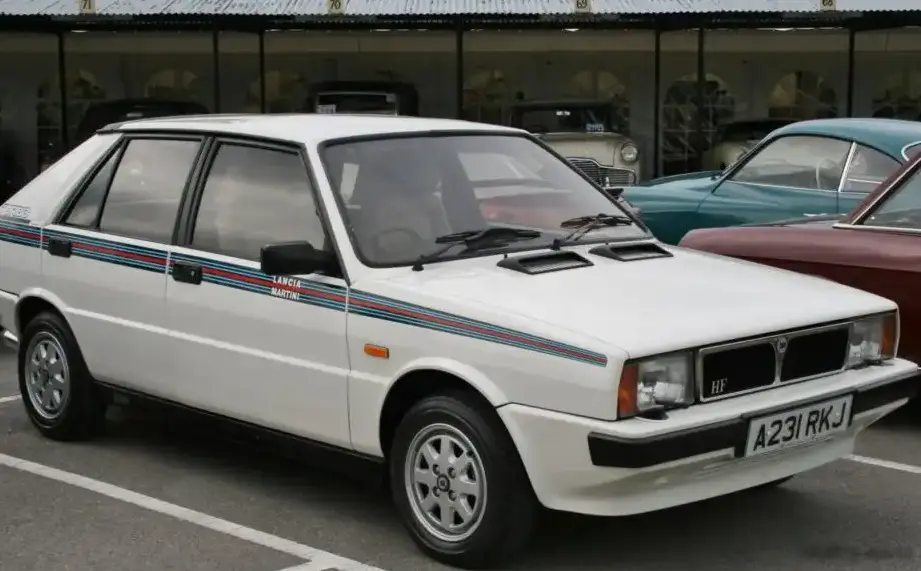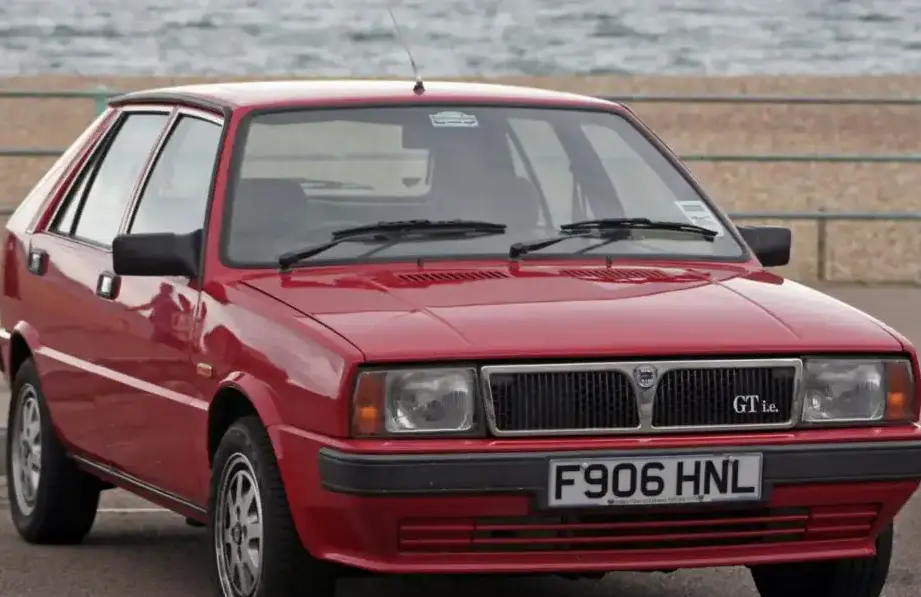
The Lancia Delta HF Turbo 1.6 (140 Hp), produced from May 1986 to August 1988, represents a significant evolution of the first-generation Delta (831 series), particularly after the 1986 facelift. Positioned as a performance-oriented variant within the Delta range, it aimed to deliver a more engaging driving experience than the standard models while remaining a practical, five-door hatchback. This model built upon the success of the original Delta, which had already established itself as a popular choice in Europe for its spaciousness, innovative design, and relatively affordable price point. The HF Turbo 1.6 slotted in above the base models and the earlier 1.5 liter versions, offering a substantial power increase and more sophisticated equipment.
Technical Specifications
| Brand | Lancia |
| Model | Delta |
| Generation | Delta I (831, facelift 1986) |
| Type (Engine) | HF Turbo 1.6 (140 Hp) |
| Start of production | May, 1986 |
| End of production | August, 1988 |
| Powertrain Architecture | Internal Combustion engine |
| Body type | Hatchback |
| Seats | 5 |
| Doors | 5 |
| Fuel consumption (urban) | 10 l/100 km (23.5 US mpg) |
| Fuel consumption (extra urban) | 6.5 l/100 km (36.2 US mpg) |
| Fuel Type | Petrol (Gasoline) |
| Acceleration 0 – 100 km/h | 8.7 sec |
| Acceleration 0 – 62 mph | 8.7 sec |
| Acceleration 0 – 60 mph | 8.3 sec |
| Maximum speed | 203 km/h (126.14 mph) |
| Weight-to-power ratio | 7.3 kg/Hp |
| Weight-to-torque ratio | 5.3 kg/Nm |
| Power | 140 Hp @ 5500 rpm |
| Power per litre | 88.3 Hp/l |
| Torque | 191 Nm @ 3500 rpm (140.87 lb.-ft. @ 3500 rpm) |
| Engine layout | Front, Transverse |
| Engine Model/Code | 831B3000 |
| Engine displacement | 1585 cm3 (96.72 cu. in.) |
| Number of cylinders | 4 |
| Engine configuration | Inline |
| Cylinder Bore | 84 mm (3.31 in.) |
| Piston Stroke | 71.5 mm (2.81 in.) |
| Compression ratio | 8:1 |
| Number of valves per cylinder | 2 |
| Fuel injection system | Multi-port manifold injection |
| Engine aspiration | Turbocharger, Intercooler |
| Valvetrain | DOHC |
| Engine oil capacity | 4.8 l (5.07 US qt | 4.22 UK qt) |
| Coolant | 6.5 l (6.87 US qt | 5.72 UK qt) |
| Kerb Weight | 1020 kg (2248.72 lbs.) |
| Max. weight | 1470 kg (3240.8 lbs.) |
| Max load | 450 kg (992.08 lbs.) |
| Trunk (boot) space – minimum | 260 l (9.18 cu. ft.) |
| Trunk (boot) space – maximum | 1000 l (35.31 cu. ft.) |
| Fuel tank capacity | 57 l (15.06 US gal | 12.54 UK gal) |
| Length | 3895 mm (153.35 in.) |
| Width | 1620 mm (63.78 in.) |
| Height | 1380 mm (54.33 in.) |
| Wheelbase | 2475 mm (97.44 in.) |
| Front track | 1402 mm (55.2 in.) |
| Rear (Back) track | 1400 mm (55.12 in.) |
| Front overhang | 750 mm (29.53 in.) |
| Rear overhang | 670 mm (26.38 in.) |
| Drag coefficient (Cd) | 0.40 |
| Minimum turning circle | 10.5 m (34.45 ft.) |
| Drivetrain Architecture | Front wheel drive |
| Number of gears and type of gearbox | 5 gears, manual transmission |
| Front suspension | Independent, type McPherson with coil spring and anti-roll bar |
| Rear suspension | McPherson, Transverse stabilizer |
| Front brakes | Ventilated discs, 257 mm |
| Rear brakes | Disc, 227 mm |
| Steering type | Steering rack and pinion |
| Tires size | 165/65 R14 |
| Wheel rims size | 5.5J x 14 |
Powertrain & Engine Architecture
The heart of the HF Turbo 1.6 is the 831B3000 engine, a 1.6-liter inline-four cylinder powerplant. This engine featured a single overhead camshaft (SOHC) design, although later revisions moved to a dual overhead camshaft (DOHC) configuration. Crucially, it was equipped with a Garrett turbocharger and an intercooler, boosting power output to 140 horsepower at 5500 rpm and 191 Nm (140.87 lb-ft) of torque at 3500 rpm. Fuel delivery was handled by Bosch multi-port fuel injection. The engine’s 8:1 compression ratio was a compromise between performance and reliability, necessary for use with the available fuel grades of the time. The five-speed manual transmission was the only gearbox option, providing a direct connection between the engine and the front wheels. This transmission was chosen for its durability and ability to handle the increased power output of the turbocharged engine.
Driving Characteristics
The HF Turbo 1.6 offered a noticeable performance upgrade over the naturally aspirated Delta variants. Acceleration to 60 mph was achieved in approximately 8.3 seconds, and it could reach a top speed of 126 mph. The turbocharger provided a surge of power in the mid-range, making overtaking maneuvers relatively effortless. However, turbo lag was present, requiring drivers to anticipate acceleration and downshift accordingly. The front-wheel-drive layout, while common for its class, could exhibit torque steer under hard acceleration. The suspension, tuned for a balance between comfort and handling, provided a reasonably compliant ride, although it wasn’t as sporty as some of its rivals. The five-speed manual transmission offered precise shifts, enhancing the driving experience.
Equipment & Trim Levels
The HF Turbo 1.6 came reasonably well-equipped for its time. Standard features typically included power steering, central locking, electric windows, and a basic stereo system. The interior featured sport seats with patterned upholstery, and a leather-wrapped steering wheel. Optional extras included a sunroof, alloy wheels, and upgraded audio systems. The dashboard layout was functional and straightforward, with clearly marked gauges and controls. The overall interior ambiance was practical and durable, reflecting Lancia’s focus on usability.
Chassis & Braking
The Delta HF Turbo 1.6 utilized an independent McPherson strut suspension setup at the front, providing good wheel control and ride comfort. The rear suspension also employed a McPherson strut design, with a transverse stabilizer bar to reduce body roll. Braking duties were handled by ventilated discs at the front and solid discs at the rear. While adequate for everyday driving, the braking system wasn’t particularly powerful by modern standards. The steering was a rack-and-pinion system, offering precise and responsive handling. The car rode on 165/65 R14 tires, providing a good balance between grip and ride comfort.
Market Reception & Comparison
The Lancia Delta HF Turbo 1.6 was generally well-received by automotive critics. It was praised for its performance, spaciousness, and practicality. However, some reviewers noted the presence of turbo lag and the potential for torque steer. Compared to other hot hatchbacks of the era, such as the Volkswagen Golf GTI and the Ford Escort RS Turbo, the Delta offered a unique blend of Italian style and turbocharged performance. The Delta was often considered a more refined and comfortable option than some of its rivals, but it wasn’t quite as focused on outright performance. Fuel economy was reasonable for a turbocharged car of its time, averaging around 23.5 mpg in the city and 36.2 mpg on the highway.
Legacy
The Lancia Delta HF Turbo 1.6 remains a popular choice among classic car enthusiasts. The 831B3000 engine, while not without its quirks, is generally considered to be a reliable unit when properly maintained. Common issues include turbocharger wear and potential oil leaks. Parts availability can be a challenge, but a dedicated community of Delta owners and specialists exists to provide support and assistance. Today, well-maintained examples of the HF Turbo 1.6 are sought after by collectors and enthusiasts, representing a significant piece of automotive history and a testament to Lancia’s innovative engineering.