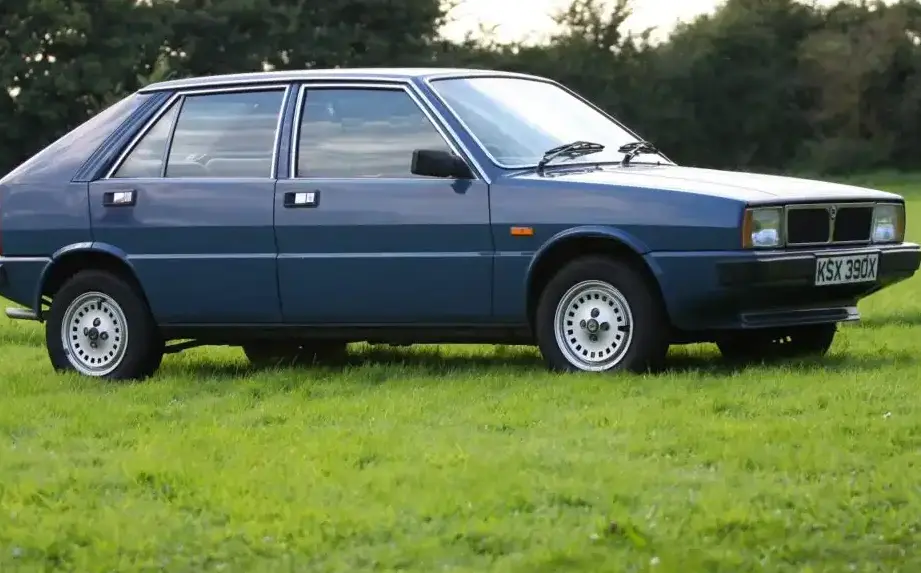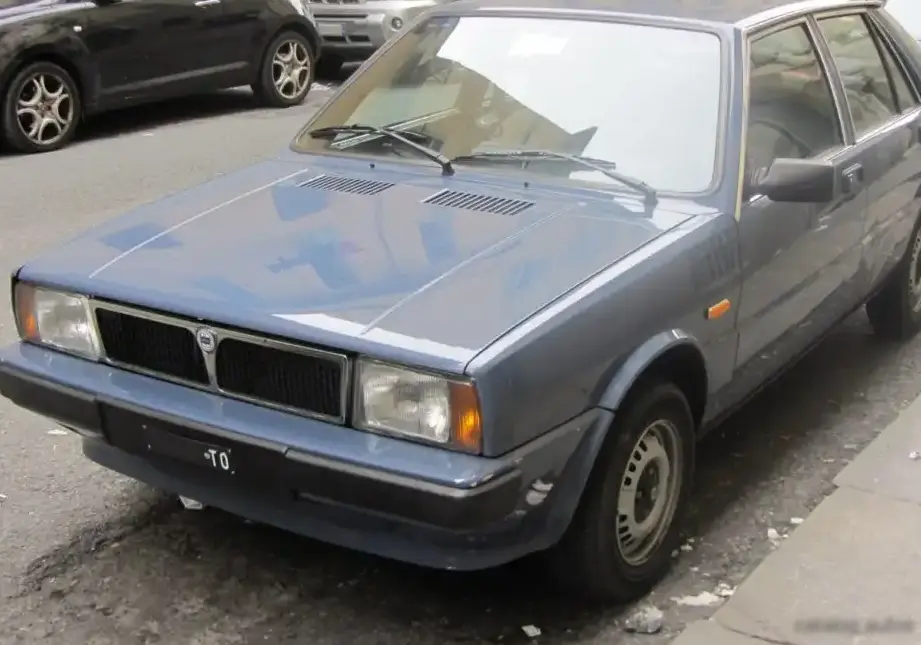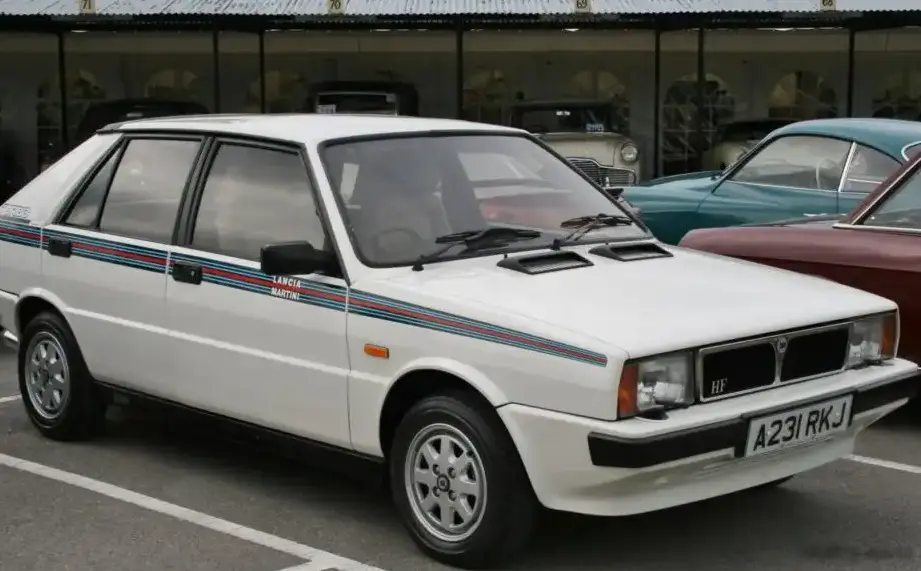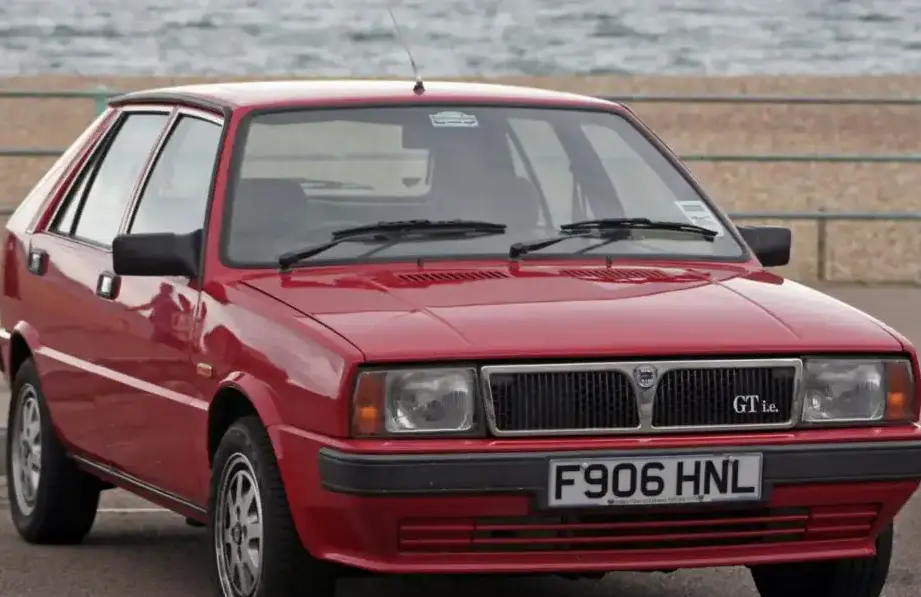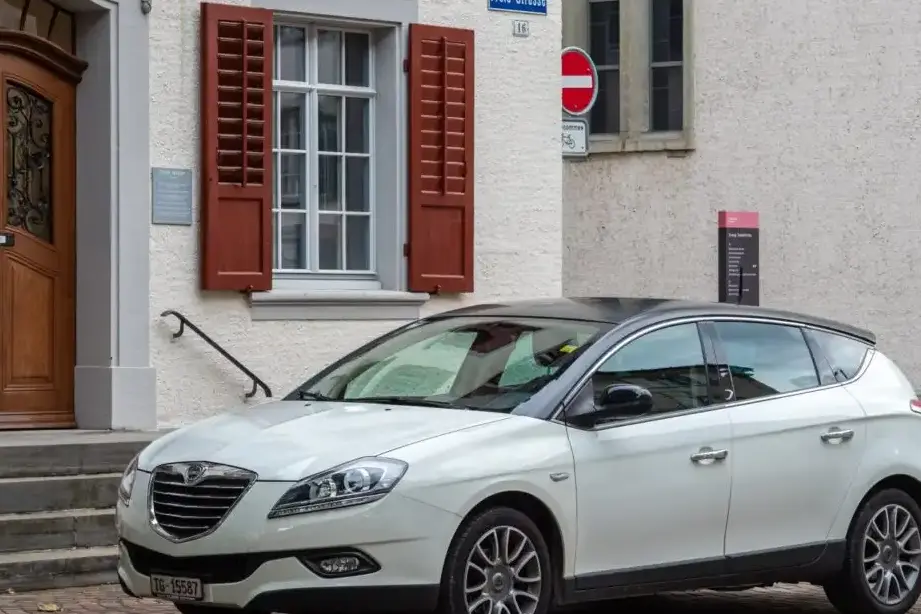
The Lancia Delta III, specifically the 844 series facelift introduced in 2011, represented a significant attempt to revive the iconic Delta nameplate. This generation, produced from 2008 to 2014, aimed to blend sporty handling with Italian design flair and modern technology. The 1.8 Di T-Jet 16V (200 hp) Automatic variant, launched in 2011, occupied a mid-to-upper position within the Delta III lineup, offering a balance between performance and convenience. It was positioned above the lower-powered 1.4 T-Jet models and below the high-performance Delta HF Integrale versions that were later introduced.
Technical Specifications
| Brand | Lancia |
| Model | Delta |
| Generation | Delta III (844, facelift 2011) |
| Type (Engine) | 1.8 Di T-Jet 16V (200 Hp) Automatic |
| Start of production | 2011 |
| End of production | 2014 |
| Powertrain Architecture | Internal Combustion engine |
| Body type | Hatchback |
| Seats | 5 |
| Doors | 5 |
| Fuel consumption (urban) | 11.1 l/100 km (21.2 US mpg, 25.4 UK mpg, 9 km/l) |
| Fuel consumption (extra urban) | 5.9 l/100 km (39.9 US mpg, 47.9 UK mpg, 16.9 km/l) |
| Fuel consumption (combined) | 7.8 l/100 km (30.2 US mpg, 36.2 UK mpg, 12.8 km/l) |
| CO2 emissions | 185 g/km |
| Fuel Type | Petrol (Gasoline) |
| Acceleration 0 – 100 km/h | 7.4 sec |
| Acceleration 0 – 62 mph | 7.4 sec |
| Acceleration 0 – 60 mph | 7 sec (Calculated) |
| Maximum speed | 230 km/h (142.92 mph) |
| Emission standard | Euro 5 |
| Weight-to-power ratio | 7.2 kg/Hp |
| Weight-to-torque ratio | 4.5 kg/Nm |
| Power | 200 Hp @ 5000 rpm |
| Power per litre | 114.8 Hp/l |
| Torque | 320 Nm @ 1400 rpm (236.02 lb.-ft. @ 1400 rpm) |
| Engine layout | Front, Transverse |
| Engine Model/Code | 939B1000 |
| Engine displacement | 1742 cm3 (106.3 cu. in.) |
| Number of cylinders | 4 |
| Engine configuration | Inline |
| Cylinder Bore | 83 mm (3.27 in.) |
| Piston Stroke | 80.5 mm (3.17 in.) |
| Compression ratio | 9.5:1 |
| Number of valves per cylinder | 4 |
| Fuel injection system | Direct injection |
| Engine aspiration | Turbocharger, Intercooler |
| Valvetrain | DOHC |
| Engine oil capacity | 5.1 l (5.39 US qt, 4.49 UK qt) |
| Coolant capacity | 7.3 l (7.71 US qt, 6.42 UK qt) |
| Kerb Weight | 1430 kg (3152.61 lbs.) |
| Max. weight | 2000 kg (4409.25 lbs.) |
| Max load | 570 kg (1256.63 lbs.) |
| Trunk (boot) space – minimum | 420 l (14.83 cu. ft.) |
| Trunk (boot) space – maximum | 1190 l (42.02 cu. ft.) |
| Fuel tank capacity | 58 l (15.32 US gal, 12.76 UK gal) |
| Permitted trailer load (braked) | 1300 kg (2866.01 lbs.) |
| Permitted trailer load (unbraked) | 500 kg (1102.31 lbs.) |
| Length | 4520 mm (177.95 in.) |
| Width | 1797 mm (70.75 in.) |
| Height | 1499 mm (59.02 in.) |
| Wheelbase | 2700 mm (106.3 in.) |
| Front track | 1538 mm (60.55 in.) |
| Rear track | 1531 mm (60.28 in.) |
| Front overhang | 1017 mm (40.04 in.) |
| Rear overhang | 803 mm (31.61 in.) |
| Turning circle | 10.6 m (34.78 ft.) |
| Drivetrain | Front wheel drive |
| Number of gears | 6 |
| Gearbox type | Automatic transmission |
| Front suspension | Independent type McPherson, Transverse stabilizer |
| Rear suspension | Torsion bar, Transverse stabilizer |
| Front brakes | Ventilated discs, 330×28 mm |
| Rear brakes | Disc, 278×12 mm |
| Assisting systems | ABS (Anti-lock braking system) |
| Steering type | Steering rack and pinion |
| Power steering | Electric |
| Tires size | 225/45 R17 |
| Wheel rims size | 7J x 17 |
Powertrain & Engine Architecture
The heart of this Delta variant is the 1.8-liter (1742 cc) 939B1000 inline-four cylinder engine. This engine belongs to the T-Jet family, utilizing direct fuel injection and a turbocharger with an intercooler to boost power output to 200 horsepower at 5000 rpm and 320 Nm (236 lb-ft) of torque at a remarkably low 1400 rpm. The direct injection system, coupled with the turbocharging, allowed for efficient combustion and a broad torque curve. The engine features a double overhead camshaft (DOHC) valvetrain with four valves per cylinder, optimizing gas flow for improved performance. The automatic transmission is a six-speed unit, designed to provide smooth shifts and efficient power delivery. While not a dual-clutch transmission, it was a conventional torque-converter automatic, tuned to complement the engine’s characteristics.
Driving Characteristics
The 1.8 Di T-Jet Automatic Delta offered a comfortable and capable driving experience. The readily available torque from the turbocharged engine meant brisk acceleration, with a 0-60 mph time of around 7 seconds. However, it wasn’t as sharp or engaging as the manual transmission versions or the higher-output HF Integrale models. The automatic transmission, while smooth, did introduce some power loss compared to a manual, and shift speeds weren’t particularly quick by modern standards. The gear ratios were tuned for a balance of acceleration and fuel economy, making it suitable for both city driving and highway cruising. The front-wheel-drive configuration provided predictable handling, but could exhibit some torque steer under hard acceleration.
Equipment & Trim Levels
The 1.8 Di T-Jet Automatic typically came with a generous level of standard equipment. This included air conditioning, power windows and mirrors, a multi-function steering wheel, and a basic audio system. Higher trim levels added features like leather upholstery, a more advanced infotainment system with navigation, parking sensors, and automatic climate control. Interior upholstery was often a combination of cloth and leatherette, with a dashboard design that aimed for a modern and stylish aesthetic. Optional extras included a panoramic sunroof, upgraded audio systems, and various styling packages.
Chassis & Braking
The Delta III utilized a McPherson strut front suspension and a torsion beam rear suspension. This setup provided a good balance between ride comfort and handling. The front suspension incorporated a transverse stabilizer bar to reduce body roll during cornering. Braking duties were handled by ventilated discs at the front and solid discs at the rear. Anti-lock Braking System (ABS) was standard. The suspension tuning was generally softer than the sportier Delta variants, prioritizing comfort over outright handling performance.
Market Reception & Comparison
The 1.8 Di T-Jet Automatic Delta received mixed reviews. Critics praised the engine’s performance and fuel efficiency, but some found the automatic transmission to be somewhat sluggish and less engaging than the manual option. Compared to the 1.4 T-Jet models, the 1.8 offered a noticeable performance upgrade, but at a higher price point. The higher-output HF Integrale models provided significantly more performance, but were considerably more expensive and focused on a more enthusiast-oriented driver. Fuel economy was respectable for its class, averaging around 30.2 US mpg in combined driving.
Legacy
The Lancia Delta III, despite its relatively short production run, remains a distinctive vehicle. The 1.8 Di T-Jet Automatic powertrain has proven to be reasonably reliable, although regular maintenance is crucial. Common issues include turbocharger wear and potential problems with the direct injection system. On the used car market, these Deltas are becoming increasingly sought after by enthusiasts and collectors, particularly well-maintained examples. While not as iconic as the original Delta Integrale, the Delta III represents a bold attempt to revive a legendary nameplate and offers a unique blend of Italian style, performance, and technology.