
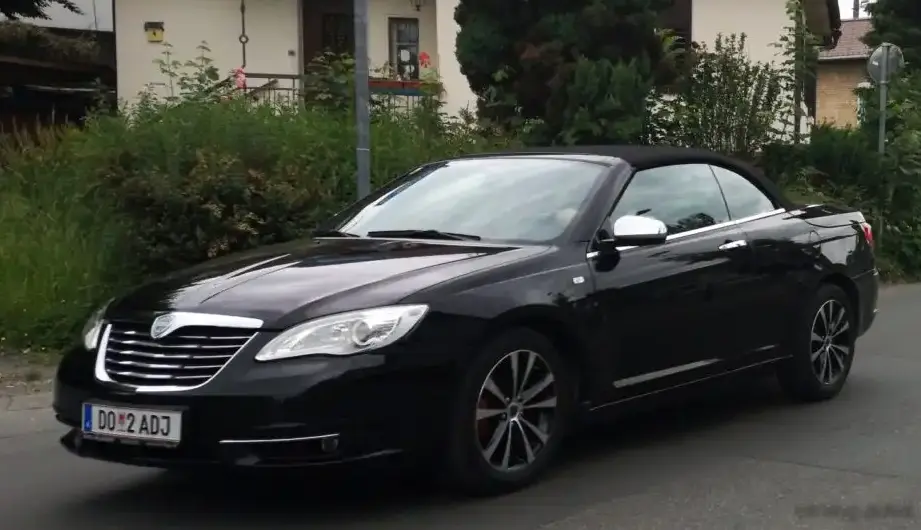
The Lancia Flavia (JS) 2.4 16V Automatic, produced between June 2012 and December 2014, represented a return to a more premium and stylish offering for the Lancia brand. Positioned as the flagship convertible within the Lancia range, it was based on the Chrysler Sebring/200 platform following Fiat’s acquisition of Chrysler in 2011. This collaboration allowed Lancia to re-enter segments where it had previously lacked a competitive offering. The Flavia 2.4 16V Automatic aimed to provide a blend of Italian design, American engineering, and a comfortable, refined driving experience. It was primarily marketed in European markets, particularly Italy, where Lancia still held a degree of brand recognition and appeal.
| Brand | Lancia |
| Model | Flavia |
| Generation | Flavia (JS) |
| Type (Engine) | 2.4 16V (170 Hp) Automatic |
| Start of production | June, 2012 |
| End of production | December, 2014 |
| Powertrain Architecture | Internal Combustion engine |
| Body type | Cabriolet |
| Seats | 4 |
| Doors | 2 |
| Fuel consumption (urban) | 13.6 l/100 km (17.3 US mpg, 20.8 UK mpg, 7.4 km/l) |
| Fuel consumption (extra urban) | 7 l/100 km (33.6 US mpg, 40.4 UK mpg, 14.3 km/l) |
| Fuel consumption (combined) | 9.4 l/100 km (25 US mpg, 30.1 UK mpg, 10.6 km/l) |
| CO2 emissions | 221 g/km |
| Fuel Type | Petrol (Gasoline) |
| Acceleration 0 – 100 km/h | 10.8 sec |
| Acceleration 0 – 62 mph | 10.8 sec |
| Acceleration 0 – 60 mph | 10.3 sec |
| Maximum speed | 195 km/h (121.17 mph) |
| Weight-to-power ratio | 10.4 kg/Hp, 96.3 Hp/tonne |
| Weight-to-torque ratio | 8 kg/Nm, 124.6 Nm/tonne |
| Power | 170 Hp @ 6000 rpm |
| Power per litre | 72 Hp/l |
| Torque | 220 Nm @ 4500 rpm (162.26 lb.-ft. @ 4500 rpm) |
| Engine layout | Front, Transverse |
| Engine Model/Code | EDG |
| Engine displacement | 2360 cm3 (144.02 cu. in.) |
| Number of cylinders | 4 |
| Engine configuration | Inline |
| Cylinder Bore | 88 mm (3.46 in.) |
| Piston Stroke | 97 mm (3.82 in.) |
| Compression ratio | 10.5:1 |
| Number of valves per cylinder | 4 |
| Fuel injection system | Multi-port manifold injection |
| Engine aspiration | Naturally aspirated engine |
| Valvetrain | DOHC |
| Engine oil capacity | 4.4 l (4.65 US qt | 3.87 UK qt) |
| Coolant | 7.3 l (7.71 US qt | 6.42 UK qt) |
| Kerb Weight | 1765-1781 kg (3891.16 – 3926.43 lbs.) |
| Max. weight | 2219 kg (4892.06 lbs.) |
| Max load | 438-454 kg (965.62 – 1000.9 lbs.) |
| Trunk (boot) space – minimum | 198 l (6.99 cu. ft.) |
| Trunk (boot) space – maximum | 377 l (13.31 cu. ft.) |
| Fuel tank capacity | 64 l (16.91 US gal | 14.08 UK gal) |
| Length | 4947 mm (194.76 in.) |
| Width | 1843 mm (72.56 in.) |
| Height | 1479 mm (58.23 in.) |
| Wheelbase | 2765 mm (108.86 in.) |
| Front track | 1570 mm (61.81 in.) |
| Rear (Back) track | 1570 mm (61.81 in.) |
| Minimum turning circle | 11.56 m (37.93 ft.) |
| Drivetrain Architecture | The Internal combustion engine (ICE) drives the front wheels of the vehicle. |
| Drive wheel | Front wheel drive |
| Number of gears | 6 gears, automatic transmission |
| Front suspension | Independent, type McPherson with coil spring and anti-roll bar |
| Rear suspension | Independent multi-link suspension |
| Front brakes | Ventilated discs, 340×28 mm |
| Rear brakes | Disc, 302×10 mm |
| Assisting systems | ABS (Anti-lock braking system) |
| Steering type | Steering rack and pinion |
| Power steering | Hydraulic Steering |
| Tires size | 215/55 R18 |
| Wheel rims size | 7J x 18 |
Powertrain & Engine Architecture
The Flavia 2.4 16V Automatic was powered by the Chrysler-sourced EDG 2.4-liter inline-four engine. This engine featured a dual overhead camshaft (DOHC) valvetrain with four valves per cylinder, contributing to its relatively high output for its displacement. The engine utilized a multi-port fuel injection system, providing precise fuel delivery for improved efficiency and performance. The 2.4L engine produced 170 horsepower at 6000 rpm and 220 Nm (162 lb-ft) of torque at 4500 rpm. The engine was transversely mounted in the front of the vehicle. Paired with the engine was a six-speed automatic transmission, chosen for its emphasis on comfort and ease of use, aligning with the Flavia’s grand touring character. This transmission was not known for particularly quick shifts, prioritizing smoothness over outright performance.
Driving Characteristics
The 2.4 16V Automatic Flavia offered a comfortable and relaxed driving experience. Acceleration from 0 to 60 mph took around 10.3 seconds, and it had a top speed of 195 km/h (121 mph). While not a sports car, the engine provided adequate power for highway cruising and everyday driving. The automatic transmission, while smooth, did detract from driver engagement compared to the available manual transmission options in other Flavia variants. The gear ratios were tuned for fuel efficiency and comfortable cruising rather than aggressive acceleration. Compared to the more powerful Flavia 2.0 Turbo, the 2.4 Automatic felt noticeably less responsive, but it offered a more refined and less demanding driving experience. The weight of the vehicle, ranging from 1765 to 1781 kg, also contributed to its less agile handling.
Equipment & Trim Levels
The Flavia 2.4 16V Automatic typically came well-equipped, reflecting its position as the range-topping model. Standard features included leather upholstery, automatic climate control, a premium audio system, power-adjustable front seats, and alloy wheels. Safety features such as ABS, electronic stability control, and multiple airbags were also standard. Optional extras included a navigation system, sunroof, and upgraded interior trim materials. The interior design was generally considered stylish and well-appointed, with a focus on comfort and luxury. The dashboard layout was reminiscent of Chrysler interiors, reflecting the platform sharing arrangement.
Chassis & Braking
The Flavia utilized an independent suspension system, with a McPherson strut setup at the front and a multi-link suspension at the rear. This configuration aimed to provide a comfortable ride and reasonable handling. The front brakes were ventilated discs measuring 340x28mm, while the rear brakes were solid discs measuring 302x10mm. ABS (Anti-lock Braking System) was standard. The steering was a hydraulic rack and pinion system, providing adequate feedback and precision. The tires were typically 215/55 R18, offering a balance of grip and ride comfort.
Market Reception & Comparison
The Lancia Flavia 2.4 16V Automatic received mixed reviews. Critics generally praised its stylish design and comfortable interior, but some found the engine performance underwhelming, particularly compared to competitors. Fuel economy was also a concern, with combined fuel consumption of 9.4 l/100 km (25 US mpg). Compared to the Flavia 2.0 Turbo, the 2.4 Automatic offered less performance but a more relaxed driving experience. The 2.0 Turbo appealed to drivers seeking a more engaging and sporty ride, while the 2.4 Automatic targeted those prioritizing comfort and refinement. Reliability was generally considered average, with some reports of issues with the electronic systems and the automatic transmission.
Legacy
The Lancia Flavia (JS) 2.4 16V Automatic, while not a commercial success, represents an interesting chapter in Lancia’s history. It was a product of the Fiat-Chrysler alliance and showcased Lancia’s attempt to re-establish itself in the premium convertible segment. On the used car market, the Flavia 2.4 Automatic is relatively affordable, but potential buyers should be aware of potential maintenance issues, particularly with the automatic transmission and electronic components. The engine, being a Chrysler design, is generally considered reliable if properly maintained. The Flavia’s lasting appeal lies in its distinctive Italian styling and comfortable driving experience, making it a potentially attractive option for those seeking a stylish and affordable convertible.
