
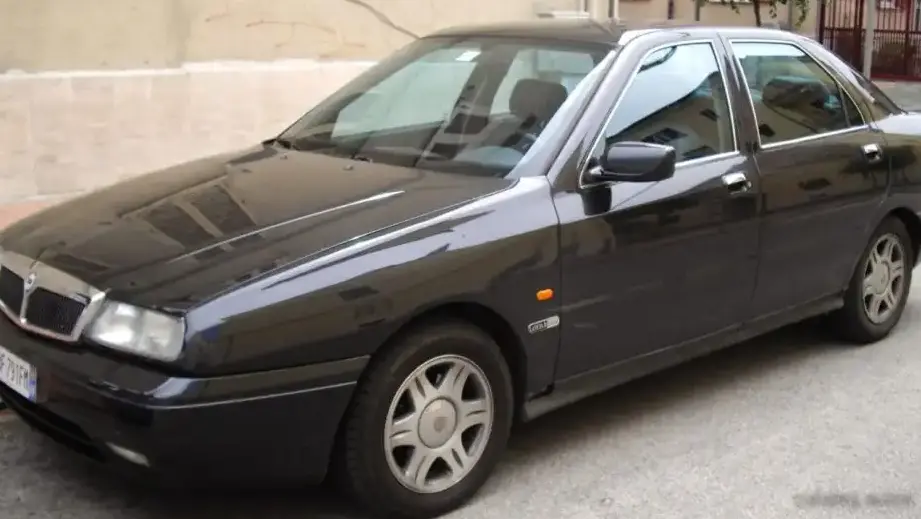
The Lancia Kappa 2.0 20V Turbo, produced between May 1998 and July 2000, represented a performance-oriented variant within the 838 Kappa generation. Positioned as a near-flagship model, it offered a significant step up in power and driving experience compared to the base Kappa trims. The Kappa, as a whole, aimed to recapture Lancia’s historical reputation for innovative engineering and sophisticated design, serving as a replacement for the aging Delta and Thema. This 2.0 20V Turbo model was primarily marketed in Europe, offering a blend of Italian style and respectable performance in the executive sedan segment.
Technical Specifications
| Brand | Lancia |
| Model | Kappa |
| Generation | Kappa (838) |
| Type (Engine) | 2.0 20V Turbo (220 Hp) |
| Start of production | May, 1998 |
| End of production | July, 2000 |
| Powertrain Architecture | Internal Combustion engine |
| Body type | Sedan |
| Seats | 5 |
| Doors | 4 |
| Fuel consumption (urban) | 14.5 l/100 km (16.2 US mpg) |
| Fuel consumption (extra urban) | 8 l/100 km (29.4 US mpg) |
| Fuel Type | Petrol (Gasoline) |
| Acceleration 0 – 100 km/h | 7.3 sec |
| Acceleration 0 – 62 mph | 7.3 sec |
| Acceleration 0 – 60 mph | 6.9 sec |
| Maximum speed | 243 km/h (150.99 mph) |
| Weight-to-power ratio | 6.7 kg/Hp |
| Weight-to-torque ratio | 4.8 kg/Nm |
| Power | 220 Hp @ 6000 rpm |
| Power per litre | 110.1 Hp/l |
| Torque | 309 Nm @ 2750 rpm (227.91 lb.-ft. @ 2750 rpm) |
| Engine layout | Front, Transverse |
| Engine Model/Code | 175 A3.000 |
| Engine displacement | 1998 cm3 (121.93 cu. in.) |
| Number of cylinders | 5 |
| Engine configuration | Inline |
| Cylinder Bore | 82 mm (3.23 in.) |
| Piston Stroke | 75.65 mm (2.98 in.) |
| Compression ratio | 8.5:1 |
| Number of valves per cylinder | 4 |
| Fuel injection system | Multi-port manifold injection |
| Engine aspiration | Turbocharger |
| Valvetrain | DOHC |
| Engine oil capacity | 5.4 l (5.71 US qt | 4.75 UK qt) |
| Coolant | 8.5 l (8.98 US qt | 7.48 UK qt) |
| Kerb Weight | 1480 kg (3262.84 lbs.) |
| Max. weight | 2030 kg (4475.38 lbs.) |
| Max load | 550 kg (1212.54 lbs.) |
| Trunk (boot) space – minimum | 525 l (18.54 cu. ft.) |
| Fuel tank capacity | 70 l (18.49 US gal | 15.4 UK gal) |
| Length | 4687 mm (184.53 in.) |
| Width | 1826 mm (71.89 in.) |
| Height | 1462 mm (57.56 in.) |
| Wheelbase | 2700 mm (106.3 in.) |
| Front track | 1547 mm (60.91 in.) |
| Rear (Back) track | 1535 mm (60.43 in.) |
| Drivetrain Architecture | The Internal combustion engine (ICE) drives the front wheels of the vehicle. |
| Drive wheel | Front wheel drive |
| Number of gears and type of gearbox | 5 gears, manual transmission |
| Front suspension | Wishbone |
| Rear suspension | Spring Strut |
| Front brakes | Ventilated discs |
| Rear brakes | Disc |
| Assisting systems | ABS (Anti-lock braking system) |
| Steering type | Steering rack and pinion |
| Power steering | Hydraulic Steering |
| Tires size | 205/55R16 |
Powertrain & Engine Architecture
The heart of the Kappa 2.0 20V Turbo is the 175 A3.000 engine, a 1998cc inline-five cylinder powerplant. This engine is notable for its relatively sophisticated design, featuring a 20-valve cylinder head (four valves per cylinder) and a Garrett turbocharger. The engine utilizes multi-port fuel injection, delivering fuel directly into the intake ports, and a double overhead camshaft (DOHC) valvetrain for optimized gas flow. The 8.5:1 compression ratio was a compromise between performance and reliability when paired with the turbocharger. The five-cylinder configuration, while less common than inline-fours or V6s, offered a good balance of smoothness and power delivery. The Kappa 2.0 20V Turbo was exclusively offered with a 5-speed manual transmission, designed to handle the engine’s 309 Nm (227.91 lb-ft) of torque.
Driving Characteristics
The 220 horsepower and 309 Nm of torque provided by the 2.0 20V Turbo engine translated into brisk performance. Acceleration from 0 to 60 mph was achieved in approximately 6.9 seconds, and the car could reach a top speed of 243 km/h (150.99 mph). The turbocharger provided a noticeable boost in power, but the engine remained relatively tractable at lower RPMs. The 5-speed manual transmission offered precise shifts, allowing drivers to fully exploit the engine’s powerband. Compared to the naturally aspirated 2.0-liter Kappa variants, the Turbo model offered a significantly more engaging driving experience. While not as raw or focused as some of its German rivals, the Kappa 2.0 20V Turbo provided a comfortable and capable grand touring experience.
Equipment & Trim Levels
The Kappa 2.0 20V Turbo typically came well-equipped, reflecting its position as a premium trim level. Standard features included air conditioning, power windows and mirrors, central locking, and an upgraded audio system. Interior upholstery was typically a combination of cloth and leather, with wood trim accents on the dashboard and door panels. Optional extras included leather seats, a sunroof, and a more advanced navigation system. The Kappa generally prioritized comfort and refinement over outright sportiness, with a focus on providing a luxurious and relaxing driving environment.
Chassis & Braking
The Kappa 2.0 20V Turbo utilized a front-wheel-drive layout with independent wishbone suspension at the front and a spring strut rear suspension. This setup provided a good balance of ride comfort and handling. The car was equipped with ventilated disc brakes at the front and solid disc brakes at the rear, providing adequate stopping power for its performance level. Anti-lock braking system (ABS) was standard, enhancing safety and control. The steering was rack and pinion with hydraulic power assistance, offering precise and responsive steering feel.
Market Reception & Comparison
The Lancia Kappa 2.0 20V Turbo received generally positive reviews from automotive critics. It was praised for its stylish design, comfortable interior, and strong performance. However, some critics noted that the Kappa lacked the dynamic sharpness of its German competitors, such as the BMW 3 Series and Audi A4. Fuel economy was reasonable for a turbocharged engine of this size, but not exceptional. Reliability was a mixed bag, with some owners reporting issues with the electrical system and turbocharger. Compared to the naturally aspirated Kappa variants, the 2.0 20V Turbo offered a significant performance upgrade, but at a higher price point.
Legacy
The Lancia Kappa 2.0 20V Turbo remains a relatively rare and sought-after model among Lancia enthusiasts. The inline-five turbo engine is considered a highlight, offering a unique and characterful driving experience. While the Kappa as a whole didn’t achieve significant sales success, it represents a bold attempt by Lancia to revive its brand image and compete in the executive sedan segment. Today, well-maintained examples of the 2.0 20V Turbo are becoming increasingly collectible, appealing to those who appreciate Italian design and engineering. The powertrain, while requiring diligent maintenance, is generally considered robust when properly cared for, and parts availability, while not abundant, is still manageable through specialist suppliers.
